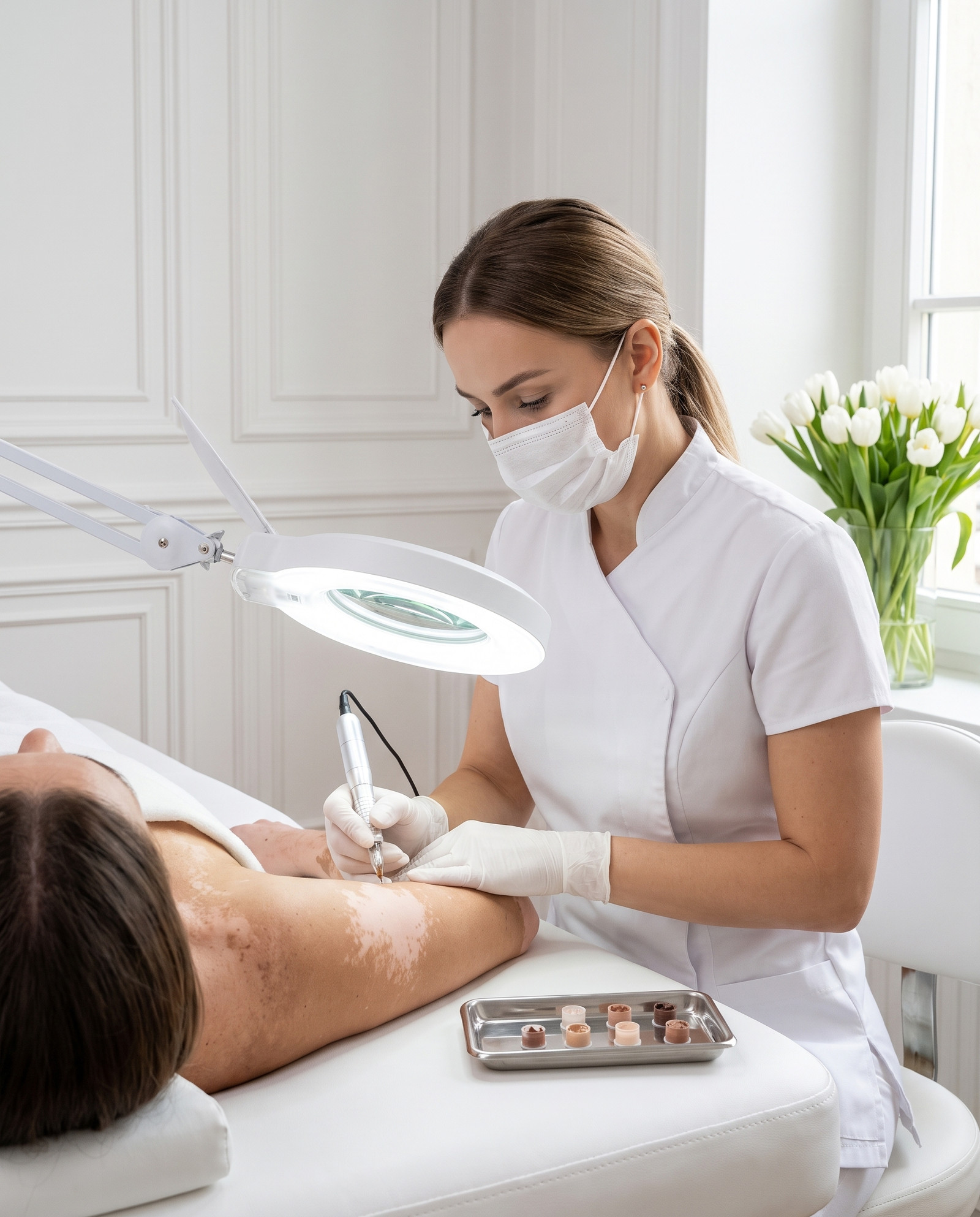
What is vitiligo?
- Non-segmental type (generalised): Symmetrical patches, progressive. The most common form (around 80%).
- Segmental type: Patches on one side of the body, limited in spread, less likely to progress.
- Acrofacial type: Hands, feet, face.
- Focal type: Isolated, few patches.
The key risks: the Koebner phenomenon and sun protection
Skin without melanocytes has no natural protection against UV radiation. Depigmented patches don't tan — they lack melanin — and burn more easily under UVB exposure. The contrast with tanned skin becomes more visible after sun exposure.
Treatments that are safe with vitiligo
LED therapy — particularly valuable
Red and infrared LED light can support healing, have an anti-inflammatory effect, and in many people support fibroblast activity in vitiligo areas.
Laser hair removal with vitiligo
Laser hair removal is possible with vitiligo, but it calls for a careful approach. The laser targets melanin — depigmented skin contains none, so treating vitiligo patches may be ineffective, or under certain conditions may trigger the Koebner phenomenon.
Treatments that need a consultation
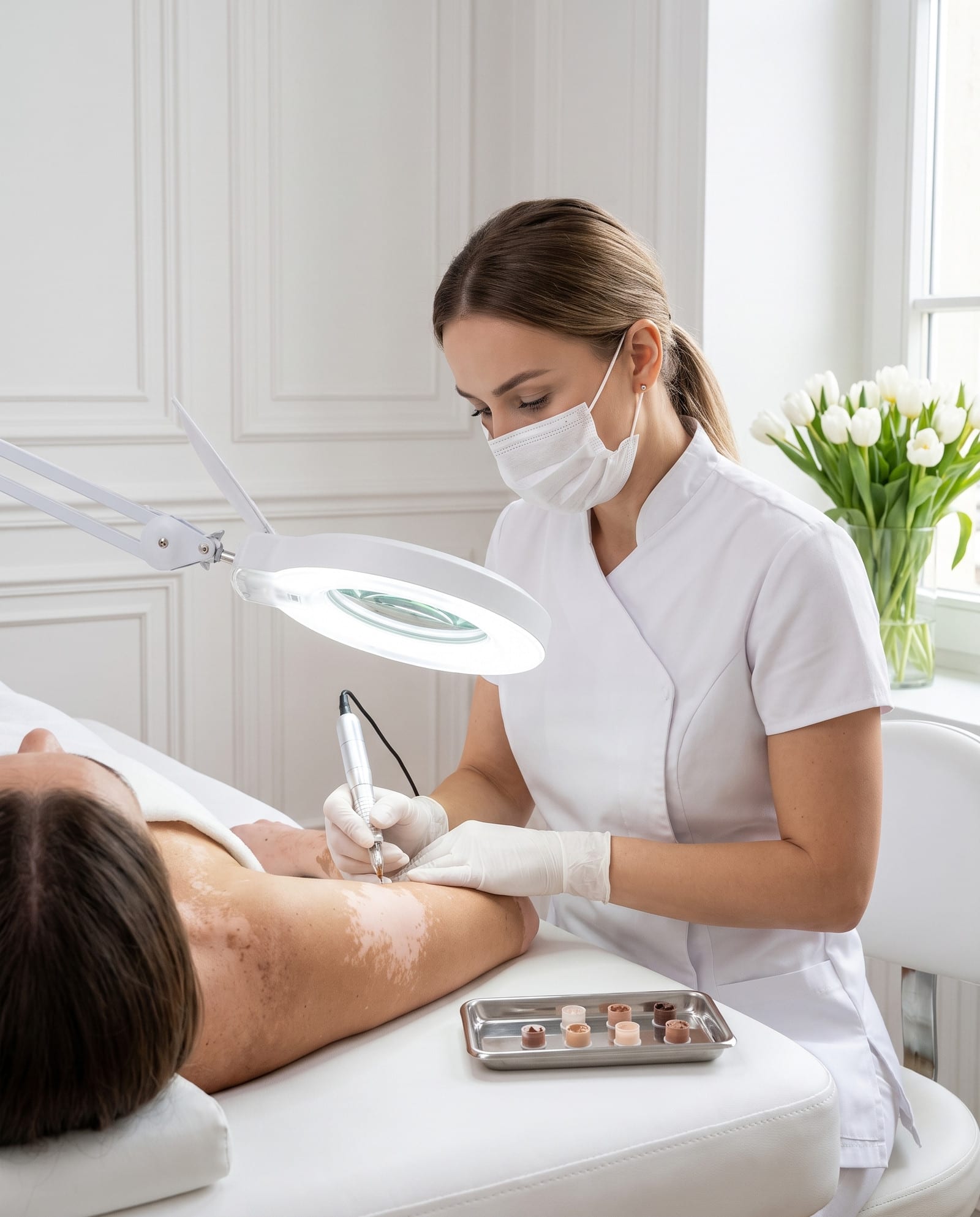
Treatments we advise against — requiring dermatologist approval
- Fractional laser directly on vitiligo patches (risk of the Koebner phenomenon and worsening depigmentation)
- Dermapen on active vitiligo areas
- Chemical peel on vitiligo patches
- Sunbeds and deliberate UV tanning on skin with vitiligo (no melanin protection, contrast between depigmented and normal skin becomes more pronounced)
Spray tanning (MineTan) — yes!
Spray tanning with DHA is safe with vitiligo. The active ingredient reacts with amino acids in the epidermis without involving melanocytes — it doesn't damage the skin and doesn't trigger the Koebner phenomenon. It can temporarily reduce the visibility of depigmented contrast.
For clients with vitiligo at J'ADORE
Always let us know about vitiligo when booking. Our cosmetologists understand the Koebner phenomenon, carefully avoid active depigmented areas, and adapt the protocol to your skin's current condition.
Vitiligo doesn't rule out looking after yourself. It just calls for extra care — which we're ready to provide.