Bearded or smooth?What your skin says about hair removal
Shaving is cheap, but it never ends. Laser puts a stop to it.
6 min read8:21 of audiowritten for men
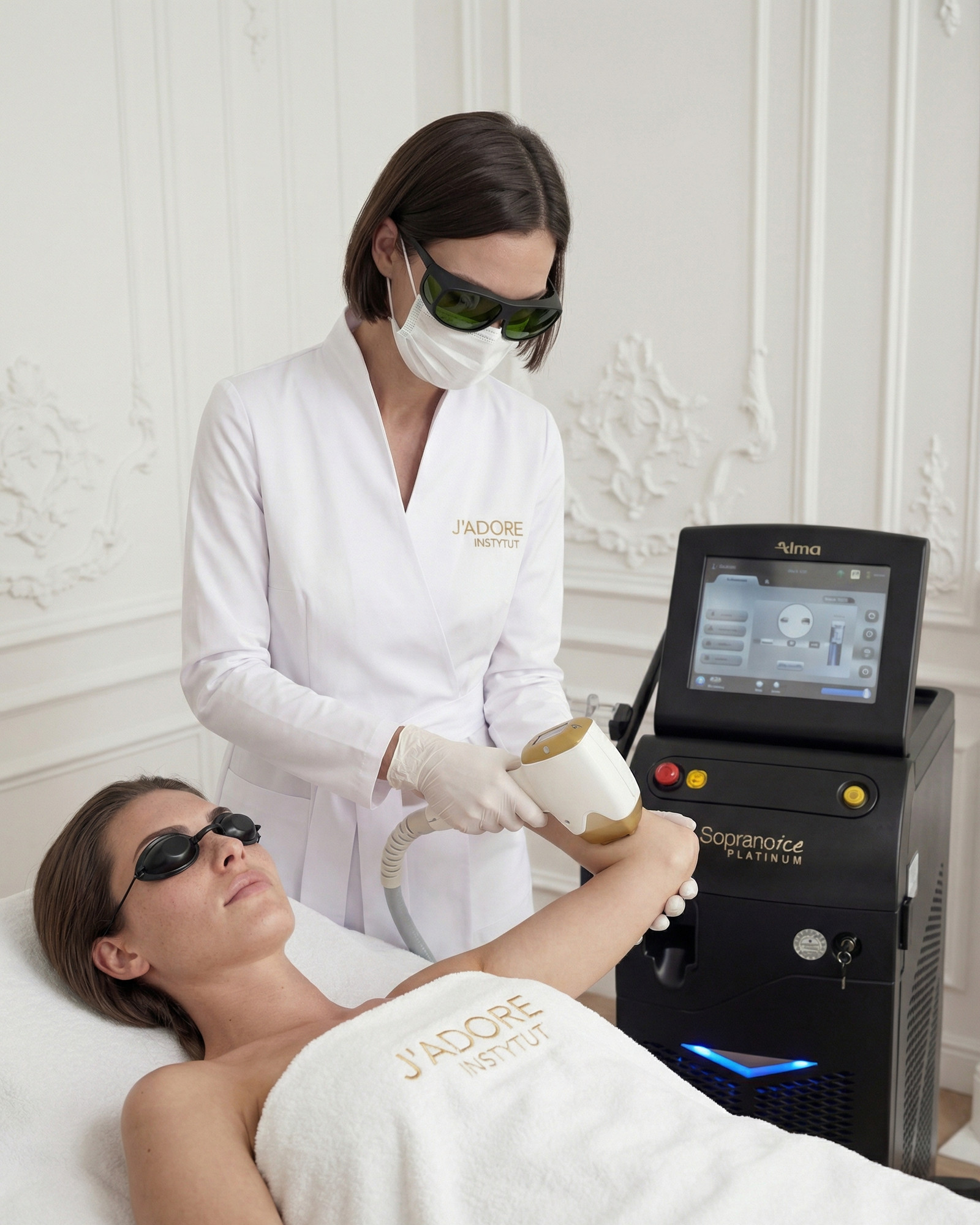
Illustrative photo. It shows an example of how the treatment is performed.
You are listening0:00 of 8:21
Listen to the article
read by Algenib · 8:21
0:008:21
6 min readread by Algenib10 March 2026
Most men know as much about hair removal as they do about quantum field theory. You shave with a razor because your father did. Or you use a trimmer, because your gym buddy does. You've heard of laser, but "isn't that for women"? No. Here's why.
01
40% of Polish men remove body hair. Another 40% are considering it. The remaining 20% are lying.
Let's be direct: the days when a man's only grooming ritual was rinsing off aftershave are long gone. Today, a man who takes care of his appearance isn't a "metrosexual" — he's simply an adult. Hair removal isn't about fashion. It's about comfort, hygiene and aesthetics that matter.
The problem is, most men know as much about hair removal as they do about quantum field theory. You shave with a razor because your father did. Or you use a trimmer, because your gym buddy does. You've heard of laser, but "isn't that for women?" No. Here's why.
02
A market that's exploding (and nobody's talking about it)
The numbers are brutal:
The global male hair removal market is growing by 12% a year — faster than the female market (7–8%).
In Poland, 4 in 10 men regularly remove hair from some part of the body (Kantar study, 2025).
Top 3 areas: chest, back, neck.
Peak age of interest: 25–40 — but increasingly 18–24.
63% of female partners say they prefer a man with "controlled hair" (Esquire/Ipsos survey, 2024). Controlled. Not smooth as a dolphin.
03
Shaving, waxing, laser — an honest comparison
We won't tell you laser is best (although it is). Instead, here are the facts, so you can decide for yourself.
04
The big question: laser for your beard?
You need to be precise here, because the stakes are high — a beard doesn't grow back after laser.
05
Male hair vs laser: why it's a perfect match
Diode laser targets melanin — the dark pigment in hair. The more melanin, the better the laser "sees" the hair, and the more effectively it destroys the follicle.
Male hair is thicker than female hair (a larger diameter means more melanin).
It sits deeper in the skin — the right diode laser wavelength reaches deep enough to treat it.
Statistically, it's darker — with more eumelanin.
06
"Shaving thickens hair" — the myth that won't die
It doesn't. End of story.
Natural hair has a tapered, fine tip — like a sharpened pencil. When you shave it, you cut that tip flat. It grows back with a blunt, flat end, which looks thicker and coarser. But the diameter of the hair hasn't changed. It's an optical illusion.
Illustrative photo. It shows an example of how the treatment is performed.
07
Popular areas — what men have removed
08
How to prepare for your first laser session
Don't wax or pluck for 4 weeks beforehand. The laser needs the follicle in place.
Shave the area 24 hours before the treatment. The laser targets the follicle, not the hair above the skin.
Avoid self-tanner or sunbeds for 2 weeks beforehand. Darker skin needs extra caution with older devices.
Avoid ibuprofen or aspirin for 24 hours beforehand. Blood thinning can increase the risk of bruising — rare, but why risk it.
Drink water. Hydrated skin tolerates the treatment better.
09
J'ADORE — the male perspective
At J'ADORE INSTYTUT, laser hair removal is one of the most popular treatments among men — neck and back are the top areas. Nobody will tell you that "you have to shave", or push a full-body package on you. Consultation means a specific plan for a specific area.
10
Summary
Male hair removal isn't "metrosexualism" — it's pragmatism. Shaving is cheap, but it never ends. Waxing is fine, but painful and temporary. Laser costs more upfront, but it can put an end to the topic for good. Male hair is a good target for diode laser. Leave your beard alone. Neck, back, chest — laser. And no — shaving doesn't thicken hair. We've known that since 1928.