Beard acne — why here specifically
The chin and jawline area gets more mechanical contact than any other part of a man's face. Razors, shaving foams and gels, towels, hands touching the face while thinking, a phone pressed against the skin — every one of these contacts is a potential vector for bacteria and inflammation. Add a sports mask and facial hair that can mechanically push sebum back into the pores. The result: acne that won't clear up even when the rest of the facial skin looks fine.
Add hormones to the mix. Androgens — testosterone and its derivatives — directly stimulate the sebaceous glands into overproducing sebum. This is why acne in men is often deeper, with larger inflammatory lesions, and responds less well to cosmetics designed for women with combination skin. The mechanism is the same, but the scale and depth of the lesions differ.
Beard acne has a distinct pattern: lesions appear and clear in cycles, often flaring with stress and poor diet, and tend to be deep and painful (carbuncles, nodules). They may be accompanied by lesions on the back and chest. The skin around them is oily, and hyperpigmentation often remains after healing.
Pseudofolliculitis barbae — ingrown hairs that mimic acne
This is a separate issue, though it looks the same. Pseudofolliculitis barbae (PFB) is inflammation of the hair follicles caused by hairs that, instead of growing straight up after shaving, curve and grow back into the skin. Dry shaving or a razor head that sits too close cuts the hair at a sharp angle, and it burrows back into the skin deeper than it should. The cut hair is as sharp as a needle, and it literally pierces the skin from inside.
The problem particularly affects men with curly or strongly wavy hair — but not exclusively. With very close shaving, shaving against the grain, or using multi-blade razors, virtually any man with dense facial hair along the jawline and neck is at risk of PFB. It isn't an allergy, it isn't dirt, and it isn't hormonal — it's a purely mechanical issue.
How do you tell PFB from acne? With ingrown hairs, the bumps cluster tightly along the shaving line — the jaw, the neck, the corners of the jawline. In good light, you can often spot a dark point inside the bump — that's the hair itself. Lesions appear after every shave, within 24–72 hours, and are more painful than itchy. With acne, the distribution is more scattered, and the cycle has nothing to do with shaving.
The protocol: what you can do yourself
In both cases, a few rules work as a starting point. The details differ — below, we cover the common ground first, then what's specific to each problem.
- Wash your face twice a day — no more. Over-washing dries out the skin, which then compensates by overproducing sebum. A gel or foam cleanser with salicylic acid helps unclog pores and regulate sebum.
- Don't shave dry, and don't shave against the grain. A single-blade or electric razor for surface shaving lowers the risk of PFB. Warm, damp skin plus a moisturising foam or gel before shaving is the absolute minimum.
- After shaving — skip the alcohol and the cologne. Reach for a soothing balm with azeloglycine, niacinamide or panthenol instead. Alcohol dries out and irritates the skin — it's a vicious circle.
- Don't squeeze. Especially PFB bumps. Squeezing an ingrown hair without releasing it pushes it deeper and triggers cystic inflammation. With acne, squeezing is a guaranteed way to scar.
- Keep your bedding and phone clean. Change your pillowcase every 2–3 days. Disinfect your phone regularly — it's one of the most overlooked sources of bacteria in beard acne.
When home care isn't enough
If lesions haven't improved after 4–6 weeks of consistent care, that's a sign your skin needs support you can't give it alone. Not because you're doing something wrong, but because deep inflammatory acne and scarring PFB are problems that cosmetics handle poorly.
The salon advantage with acne
what a home product can't do
- sebum regulation at the level of the sebaceous gland
- deep mechanical and chemical cleansing
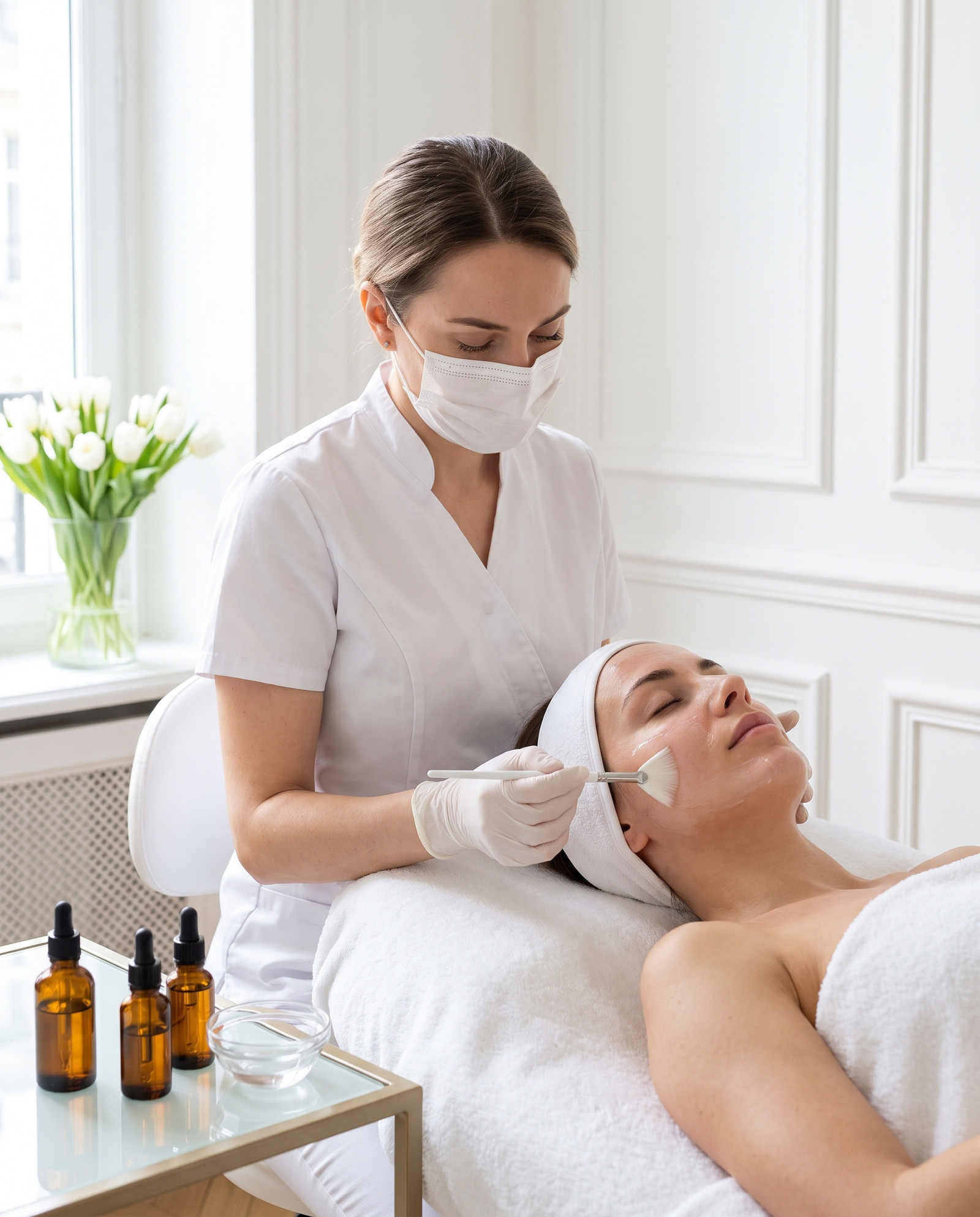
- acid peels (azelaic, mandelic) matched to severity
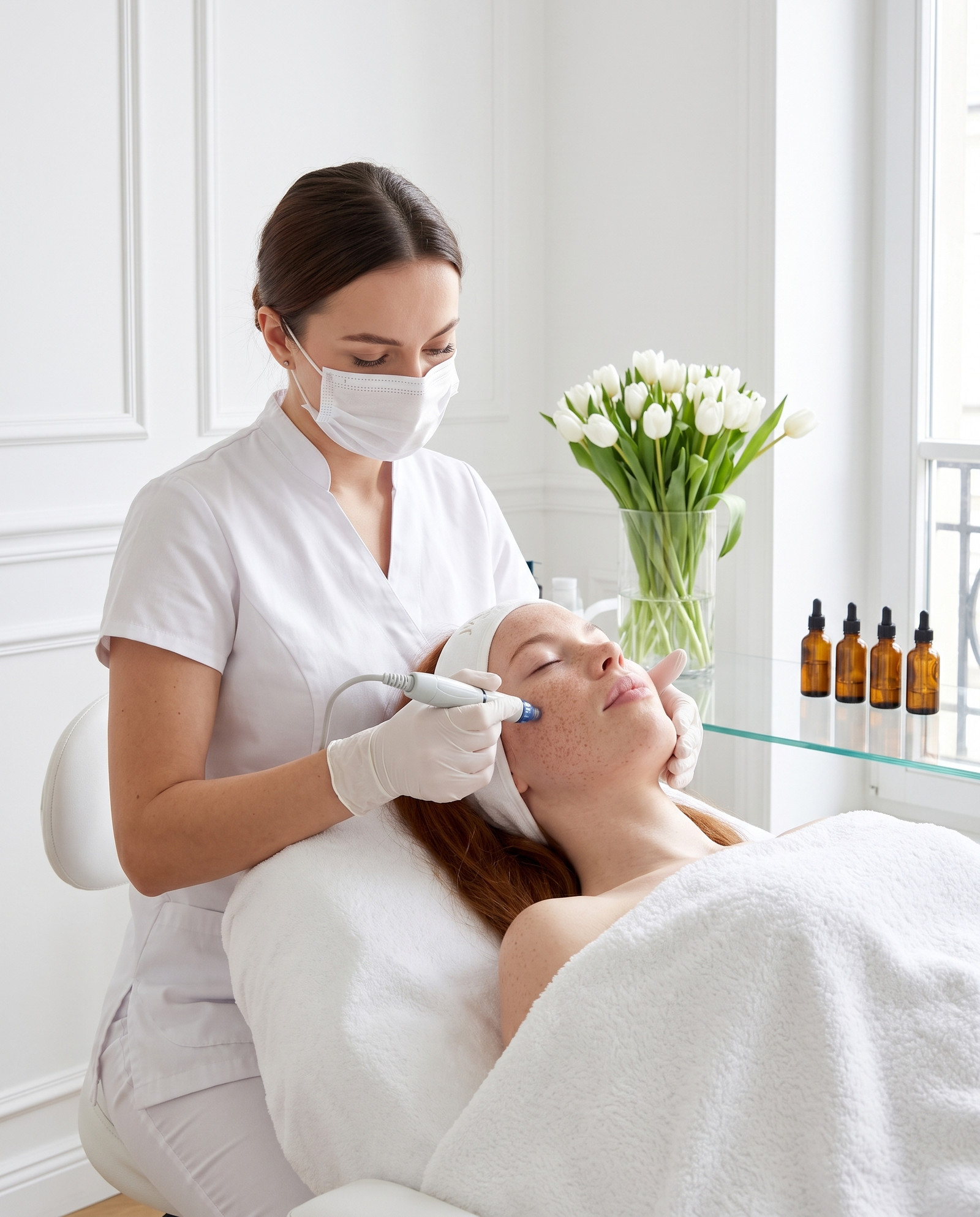
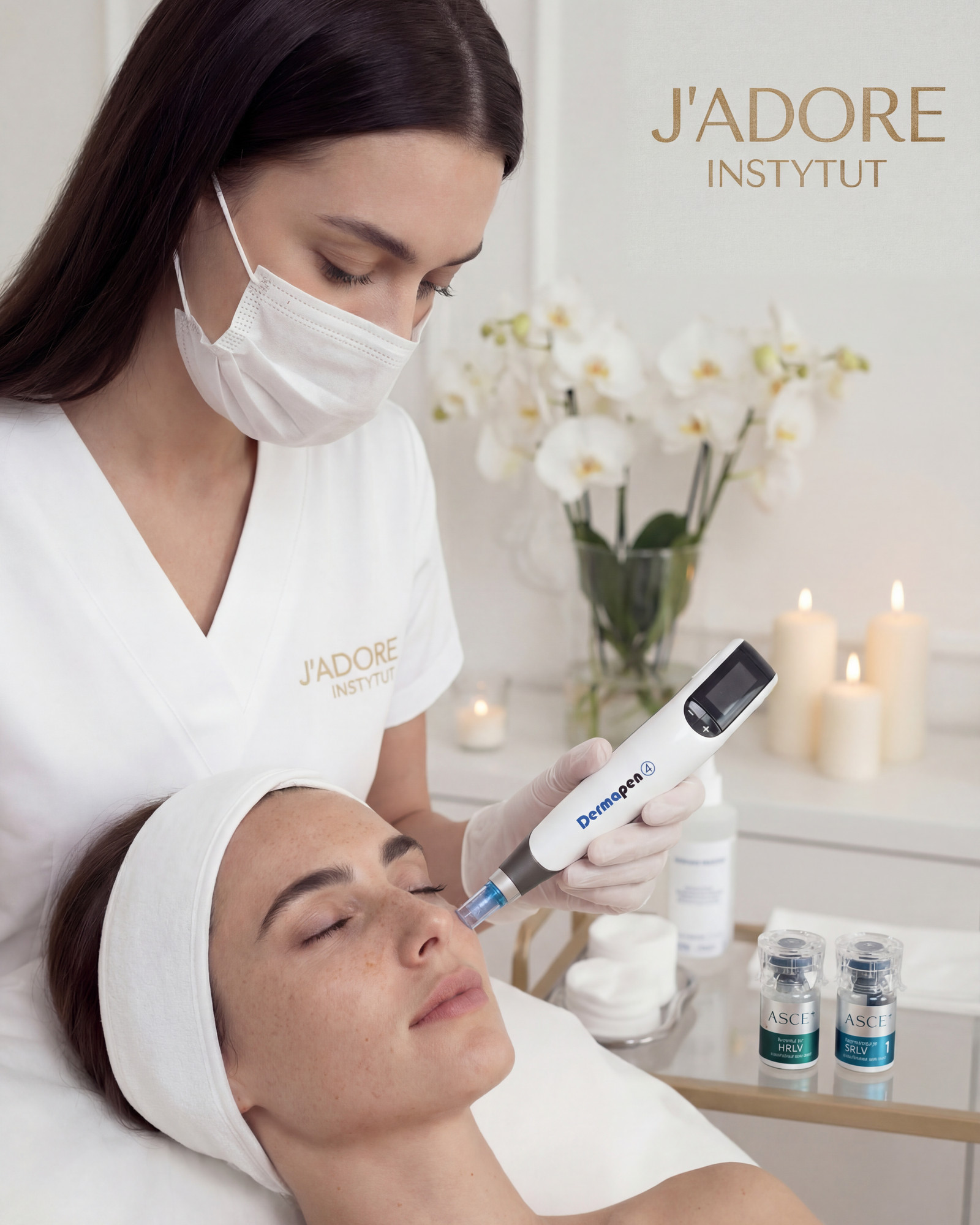
- treating acne scars — Dermapen, fractional laser
The salon advantage with PFB
mechanics you can't handle alone
- releasing ingrown hairs without risking infection
- calming active inflammation
- laser hair removal — a lasting reduction of hair growth in problem areas
- softening scars from chronic PFB
With beard acne, what matters is a course of treatment, not a single session. Skin needs regular cleansing, sebum regulation and calming of active inflammation — and that takes at least several sessions. For PFB with deep scarring from ingrown hairs, Dermapen works well, stimulating tissue remodelling, alongside an azelaic acid peel, which reduces hyperpigmentation and has antibacterial action at the same time. For men who are done fighting PFB for good, laser hair removal on the beard and neck area is a lasting solution.
Beard acne scars — what to do about them
Men rarely come in specifically about scars — usually only once they notice their face looks "uneven", or that hyperpigmentation isn't fading months later. Acne scars aren't a cosmetic whim; they're a physical change in skin structure that no cream can reverse.
Two types of change need two different responses. Atrophic scars (depressions, "craters") result from deep inflammation that destroyed collagen — they need stimulation to rebuild, for example through microneedling. Post-inflammatory hyperpigmentation (PIH) (brown or pink-purple marks left after healing) results from melanin overproduction in response to inflammation — here, consistent work with acids and sun protection helps, sometimes alongside brightening treatments.
An important rule: scars are treated only once acne is under control. Stimulating the skin during active inflammation is a recipe for making things worse. The order is always the same: calm it first, repair it second.
+ Dermapen
microneedling stimulates collagen synthesis and evens out texture; a series of 3–6 sessions gives most men a visible improvement in skin texture
+ azelaic acid peel
reduces post-inflammatory hyperpigmentation (PIH) and has antibacterial action; gentler than retinol, well tolerated by irritated and reactive skin
+ anti-acne treatment
active lesions are brought under control first, then scar treatment follows; skip this step, and results on scars won't last