What actually happens to a follicle after years of plucking
To understand how to repair your brows, you first need to understand why they stopped growing back. This isn't about one plucked hair. It's about years of regular mechanical trauma to the same spot.
Every hair grows from a follicle — a small structure deep in the skin that produces the hair and keeps it in a cycle: growth, rest, shedding, growth again. When you pluck a hair, you pull it out together with the root. Do this regularly for years, and the hair papilla — the tiny "factory" at the base of the follicle — receives fewer and fewer signals to work. It doesn't die straight away. First it slows down, then it produces increasingly thin hair, then it stops responding.
Deep plucking (to the root)
Highest risk
- A plucked root with the papilla = direct trauma
- Repeated many times → micro-scarring within the follicle
- Gradual atrophy of the hair papilla
Regular plucking over the years
Cumulative damage
- Each plucking cycle weakens the follicle structure
- Follicles enter a dormant state (extended telogen)
- Heavily plucked areas → "empty" zones
Additional factors
Worsen the outlook
- Age — regenerative capacity declines after age 35
- Thin brows in the family (genetic predisposition)
- Long plucking history — follicles under 10–15 years of trauma
Where's the limit? There's no single answer — each of us has a different history, different genetics, a different pace of regeneration. But the practical rule is this: if even a few single hairs still grow anywhere, the follicles there are alive. That's very good news, and it's the starting point for repair.
Step by step — the recovery plan
A recovery plan for over-plucked brows isn't a sprint. It's more of a six-month decision. It only works if you follow the steps in order, and don't jump to step four before completing step one. Here's what to do.
- 01
Step 1 — Stop. Completely, for at least 6 months
This is the hardest and most important step. No tweezers. Not even "just this one hair that spoils the line". Follicles need time without trauma to resume activity. The first weeks will be tough to look at — hairs grow back unevenly, at different rates, often in places you don't expect. Accept this stage as the cost of repair.
- 02
Step 2 — Brow serum (peptide-based, at night)
Once your follicles have peace and quiet, it's worth giving them a signal from the outside. A good-quality peptide brow serum (for example, biotinoyl tripeptide-1), applied every evening along the brow arch, can help activate dormant follicles. This isn't a miracle solution. It's biological support that works alongside patience, not instead of it.
- 03
Step 3 — Visit a beautician (shaping what's there)
After 4–6 weeks without plucking — not before — it's worth seeing a good brow specialist. Not to pluck, but to assess what's growing back, map the natural brow architecture, and gently remove only what truly disrupts symmetry. A good specialist will also show you where there's density and where there's a lasting gap — and whether it's worth waiting longer.
- 04
Step 4 — Stimulating treatments (PRP or brow-skin mesotherapy)
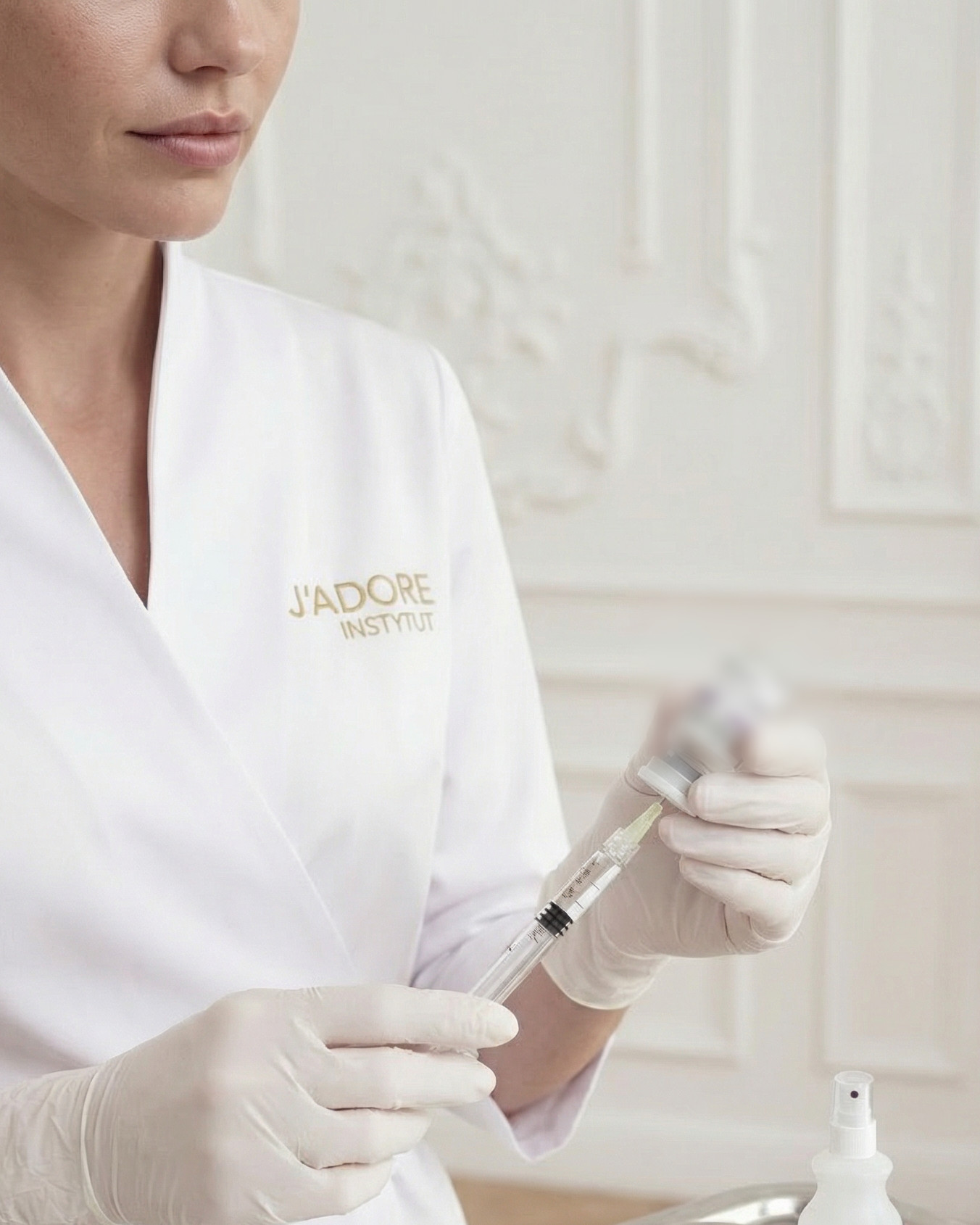
This step is for anyone whose results from waiting alone aren't satisfying enough — or anyone who wants to speed up and strengthen regeneration. PRP (platelet-rich plasma) and needle mesotherapy with nutrient cocktails can stimulate dormant follicles along the brow arch. The treatment involves delivering active substances directly into the brow skin — precisely, in fine amounts, into the areas where regrowth is weakest.
- 05
Step 5 — Documentation and patience (photos every 4 weeks)
Results are measured in months. Take your first photo today — same lighting, same angle, no makeup. Repeat every 4 weeks. Changes in brow regrowth are slow, and often invisible day to day. Only comparing photos from 3 months ago shows what's really happening. It's also good motivation not to reach for tweezers in a moment of weakness.
What absolutely not to do
A recovery plan is easy to sabotage — usually not out of bad intentions, just a lack of knowledge. Before you start, read this list.
What's normal during regrowth — so you don't panic
Patience in this process isn't passivity — it's a strategy. Brow biology has its own pace, and it can't be significantly shortened. But it can be supported: with proper care, serum and, if needed, a stimulating treatment under a specialist's guidance.
When PMU makes sense — and why it isn't giving up
Permanent eyebrow makeup (PMU) is sometimes treated as a surrender — as if reaching for pigment meant admitting defeat. That's the wrong way to think about it. PMU is a tool, not a verdict. The real question is: when is it the right tool?
- When, after 12 months of a diligent recovery plan — no tweezers, serum, visits, and any relevant treatments — regrowth remains clearly insufficient, follicles may be permanently inactive.
- When trichoscopy or a cosmetic assessment confirms that certain areas of the brow arch show no follicle activity.
- When you need a complementary solution — for example, your brows are mostly fine, but the tail or arch is missing, and there's no point waiting for hairs that simply aren't there.
In these situations, PMU doesn't replace your brows — it completes them. With hair-mimicking techniques like needle shaping, the result looks very natural. The only thing that matters is not rushing into PMU out of impatience after two months — before biology has had a chance to respond. PMU applied over follicles that are still active, just dormant, can be ineffective, and may complicate future stimulating treatments.