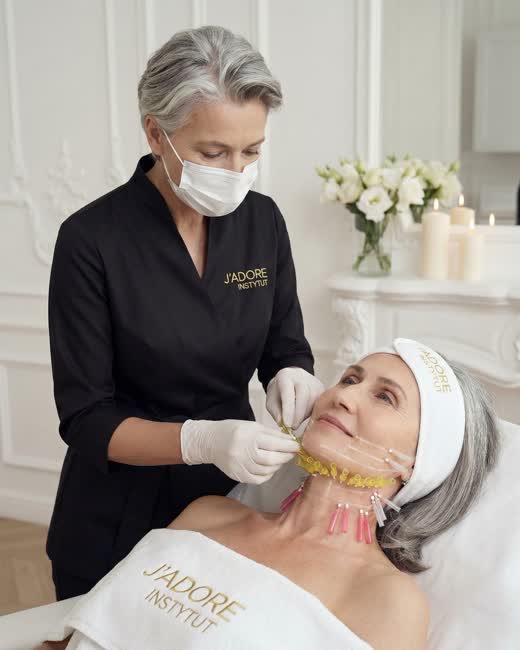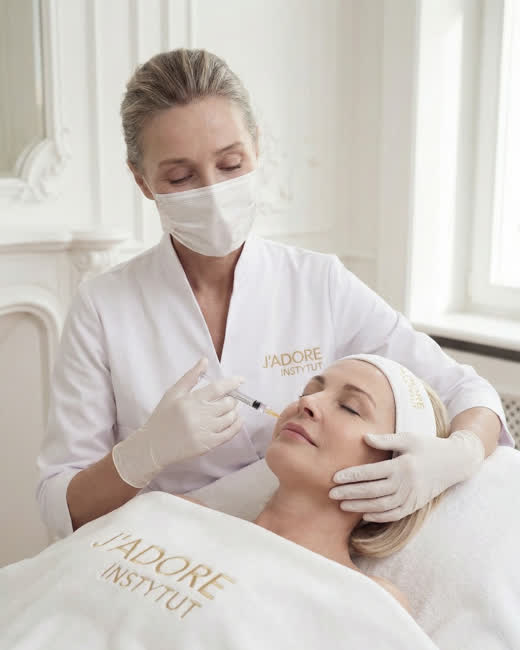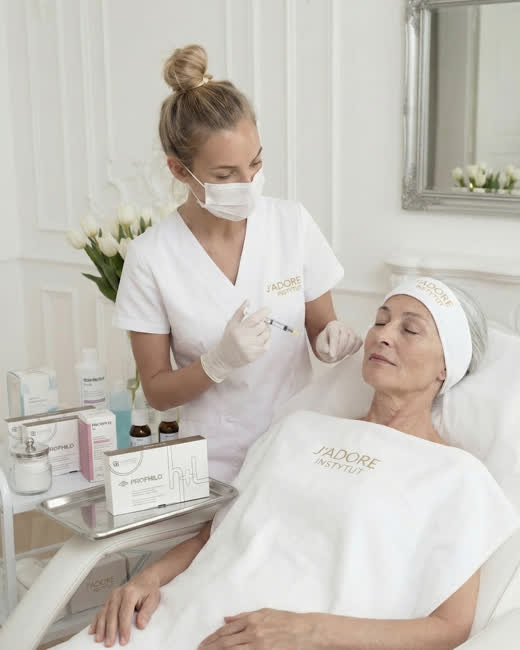
 A treatment room at J'adore
AESTHETIC MEDICINE
Grey, tired skin losing density and radiance; shadows and a "tired look" around the eyes; a décolletage and hands that give away your age; for some, thinning hair. In these cases, it's not about filling a wrinkle or adding volume — it's about regenerating skin quality from within.
PRP does exactly that: we draw a small amount of your own blood, spin it down to isolate plasma rich in platelets and growth factors, and inject it back into the skin — as a natural "repair" signal. The media sometimes call it a "vampire facial", but this isn't magic. It's a medical treatment, cumulative and spread over time. At J'adore Instytut, it's prepared and performed by a doctor or experienced cosmetologist. Below you'll find everything worth knowing before your first visit — including why one plasma variant costs more than another, and whether it "works straight away".
series of 3–4 sessions roughly monthly + maintenance
How it works
PRP stands for platelet-rich plasma. The material is your own blood — a small amount is drawn, as with a routine blood test. It's then spun in a centrifuge to separate out plasma rich in platelets and growth factors, which is injected back into the skin. The growth factors in the plasma act as a natural "repair" signal. They stimulate cells to produce collagen and elastin, improve microcirculation and support skin renewal.
The biggest difference from "bottled" biostimulators: PRP is 100% autologous — it comes from you, so there's practically no risk of an allergic reaction to a foreign substance. It's one of the most "natural" regenerative treatments, referred to in the media as a "vampire facial". PRP doesn't fill the skin and doesn't add volume — it triggers regeneration from within. Skin becomes denser, better oxygenated, firmer and more radiant. On the scalp, it supports weakened hair follicles.
The most common myth to dispel: "PRP will work instantly and permanently." It won't. This is a cumulative treatment spread over time — a full effect is built through a series, and results need maintenance.
Ideal for
Areas we treat with plasma: face, eye area, décolletage, hands and scalp. A specialist selects the plan, area and delivery method based on your indications — facial skin regeneration is guided differently from hair therapy.
Female and male focus areas
The most common goal is improving skin quality, radiance and firmness the natural way — regenerating the face, the delicate eye area, décolletage and hands. It works well for tired, dehydrated skin that's losing density, and as support after treatments that "damage" the skin barrier. This is classic PRP for women.
What we work with
Men have a strong, distinct indication: scalp and early hair loss, including male pattern baldness (AGA) — alongside regeneration of facial skin worn down by sun and shaving. This is so-called PRP for men.
What we work with
Fact: the plasma we use to revitalise the face is the same material we use to support hair follicles on the scalp — because it does the same thing everywhere: it delivers growth factors from your own blood wherever regeneration is needed. "Vampire facial" is just a media name for the same mechanism.
Safety
With PRP, results and safety depend on a few things worth asking about at any salon:
PRP is prepared and administered by a doctor or experienced cosmetologist — depending on the plasma form and protocol. This is a treatment involving blood collection and injection, so technique, sterility and correct centrifugation all matter.
Material quality depends on sterile, certified tubes and a proper centrifugation protocol. This is usually where the difference between "cheaper" and "well done" lies.
Although PRP is autologous, qualification is mandatory — blood and clotting parameters, blood-thinning medication and medical history all matter.
Red flag: suspiciously cheap PRP · A bargain price is the most common warning sign — it usually means a compromise on tube technology or procedure. You have the right to ask what plasma preparation system is used, who performs the treatment, and what the qualification process looks like. A good salon will answer without hesitation.
PRP's safety advantage: it's fully autologous — we work with your own blood, so there's practically no risk of an allergic reaction to a foreign substance. That doesn't remove the need for thorough qualification, though.
Contraindications
Some contraindications are permanent (or require individual assessment), and some are temporary — in that case, we simply postpone the treatment until the situation resolves. Since the material is your own blood, blood and clotting parameters carry particular weight.
From the specialist's chair
The most commonly forgotten issue: herpes. Clients think "I only have it on my lip, and PRP is on my forehead — that shouldn't matter." It does matter — an active virus is a risk, regardless of where it shows up. It's better to postpone by a few days.
This isn't a complete list — qualification is decided by a specialist at consultation, and for blood disorders, clotting disorders or anticoagulant medication, the final decision rests with a doctor.
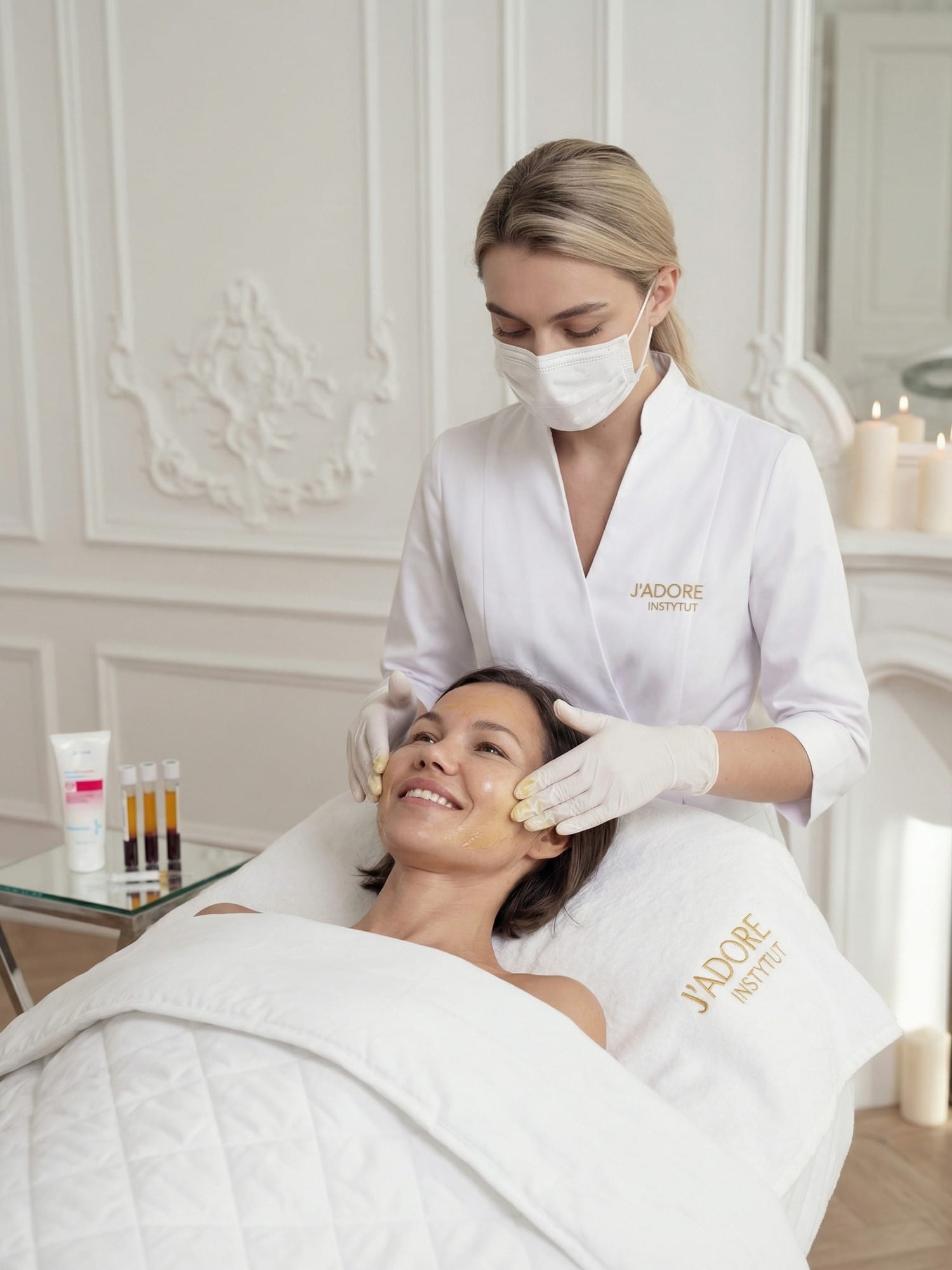
The visit
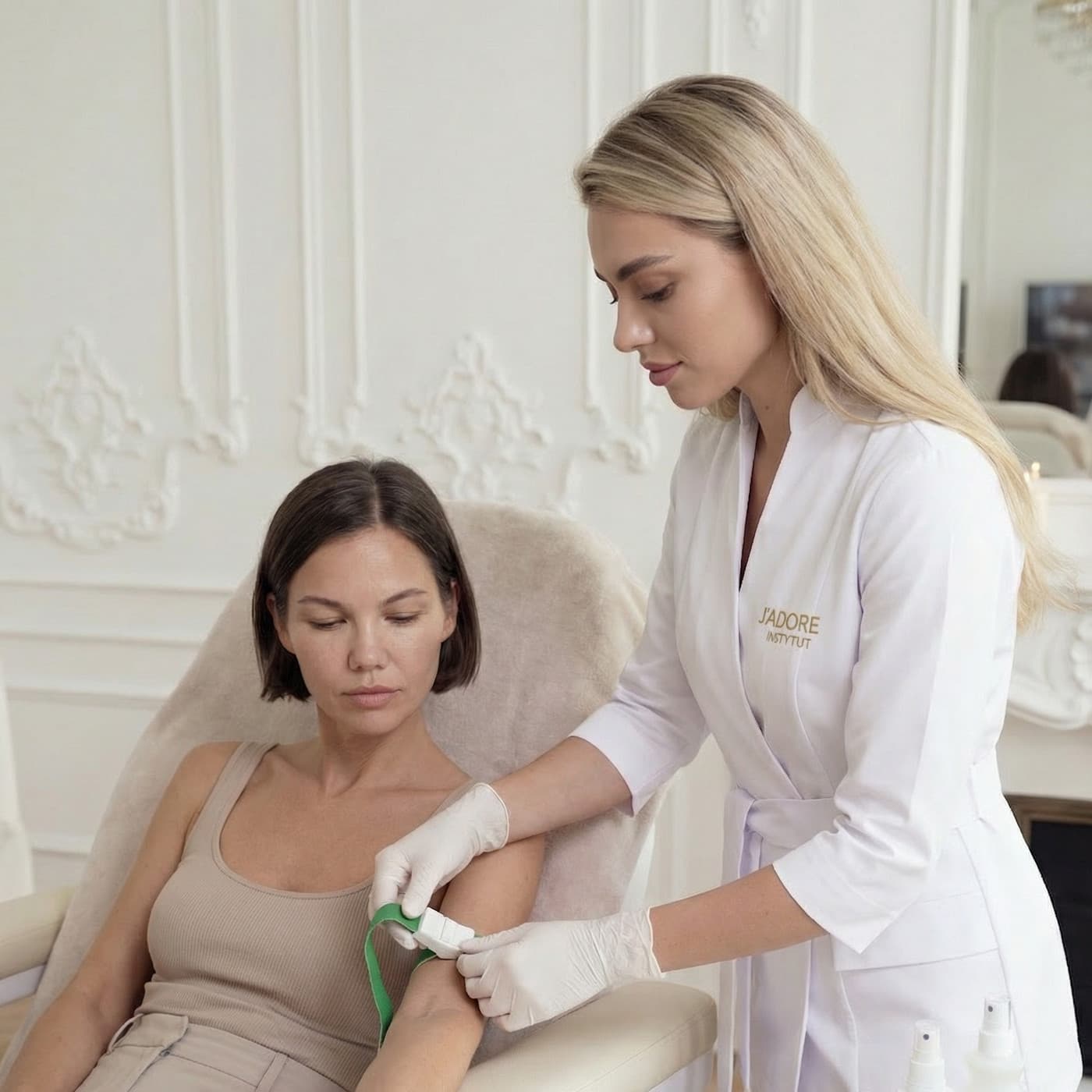
Consultation and qualification
a specialist assesses your indications, chooses the plasma form (classic PRP, activated PRP or PRF) and area, takes a medical history, and asks about blood-thinning medication and blood disorders.
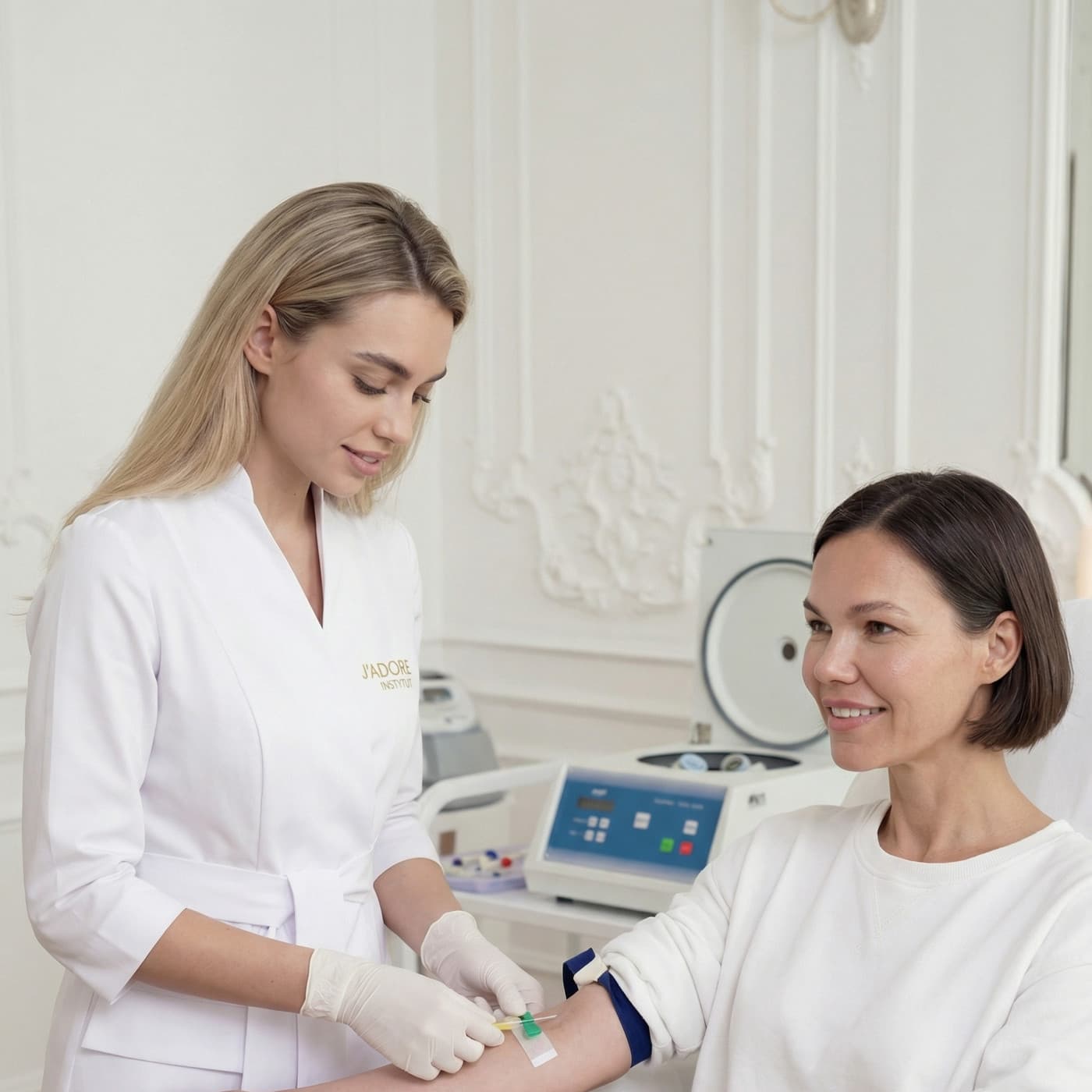
Blood draw
a small amount, like a routine test; quick and well-tolerated.
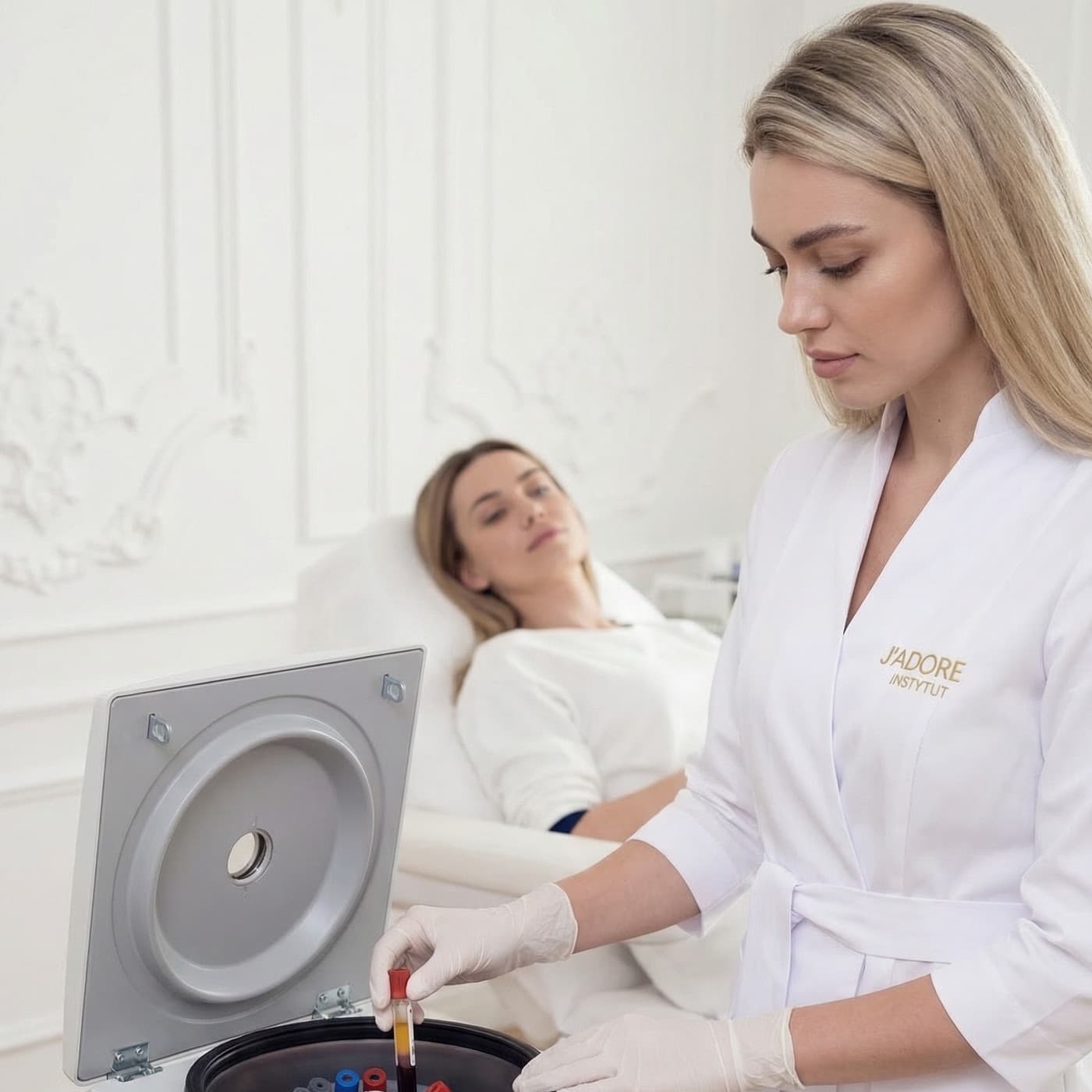
Centrifugation and preparation
the blood is centrifuged in special tubes to obtain platelet-rich plasma (for PRP, an activation step follows activation, while for PRF, preparation is without anticoagulant).
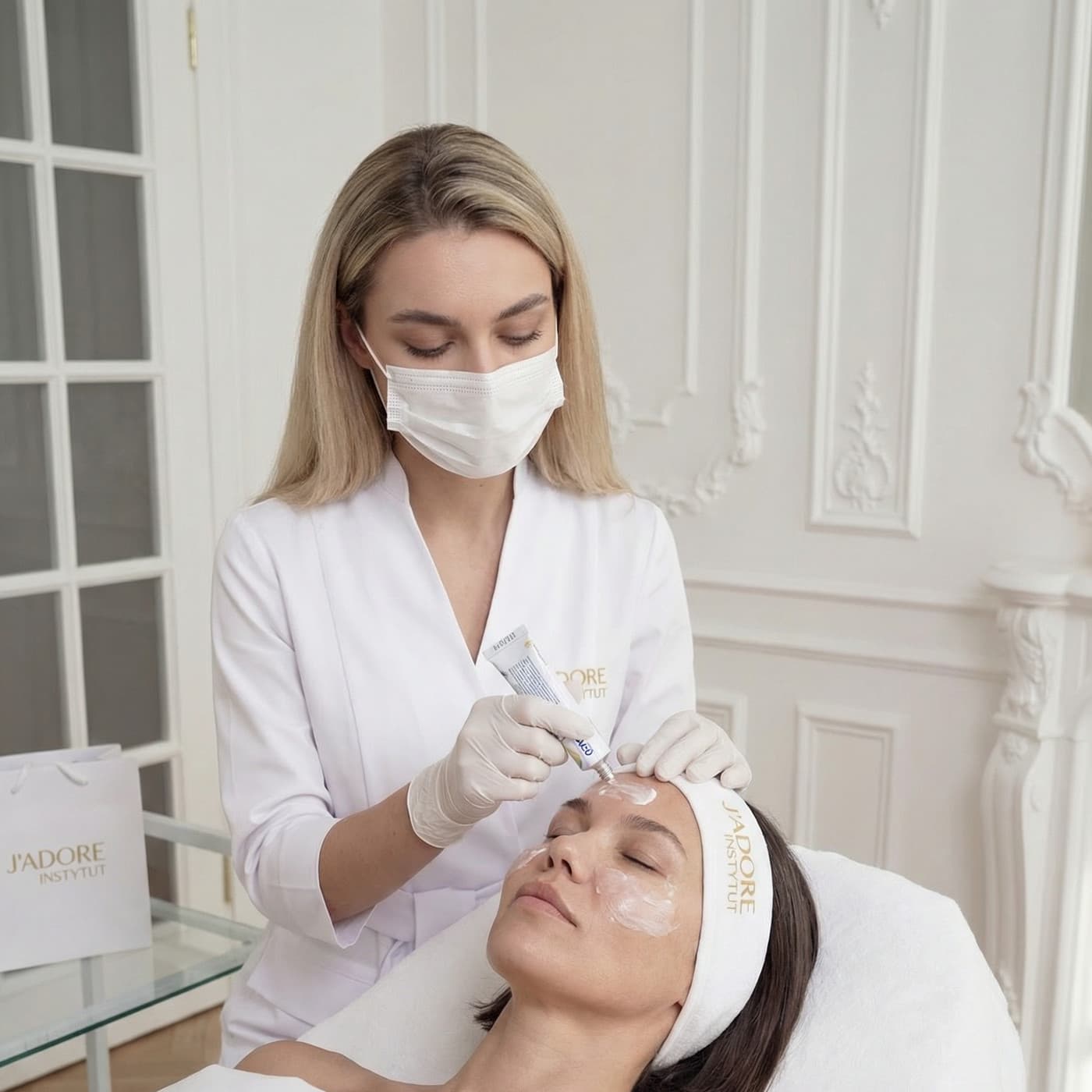
Application
targeted micro-injections, or application after microneedling (e.g. Dermapen — the so-called "vampire facial"); for hair, plasma is injected around the follicles on the scalp. The whole visit — including collection and preparation — takes roughly an hour.
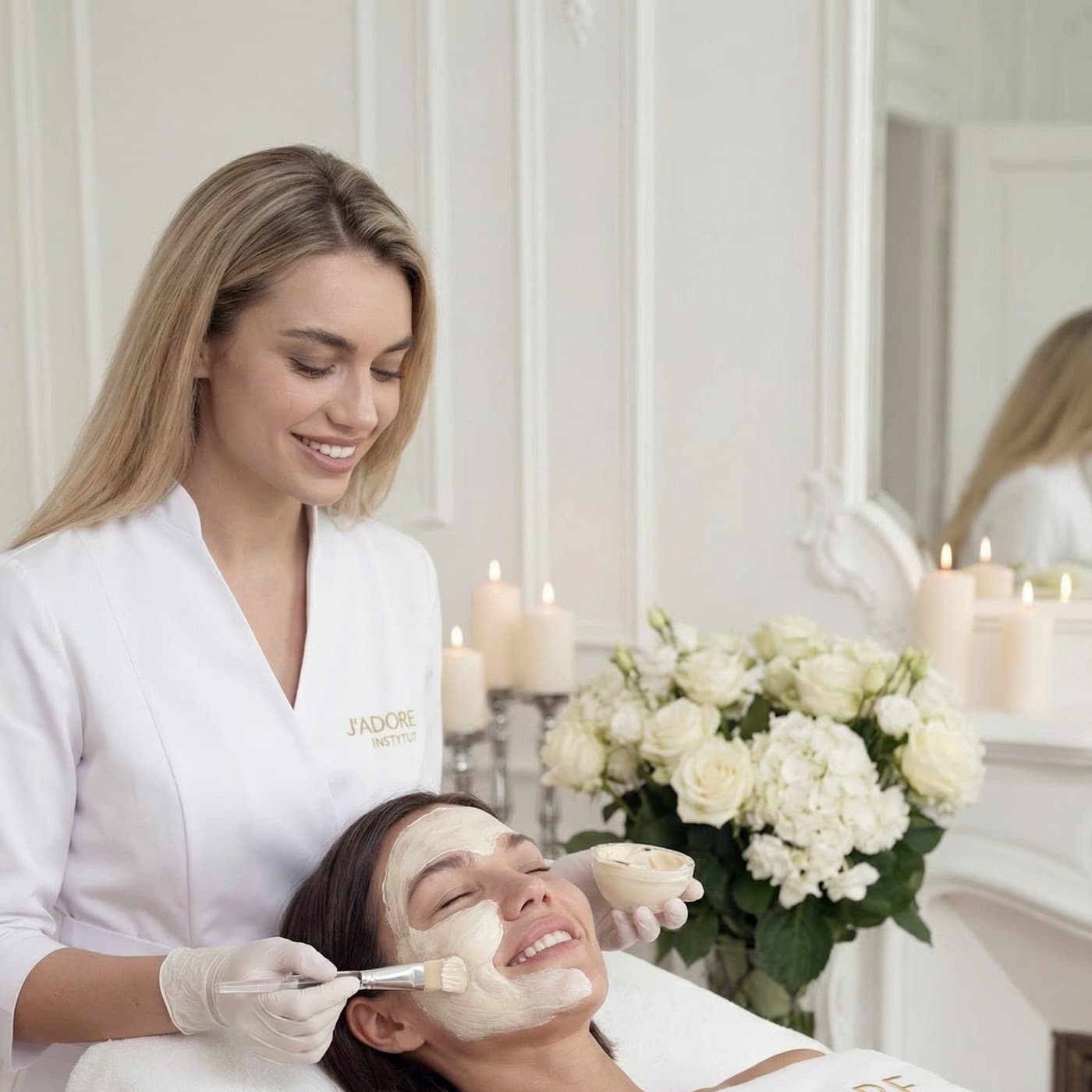
Guidance and departure
gentle skincare and SPF, and for the scalp, avoiding hair washing for a while; we schedule your next session in the series.
What to expect
Most importantly: PRP builds gradually. The "skin booster" effect — hydration, a fresher, more rested look — can be felt fairly quickly, but proper regeneration only comes together over a series.
Some people write after two days that "nothing has changed". This is completely normal — the PRP effect is not visible straight away. We assess regeneration after a few weeks, and the final result only after the full series, not after the first session.
Portfolio
A record of the work in our salons — the place where we publish treatment frames and, after photo sessions, results.
A record of results — in preparation. We publish photographs of our clients only with their consent.
For hair treatments the effect is slower — thickening and strengthening are usually assessed after several months, since it depends on the hair growth cycle. Results typically last several months to over a year, with recommended maintenance.
PRP and your lifestyle
The most common questions aren't about the treatment itself, but about what comes after: training, sauna, sun, makeup, washing your hair. There's one rule — for the first hours and days, protect regenerating skin and avoid worsening bruising.
Skip makeup for roughly a day, and if you've had a scalp treatment, don't wash your hair during that time. Keep your skincare gentle — no strong acids or retinol for a few days.
Intense training speeds up circulation and encourages bruising and swelling. Skip it for 24–48 hours after the treatment.
High temperatures dilate blood vessels and increase swelling, and a pool risks irritating fresh injection sites. Hold off for 1–2 days.
Skip sunbathing and sunbeds, especially in the first week. SPF 50+ is a must every day — it protects regenerating skin.
Alcohol dilates blood vessels and increases the risk of bruising — it's best avoided on the day of the treatment.
We work with your blood: come well-rested and well-hydrated. A rested, hydrated body means better material for preparing plasma. Don't massage the injection sites in the first 24 hours.
If you take blood-thinning medication, discuss any temporary pause before the treatment with your doctor only — it affects plasma quality and bruising risk.
PRP plasma
These three treatments are often confused because they all "regenerate and improve skin quality" — but they draw on different sources, which is exactly why they complement each other well:
growth factors from your own blood
doesn't fill wrinkles, doesn't add volume, doesn't relax expression lines, doesn't work instantly
regenerative signals from outside
the stimulus comes from outside the body — it's not your own material like PRP
ready-made ingredients from outside
doesn't stimulate your own blood and doesn't deliver autologous growth factors

Combine with
Wherever quality, regeneration and renewal matter, PRP pairs well with other treatments. A specialist decides the order and intervals (usually a few weeks) at consultation, but the general logic stays the same:
The simplest way to remember it is this: PRP = growth factors from your own blood, exosomes = signals from the outside, mesotherapy = ready-made ingredients. What PRP will not do: it will not fill a groove, will not lift a sagging oval and will not change facial expressions — such treatments are decided by a doctor during a consultation. It is a tool for regeneration and quality of the skin — often the foundation of a broader plan.
Plasma variants
Several forms of plasma fall under the term "PRP". All come from your own blood — what differs is mainly the preparation method (tubes, centrifugation parameters, possible activation) and the speed and pattern of growth factor release. You don't pick a variant "off the shelf" — a specialist selects it based on the area, the goal, and your history.
Plasma obtained after centrifuging blood, delivered by injection or after microneedling. The "standard", most widely used form — concentrated platelets and growth factors.
Dla kogoRevitalising the face, décolletage, hands, and supporting the scalp.
Classic plasma with an additional activation step that "triggers" the platelets and encourages growth factor release — a stronger, more concentrated stimulus. Requires the right equipment and protocol.
Dla kogoNoticeably tired skin, more intensive stimulation, hair therapy.
Prepared without an anticoagulant and with gentler centrifugation; a natural fibrin "matrix" forms, from which growth factors release more slowly over a longer period — a more gradual, "natural" effect.
Dla kogoWhen a gentle but long-acting stimulus is the goal.
Fact: Why do prices vary? Without quoting amounts — several factors contribute: tube technology and centrifugation parameters (closed systems, special tubes and activation protocols cost more than basic ones), the number of tubes / volume of material (a larger area or a stronger treatment = more material), the zone and method of administration (the face alone is different from the face + décolletage or extensive scalp) and the form of plasma (classic PRP, activated PRP and PRF differ in preparation). A more expensive option does not mean "better for everyone" — it means "different, for a different need". The right form and plan are chosen by a specialist.
Price list
Checking free hours…
From the magazine
Editorial pieces on how this treatment works in practice — what happens during the session, how to prepare, where the limits are and what the first days after look like.
See also
The result lastsseveral months to over a year after the seriesJ’adore Instytut
Medical information. Platelet-rich plasma (PRP) uses your own blood; it is a medical procedure, and blood collection and plasma injection are carried out by a qualified specialist — a doctor or experienced cosmetologist, depending on the plasma form and protocol. The text above is for information only and does not constitute medical advice. Indications, choice of plasma form, treatment series plan and contraindications are decided by a specialist during an individual consultation. For blood disorders, clotting disorders and anticoagulant medication, the decision rests with a doctor.
Home care
Cosmetics matched to what your skin needs after a treatment — so the clinic effect lasts longer.
 post-treatment regenerationCell Fusion CDermagenis pH Biome SerumView in the shop(opens in a new tab)
 skin radianceDiego Dalla PalmaCELL-DETOXIUM Revitalizing Tonic 250 mlView in the shop(opens in a new tab)
 sun protectionDermaQuestSunArmor SPF50 30 mlView in the shop(opens in a new tab)
 post-treatment regenerationMedMelanoSkinbiotic Elixir Probiotic Repair Serum 50 mlView in the shop(opens in a new tab)
 skin radianceSesdermaC-VIT RADIANCE Illuminating Cream 50 mlView in the shop(opens in a new tab)
 sun protectionSkeyndorProtective cream SPF 50+ – Age Photo DefenseView in the shop(opens in a new tab)
 post-treatment regenerationVagheggiEmozioni Plus — Anti-Stress Face Mask 75mlView in the shop(opens in a new tab)
 skin radianceMesoesteticMelatonin AmpoulesView in the shop(opens in a new tab)