Dry vs dehydrated — a quick reminder of the difference
These two are often confused, but they have different causes and different solutions. Dry skin is a permanent skin type with low sebum production — it affects you constantly, regardless of the season. Dehydrated skin is a temporary condition — it can affect any skin type when moisture levels drop.
- Dry — low sebum, constant tightness, affects only this skin type
- Dehydrated — water deficiency, a temporary state, can appear on any skin type
- Dry skin can be dehydrated at the same time — in that case, both issues need addressing
Signs of dry skin
Dry skin gives fairly clear signals — it helps to recognise them so you don't confuse them with other issues.
- Constant tightness, even after moisturising (or shortly after)
- Flaking — especially around the nose, brows and forehead
- Wrinkles more visible than in others of the same age — thin, dry skin can age faster
- No natural radiance — skin looks dull and flat
- Quick irritation from wind, cold or air conditioning
- Makeup "settles" into fine lines
Treatments for dry skin at J'ADORE
Dry skin responds well to treatments focused on multi-level hydration and rebuilding the lipid barrier. At J'ADORE, we always tailor the protocol to you — below are the options we recommend most often.
HydraFacial — multi-level hydration
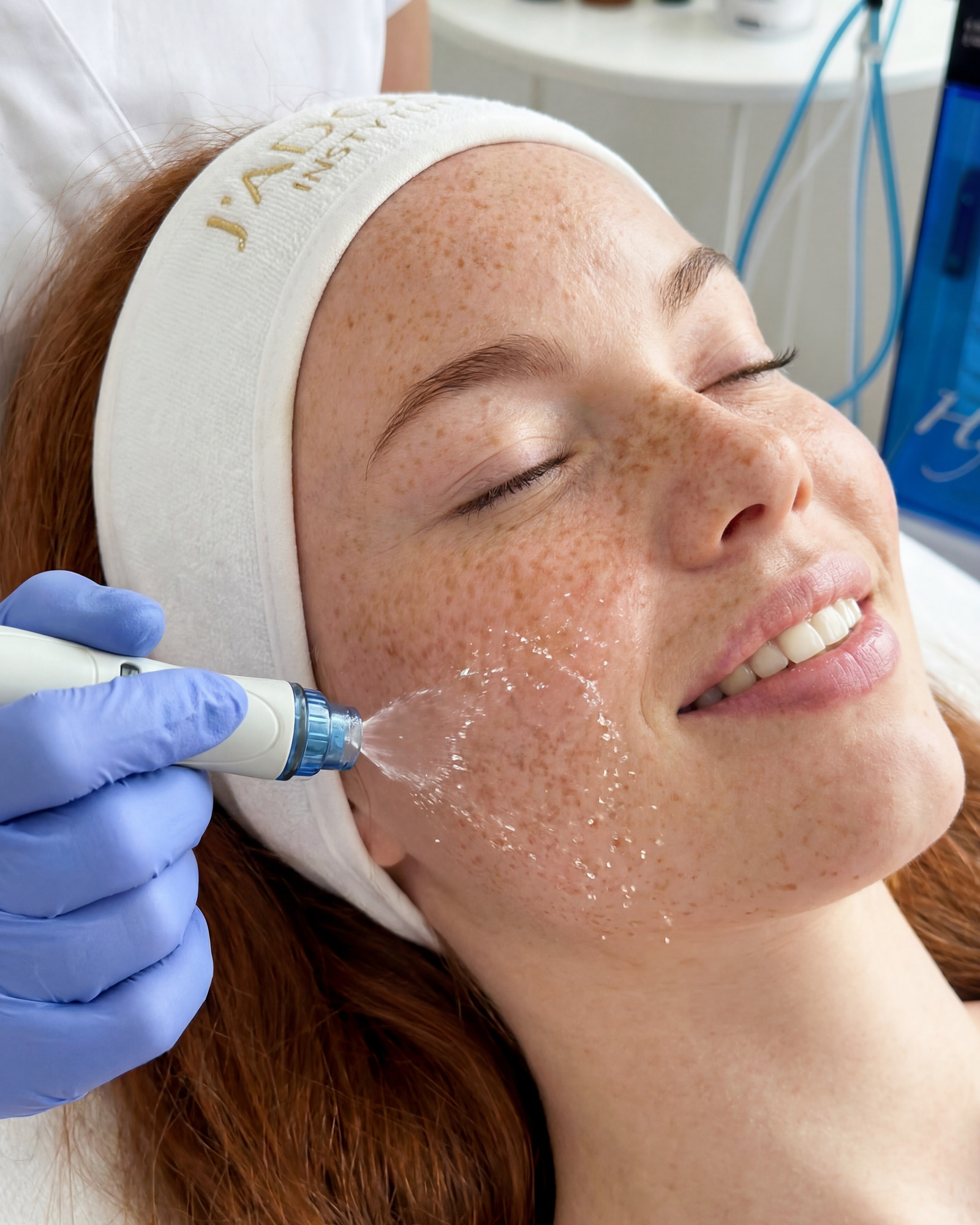
HydraFacial is a multi-step treatment — each step has a specific job. The Hydrate step, using ACTIV-4 and Antiox+ serum, delivers hyaluronic acid and peptides. The Fuse step, with Growth Factor serum, provides the most hydrating finish.
OxyGeneo Hydrate / Revive
The Hydrate capsule (OxyGeneo) contains hyaluronic acid, aloe vera and collagen. It combines oxybrasion with an oxygenating effect — afterwards, skin often looks as if it's "breathing".
EstGen — barrier repair and hydration
The colostrum and growth factors used in the EstGen treatment rebuild the dermis's lipid barrier. This is key for dry skin — a well-functioning barrier keeps water in the epidermis and protects against transepidermal water loss (TEWL).
Profhilo — hydration and density from within
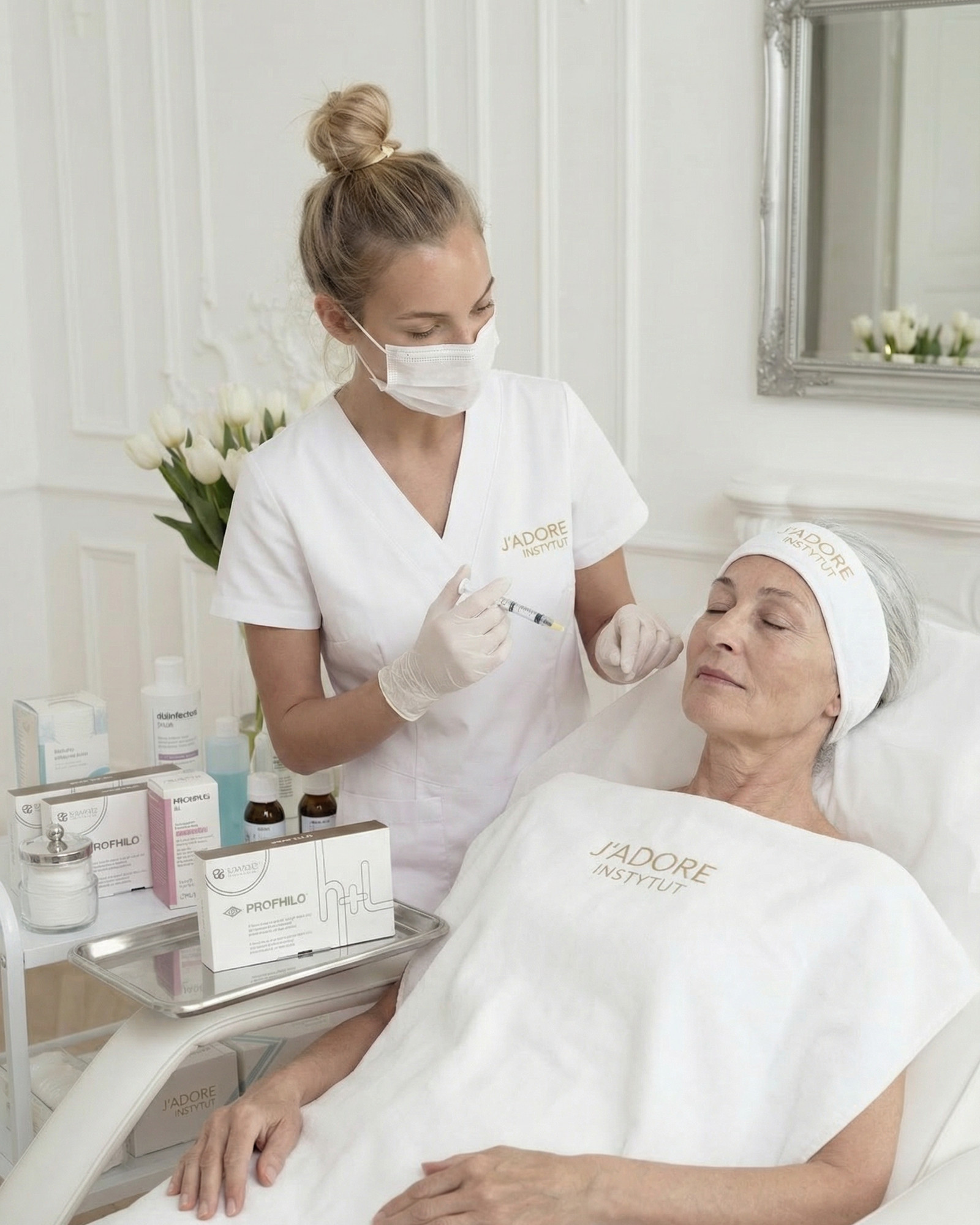
Profhilo is a high-concentration hyaluronic acid product that reorganises the skin's extracellular matrix. For dry skin, this means hydration "from within" and visibly denser skin — results can last several months.
Hydrating mesotherapy
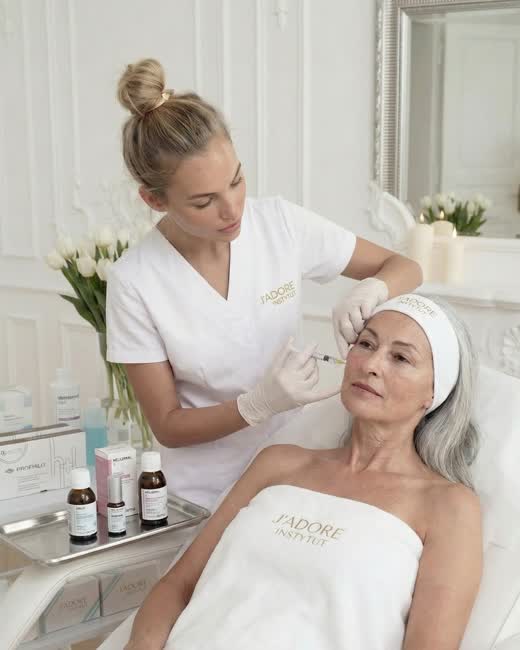
Injectable cocktails with a high concentration of hyaluronic acid and ceramides (including NCTF 135 HA, Dives Med Hydra) deliver active ingredients directly into the dermis. A series of several sessions can noticeably improve hydration levels.
Home care — the Humectant + Emollient + Occlusive rule
Effective care for dry skin relies on three layers — each with a different job.
Common care mistakes with dry skin
A few products and habits that can make dryness worse — worth cutting out.
- Bar soap — pH 9–10 against skin's pH of 4.5–5.5 damages the protective barrier
- Hyaluronic acid without an occlusive in dry air — HA can draw water from deeper skin layers
- AHA acids without proper skin preparation — dry skin irritates more easily; start with low concentrations
- Denatured alcohol in product formulas — strips lipids from the skin barrier
- Grainy scrubs — micro-trauma to dry, often sensitive skin
Winter care for dry skin
Winter is the toughest season for dry skin — several factors overlap at once.
- Dry air from heating increases TEWL (transepidermal water loss)
- Cold outdoor air causes vessels to constrict and reduces microcirculation
- Moving from cold to warm environments increases skin reactivity