Act at the right time — not too early, not too late.
7 min read4:28 of audio
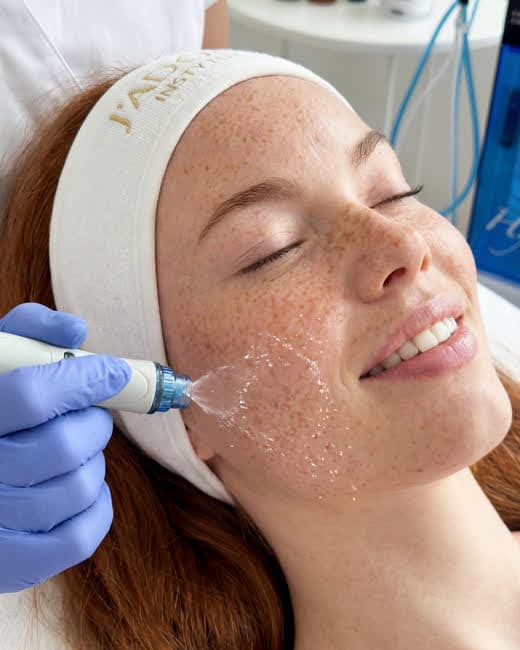
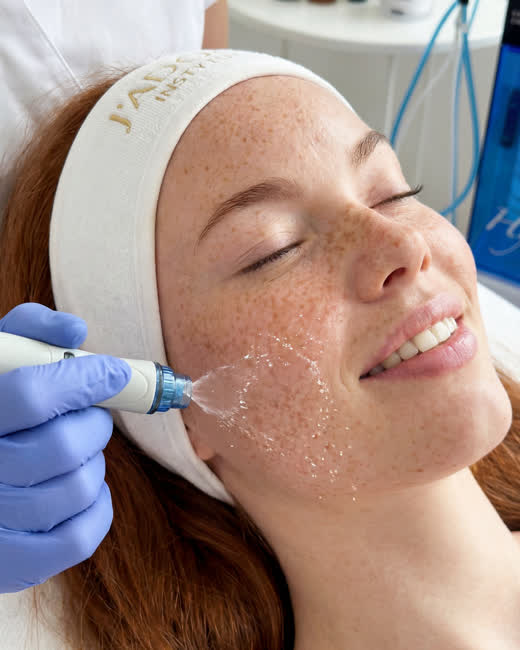
Illustrative photo. It shows an example of how the treatment is performed.
You are listening0:00 of 4:28
Listen to the article
read by Algenib · 4:28
0:004:28
7 min readread by Algenib1 June 2026
Every surgical scar goes through predictable stages of maturation. Understanding this process lets you act at the right moment. Intervening too early can intensify the tissue's reaction. Intervening too late means working on a scar that has already "set", where results are more limited.
01
Stages of scar healing
A surgical scar goes through four stages. Each one follows its own rules — both in terms of what happens in the tissue and what can be done.
Inflammatory phase (0–5 days) — the wound cleanses itself, with leukocyte activity. We do nothing at this stage — the body manages healing on its own.
Proliferative phase (5 days – 3 months) — fibroblasts build collagen, and the scar is red and raised. Silicone and gentle massage can be used once the wound has closed.
Remodelling phase (3–18 months) — collagen reorganises, and the scar gradually fades and softens. This is where in-salon treatments give the best results.
Mature scar (over 18 months) — the tissue has "set". Treatments are still possible, but results are often more modest than during the active phase.
02
Types of surgical scars
Not every surgical scar is the same — the type of scar determines which methods make sense.
Normotrophic scar — flat, pale, often slightly indented. The easiest to improve aesthetically.
Atrophic scar — sunken, resembling an indentation left by sutures or an ulcer. Responds well to fractional microneedling RF and biostimulation.
Hypertrophic scar — raised, firm, red, but confined within the original wound edges. Silicone, massage and laser often bring clear improvement.
Keloid — a raised growth extending beyond the original wound edges, which can keep growing. Requires a dermatology consultation and specialist treatment before any aesthetic procedures.
03
Treatments for surgical scars at J'ADORE
04
Home scar care — the foundation of every programme
In-salon treatments work better when the scar is cared for consistently at home. Three methods have the strongest evidence in the literature and are worth introducing as early as possible.
05
When not to start — minimum waiting times
Intervening too early can trigger an excessive reaction in scar tissue. Below are approximate minimum waiting times before in-salon treatments on a fresh surgical scar.
Fractional microneedling RF and needle biostimulation: no earlier than 3–6 months after surgery
Fractional laser: no earlier than 6–12 months after surgery
Caesarean section scar: no earlier than 12 months after delivery
Keloid (scar extending beyond the wound edges): dermatology consultation required before treatment