The question about peeling comes up in almost every consultation before a chemical peel. Some clients worry they won't be able to leave the house for a week afterwards. Others actually hope for dramatic flaking as proof the treatment worked. Both attitudes come from myths that have built up around chemical peels — and it's worth taking them apart.
Skin is an organ that renews itself constantly. Dead epidermal cells shed naturally, long before anyone reaches for an acid. A chemical peel speeds up and organises this process — but its effectiveness isn't measured by how much skin flakes off. Before you book a session, it helps to know what actually happens, what counts as a normal course of events, and what's simply a myth.
Myth 1: Skin always peels after a chemical peel
This is probably the most common myth, and we understand where it comes from. The word "peel" suggests peeling, and the mechanism behind acids sounds like a recipe for dramatic flaking. In practice it varies a great deal, depending on the type of peel.
With lighter acid treatments, such as lactipeel or salipeel, the skin's reaction can be completely invisible. Lactipeel, based on lactic acid, works gently — it hydrates, evens out texture and improves skin tone. For many people, skin simply looks brighter and smoother afterwards. No visible flaking, no intense redness. That doesn't mean nothing happened. Epidermal renewal takes place at cellular level, out of sight.
Salipeel, with salicylic acid, tends to be a little more noticeable on oily skin prone to blackheads. But even here, flaking — if it happens at all — is usually mild, often felt rather than seen. Skin may simply feel slightly rough for a day or two.
More intense flaking appears with deeper protocols. Pumpkin peel, mandelac and biorepeel work differently and can produce a more visible reaction, especially if skin hasn't been prepared with acids beforehand. Even here, though, it's not a rule. A lot depends on skin condition, thickness, hydration levels, and how closely you follow aftercare instructions.
Myth 2: Flaking means the peel worked
This belief is deeply rooted and intuitively understandable — you can see a physical effect, so something must have happened. But how effective a peel is and how visible the flaking is are two completely separate things.
Acids mainly work on the bonds between epidermal cells, speeding up their natural shedding. With lighter protocols, this happens unnoticed — cells leave one by one, just as they do every day, only faster. The result shows up as more even skin tone, less visible pores and better hydration — not as sheets of skin coming away.
Some people see clear flaking after a stronger peel, and their skin genuinely improves. But the same improvement can happen without visible flaking, if skin has been regularly prepped with acids at home or responds well to the protocol. No flaking doesn't mean the treatment failed — it's often simply a sign that skin is regenerating well.
Myth 3: The more I flake, the better the result
This myth isn't just wrong — it can cause real problems. Intense, uncontrolled flaking doesn't translate into a better result. In fact, it can be a sign that skin has reacted too strongly to the protocol used.
A peel is meant to work precisely and under control. The goal is to stimulate regeneration, even out texture and boost collagen production. An overly strong inflammatory reaction, excessive flaking or cracked skin are signs that skin was overloaded — not that it's responding well. After a reaction like this, recovery takes longer, skin is more prone to post-inflammatory hyperpigmentation (PIH), and the final result can be worse than with a gentler approach.
A good peel result is usually visible 10–14 days after the treatment, and it has nothing to do with how much skin sheds during recovery. Even skin tone, better texture, less visible pores — these are the real markers of effectiveness.
Myth 4: I can peel off dead skin myself
Absolutely not. This is one of those myths that can genuinely harm skin if followed consistently.
During recovery after a peel, the epidermis sheds at its own pace. Underneath, new, younger skin is forming — it isn't ready for contact with the outside world yet. It's thinner, more sensitive and lacks some of its natural protection. Mechanically removing flaking skin — whether with fingers or a scraper — interrupts this process, exposes immature layers and significantly increases the risk of hyperpigmentation.
Post-inflammatory hyperpigmentation (PIH) is one of the most common negative side effects after a peel — and most cases come from disrupting the skin barrier during recovery. Touching, scratching, rubbing with a towel, or trying to "speed up" flaking with a home scrub is a straightforward path to a worse result than before the treatment.
Flaking needs to happen on its own. Skin knows its own pace. Our role is not to interfere: keep it hydrated, don't scrub it, avoid sun exposure, and skip makeup on areas that haven't fully healed yet.
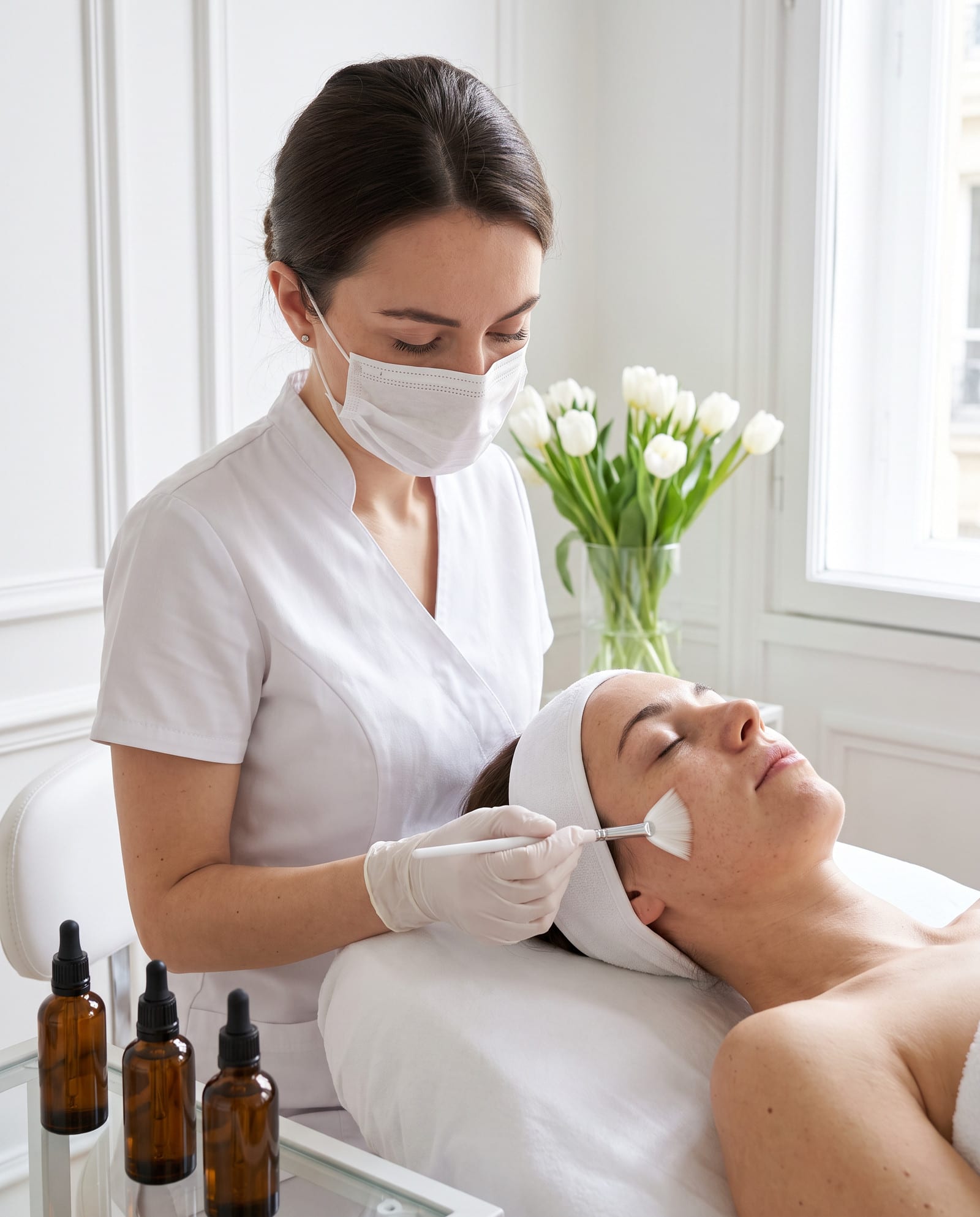
Myth 5: A peel will damage sensitive skin
This belief leads many people with reactive, vascular or redness-prone skin to avoid chemical peels altogether. That's a shame, because some available protocols were designed specifically for sensitive skin.
Lactipeel, based on lactic acid, is one of the gentler options available in a salon setting. Lactic acid has a large molecule, so it doesn't penetrate deeply and rarely triggers an intense reaction. It mainly works on the surface of the epidermis, hydrating, evening out and brightening skin without causing inflammation. Many people with sensitive skin get great results from it, with no irritation at all.
Mandelac, based on mandelic acid, is another option for more delicate skin — mandelic acid works slowly and evenly, and its effect on vascular and sensitive skin is generally gentler than with stronger acids. Biorepeel, on the other hand, is a multi-component protocol that combines several acids with nourishing and soothing ingredients — even on sensitive skin, it tends to produce a well-tolerated reaction.
The key isn't avoiding peels altogether — it's choosing the right protocol for your skin's condition. A consultation before the treatment isn't a formality. It's the moment when a specialist can assess your current skin condition and select the strength and type of acids to get the best possible result with the mildest possible reaction.
When flaking is normal — and what to expect
With deeper protocols — a stronger biorepeel, pumpkin peel, or mandelac on thicker skin or on a first encounter with higher concentrations — flaking can appear, and it's completely normal. It usually starts on the second or third day after the treatment and lasts anywhere from a few days to a week.
Skin may feel slightly tight, rough to the touch in places, and with a more intense protocol you may see patches where the epidermis comes away in sheets. It looks dramatic in social media photos, but in practice, everyday life rarely calls for total isolation. Many people return to normal activities the next day — with sun protection and without heavy makeup.
What helps during this time? Hydration, above all. A gentle cream without irritants, retinoids or strong active ingredients. Good sun protection — not because skin is more sun-sensitive than usual, but because the new epidermis hasn't fully developed its protective function yet. Avoid saunas, swimming pools and intense physical activity for the first few days after a stronger treatment.
How to choose the right peel for your skin
There's no single answer here — it depends. It depends on your goal, your skin condition, what you want to achieve, and how much recovery time you can spare.
If you want results with minimal downtime and can book regular sessions, light enzymatic and acid peels done as a series give very good results with virtually zero downtime. Lactipeel and salipeel are protocols you can walk out of the salon with brighter skin and get straight back to your day.
If you have noticeable hyperpigmentation or acne scars, or want stronger stimulation of skin renewal, mandelac or biorepeel may be a better choice. It's worth planning a few quiet days after your first session, until you know how your skin reacts.
The most important rule: don't compare your reaction to anyone else's. If a friend flaked for five days after the same treatment, that doesn't mean you will too — and the reverse is also true. No flaking doesn't mean "nothing happened". Skin is individual, and its reaction to acids depends on dozens of factors: hydration, epidermal thickness, previous skincare, diet, stress and even the season.
If you're unsure, start with a consultation. At J'ADORE INSTYTUT, we discuss your skin condition, expectations and any contraindications before every treatment. This lets us choose the protocol precisely and avoid unpleasant surprises. Flaking after a peel — if it happens — should be a planned stage of the process, not an unpleasant surprise.