Why you look like a character from The Walking Dead
It's not about genetics, age, or "just how you look". It's about 5 things that have been doing something to your skin for the last 4 months — things you have no idea about. Each one is reversible. Together — they create the "grey guy in March" effect.
Reason 1: No UV for 4 months
From November to March, your skin barely sees any UV rays. The result? Melanin production drops to a minimum. Melanin isn't just "a tan" — it's a natural pigment that gives skin a warm, healthy tone.
No melanin means paleness plus a grey undertone. Skin looks flat, without depth — as if someone turned the saturation down to zero.
Want colour? Use self-tanner. Seriously. It's 2026 — self-tanners don't smell and won't turn you into an orange gnome.
Reason 2: Central heating = the Sahara in your flat
Ideal air humidity for skin: 40–60%. Humidity in an average flat with central heating in March: 15–25%. That's lower than the Sahara (25% on average).
Add the fact that most guys don't use a humidifier and skip moisturiser ("because that's for women"), and you have a recipe for a face like it's been through a tumble dryer.
Reason 3: Less movement = poorer microcirculation
In winter, you wake up in the dark and get home in the dark. Statistically, people in Poland move 30–40% less in winter than in summer.
Less physical activity means slower blood circulation, which means less oxygen and fewer nutrients reach the skin. Microcirculation in the dermis is responsible for that healthy, slightly pink tone. Without it — greyness.
Reason 4: The winter diet
From December to March, you eat differently. More comfort food, fewer raw vegetables and fruit. In Poland, fresh fruit and vegetable consumption drops by 25–30% in winter (GUS data).
The consequence: fewer antioxidants (vitamin C, E, polyphenols), fewer carotenoids (beta-carotene from carrots, lycopene from tomatoes). These are what give skin a warm undertone.
Reason 5: Winter shaving
For 4 months, you've been shaving in a rush every morning, often dry or with a single swipe of gel. Skin irritated by morning shaving in cold conditions leads to chronic micro-inflammation. The lipid barrier gets damaged. Skin reacts with redness, then turns grey — because it's stuck in constant repair mode.
What to do — the "I don't have time for nonsense" version
Four things. Together, they'll take you 3 minutes in the morning and 2 minutes in the evening.
1. Vitamin C cream (morning, under SPF)
Vitamin C (L-ascorbic acid, 10–15%) is the most thoroughly researched brightening ingredient. It inhibits tyrosinase (the enzyme that produces melanin in dark spots), neutralises free radicals and stimulates collagen synthesis. Results are often visible after 2–3 weeks of regular use.
2. Two litres of water a day
Yes, I know. Everyone says this. Everyone ignores it. But a study in Clinical, Cosmetic and Investigational Dermatology (2015) found that increasing daily water intake by 2 litres over 30 days improved skin hydration and density, measured by ultrasound.
3. 15 minutes of movement outdoors
I'm not talking about a marathon. 15 minutes of brisk walking outside. Every day. Microcirculation kicks in, oxygen reaches your skin, colour comes back. Bonus: endorphins lift your mood, and a better mood means less cortisol — which means better skin.
4. Alcohol-free aftershave balm with allantoin
Throw out that "Old Spice that stings nicely". Get a balm with the right ingredients and apply it straight after shaving, on damp skin. 30 seconds — a real game changer.
- Allantoin — soothes and regenerates
- Panthenol — rebuilds the barrier
- No alcohol denat. — check the ingredients list: if "alcohol denat." is in the first five, put the product back
What the salon can do — if you want faster results
Three treatments that actually make sense in March. No spin, no "you need a series of 12 sessions".
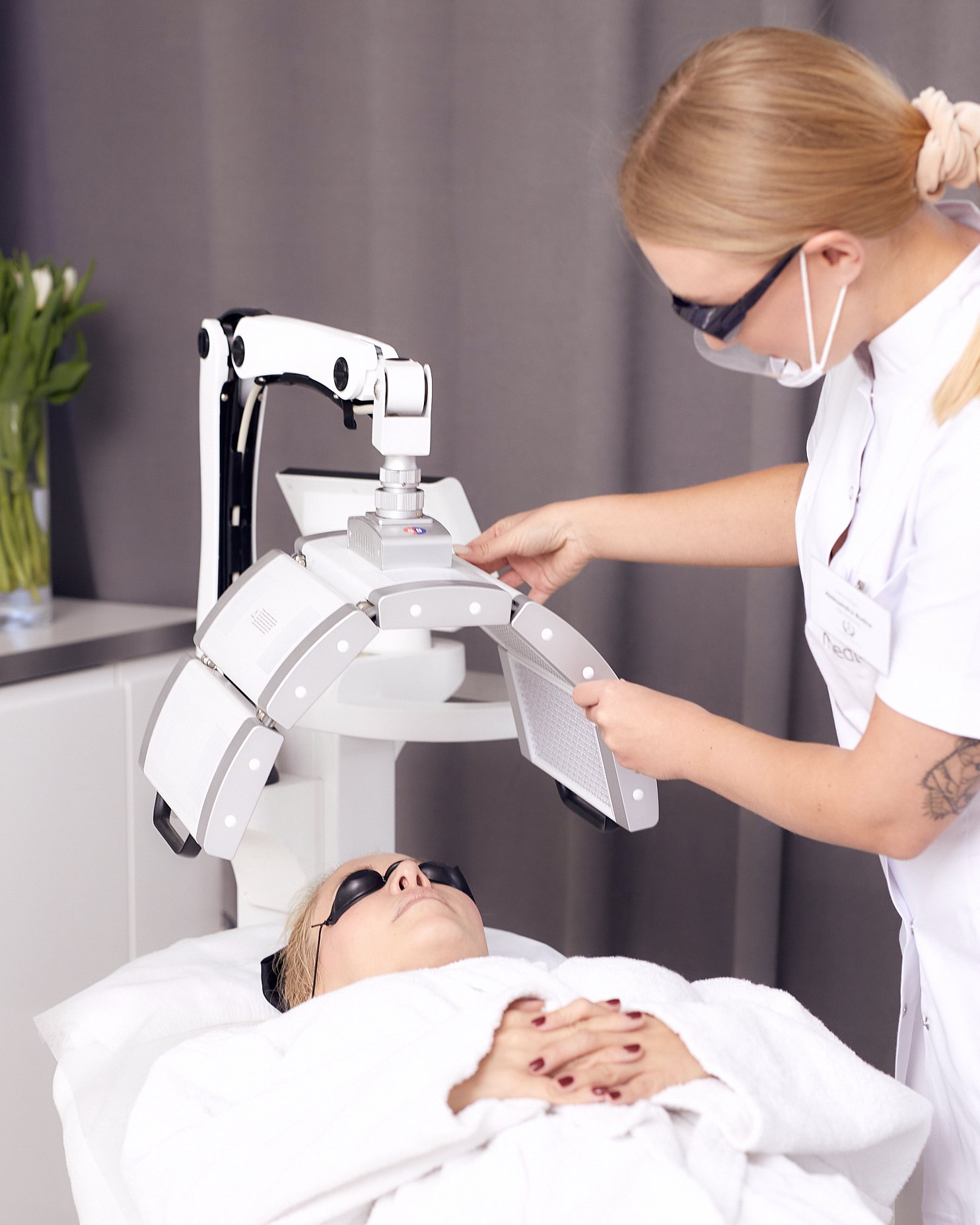
LED Red Light therapy
Red light penetrates the dermis and stimulates mitochondria — the cells' "power plants". The result: more ATP (cellular energy), better collagen synthesis and stimulated microcirculation.
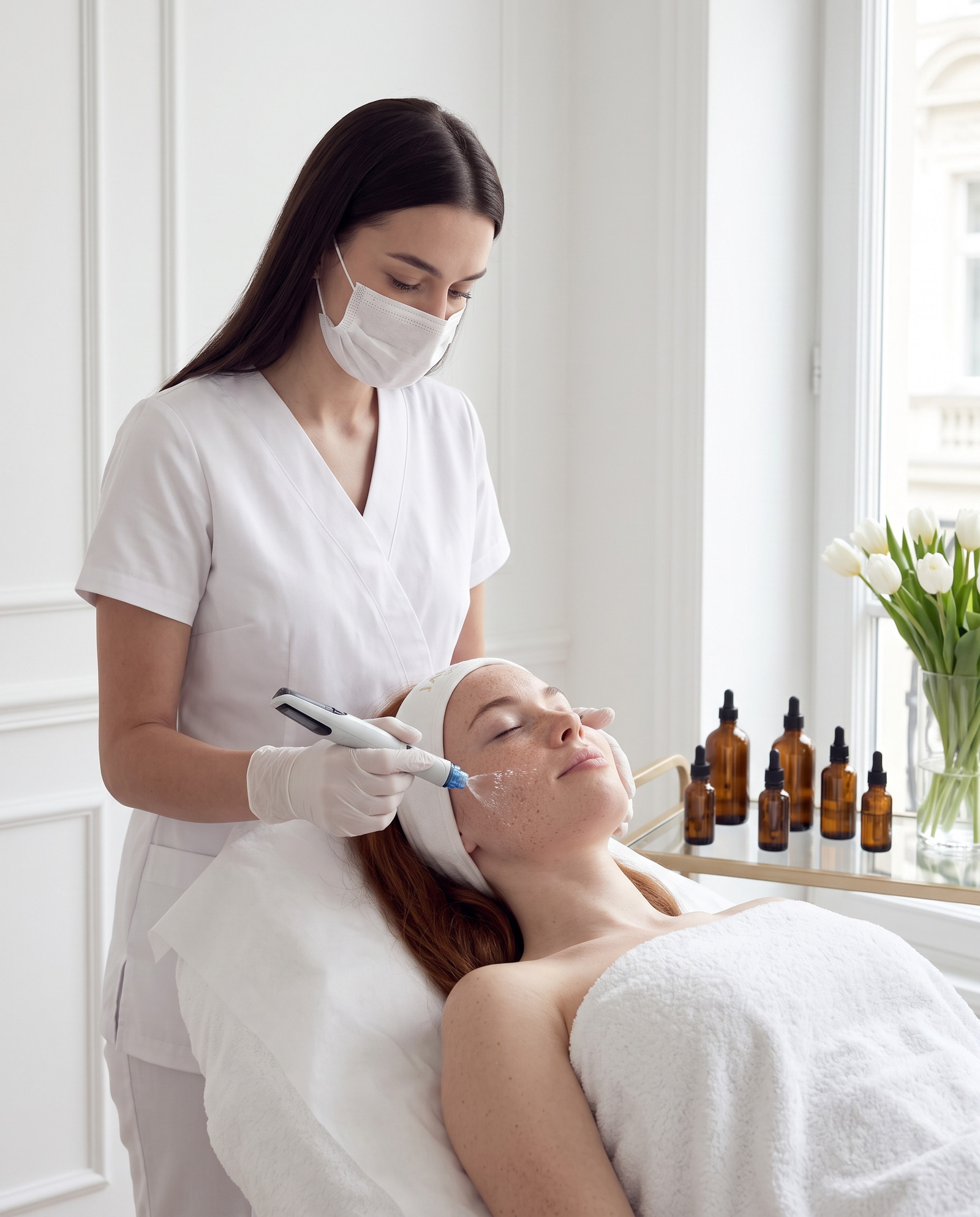
Hydrogen cleansing
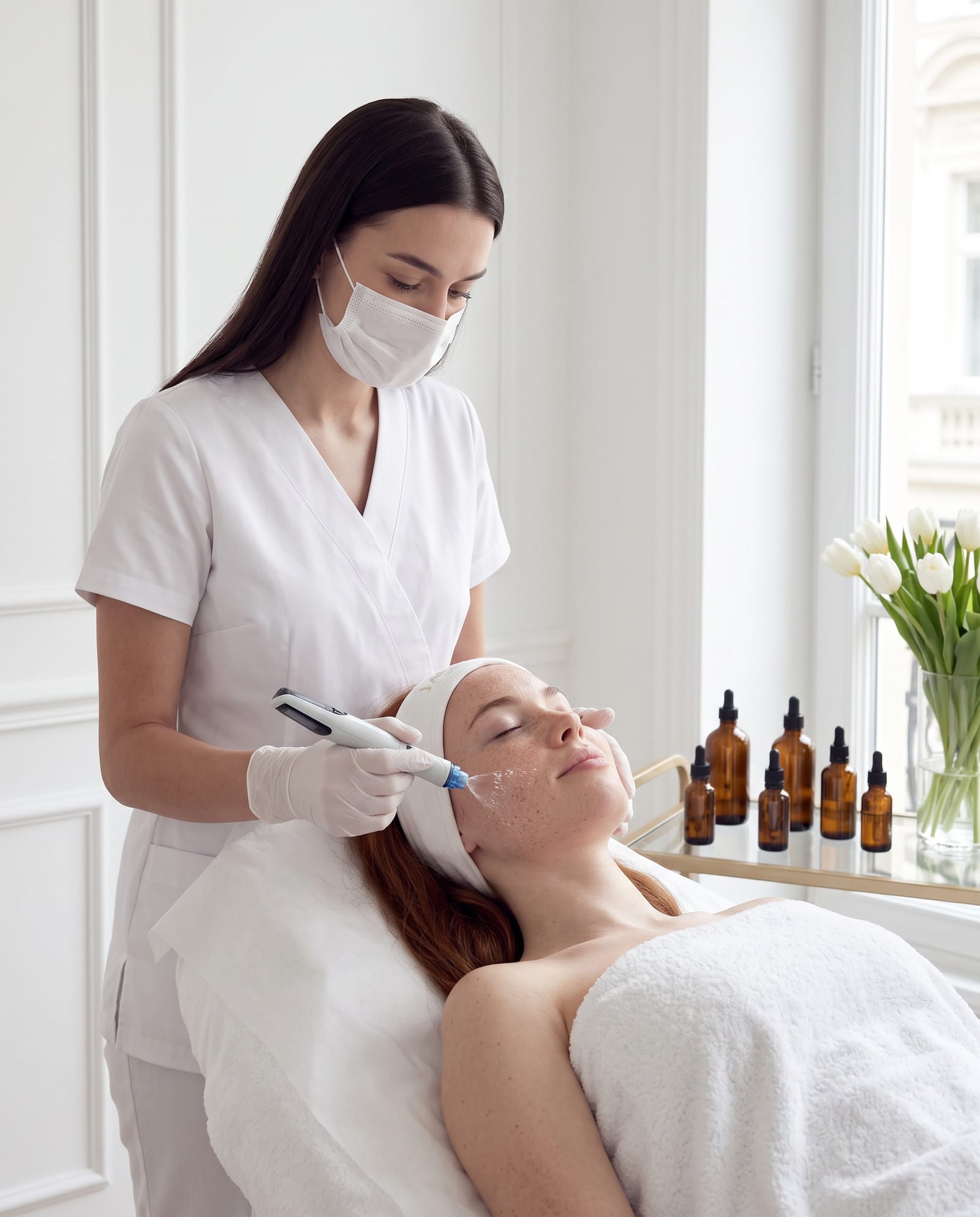
A gentle version of facial cleansing — instead of manual extraction, a stream of water with active ingredients (hyaluronic acid, niacinamide, vitamins). It clears pores, hydrates and brightens.
Hydrating mesotherapy
A cocktail of vitamins, amino acids and hyaluronic acid delivered directly under the skin. Sounds intense? It's milder than you'd think — fine needles, numbing cream, minimal discomfort.
The result: skin hydrated from within, improved tone, less greyness. One session often makes a difference. A series is a real game changer.
Summary — what you can do
Two weeks of a home routine plus one salon treatment equals a difference you can see with the naked eye. Not in a month. In two weeks.