Stages of scar healing
A surgical scar isn't "ready" the moment the wound closes. It goes through several stages, each governed by different rules.
- Inflammatory phase (0–5 days) — the wound is cleaned, and leukocytes get to work. During this time we do nothing beyond standard wound care.
- Proliferative phase (5 days – 3 months) — fibroblasts build collagen; the scar is red and raised. Silicones and gentle massage can be used once the wound has closed.
- Remodelling phase (3–18 months) — collagen reorganises, and the scar fades and softens. This is when treatments deliver the best results.
- Mature scar (after 18 months) — the tissue has "set". Treatment results are still possible, but usually smaller than in the earlier phase.
Types of surgical scars
Not every scar calls for the same approach. Scar type determines which method we choose.
- Normotrophic scar — flat, pale, often below the level of surrounding skin. The easiest to improve.
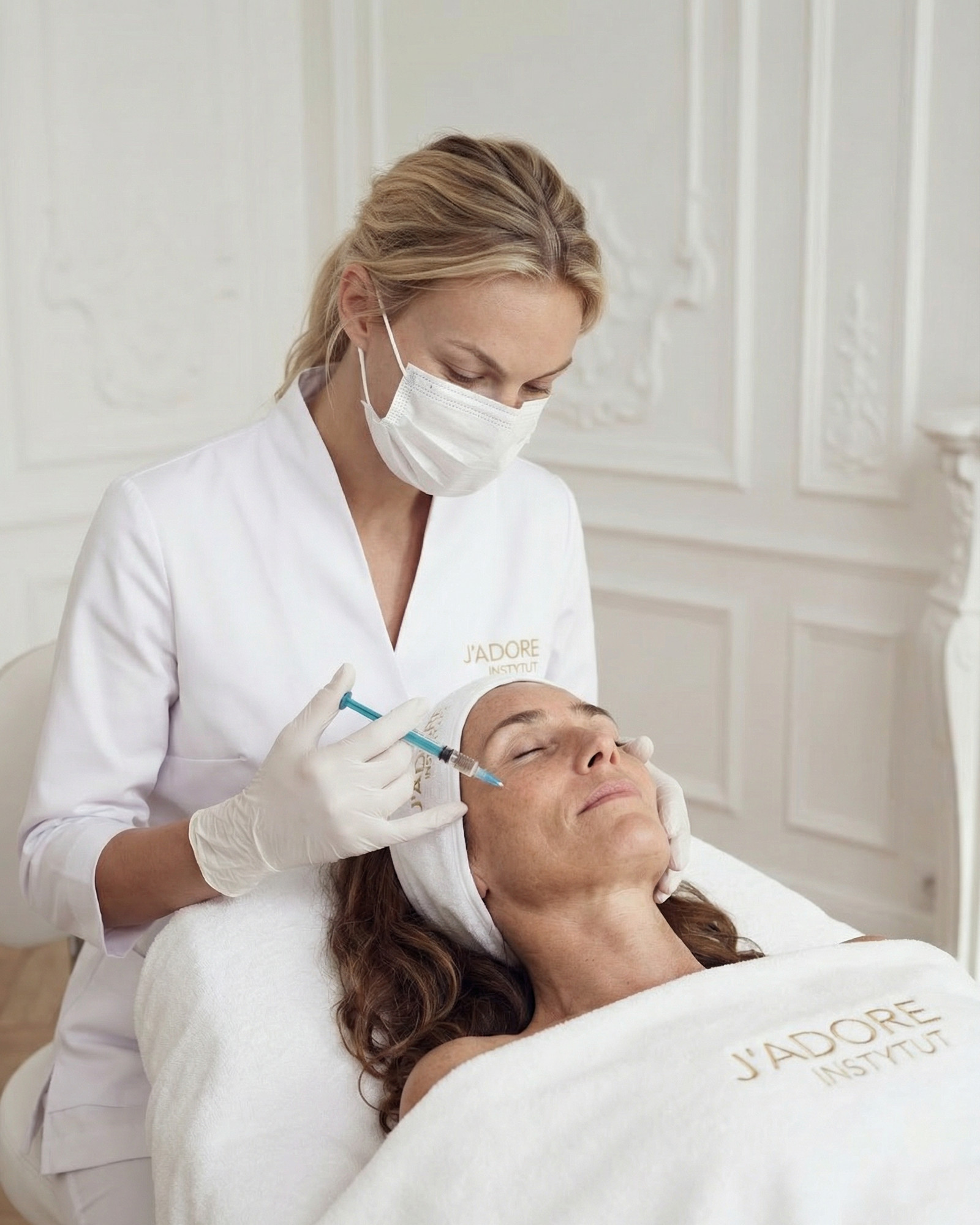
- Atrophic scar — sunken, for example after sutures or an ulcer. Responds well to fractional microneedling RF and collagen-stimulating treatments.
- Hypertrophic scar — raised, firm, red, but stays within the original wound boundaries. Silicones, massage and laser often bring significant improvement.
- Keloid — raised, extends beyond the wound boundaries, and may grow over time. Requires a medical consultation before any treatment.
Methods available at J'ADORE
Depending on the type of scar, its age and location, we choose the right method — or combine several.
Home care — the foundation of every programme
In-salon treatments work best when paired with consistent home care. Two tools have the strongest evidence behind them.
When is it too early for treatment?
Starting too early can intensify the scar tissue's reaction rather than calm it down. Below are approximate minimum timeframes before beginning treatment.
- Fractional microneedling RF / collagen stimulation — minimum 3–6 months after surgery
- Fractional laser — minimum 6–12 months after surgery
- Caesarean section scar — minimum 12 months after delivery
- Keloid — consult a doctor first, not a beauty salon
How to get started
The first step is a scar assessment during a cosmetology consultation. Our specialist identifies the scar type, its age and condition, and chooses a method or sequence of treatments accordingly.
A surgical scar correction programme is usually a series of several sessions spaced a few weeks apart, combined with home care. Results build up gradually — the full picture is often visible 3–6 months after starting.