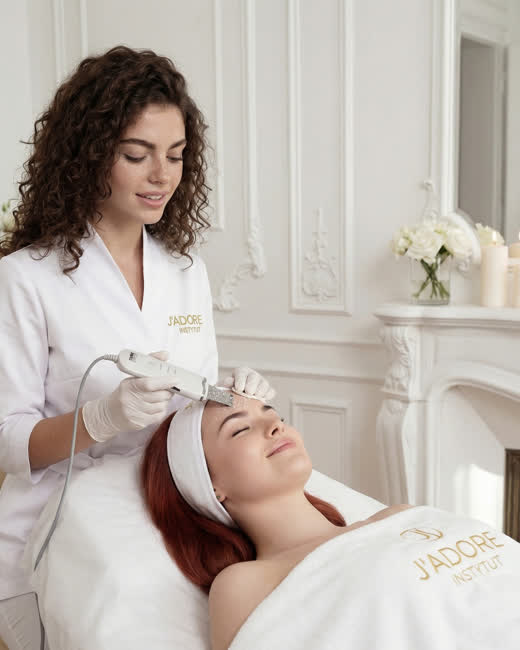
What exactly is needle-free mesotherapy — and why the name is misleading
Classic needle mesotherapy involves mechanically disrupting the skin barrier. An active substance is injected directly into the dermis or deeper through very fine needles. The route is simple: the substance reaches where it needs to work. There are no obstacles and no need to “penetrate” the epidermal layer.
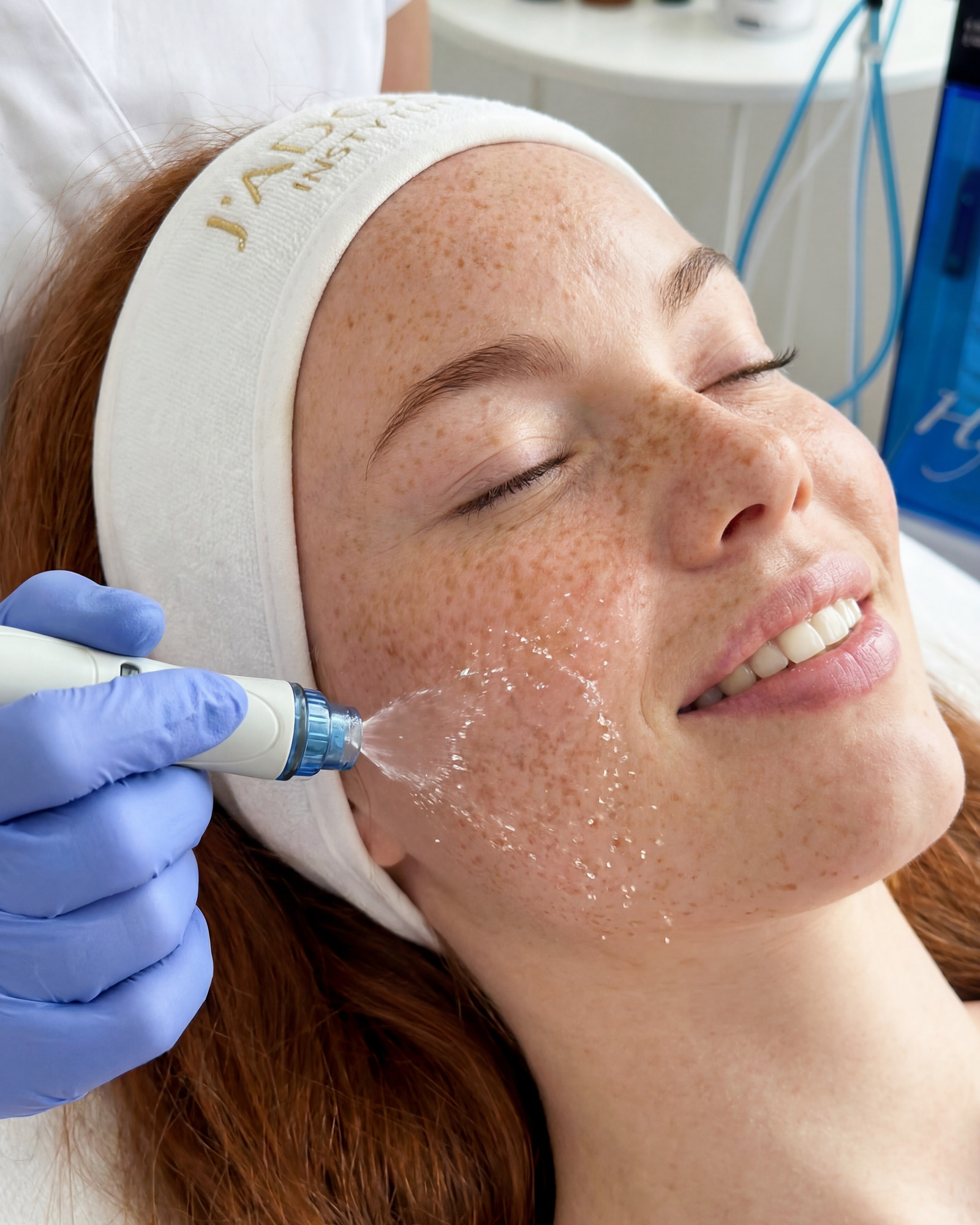
Needle-free mesotherapy does something different. Rather than piercing the skin, it aims to increase the permeability of its barrier. This allows active substances applied to the surface to penetrate more deeply than with home skincare alone. This is the key point: it is a treatment that supports penetration, rather than delivering substances while bypassing the barrier.
- Electroporation. Short electrical impulses temporarily “open” channels in epidermal cell membranes, creating temporary micropores. During this window, active substances can penetrate more deeply than usual. After several to a dozen or so minutes, the pores close and the skin returns to its normal barrier state. Effectiveness depends on device settings, application time and — crucially — the physicochemical properties of the active substance itself.
- Iontophoresis. This uses direct current to “push” charged molecules (ions) through the skin along an electrical gradient. It works better with substances carrying a specific electrical charge — so not every ingredient is equally suitable. It has been known for decades and is well described in transdermal dermatology.
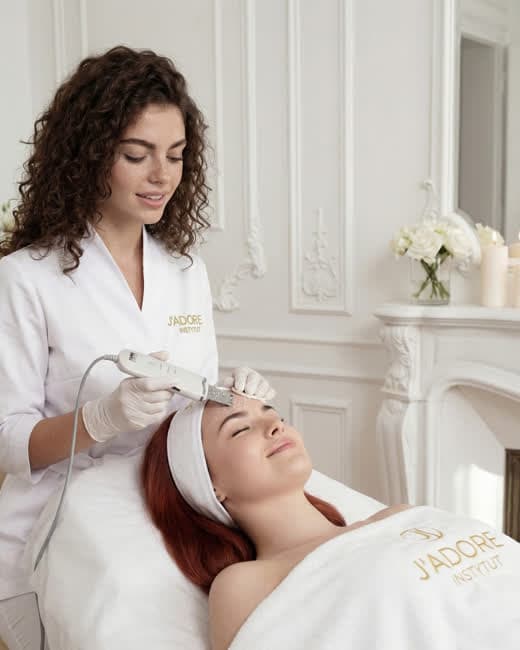
- Sonophoresis. Ultrasound waves temporarily loosen the arrangement of lipids in the stratum corneum, increasing its permeability. It is usually used before applying an active substance. Combined with electroporation, it creates so-called dual-channel enhancement — two penetration routes at once.
- Modern hybrids. Many devices combine several of the methods above with, for example, muscle electrostimulation or microcurrents. This makes studies difficult to compare, as “needle-free mesotherapy” can refer to more than a dozen different protocols.
What the research says — an honest review
Research into needle-free mesotherapy exists and, importantly, is uneven in quality. A considerable number of studies show a genuine increase in active-substance penetration with electroporation or sonophoresis, compared with application to the skin alone. There are also clinical studies assessing visible effects — hydration, firmness and skin tone.
The issue is that many of these studies have limitations. These include small participant groups, short follow-up periods, no control group and varied protocols. It is therefore difficult to draw firm, universal conclusions. This does not mean the method does not work. It means that we know more about the mechanisms than about long-term clinical effects on a broad scale.
What research confirms
a solid foundation
- Electroporation genuinely increases the penetration of selected active substances through the epidermis
- Iontophoresis has documented effectiveness in the transdermal delivery of charged molecules (dermatology since the 1980s)
- Sonophoresis improves the absorption of lipophilic substances by modifying the stratum corneum
- After completing the series, skin may show improved hydration and a more even skin tone
What research does not confirm unequivocally
the zone of marketing promises
- That the effect is comparable to needle mesotherapy in terms of the depth at which substances are delivered
- That penetration is always clinically significant (it depends on the substance, device and protocol)
- That every device on the market works in the same way — differences between devices are substantial
- That effects last without regular repeat series
The conclusion from the literature review is this: needle-free mesotherapy is a genuine technology with documented mechanisms of action, not a placebo packaged in a device. For it to work as claimed, certain conditions must be met: appropriate equipment, a well-selected active substance and a protocol tailored to the treatment goal. Where even one of these elements is missing, the result may be unnoticeable.
Where marketing ends and reality begins
The needle-free mesotherapy market has one serious problem: promises that are too great and education that is too limited. Devices are sold with claims that sound like the effects of needle mesotherapy: “delivers substances deep into the dermis”, “needle-like effects without pain”. This simplification leads to two scenarios. You may be delighted because your expectations were modest. Or disappointed because you expected needle mesotherapy and did not receive it.
The difference between what needle-free mesotherapy is genuinely suitable for — and what it is forced to do as an “alternative to needle mesotherapy” — is also important. For example, work on skin hydration, barrier support, improved skin tone and Skin preparation before other treatments are areas where needle-free mesotherapy has a strong rationale and real potential. Rebuilding dermal density, stimulating fibroblasts or tissue lifting, however, require deeper penetration. Needle-free mesotherapy is physically unable to provide this at a level comparable to a needle.
When needle-free mesotherapy genuinely makes sense
If we set marketing promises aside and focus on what is realistic, needle-free mesotherapy fits several very specific scenarios. It is not a second-choice method. It has its own clearly defined place in a skincare plan.
- Work on hydration and the barrier. This is the natural area for needle-free mesotherapy — hygroscopic substances, ceramides and surface peptides. With the right cocktail and a good device, skin hydration after completing the series is clear and measurable.
- Improved skin tone and radiance. Vitamin C, niacinamide and antioxidants are substances that work well with electroporation. They help even out and brighten the skin tone.
- Skin preparation before more invasive treatments. A strengthened barrier, hydrated skin and improved blood circulation provide a good foundation before laser treatment, a deeper peel or needle mesotherapy.
- Maintaining results between series. After completing a needle mesotherapy series, needle-free mesotherapy can serve as a maintenance protocol. It is less intensive, but helps maintain hydration and skin condition.
- People who avoid needles. For someone who cannot tolerate pain or is firmly opposed to injections, needle-free mesotherapy is a genuine alternative — with an understanding that expectations regarding the depth of effects will differ.
This brings us to the key conclusion: needle-free mesotherapy works — but not because it “does the same as needle mesotherapy, only without pain”. It works because it has its own considered logic. This is how it should be presented — not as a substitute for something “more real”, but as a fully valid method with its own range of uses.
What to do with this — a practical starting point
Needle-free mesotherapy is neither a needle-free miracle nor a scam in attractive packaging. It is a tool with a genuine mechanism of action and genuine limitations. Like any tool, it delivers the best results in the hands of someone who understands those boundaries and can match the method to a specific goal.
If your skin needs hydration, barrier support, a more even skin tone and work on surface quality, needle-free mesotherapy is a justified choice. It may bring visible improvement within a few visits. If the goal is deep regeneration, collagen stimulation or lifting, the conversation should begin with other methods. This is exactly what a good consultation provides: it does not sell a treatment, but helps you understand which treatment makes sense for your particular face.