4 types of under-eye shadows
Before choosing a method, it helps to know which type you're dealing with. Shadows can have different underlying causes — and not every one responds to the same method.
- Vascular — visible veins showing through thin skin; appearance: purple or bluish
- Pigment-related — excess melanin (genetic or sun-induced); appearance: brown or dark brown
- Structural — hollowed tear trough; appearance: shadow from a three-dimensional hollow
- Mixed — a combination of the above; appearance: multi-toned, often asymmetric
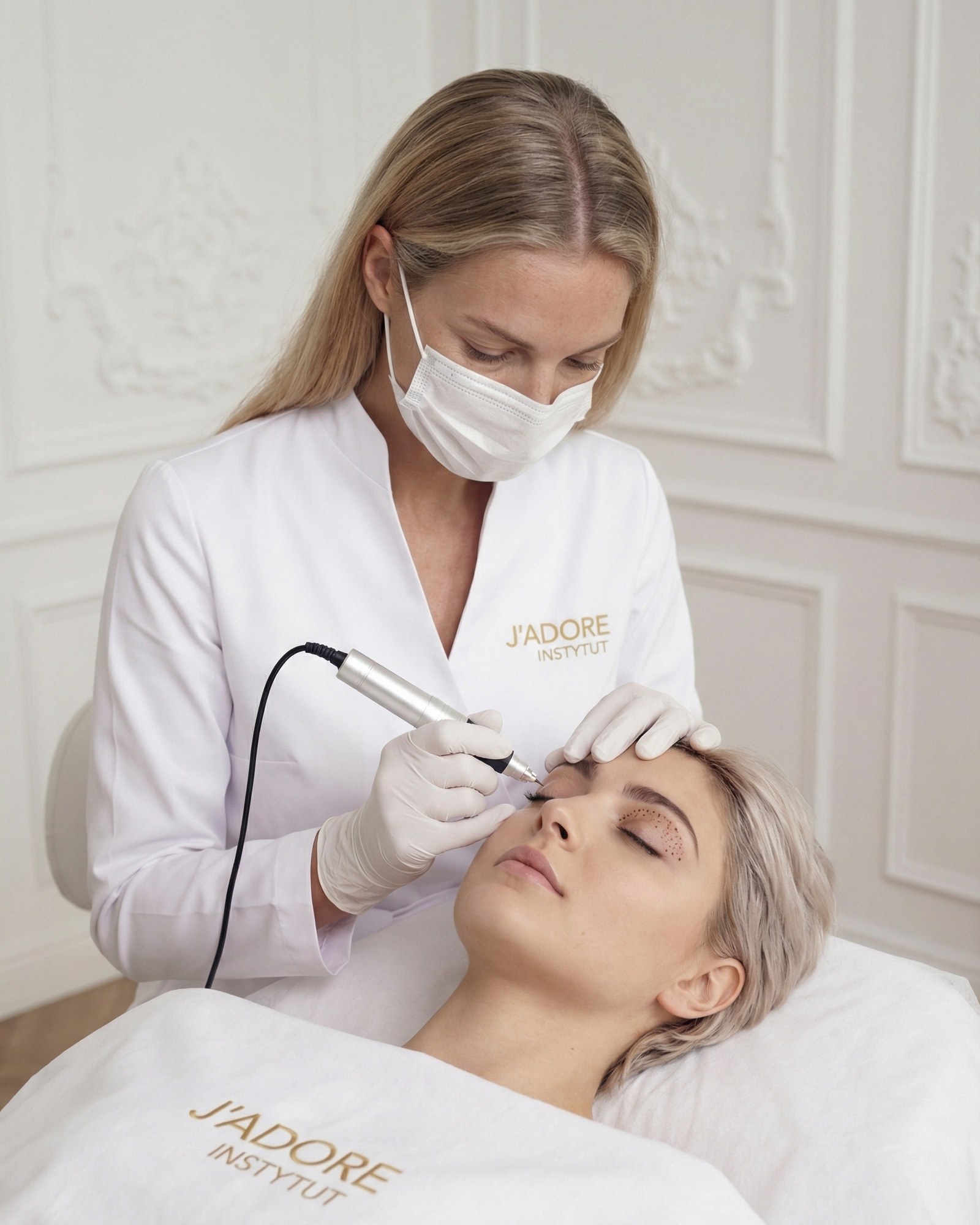
Eye-area mesotherapy — Lumi Eyes, Nucleofill Eyes, NCTF
Eye-area mesotherapy is one of the most effective methods for vascular shadows. At J'ADORE INSTYTUT we use several preparations — we select them according to the specific mechanism behind the shadow.
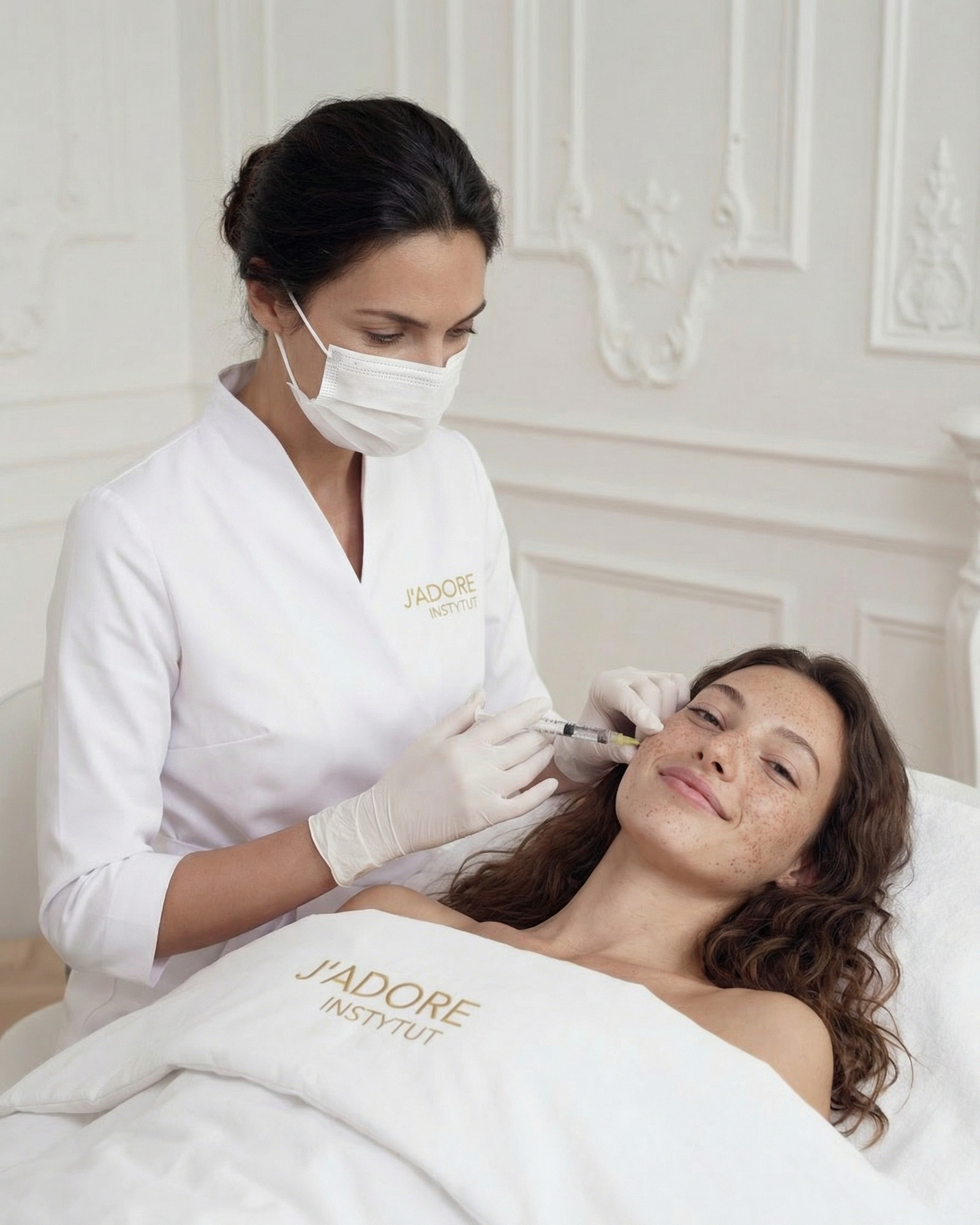
Carboxytherapy for the eye area
Carboxytherapy involves injecting carbon dioxide under the skin. This dilates the capillaries and improves tissue oxygenation. In many people with vascular (purple) shadows, it can significantly improve the appearance of the eye area.
HA filler — tear trough
For structural shadows — those caused by a hollow under the eye rather than pigment or veins — the method of choice is hyaluronic acid injected into the tear trough.
Levelling out the hollow removes the shadowing effect caused by the area's three-dimensional shape. The result can last many months.
Brightening peels and pigment treatment
Pigment-related (brown) shadows need a different approach from vascular ones. Here the goal is to limit melanin production and gently exfoliate.
- Brightening peels — azelaic, kojic, tranexamic acid, vitamin C — an exfoliating series that inhibits pigment
- DYE-VL — a laser treatment targeting pigment, used for more pronounced pigmentation changes
How we choose a method — the treatment algorithm
The choice of method depends on the type of shadow. At J'ADORE INSTYTUT, we always start with an assessment — only then do we select a protocol.
- Purple / blue (vascular) → carboxytherapy + Lumi Eyes or Nucleofill Eyes
- Brown / dark (pigment-related) → brightening peels + DYE-VL
- Hollow visible in profile (structural) → HA filler in the tear trough
- Mixed → a combined protocol: usually mesotherapy first, supplemented with filler if needed
What doesn't help
It's worth knowing what to avoid — especially in an area as delicate as the eyelids.
- Retinol eye creams — retinol can irritate the very thin eyelid skin, and it has no effect on vascular or structural shadows
- Under-eye patches — they provide short-term hydration but have no effect on deeper-rooted shadows
- More sleep — helps with vascular shadows and swelling, but doesn't correct structural or pigment-related shadows