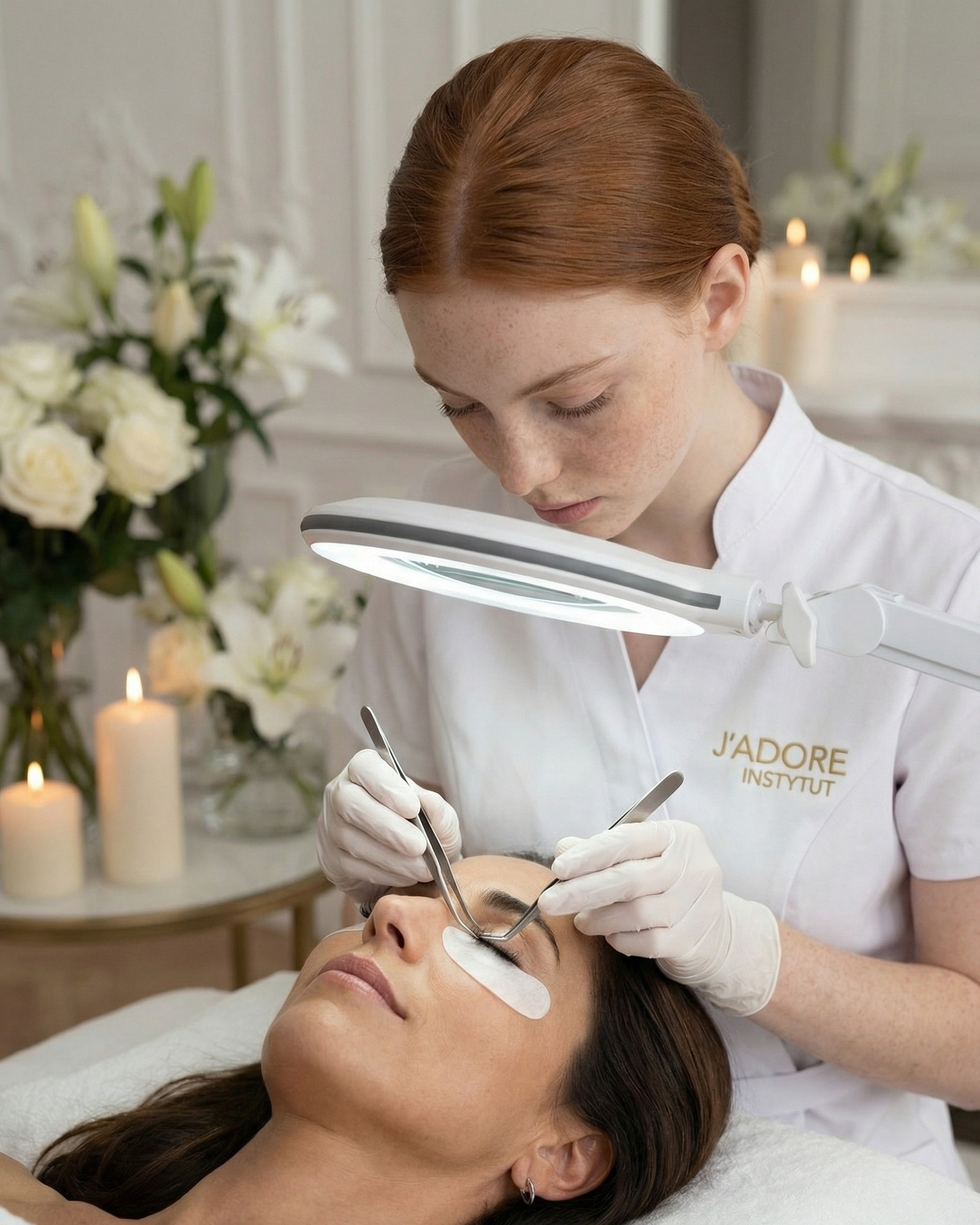
The result is created by length, curl, direction and density distribution
Two styles with a similar number of fibres can look completely different. Shorter lashes with a more pronounced curl open the eye, but if chosen poorly, they can optically shorten the eyelid. A strong elongation of the outer corner creates a cat-eye effect, but it can weigh down a drooping corner. A good map does not copy a trend. It corrects proportions within the limits provided by the natural line.
Colour also changes the result. Deep black builds a graphic emphasis; brown and colour mixes can look soft against a fair complexion. "Natural" must therefore be translated into parameters: how much visible contrast is required, what your daily make-up looks like and whether the styling should be legible without eyeliner.
The first day and the third week show two stages of the same result
Immediately after application, the line is full. Then, natural lashes go through their own cycle and some fall out along with the attached fibres. The resulting gaps do not necessarily indicate poor application, provided the loss is even and your own lashes are not stuck together or pulled out. The pace is changed by the hair cycle, care, friction, cosmetics, sauna, activity and sleeping position.
A refill should not automatically mean adding more layers to everything that remains. The stylist removes the regrowth, assesses the condition of the base and recreates the map. If many lashes are overloaded or irritation has appeared, the plan should change.
Comfort is also a sign of a good result
- You do not feel any pulling of individual clusters when blinking.
- The lashes are not stuck together in stiff groups.
- The application line does not touch the eyelid skin.
- You can wash the eye area thoroughly without pain.
- After a few days, there is no increasing burning, swelling or redness.
- Natural lashes are not broken en masse after the styling is removed.
When an eye reaction occurs, do not assess it solely as an aesthetic problem. Severe burning, swelling, discharge or pain require stopping exposure to the potential irritant and seeking appropriate consultation. A pretty fan is not worth ignoring the health of your eyelids and eye surface.
Three techniques, three completely different results
The simplest way to understand the differences is one key: how many artistic lashes go onto one natural lash. This proportion determines how full, expressive and dramatic the final result will be.
1:1 — Classic
subtlety and naturalness
- one lash per one natural lash — clean, clear
- result: lengthened, defined, naturally dense
- a great first method or a return after a break
- lighter on the lashes — many stylists recommend it as a start
Russian Volume
volume and density
- a fan of 2–6 ultra-thin lashes per one natural lash
- result: full, fluffy, clearly denser fan
- fans glued at the base — soft, light
- often recommended for sparse or weak natural lashes
Hollywood / Mega Volume
drama and spectacularity
- 7–16 ultra-thin lashes per one natural lash
- result: intense, expressive, theatrical, full of volume
- eye make-up can often be skipped — the lashes speak for themselves
- a favourite for photo shoots, weddings, big events
How to choose a method for yourself — a lifestyle test
Choosing a method is not just a matter of aesthetic taste. The condition of your natural lashes, your lifestyle and how much time you want to spend on refills — all this matters. Here are a few questions to help you find your way:
- Do you like "no-make-up" make-up? Classic 1:1 — will subtly define, nothing will be "too much".
- Do you have sparse lashes and want clear density? Russian Volume can optically thicken and fill them in.
- Are you preparing for a wedding, a shoot, a special event? Hollywood gives a result that does not need mascara.
- Are you physically active, do you swim a lot or have contact with steam? Every method requires caution with water — ask your stylist about durability in your routine.
- Do you have delicate or damaged natural lashes? This is the most important factor — the stylist will assess whether your lashes can support the fans or if it is better to start with a classic one.
How the results differ — and why it is not just a matter of thickness
Many women think about choosing a method through the prism of one variable: how dense I want my lashes to be. This is simplified thinking — the differences between techniques are more complex and concern several dimensions at once.
- 01
Fan shape
Classic 1:1 gives a line. Russian creates a fan — lashes in a fan, which gives an impression of space and softness. Hollywood is the maximum number of layers on one base.
- 02
Volume impression
With the same extension length, the result can look very different depending on the number of lashes in the fan. A 4D Russian volume looks different from the same shape in a 1:1 ratio — it is fuller and more "plush".
- 03
Weight for natural lashes
Paradoxically, a well-executed Russian Volume with ultra-fine lashes can be lighter than a thick classic lash. The key is the weight of the individual lash used in the fan.
- 04
Refill time
Every method requires refills every few weeks because natural lashes grow and shed in cycles. The frequency of refills also depends on your lash growth cycle, not just the technique.
How to care for lashes after the treatment — regardless of the method
Lash longevity depends largely on aftercare. Each technique requires similar rules, although Hollywood and Russian can be slightly more demanding due to the number of glue points.
- The first 24–48 hours — avoid water, steam (sauna, swimming pool) and oil-based eye makeup.
- Cleaning — use only gentle foams and lash cleansing brushes. No oily products — they break down the glue.
- Brushing — use a spoolie every day, from the base to the tips, to prevent the fans from sticking together.
- Sleeping — sleeping on your side or stomach can crush the lashes; satin pillowcases help.
- Makeup — ideally no mascara or only water-based cosmetics. Waterproof mascara and oil-based removers are enemies of the glue.
When to combine techniques or experiment with changes
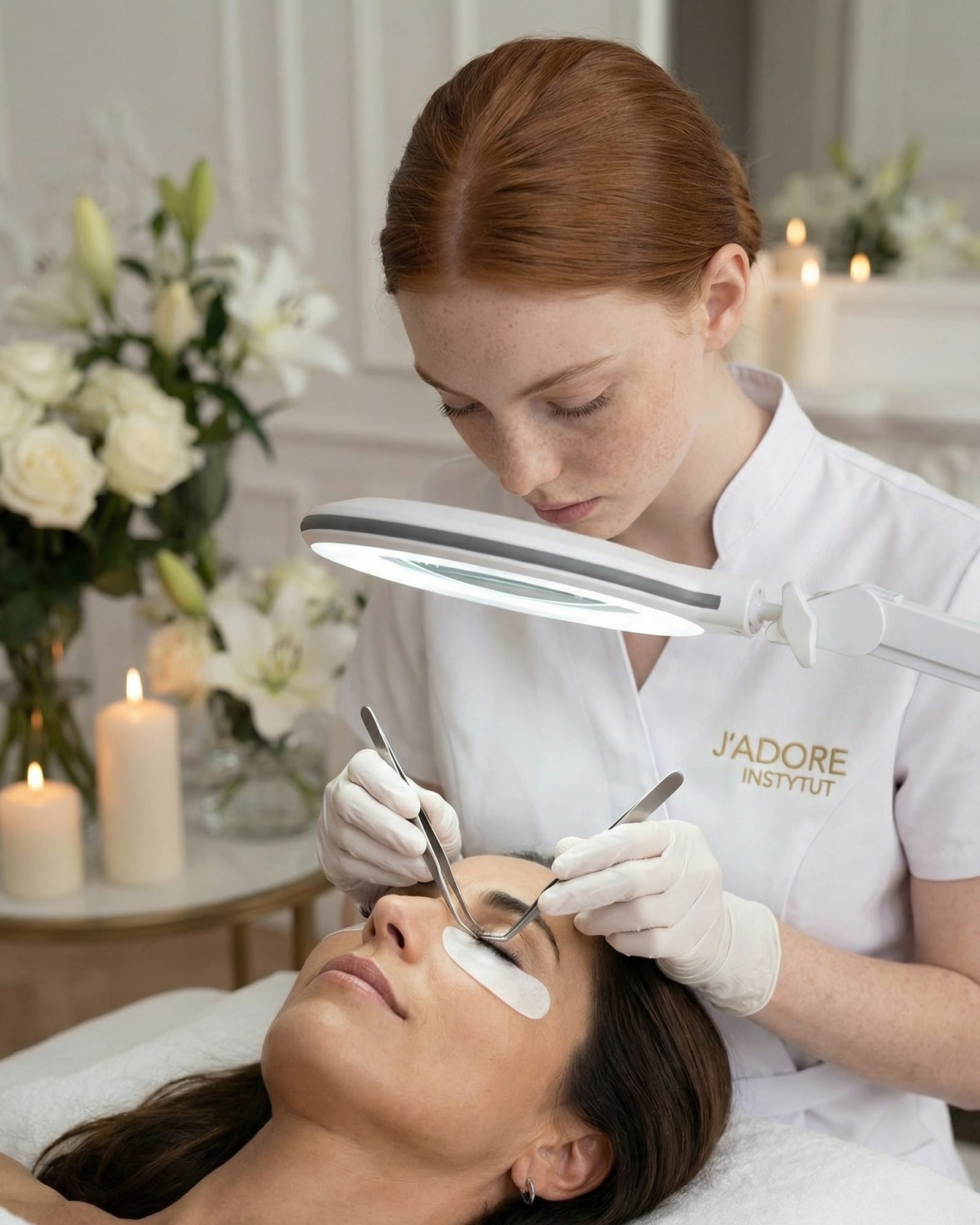
Many women start with classic 1:1 and eventually move to Russian — or vice versa: they try Hollywood for a special occasion and return to a subtler variant for everyday wear. Techniques can also be mixed within a single treatment, e.g., thinner lashes in the inner corners, denser in the middle and on the outer corner — for a "cat eye" or "doll" effect. This is a joint decision with your stylist, after assessing your lashes and determining which eye shape you want to highlight.
1:1 + lash lift
For those who want the most natural result — the lift raises your own lashes, and 1:1 lengthens them. Gentle and natural.
Russian + brow lamination
Full eyes and defined brows in one visit — a popular combination before important events.
Hollywood for a special occasion + return to Russian for everyday wear
Some clients treat Hollywood as an "upgrade" before photo shoots or weddings, and return to 2D–4D Volume for daily life.
Two methods, two completely different goals
Simply put: a lift works with your own lashes, while extensions supplement them. It is not a question of which is better — it is a question of what you are looking for and what lashes you have to start with.
Lash lift
brings out the potential of natural lashes
- lifts and curves lashes from the root
- effect of an open, awake eye without mascara
- your own lashes remain untouched throughout
- lasts several weeks, grows out naturally
- standard care — you can wash, rub and sleep as usual
Lash extensions
builds an effect where your own lashes are not enough
- adds length, volume and density according to your preferences
- precise adjustment to the eye shape (cat, doll, open)
- mascara effect without makeup
- requires refills every few weeks
- wide range of materials and styling
Who is the lift for, and who are extensions for?
The key is not "which treatment is better," but what is the starting condition of your lashes and what do you expect from the result. Two questions to ask yourself before your visit:
- Are my lashes long but straight and pointing downwards? → A lift may be enough — a highlighting effect without adding anything.
- Are my lashes short, sparse or do I simply have few of them? → A lift will not add length. Extensions are the right path.
- Do I care about minimal maintenance (swimming pool, sports, quick mornings)? → A lift — after healing, it requires no special caution.
- Do I want a spectacular effect — cat shape, clear density, makeup without makeup? → Extensions achieve this precisely.
Effect: how much what you see differs
Lifting and extensions can give a seemingly similar effect in a photo, but their daily experience is different. A lift is a subtle change that you and those who know you see. Extensions are a change that everyone sees — even at a first meeting.
- 01
Consultation
We assess the condition of your lashes, discuss your expectations, and select the method — and for extensions, the shape and material.
- 02
Treatment
Lifting: chemical curling on a rod, keratin, and setting. Extensions: attaching individual hairs or clusters to your natural lash.
- 03
The first few hours
Lifting: it is best not to get them wet. Extensions: avoid moisture and oily cosmetics for 24 hours.
- 04
Daily routine
Lifting: standard care, no need to change your habits. Extensions: gentle brushing, oil-free products, and care when washing.
- 05
Refills
Lifting is repeated after a few weeks — along with natural regrowth. Extensions require refills every few weeks.
How to choose — without pressure, with a clear head
There is no single right answer — it depends on your lifestyle, the condition of your lashes, and the effect you are looking for. Lifting works well for those who value naturalness, do not want to change their care routine, and have lashes of a good length. Extensions suit those whose own lashes do not provide what they need and who are ready for slightly changed care rituals.
- You have good lashes, want a natural look, without complications → start with a lifting.
- You want a clear effect, eye shape modelling, a spectacular change → extensions are for you.
- You are undecided → a consultation with a specialist takes a few minutes and usually resolves the dilemma immediately.
- You want to see how your lashes react to lifting → it is a gentler entry point before potentially deciding on extensions.
Both treatments — lifting and extensions — can provide a beautiful, lasting effect. The difference lies in the philosophy: bringing out what you have versus building what you need. A good stylist will help you assess which approach makes sense in your situation — and what you can expect before you even begin.