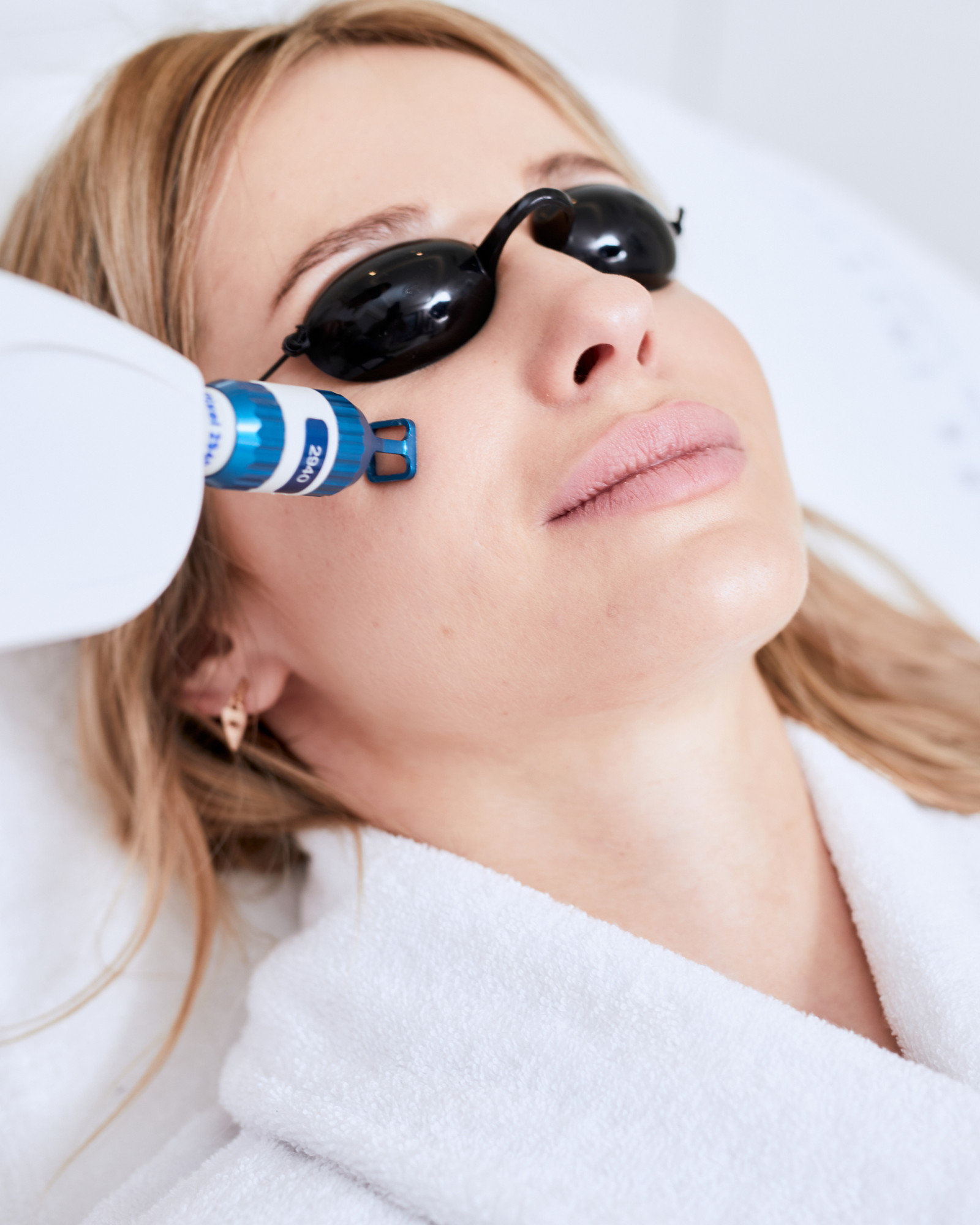
First, confirm whether the plan concerns CO2, Er:YAG, and the depth of ablation.
Preparation for spot scar treatment does not have to look like preparation for the entire face. CO2 and Er:YAG have different properties, and the fraction settings, density, and energy affect the wound and downtime. Do not download recommendations for a random "fractional laser" without checking if it involves ablation.
Two weeks before: block the sun, solarium, and trips after the treatment.
A tan and sunburn change the risk of pigmentation and burns. The AAD emphasises that laser therapy is not performed on tanned or burnt skin. The Mayo Clinic recommends discussing sun protection even before resurfacing. Two weeks is a practical minimum for adjusting your behaviour, not a guarantee of qualification after previous intense exposure.
- Give up the solarium and conscious tanning.
- Use shade, clothing, and SPF as recommended.
- Report a fresh tan, even without redness.
- Do not plan a sunny holiday immediately after the procedure.
- Postpone the treatment after a burn instead of trying to hide the colour with foundation.
Your skin may look calm but still carry fresh exposure. The final decision is made by the person performing the qualification after assessing the area and your sun history.
Two weeks before: provide a full list of medications instead of creating your own list of exclusions.
Medications can affect healing, bleeding, photosensitivity, immunity, and your reaction to anaesthesia. Supplements are not neutral either. Do not stop taking an anticoagulant, antiplatelet drug, oral retinoid, or any chronic therapy just because a forum lists it before a laser. The risk of stopping may be greater than the cosmetic benefit.
A history of cold sores changes the plan, even if there is no blister today.
Resurfacing in the lip area can reactivate the herpes virus. The AAD and Mayo Clinic indicate that for people with such a history, a doctor may prescribe antiviral prophylaxis before and after the treatment. The medication, dosage, and timing are not for you to choose alone.
- Tell us about every previous episode of cold sores in the face area.
- Report any tingling or burning that heralds a lesion.
- Do not start leftovers of medication from a previous infection without instructions.
- Determine what to do if a blister appears just before your appointment.
- Do not cover an active lesion with makeup during qualification.
An active cold sore is a reason for postponement and treatment, not for skipping a skin fragment without assessment.
Smoking and nicotine take predictability away from healing.
The Mayo Clinic and ASDS recommend stopping smoking before and after resurfacing, as smoking worsens healing conditions. Also, discuss nicotine in other forms, not just cigarettes. If you cannot meet these recommendations, say so honestly before choosing parameters and a date.
Do not treat a short break as a guarantee of no risk. The person in charge needs accurate information about frequency to decide if the procedure is reasonable. Hiding smoking does not mean your tissues do not feel it.
A week before: put off treatments, hair removal, and experiments on the same area.
Peels, wax, threading, intensive cleansing, home devices, and new active products can leave irritation invisible at the time of planning. The timing for stopping them depends on the method and protocol. Do not do anything "at the last minute" to make your skin look cleaner before the laser.
Skin ready for re-assessment:
no new trauma
- no burns
- no active infection
- no fresh peeling
- stable skincare
- full medical history
Skin to be postponed:
has a new reaction
- burning sensation after using a cosmetic product
- abrasions after hair removal
- fresh peel
- rash
- compromised skin barrier
Discontinue active cosmetics according to the schedule, not by general category.
Retinoids, acids, benzoyl peroxide, peels and irritating preparations may require a break. The duration depends on the product, concentration, frequency, skin reaction and laser settings. Not all vitamin C serums or toners have the same potential. Show us the names and ingredients during your consultation.
Do not replace a discontinued retinoid with a new acid or a strong enzymatic peel. The break is meant to reduce irritation, not to create a vacancy for another stimulus.
Two days before: check your skin, health and logistics instead of intensifying your skincare.
The final forty-eight hours serve to confirm that nothing has changed. Pay attention to infection, fever, cold sores, new medications, burns, inflammatory spots, cuts and reactions to cosmetics. Any of these factors may change the appointment date or the treatment area.
- Skin
Examine it in daylight.
Look for damage, rashes, active infection and a fresh tan.
- Health
Update your medical history.
Report any medication, illness, medical procedure or change in your well-being.
- Home
Prepare the recommended materials.
Do not buy random ointments; check that you have clean pillowcases and hygienic conditions.
- Calendar
Eliminate exposure and rushing.
Plan your transport, work, sun exposure and the possibility of contact after the treatment.
The day before: prepare your home for a wound, not your face for a photo.
Wash your hair if the guidelines allow it and it will be difficult to avoid products running onto your face later. Change your pillowcase, clean your phone and glasses, secure your hair and prepare a space for the recommended products. Do not perform any peels, cleansing masks or hair removal.
- Check your route home to avoid prolonged sun exposure.
- Organise assistance if sedation or an extensive procedure is planned.
- Prepare food and manage your duties to limit the need to go out.
- Remove any random active cosmetics from the bathroom that could be easily mistaken.
- Save the clinic's contact number in your phone.
- Do not drink alcohol and follow the instructions regarding meals.
If the clinic has provided different rules due to anaesthesia or medication, these take precedence. Do not guess whether you are allowed to eat or drive.
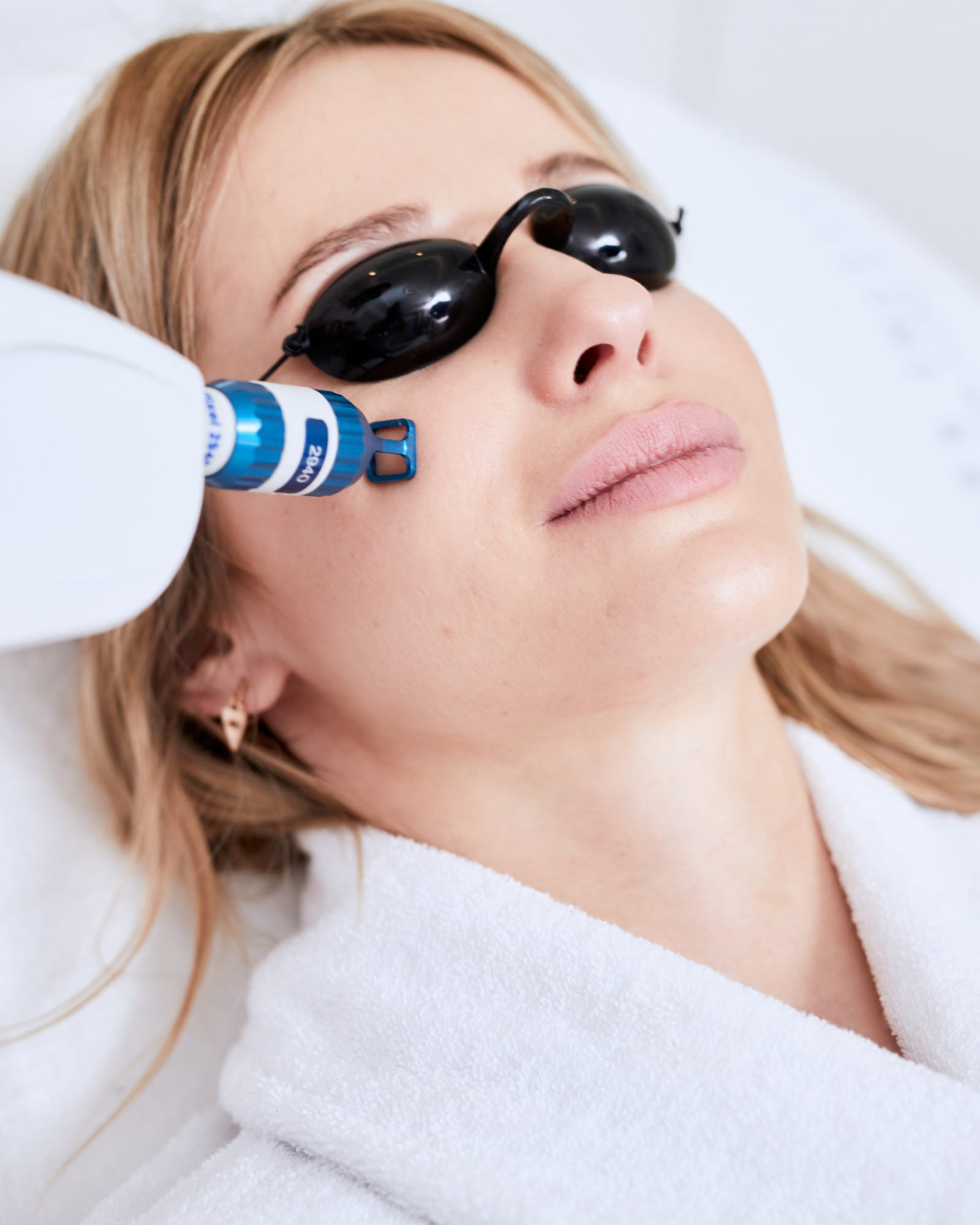
Establish a baseline with photos before swelling and micro-scabs change your appearance.
Pre-treatment documentation should show the treated problem in constant light, without make-up or camera filters. If the goal is a scar, photograph its position and shadow at a comparable angle; if it is skin tone, similar exposure is required. A photo does not replace a skin examination, but it protects you from relying on memory.
Plan the first 24 hours before anaesthesia and emotions cloud your memory.
After the procedure, it is easy to confuse the order of cleansing, cooling, ointments and medication. Ask for a written plan with the time of the first wash, the application method and an emergency number. If someone is helping you, show them the instructions beforehand. A carer should not improvise based on experience from a different treatment.
- Return
Transport without driving, if required.
The rules are based on the anaesthesia and any sedatives used.
- The first few hours
Protection in accordance with the dressing.
Do not wash off the preparation early and do not add any random cosmetics.
- The first wash
Clean hands and the indicated technique.
The timing and the liquid come from the instructions for the specific ablation.
- Night
Position, contact and observation
You know which swelling is expected and when to call us.
The schedule we prepare is not meant to keep you waiting if an emergency symptom occurs. Increasing, unusual pain, rapidly spreading swelling, vision disturbances, shortness of breath or a sudden reaction require urgent assistance in accordance with medical advice.
On the day of your appointment, arrive with clean skin and a full update on your medical history.
Do not apply make-up, perfumed cosmetics or active products unless the clinic has explicitly advised otherwise. Your usual morning skincare routine should also follow our instructions. Dress in a way that prevents collars, scarves or hats from rubbing the treated area after you leave.
Postponing a treatment due to infection, a tan or skin damage is a result of proper qualification.
A cold without skin symptoms does not always carry the same weight as a fever, but do not decide for yourself that "it is nothing". An active cold sore, infection, open wound, fresh burn or unexplained rash must be reported. We can reschedule your appointment; a damaged barrier cannot be convinced that the booking was important.
Prepare for an ablative laser treatment in Warsaw together with a return plan from two locations.
J'ADORE INSTYTUT operates at ul. Żelazna 59, 00-848 Warsaw from Monday to Saturday between 8:00–21:00, and on Sundays between 11:00–19:00, as well as at ul. Mińska 29A/46, 03-808 Warsaw from Monday to Saturday between 9:00–21:00. The current range of services is available on our website Ablative fractional laser in Warsaw.
Confirm which location the treatment takes place in, where the follow-up will be, and which number to call in case of a reaction outside of working hours. Plan your return journey to avoid crowds, sun exposure and the need to drive if anaesthesia or medication precludes it. Do not choose a salon solely based on a shorter commute if the continuity of your follow-up is at the other location.
Readiness means the possibility of cancellation, not just performing the treatment.
Two weeks before the treatment, manage your sun exposure, medication, nicotine, history of cold sores and cosmetics. Two days before, check your skin, health, materials and calendar. On the day of your visit, update your medical history before anaesthesia.
The best-prepared person is not the one who keeps the appointment at all costs. It is the person who knows what disqualifies their skin today and has the conditions for healing tomorrow. If any of these elements do not align, the proper stage of preparation is a new date.