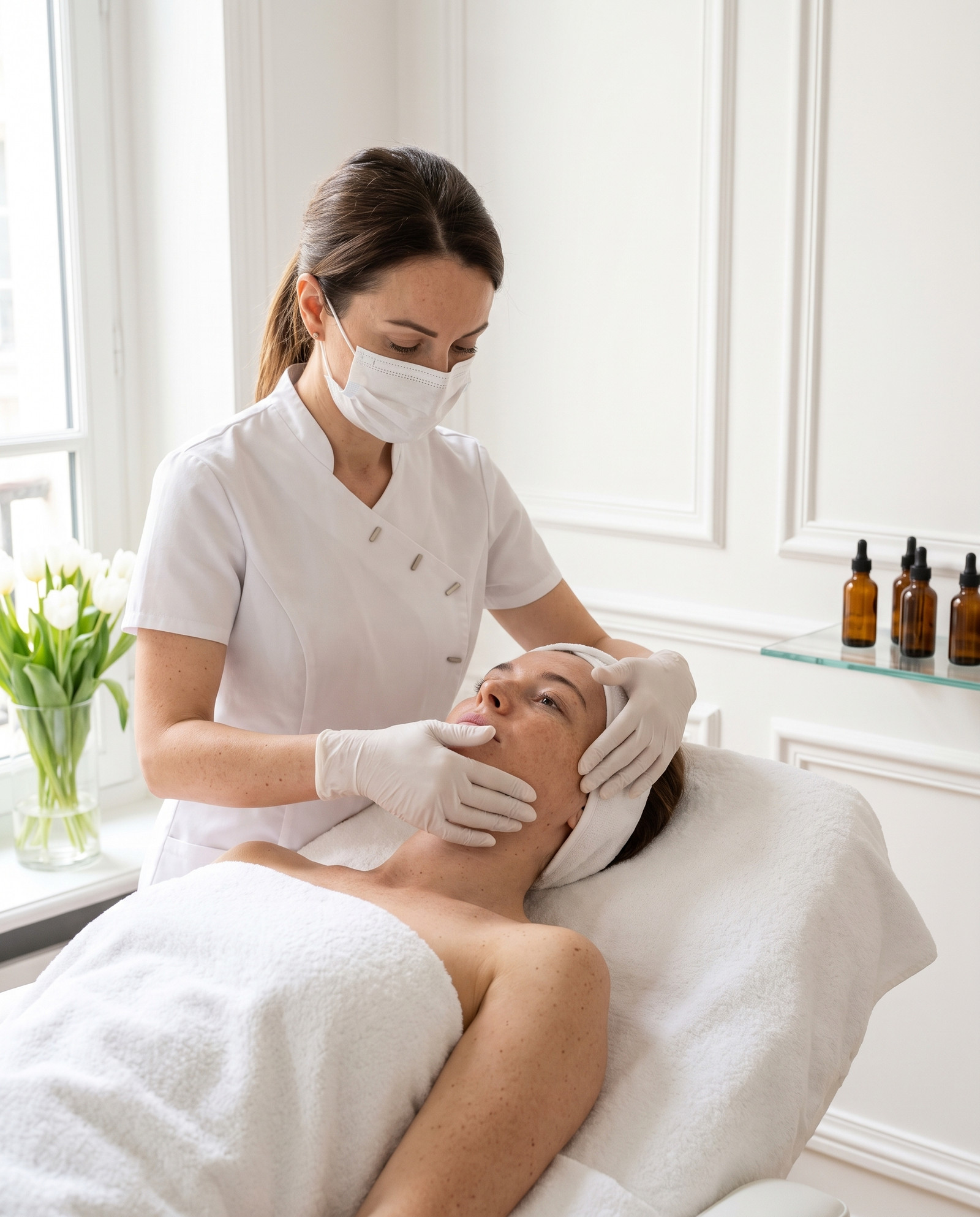
The first session also serves to map tension.
The first change may be sensory: easier jaw relaxation, freer breathing, less feeling of facial heaviness. Your appearance may change subtly due to a decrease in tension and swelling. This does not yet tell us how long your body will maintain the new pattern.
Note where the tension returns first, at what time and in what situation. This data is more important for your plan than a photo taken immediately after the massage.
The series is evaluated by function, comfort and repeatability.
- Do you clench your teeth less often when at rest?
- Is the movement of your jaw freer?
- Does morning swelling return more slowly?
- Does neck and chest tension change your facial alignment?
- Are you able to recognise the moment of clenching on your own?
If improvement does not appear or the symptom increases, the plan requires re-evaluation. More sessions are not the answer to every cause of pain or asymmetry.
Intervals are extended when the body maintains the effect for longer.
At the beginning, meetings may be closer together so the therapist can observe your reaction and work on the established pattern. Later, the interval can be increased if lightness, movement and awareness of tension persist. The calendar should not be identical for someone with periodic stress and someone with long-term bruxism.
A break does not reset all the work. It may reveal which elements of the effect were dependent on regular sessions and which sustain new habits. Upon returning, you do not always have to start from the beginning; first, we update the tension map.
Home maintenance does not mean aggressive self-massage.
Short reminders are most useful: relaxing the tongue, checking for tooth contact, breathing, screen positioning and taking breaks at work. Kneading a painful area firmly may increase tissue defence. Exercises should follow the instructions of someone who knows your pattern.
If the source is a dental, joint or neurological problem, manual treatment may only be a supplement. The series makes sense when it supports the right plan, not when it delays a diagnosis.
Three methods, three different work philosophies.
Before we compare the effects, it is worth understanding where each method comes from and what it actually does. This will provide a better foundation for your choice than any list of points.
Endermology
a device working deeper than hands
- mechanical vacuum massage — folding and stroking tissue with rollers
- reaches deeper layers: fascia, adipose tissue, lymphatic vessels
- often used on the face and body
- for many people, it can support cellulite reduction and body contouring
- results usually require a series of treatments
Kobido
Japanese tradition of working with the face using hands
- manual massage technique for the face, neck and décolletage
- work with mimic muscles, acupressure points and connective tissue
- often combined with elements of acupressure and energetic bodywork
- can improve facial contour, tension and skin tone
- strong relaxation effect — the therapist's hands are an integral part of the experience
ZOGA (Zontherapy)
modern manual method of working with the face and body
- manual technique combining elements of drainage, contouring and work with muscle tension
- works with the fascia, muscles and lymphatic system of the face and neck
- can bring lifting and drainage effects after just a few sessions
- combines precision with a holistic approach to the face as a whole
- less known than Kobido, but increasingly used in premium salons
How to recognise what you need — three questions before choosing
Before your consultation, it is worth asking yourself a few specific questions. The answers will not give you the only correct answer — but they will narrow the field to sensible options.
- 01
What is your main goal?
Body contouring or deep work with cellulite → endermology. Improving facial contour with a relaxation ritual → Kobido. Drainage, facial and neck tension with precise manual work → ZOGA.
- 02
How important is the sensory aspect to you?
If the contact with the therapist's hands is part of the value of the treatment for you — manual techniques (Kobido, ZOGA) will provide what a device cannot replace. If the physical effect is the priority — endermology works differently, but effectively.
- 03
Are you working with the face, body, or both?
Endermology is used on both the face and body. Kobido and ZOGA are predominantly treatments for the face, neck and décolletage. If you care about consistent work with the whole body — this is a significant difference.
Results you can expect — and what "a series" means
All three methods share one common feature: results accumulate over time. A single treatment may provide a pleasant feeling of freshness and temporary radiance — but the benefits most satisfied clients talk about usually come from regular sessions.
- Endermologia — for many, visible improvement in skin tension, cellulite reduction and body contouring often require several to a dozen or so treatments. Results can be maintained longer with regular follow-up sessions.
- Kobido — after one session, the face often looks "awakened" and refreshed. Deeper changes in facial contour, tension and skin tone usually appear after a series and require consistency.
- ZOGA — a technique that provides relatively quick drainage and tension-relief results for many, but — like Kobido — shows its full potential in a series.
When to combine them
The three methods described do not compete with each other — they can complement one another by working on different levels and at different rhythms. The logic of combining them is simple: what one method cannot achieve, another might.
Endermologia + Kobido or ZOGA
Endermologia works deeper, on tissue and fascia, while Kobido or ZOGA work manually with facial muscles and skin. Combining them can provide a more complete approach to the face — both mechanical and sensory.
Kobido + ZOGA
If you prefer a purely manual approach, both techniques can be used alternately or combined by an experienced therapist. ZOGA brings the precision of drainage, while Kobido provides an energetic rhythm and relaxation.
Body Endermologia + facial ZOGA
A natural combination when you are working on your silhouette and face in parallel. Each method works in its own zone without conflict.
Any method + home care
Results from a series of treatments are often more pronounced when supported by regular care: lymphatic drainage at home, hydration and sun protection. These do not replace the treatment, but they can enhance its results.
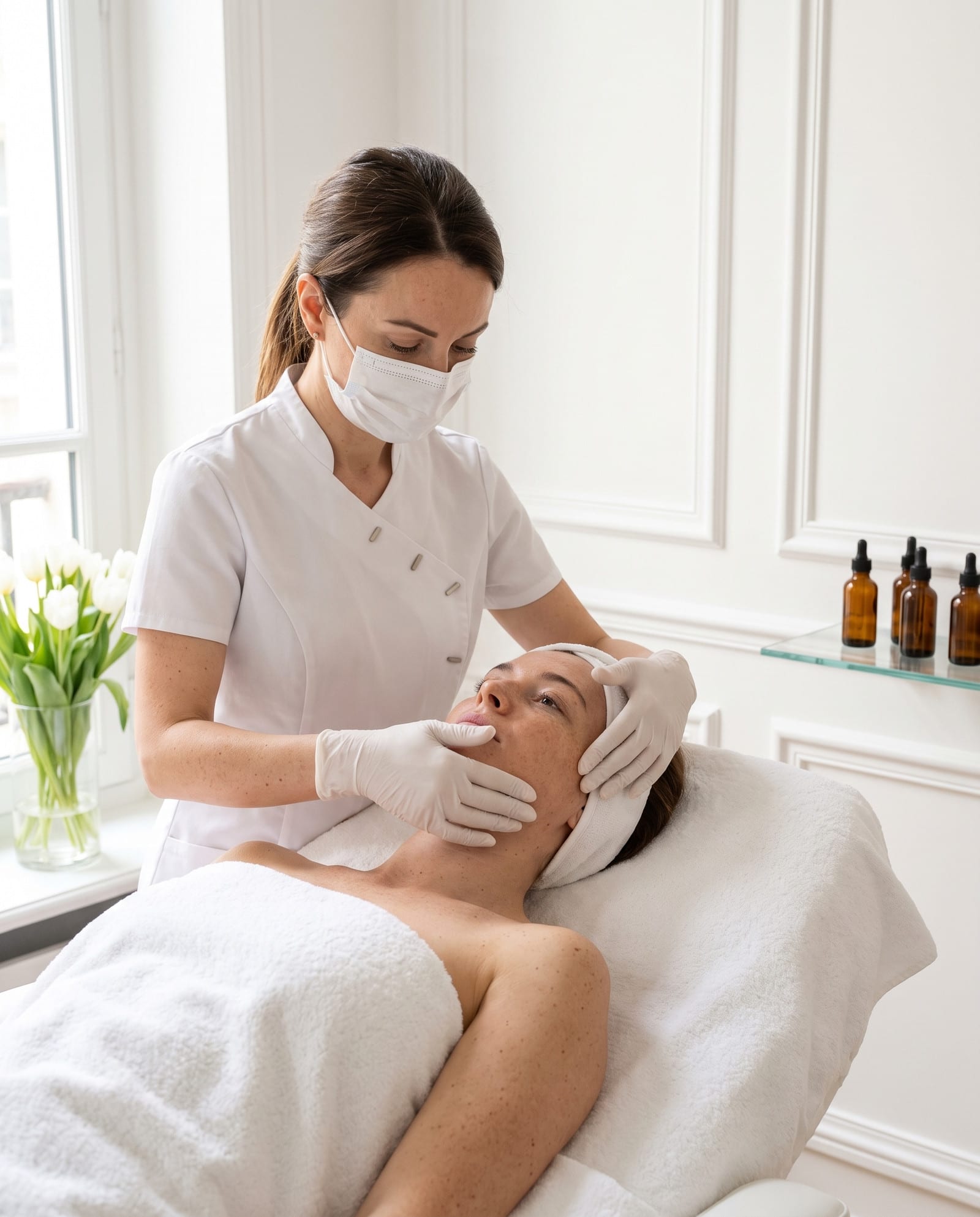
One table to summarise
If you still do not know where to start — this table will not give you a ready-made answer, but it will help you find it in conversation with a cosmetologist.
Endermologia
device-based, deep mechanical work
- face and body
- cellulite, body contouring, lymphatic drainage
- results after a series of treatments
- no sensory "hands-on" element
Kobido
manual Japanese tradition, face
- mainly face, neck, décolletage
- facial contour, tension, skin tone, acupressure
- strong relaxation effect
- rich sensory and ritual dimension
ZOGA
modern manual method, precision and drainage
- mainly face, neck, head
- drainage, tension, fascia work
- precision and holistic approach
- good drainage results relatively early in the series
Two philosophies, one goal — but a completely different path
Yoga face and Kobido differ not only in technique but in their approach to the face as a whole. Yoga face treats the face like the rest of the body: overloaded muscles need to be relaxed, and weakened ones need to be strengthened. Kobido works more rhythmically and dynamically — rapid movements, pressure and drainage are intended to provide a lifting effect visible almost immediately.
Yoga face
working with muscles from within
- relaxes chronic tension (jaw, forehead, eye area)
- contours the facial shape through conscious muscle exercise
- works on mimicry — reduces habits that create wrinkles
- deep relaxation, "rested face" effect
- often used as a complement to body and breath work
Kobido massage
lifting sculpting and stimulation
- intensive pressure, tapping and rolling techniques
- visible lifting of facial contours often after the first treatment
- strong circulation stimulation — radiance and skin oxygenation
- lymphatic drainage — reduces swelling and puffiness
- stimulates collagen and elastin production with regular series
When to choose Yoga face and when to choose Kobido
The choice is not difficult when you know what bothers you the most. Here is a simplified decision map:
- Tension, jaw pain, teeth grinding, tension headaches → yoga face first. Working to relax the jaw, temple and forehead muscles can provide relief that no lifting treatment can offer.
- "Sagging" facial oval, less defined contours → kobido. Intense lifting techniques remodel the contour — the effect is visible sooner.
- Tired, grey skin, lack of radiance, morning swelling → kobido. Lymphatic drainage and circulation stimulation do more here than relaxing muscle work.
- Expression lines from habitual tension (raised brows, clenched lips, furrowed forehead) → yoga face. It teaches facial awareness and often eliminates habits before they can become permanently "etched" into the skin.
- General relaxation, a reset after stress, a ritual for yourself → yoga face. It is calmer and has a deeper effect on the nervous system.
- Special occasion, wedding, important meeting — immediate effect → kobido. More pronounced lifting and radiance are often noticeable after just one treatment.
When it is worth combining them — and with what
In practice, yoga face and kobido complement each other perfectly. They can be used alternately or in a single series, depending on the current state of your skin and your goals. Below are combinations that bring exceptionally good results for many people:
Yoga face + kobido in a series
Yoga face at the start of a series releases tension and prepares the muscles. Kobido then sculpts and lifts on a "relaxed" foundation. This combination is often used as an intensive treatment programme.
Kobido + needle mesotherapy or PRP
Kobido improves circulation and prepares the skin for intensive hydration or regeneration. Strengthening treatments work best on skin that is ready to receive them.
Yoga face + enzymatic peel
Gentle exfoliation removes the barrier of dead cells, through which nutrients are absorbed better. Yoga face then stimulates circulation and oxygenates the skin after the peel.
Kobido + body lymphatic drainage
With water retention and a tendency towards swelling, kobido on the face and drainage on the body mutually reinforce the effect. Lymph drains more effectively.
What to look for when choosing a specialist
Both techniques require good training — especially kobido, where rhythm, pressure and the sequence of movements are significant for the effect and safety. A few things worth asking before booking:
- Pre-treatment interview — a good specialist asks about your habits, tension, skin condition and any contraindications.
- Individual adjustment of pace — yoga face can be deeper or gentler depending on tension. Kobido is intense but should not be painful.
- Regularity — both massages give the best results in series, not as one-off sessions. It is worth asking about the recommended frequency.
- Couperose and sensitive skin — in kobido, some techniques may increase redness. A good specialist will modify the treatment or suggest an alternative.