Why does skin darken?
Discolouration around the underarms and bikini area has specific causes. Understanding them is the first step towards effective treatment.
- Shaving — daily razor irritation triggers post-inflammatory hyperpigmentation (PIH). Every micro-injury to the skin stimulates melanocytes to produce more pigment.
- Wax hair removal — pulling out hair damages the skin. Melanocytes respond to this injury by producing excess pigment.
- Friction — tight underwear, tights and skin-on-skin contact cause constant micro-irritation.
- Aluminium deodorants — aluminium salts can irritate and darken skin in sensitive individuals.
- Ingrown hairs — inflammation from ingrown hairs leaves post-inflammatory discolouration.
- Hormones — pregnancy, hormonal contraception and insulin resistance can intensify hyperpigmentation.
- Genetics — darker skin tones are naturally more prone to post-inflammatory hyperpigmentation.
When you should see a doctor
If the darkening appeared after hair removal, shaving or ingrown hairs, it's post-inflammatory hyperpigmentation. We can reduce this effectively.
Methods available at J'ADORE INSTYTUT
Treating discolouration in intimate areas requires combining methods — eliminating the source of the problem and reducing existing discolouration.
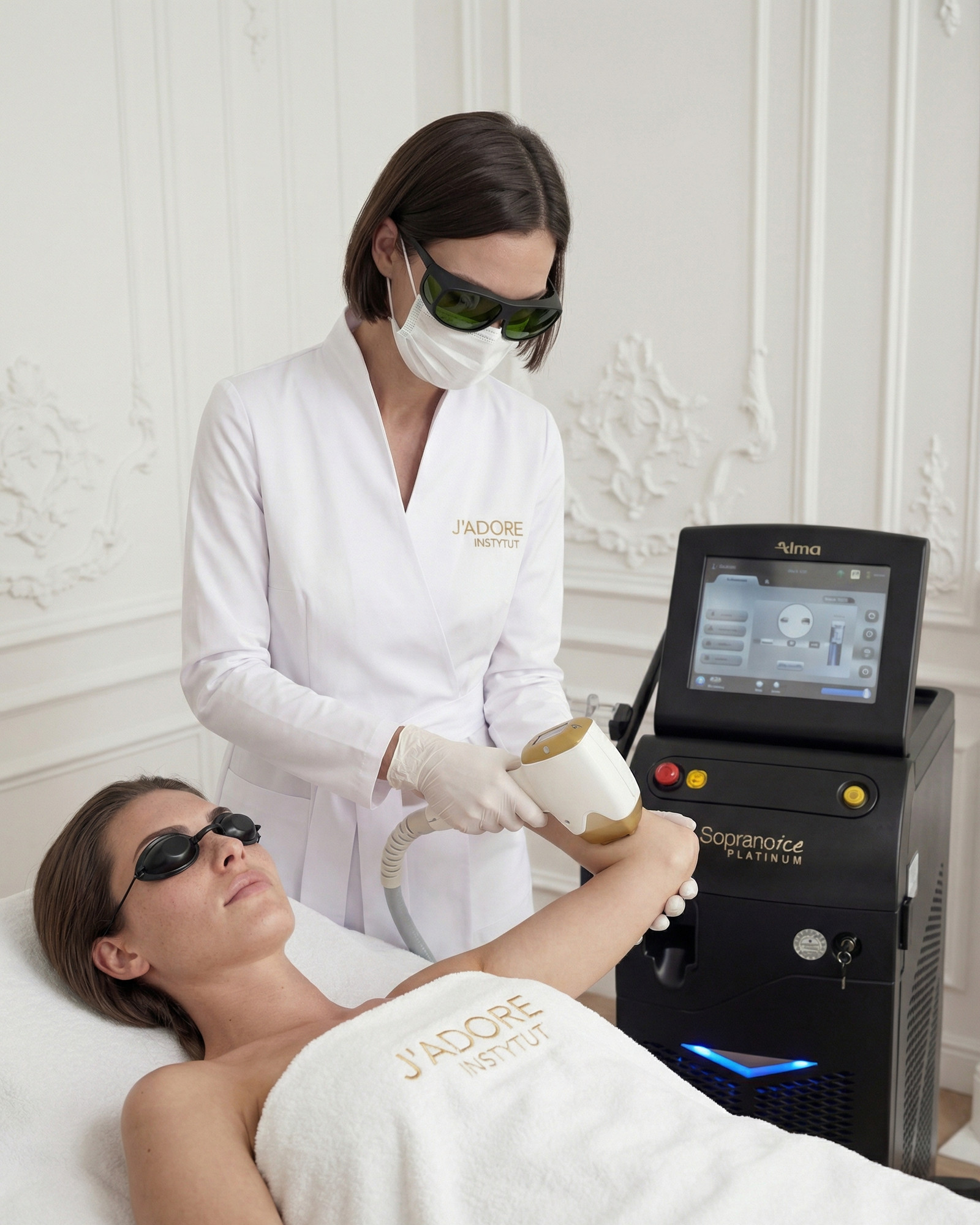
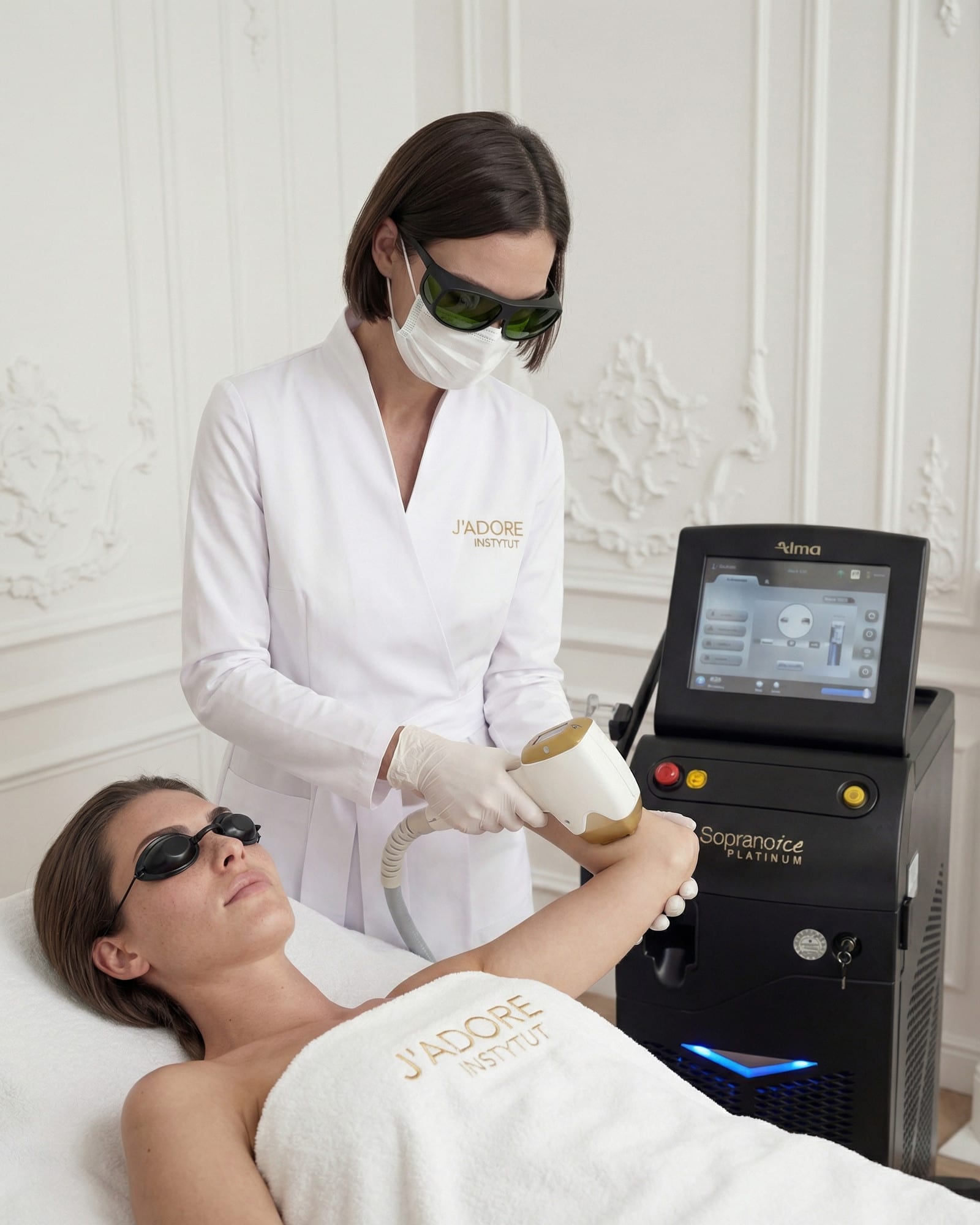
Laser hair removal — eliminating the source of the problem
A series of laser sessions usually involves several treatments at regular intervals. Results can appear gradually — for many people, skin tone starts to even out during the series.
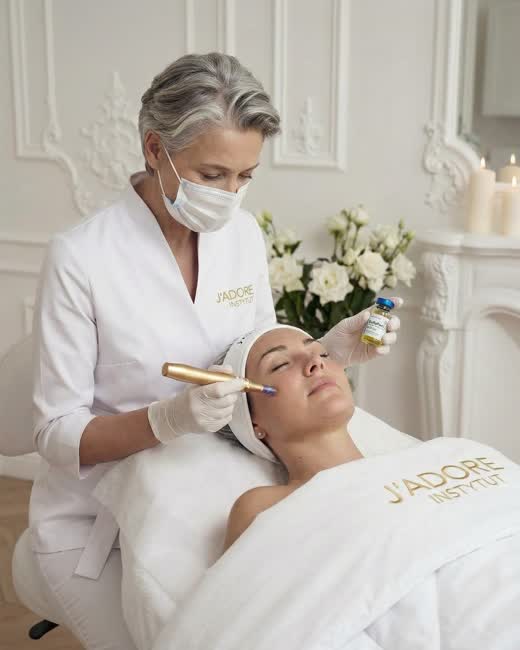
Depigmenting peels
After laser hair removal, or alongside it — a series of peels to reduce existing discolouration.
DYE-VL — precise action on discolouration
For existing dark discolouration that doesn't fade with peels, DYE-VL targets melanin selectively, without damaging the surrounding skin.
The series is customised individually — it depends on the depth of the discolouration and your skin's response. For many people, results are visible after the first few sessions.
Home care — active ingredients
In-salon treatments work best when supported by the right home care. At J'ADORE we'll recommend products tailored to your skin.
- Niacinamide 10% — can reduce melanin transfer to the epidermis and evens out skin tone
- Azelaic acid — inhibits melanocyte activity, well tolerated by sensitive skin
- Arbutin — a natural tyrosinase inhibitor, a gentle alternative to hydroquinone
- Kojic acid — depigmentation without excessive irritation
The plan — how to combine methods
A staged approach that takes the cause into account and aims to reduce existing discolouration may help.
- Stage 1: a series of laser hair removal sessions — eliminating daily shaving as the source of irritation
- Stage 2: alongside or afterwards — depigmenting peels, plus a niacinamide cream at home
- Stage 3 (if needed): DYE-VL for stubborn discolouration, to maintain results