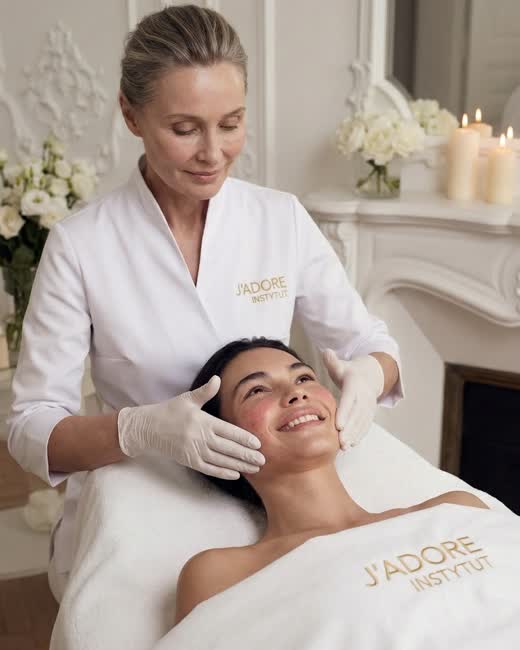
Why oily skin doesn't disappear after washing your face
Sebaceous glands beneath the skin produce sebum regardless of how often you wash your face. No foam or gel changes that. What does matter is the condition of the stratum corneum — if it's thick and compacted, sebum can't reach the surface freely. It blocks the pore and creates a blackhead or inflammation. This is how most adult male acne begins.
Acids work on a different level. AHAs (such as glycolic or mandelic acid) dissolve the bonds between dead skin cells — once exfoliated, sebum has an outlet and blocked pores open up. Salicylic acid (BHA) is lipophilic — it penetrates directly into fat-saturated pores, cleans them from within and has anti-inflammatory properties. Together they form a protocol that doesn't fight the skin. It resets its chemistry.
DermaQuest — what is this system, and why not the pharmacy
DermaQuest is a professional cosmetology line from the USA, developed for demanding, problem-prone skin. In short: the acid concentrations and combinations here are significantly higher than in pharmacy products, which is why they require professional application. This isn't about pain — it's that the wrong concentration on unprepared skin can end in irritation instead of improvement.
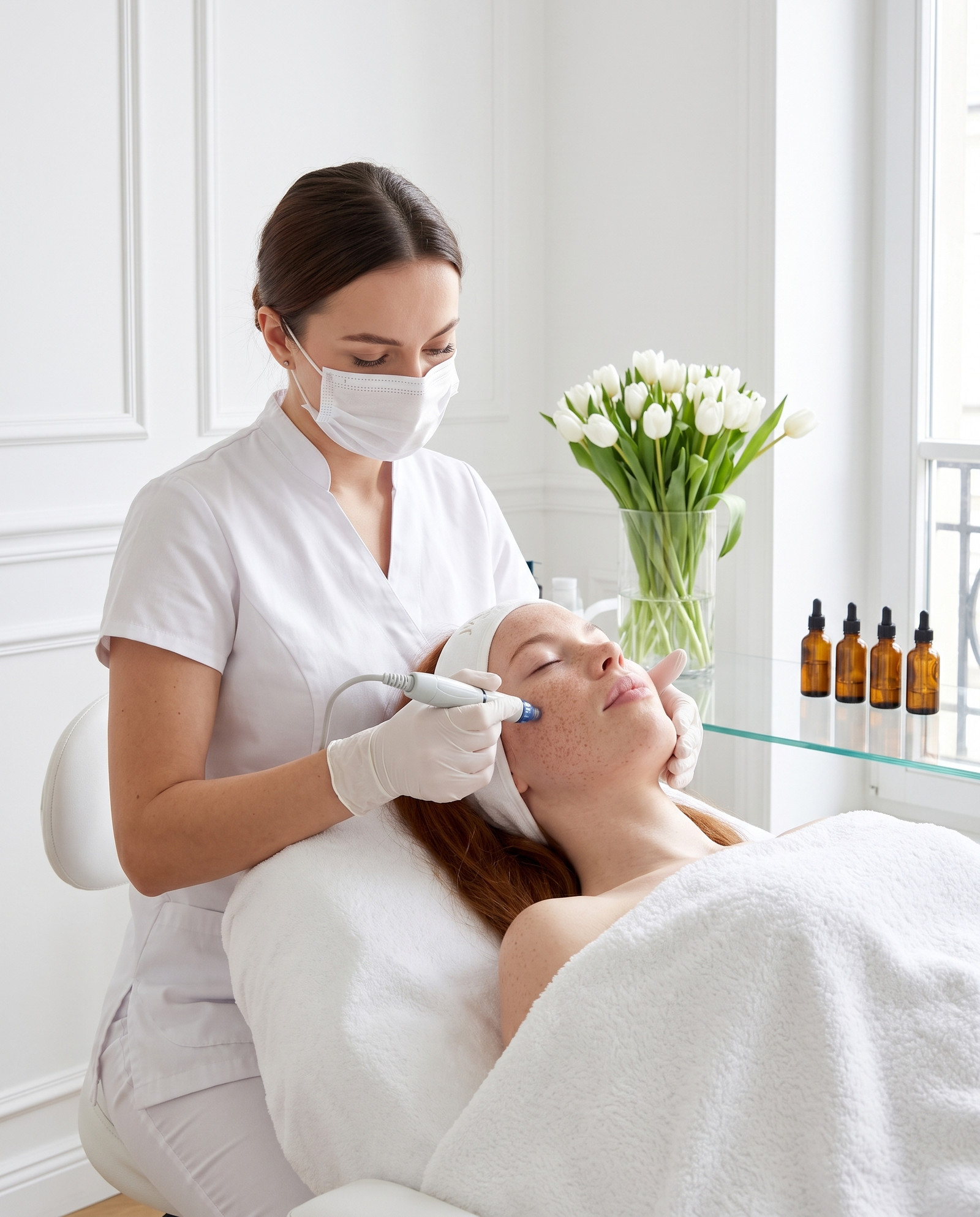
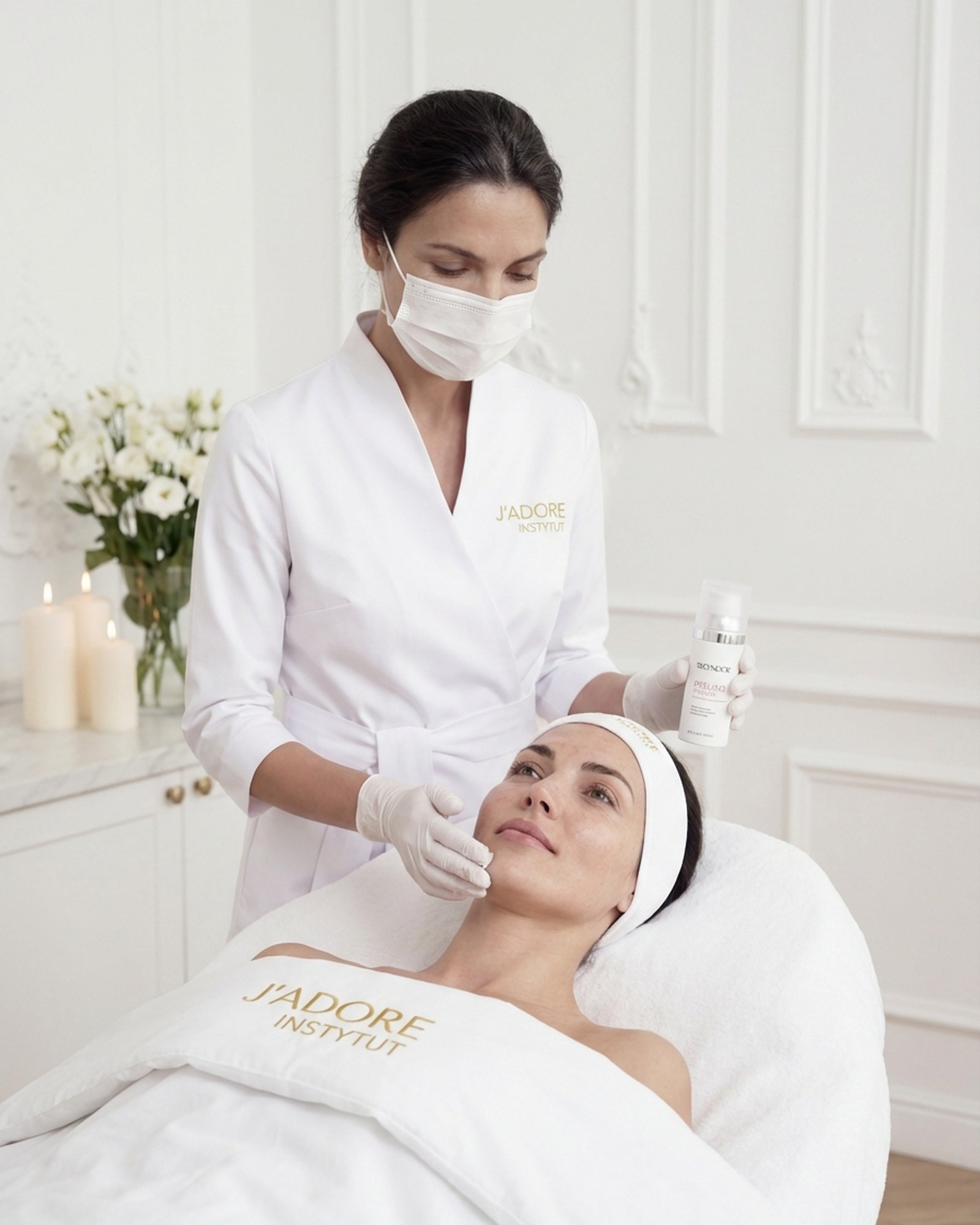
In the salon, your cosmetologist selects a protocol for your specific issue: an oily sheen with inflammation needs a different formula than dry skin with post-acne hyperpigmentation. The treatment isn't "apply acid and wash off" — it's a sequence: cleansing, peel, neutralising mask, skin barrier finalisation. Every step matters.
Pharmacy acids (OTC)
what they're suited for
- low concentrations (2–5% AHA/BHA)
- daily maintenance of results
- gentle exfoliation and prevention
DermaQuest in-salon
why more effective
- higher concentrations under a cosmetologist's supervision
- acid combinations matched to the problem
- a corrective protocol, not just an exfoliating one
Adult acne: where it comes from in men over 25
Acne after age 25 in men is often the result of several overlapping factors: stress and cortisol (which boost sebum production), a diet rich in dairy or simple sugars (insulin-related hormones affect the sebaceous glands), and often — a compromised skin barrier damaged by harsh shaving products. Skin that's sensitive and oily at the same time is a more common scenario than you'd think.
DermaQuest addresses this on multiple levels: the peel regulates sebum secretion, active ingredients calm inflammation, and finalisation rebuilds the skin barrier. The result isn't just fewer breakouts — it's skin that responds better to your daily routine and reacts less to stress.
What the treatment involves — zero downtime, done on your lunch break
The standard questions we hear: "does it hurt", "will I go red", "will anyone notice". The answers: a mild tingling or warmth during the treatment, depending on the concentration used. Afterwards, your skin may be pink for a few hours — but that's a matter of hours, not days. Any flaking (if it appears at all) is subtle and shows up 2–3 days after the treatment, not immediately.
- 01
step
Skin cleansing — removing sebum, SPF and aftershave products. The base needs to be clean so the acid works on the epidermis, not on product residue.
- 02
step
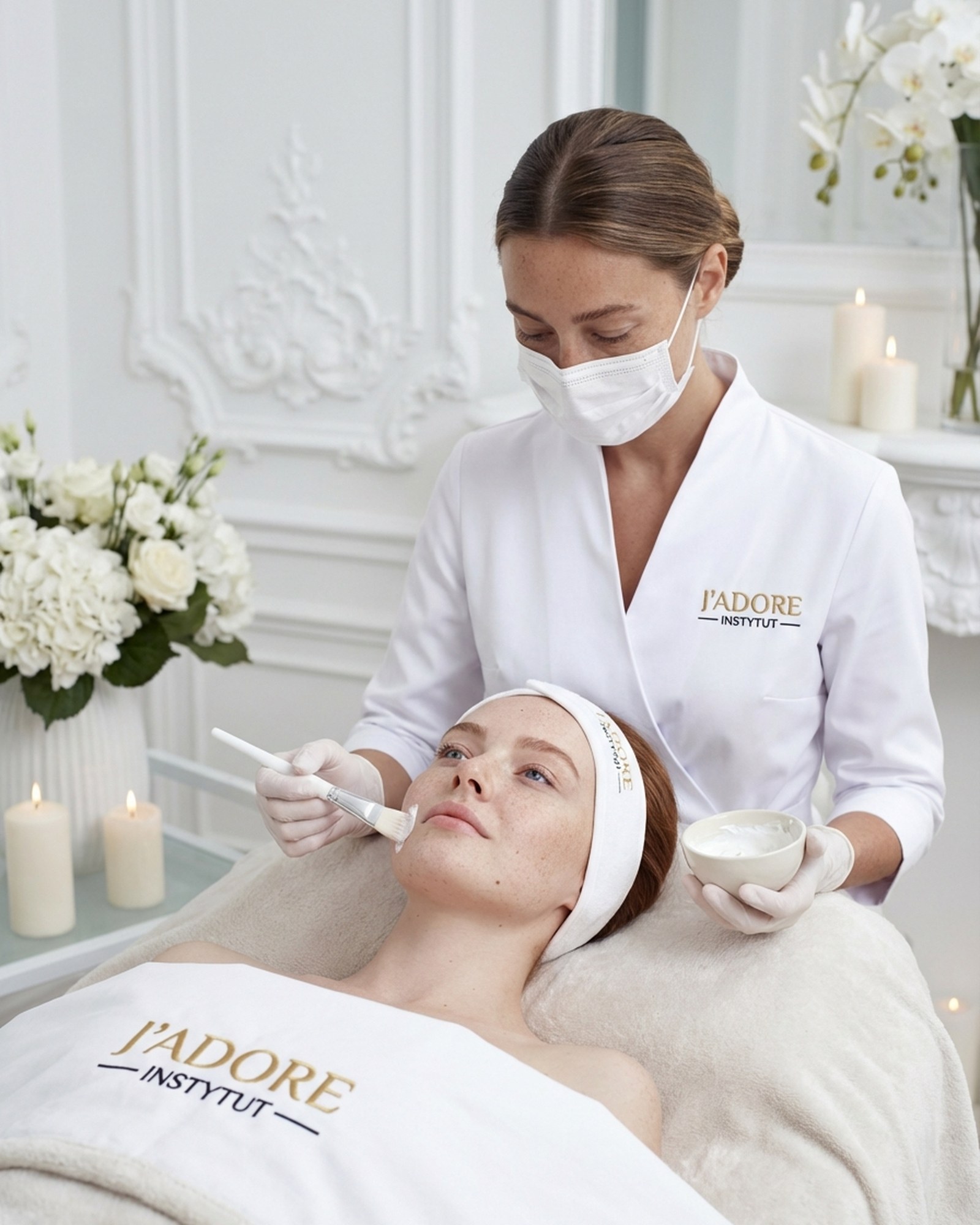
Peel application — your cosmetologist applies a DermaQuest formula chosen for your specific concern (seborrhoea, acne, hyperpigmentation). Exposure time is controlled.
- 03
step
Neutralisation — stopping the acid's action and moving to the calming stage. Your skin isn't simply rinsed off — it's actively rebalanced.
- 04
step
Mask and finalisation — repairing, hydrating and barrier-supporting ingredients. You leave the salon with finished skin, not skin that still looks "worked on".
For 24–48 hours after the treatment, avoid saunas, intense training and strong sun exposure without SPF. Otherwise, you're back to your normal day. Visible improvement usually starts after 2–3 sessions — one session works, but the full protocol delivers the full result. Your cosmetologist sets a schedule matched to your skin's condition.
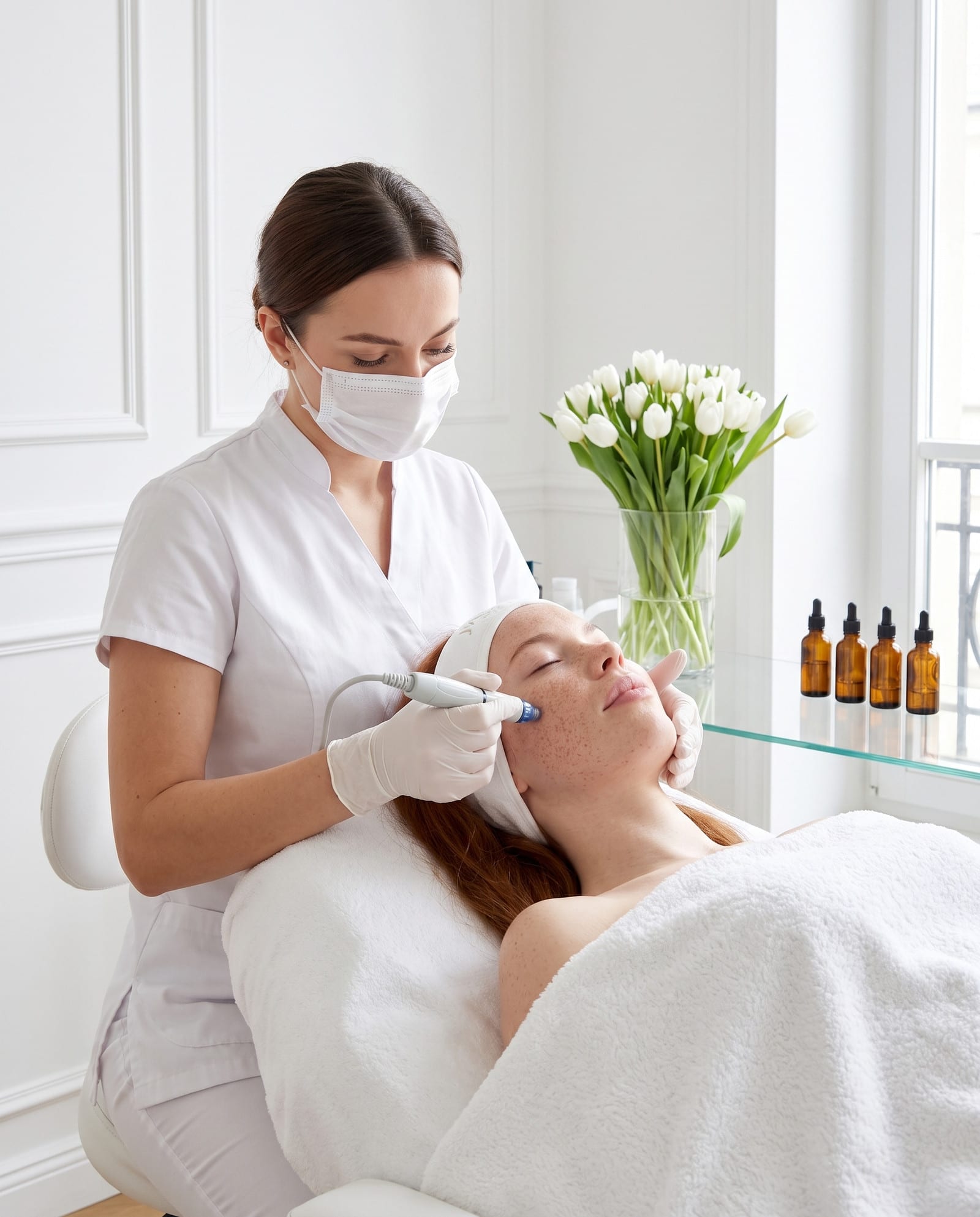
Post-acne hyperpigmentation: what can be done
Inflammation isn't the end of the story — a healed breakout often leaves a brown or reddish mark behind. This is post-inflammatory hyperpigmentation (PIH). In men who've dealt with acne for years, there can be dozens of these marks, even on skin that now looks calm. Mechanically, there's nothing you can do about them. Acids can.
DermaQuest offers brightening protocols with vitamin C and azelaic acid, which inhibit tyrosinase (the enzyme responsible for melanin production) and evenly lighten hyperpigmentation. This is a slower process than tackling active acne — usually 4–6 sessions for a clear result — but it lasts, because it addresses the mechanism, not just the symptom.
Skin after shaving — a separate issue
Shaving is regular mechanical abrasion of the skin. Every pass of a razor across the face creates micro-injuries and the risk of ingrown hairs, especially on the chin and neck. Skin that's permanently irritated by shaving is thinner, more reactive, and struggles more with seborrhoea. It's a vicious circle: irritation → inflammation → more sebum → acne.
DermaQuest protocols include ingredients that directly ease shaving-related irritation: soothing extracts, ceramides and barrier-strengthening niacinamide. This doesn't remove the need for a good aftershave balm at home — but it means your skin is fundamentally stronger and reacts less to everyday stressors.