1. Sun-induced hyperpigmentation — a time bomb that has just gone off
The most frustrating thing about hyperpigmentation is that it doesn't appear straight away. Delayed melanogenesis means the full extent of UV damage only shows up 2–4 weeks after exposure. In other words, the spots you see in the mirror now are the result of sun exposure from a month ago.
UVA radiation — which passes through clouds, car windows and beach umbrellas — reached the deeper layers of the dermis and activated melanocytes, the cells that produce melanin. After intense exposure, melanocytes start working erratically. Instead of distributing pigment evenly, they form clusters — and that's how spots appear.
Action plan:
- Medical peel with acids (mandelic, kojic, azelaic) — exfoliates the layer holding excess pigment
- Vitamin C serum (15–20%) in the morning — inhibits tyrosinase, the enzyme responsible for melanin production
- SPF 50 every day, even at the office — light from windows and screens keeps melanogenesis going
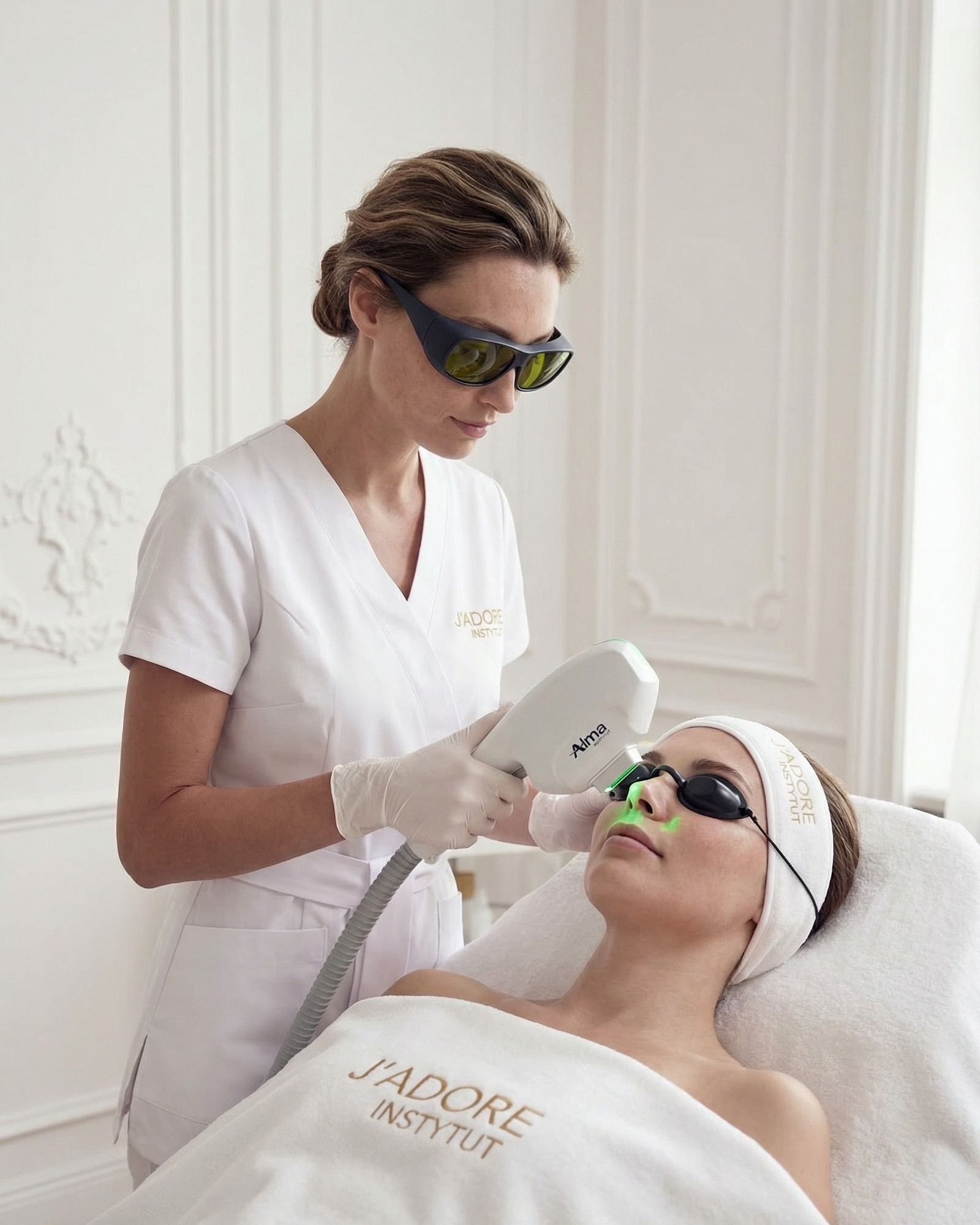
- For deeper hyperpigmentation: fractional laser in-salon — breaks up melanin clusters with precise micro-beams
2. Deep dehydration — not to be confused with dry skin
"But I drank water, I used SPF cream — where's this tightness coming from?" you ask, looking at skin that resembles crumpled tissue paper. Sun, wind, sea salt and pool chlorine form a quartet that systematically breaks down the skin's hydrolipidic barrier.
Sea water has a much higher osmolarity than your skin — it literally draws water out of the epidermis through osmosis. Sun speeds up water evaporation from the surface (known as TEWL — transepidermal water loss). Wind adds to the effect. By the end of a holiday, skin can lose several times more water than usual.
Action plan:
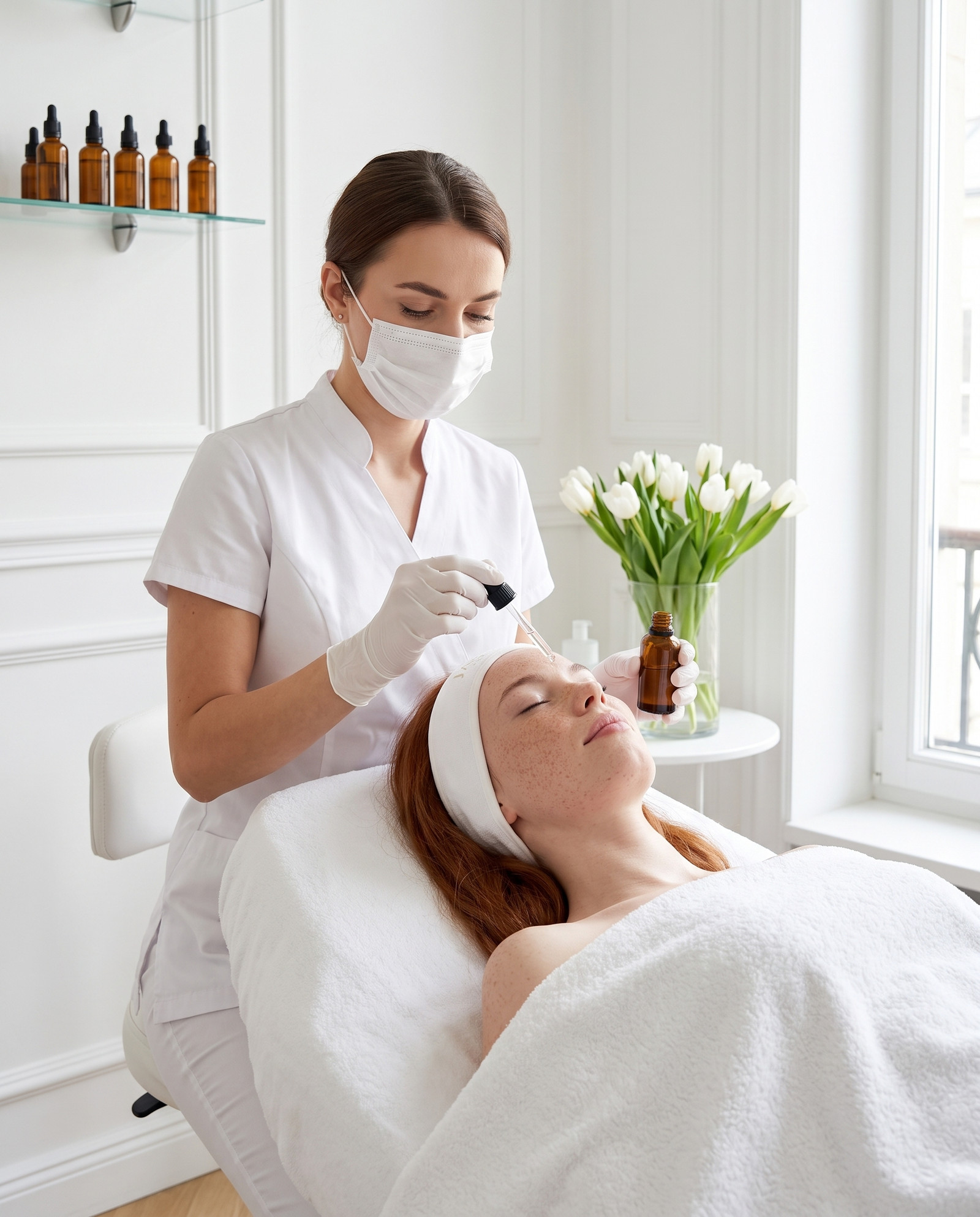
- Needle mesotherapy with hyaluronic acid — delivers hydration where cream can't reach, directly into the dermis
- Serum with hyaluronic acid of different molecular weights — the low-molecular form penetrates deeply, the high-molecular form forms a film on the surface
- Ceramides in your moisturiser — rebuild the barrier that prevents water loss
- Internally: 2 litres of water a day plus electrolytes (potassium, magnesium) for the first week after returning
3. Thickened epidermis — your skin has built a defensive wall
Touch your cheek. Does the skin feel thicker, rough, almost "cardboard-like"? That's protective hyperkeratosis — a defence mechanism in which skin produces extra layers of dead cells to shield itself from UV. Clever from an evolutionary standpoint, frustrating cosmetically.
Action plan:
- Medical peel in-salon (e.g. Jessner, TCA, 40% mandelic) — controlled, even exfoliation
- At home: glycolic acid 8–10% every other evening for 2 weeks
- Enzyme mask (papain, bromelain) twice a week as a gentler alternative
4. New wrinkles — photoageing on fast-forward
A single summer of intense sun exposure can add several years of biological ageing to your skin. UVA radiation breaks down collagen and elastin — the proteins responsible for skin's elasticity and firmness. We call this process photoageing, and it accounts for a significant share of visible signs of ageing on the face.
Wrinkles that may appear after a holiday fall into two categories:
- Dehydration lines — shallow, fine, caused by water loss. Reversible once hydration is restored.
- Collagen wrinkles — deeper, visible even on hydrated skin. These need stimulation of new collagen production.
Action plan:
- Retinol — but note: hold off for 2 weeks after returning if your skin is irritated. Start with a low dose and increase gradually
- Mesotherapy with a revitalising cocktail (amino acids, vitamins, hyaluronic acid) — may stimulate fibroblasts to produce collagen
- Copper peptide (GHK-Cu) in serum — studied for its effect on collagen synthesis
- Fractional laser — thermal micro-columns force the skin to remodel itself. One autumn session lays a good foundation for winter
5. Post-season hair — dry, brittle, lacking shine
Skin isn't the only casualty of summer. Hair goes through its own ordeal — UV, salt, chlorine, hot sand. Ultraviolet radiation breaks the disulphide bonds in keratin, the main structural protein of hair. The result: hair becomes porous, loses elasticity and breaks easily.
Action plan:
- Protein mask once a week (keratin, silk, collagen) — fills in gaps in the hair structure
- Overnight oiling (argan oil, jojoba) — rebuilds the lipid layer
- Trim 2–3 cm — heavily damaged ends can't be repaired, so it's best to let them go
- Avoid straighteners and hot hairdryers for 2 weeks — let your hair rest
- Supplementation: biotin, zinc, iron — support repair from within
Your September repair plan — week by week
What NOT to do after your holiday
- Don't jump straight into an aggressive peel — irritated skin plus a strong acid is a recipe for disaster
- Don't top up your tan "just a little more" on the balcony — holiday melanogenesis is still under way
- Don't buy lots of new products at once — skin needs stability, not experiments
- Don't ignore new moles or skin changes — September is a good time for a dermatological check-up
- Don't skip SPF just because "summer's over" — UVA radiation is present all year round
When will you see results?
Miracles don't happen overnight. The epidermal renewal cycle takes around 28 days. If you start your repair plan in early September, you should see noticeable improvement by the end of the month. Full recovery after an intense summer takes 2–3 months of consistent skincare.