Ingrown hairs after hair removal — is it the laser's fault, or yours?
Laser reduces ingrown hairs. The problem lies in what you do between sessions.
6 min read8:05 of audiowritten for women
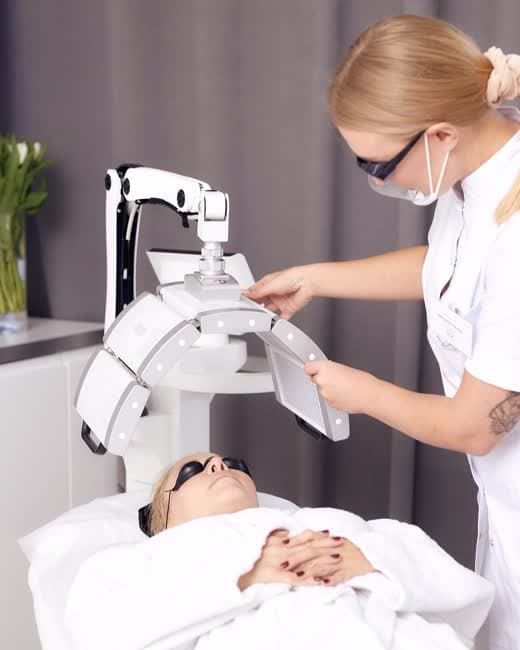
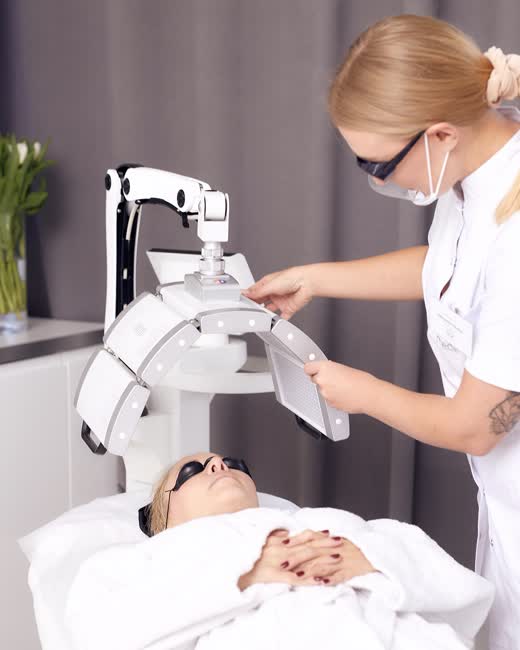
Illustrative photo. It shows an example of how the treatment is performed.
You are listening0:00 of 8:05
Listen to the article
read by Kore · 8:05
0:008:05
6 min readread by Kore22 May 2026
You had laser hair removal. A week later, a red, painful lump appears on your calf. Your first thought: "The laser damaged my skin." In 90% of cases, ingrown hairs after laser treatment aren't caused by the technology — they're caused by what happens after you leave the salon. Understanding the mechanisms and following proper aftercare can eliminate this problem completely.
01
The mechanism of ingrown hairs — what actually happens beneath the skin
Hair grows from a follicle, travelling through a channel in the dermis and epidermis. Under normal conditions, it emerges onto the surface and keeps growing. Ingrown hairs start when something disrupts this process.
Three main mechanisms:
02
Shaving, waxing, laser — three methods, three different problems
Not every hair removal method causes ingrown hairs in the same way. Understanding the differences is the key to prevention.
A blunt blade (dragging instead of cutting = micro-trauma)
Dry shaving (no glide = uneven cutting)
Shaving against the grain (sharp tip below the surface)
Shaving too often (skin doesn't have time to recover)
Hair that's too short (under 5 mm = wax can't grip, hair breaks)
Sessions too far apart (hairs in different growth phases = uneven removal)
No exfoliation between sessions
So why do ingrown hairs sometimes appear after laser treatment? Because the laser doesn't destroy 100% of follicles in a single session. It's only effective on hairs in the anagen (growth) phase — and at any given time, only 20–30% of hairs are in that phase. The rest survive and start growing again after a few weeks.
Shaving between sessions (creates a sharp hair tip)
No skin exfoliation (hyperkeratosis blocks the channel)
Wearing very tight clothing (friction = micro-inflammation)
03
The golden rules of aftercare
If you want to avoid ingrown hairs after any hair removal method, these rules are non-negotiable:
04
Folliculitis vs ingrown hairs — when it's something more serious
A single ingrown hair is a cosmetic issue. Recurring folliculitis is a medical one.
Folliculitis (inflammation of the hair follicles) presents as:
Multiple pustules with a white or yellow tip
Pain and tenderness to the touch
Redness around the follicles
Itching
Folliculitis can be bacterial (most often Staphylococcus aureus), fungal, or caused by mechanical irritation. The distinction matters: bacterial folliculitis requires antibiotics, fungal folliculitis requires an antifungal, and mechanical folliculitis requires a change in habits.
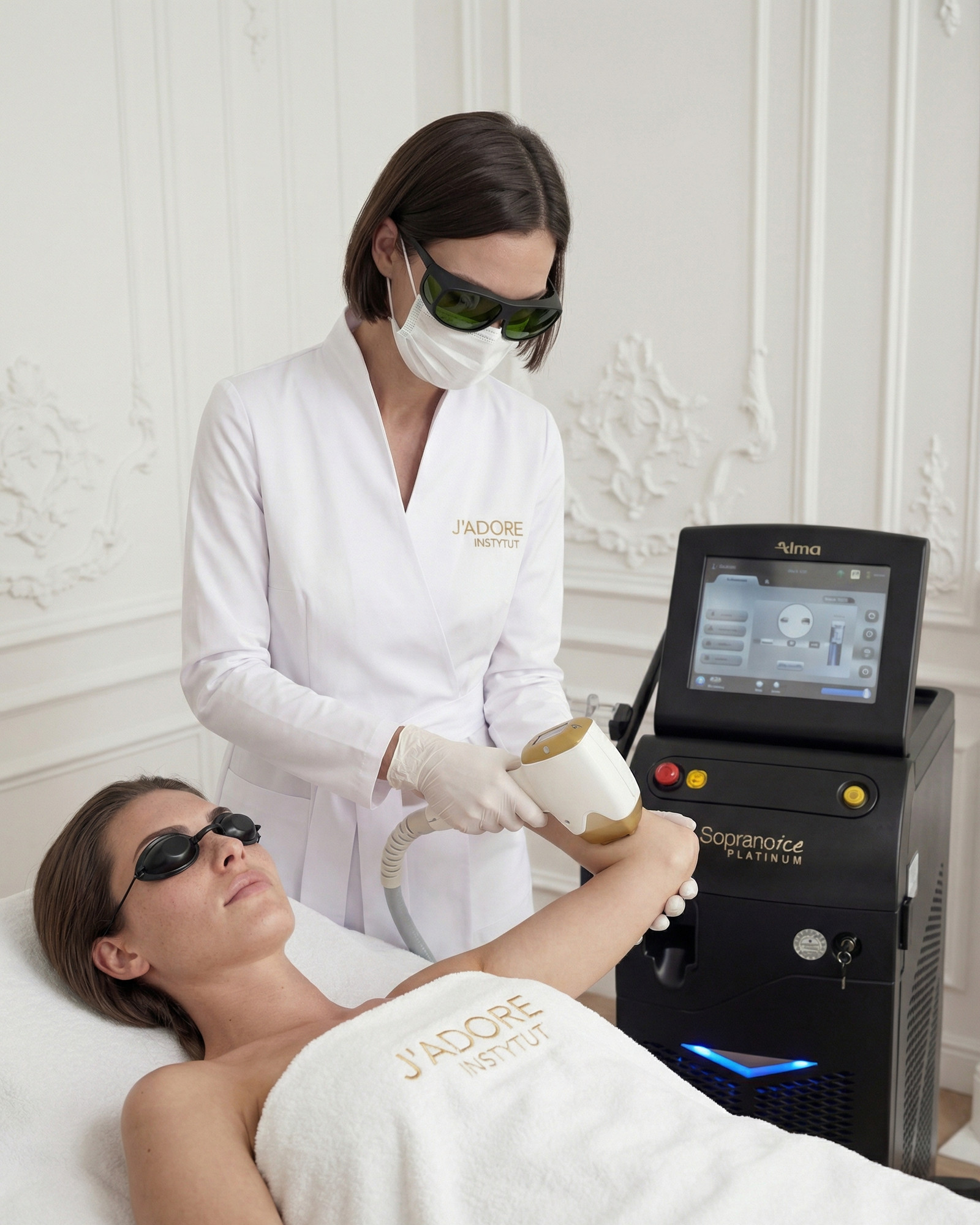
Illustrative photo. It shows an example of how the treatment is performed.
05
Myths you need to drop
06
Rescue plan: what to do once ingrown hairs appear
Have a series of ingrown hairs and need a solution right now? Here's a step-by-step protocol:
Stop hair removal for at least 2 weeks — give your skin time to heal
Warm compress (5 minutes, twice a day) — softens the epidermis and helps the hair emerge
Salicylic acid — applied directly to the lumps, morning and evening (exfoliates and has an anti-inflammatory effect)
Don't touch it — no squeezing, no picking, no digging
Loose clothing — to minimise friction
After 2 weeks — a gentle enzyme peel over the whole area