
WarszawaŻelazna 59WarszawaMińska 29AKrakówKarmelicka 45Warszawa · Kraków

Careers

ENPL

Full perspective

Azelac — azelaic acid for women

Skin that reddens at the slightest provocation
The most common reason women choose the Azelac peel for women is rosacea and broken capillaries — redness, flushing, skin that flares up easily. The second is hyperpigmentation (post-inflammatory and hormonal) and uneven skin tone. Azelaic acid is ideal here, since it calms and brightens at the same time, while being well tolerated by sensitive skin.
Czas
several dozen minutes
Efekt
cumulative effect — builds and is maintained with a series and home care
Regeneracja
minimal — usually zero downtime
Seria
series of 4–6 treatments every 1–2 weeks (a 10-session package is also available)
Wykonuje
experienced cosmetologist
ListenAzelac — azelaic acid — this whole page read aloud

When it's worth it — indications

  • Rosacea — persistent redness, a feeling of heat, "flushing" on the cheeks and nose.
  • Broken capillaries and fragile blood vessels — visible thread veins, skin that flushes in response to temperature, stress or spicy food.
  • Hyperpigmentation — post-inflammatory (from breakouts), sun-induced and uneven skin tone.
  • Acne and oily skin — antibacterial action and sebum regulation, fewer blackheads and breakouts.
  • Reactive and sensitive skin — skin that can't tolerate strong acids but needs evening out and calming.
  • Acne marks — flat post-acne hyperpigmentation and uneven tone.
  • Grey, fatigued skin — when the goal is refreshing skin tone without risking irritation.

The areas we work on

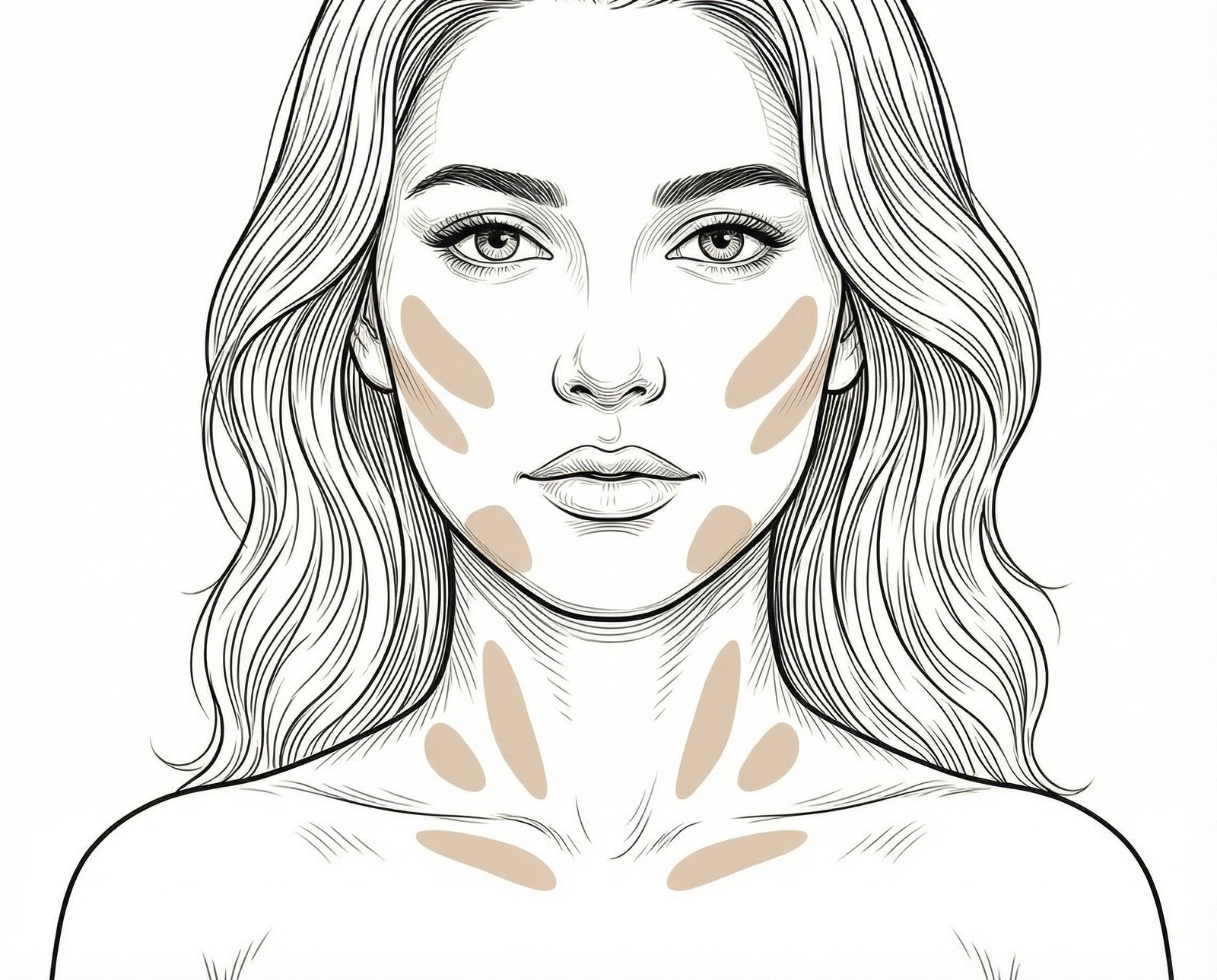
  1. redness, rosacea, broken capillaries on the cheeks and around the nose;
  2. post-inflammatory and hormonal hyperpigmentation, uneven tone;
  3. reactive skin that doesn't tolerate stronger acids well;
  4. skincare support for breakout-prone skin ahead of an important event.
Rysunek stref zabiegowych — twarz, szyja i dekolt, sylwetka kobiecaForeheadPoliczkiSzyjaDécolletage
Indicative map of the areas

Skin that reddens at the slightest provocation

Redness after a glass of wine, a flushed face after walking into a warm room, visible broken capillaries even without make-up — this isn't an exaggeration or a case of "difficult" skin. This is reactive, vascular skin, and it needs a concrete plan, not increasingly aggressive skincare. The Azelac peel is the first in-salon tool a cosmetologist reaches for when a woman's skin mainly reddens, develops broken capillaries and flushes — because azelaic acid targets exactly this mechanism: it calms inflammation and strengthens the walls of small blood vessels, without irritating already-reactive skin.
For many women, Azelac is also the first serious answer to hyperpigmentation with a partly hormonal background — post-inflammatory hyperpigmentation from breakouts often worsens around cycle changes, after pregnancy or while on contraception. Azelaic acid blocks excess melanin production, and it does so gently — without risking irritation to skin that's already reactive.

What women's skin needs from an azelaic peel

Looking for a treatment "for redness", many women end up with aggressive exfoliation — and end up with skin worse than before. For vascular and rosacea-prone skin, that's a mistake: it doesn't need brutal resurfacing, it needs consistent calming and strengthening. Azelac works on that logic:
The effect builds over a series of 4–6 treatments — and it's this consistency, not a single "strong hit", that translates into a real change in how skin responds to temperature, stress and light.
  • it evens out skin tone without the peel itself triggering redness;
  • it reduces redness and flushing over the following weeks of the series;
  • it targets post-inflammatory and hormonal hyperpigmentation, which can be more pronounced in women than in men;
  • it's well tolerated by sensitive skin that can't cope with strong AHA acids or high-strength retinol.

Redness and emotions — why it matters

Redness and broken capillaries in women are often a problem that goes beyond the skin itself: a face suddenly reddening during a conversation or presentation builds self-consciousness and tension — and stress, in turn, worsens the redness. It's a vicious cycle, and an azelaic peel starts breaking it from the biological side: reduced vessel reactivity and calmed inflammation mean fewer "autopilot" flare-ups in everyday situations.
The series itself isn't a one-off event — it's a plan for your skin, built together by cosmetologist and client, including home care (an azelaic acid cream, panthenol, ceramides) and daily SPF 50+.

What women in their 30s, 40s or 50s+ gain

With age, blood vessel walls become more fragile, and regulating melanogenesis becomes harder. Azelac is safe at every stage of a woman's life except pregnancy and breastfeeding — during those, we discuss safe options at consultation. After menopause, when skin can be thinner and more reactive, the gentleness of azelaic acid is an advantage, not a compromise.

Frequently asked questions

I've had rosacea-type redness for years — can a peel really reduce it?
Yes, though it isn't an instant change. Azelaic acid works as an anti-inflammatory and strengthens vessel walls — it targets the mechanism behind rosacea, not just masks the result. The effect builds over a series of treatments and is maintained with consistent home care and SPF. For advanced rosacea, a cosmetologist may combine Azelac with laser or IPL vessel closure — that's something you'll decide together at consultation. Will it show that I've had something done? I have an important meeting in a few days. Usually not — this is a superficial peel, and typical "symptoms" are, at most, mild tightness and subtle flaking for 1–3 days. Post-treatment redness can be temporary and often fades the same day. Your cosmetologist will tailor the strength and timing to your current reactivity — the first treatment is deliberately gentler, to assess how your skin responds. For an important event, it's worth allowing a few days' buffer, but an azelaic peel is definitely not a treatment with a "week of recovery".
I have pregnancy-related hyperpigmentation that hasn't faded. Will Azelac help?
Azelaic acid blocks excess melanin production, so it works on hormonal and post-inflammatory hyperpigmentation. For melasma (pregnancy mask), Azelac alone may not be enough — your cosmetologist will assess how deep the pigment sits and decide whether it's the right starting point or whether a fuller depigmentation protocol is needed straight away. Important: after pregnancy and during breastfeeding, treatments require individual assessment — start with a consultation.
I use retinol and acids at home. Do I need to stop before a series of peels?
Yes — before each treatment and during the series, your cosmetologist will ask you to pause strong AHA/BHA acids and retinol in your home routine. Applying them right after a peel is a quick route to irritation. When to reintroduce them is something your cosmetologist will tell you based on how your skin responds after each session.
I've heard peels in summer are a bad idea. Do I have to wait until autumn?
You don't have to, but conditions matter. We treat in summer and spring with strict SPF 50+ — skin is more exposed to UV after a peel, so sun protection is a condition, not an add-on. If you're planning a full-sun holiday during your series, mention it at consultation — we'll schedule your sessions so treatments and heavy sun exposure don't overlap.

Where we offer it

Azelac — azelaic acid for women — we perform it in three J'ADORE INSTYTUT salons: two in Warsaw and one in Krakow.

  • WarszawaŻelazna 59 · Wola · Mirów
  • WarszawaMińska 29A · Praga-Południe · Kamionek
  • KrakówKarmelicka 45 · Stare Miasto · Piasek

Price list

    Book a visit

    Prices come from the salon price lists. The choice of cocktail and the number of sessions is decided by your specialist at the consultation.