WarszawaŻelazna 59WarszawaMińska 29AKrakówKarmelicka 45Warszawa · Kraków

Careers

ENPL

Full perspective

Hibiscus Mandelic for women

When cream is no longer enough — what most women feel before their visit
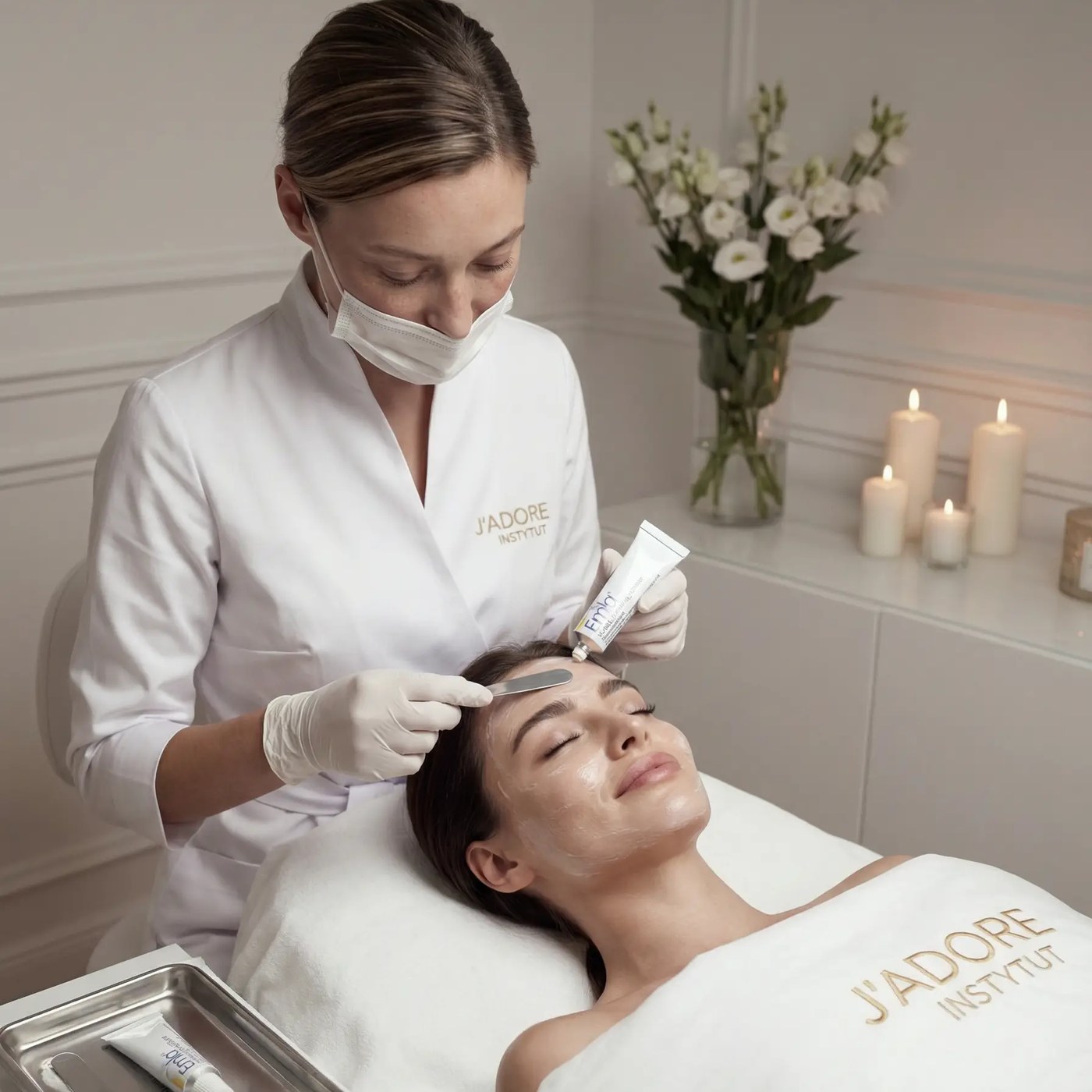
For women, Hibiscus Mandelic is most often the answer to grey, tired skin with no radiance — after winter, after summer, after sleepless nights — as well as to mild pigmentation and uneven skin tone. Gentle mandelic acid brightens and evens out skin tone, and hibiscus adds a smoothing effect, which is why it also works well for sensitive, reactive skin. This is the classic almond peel with hibiscus for women.
Czas
a few dozen minutes (slightly longer with skin preparation)
Efekt
radiance and smoother texture are visible immediately; evening out skin tone and pigmentation deepens and lasts with a series
Regeneracja
minimal — usually mild redness the same day, with no visible peeling
Seria
best as a series of 4–6 sessions every 1–2 weeks, followed by maintenance
Wykonuje
experienced cosmetologist
ListenHibiscus Mandelic — this whole page read aloud

When it's worth it — indications

  • Grey, sallow skin with no radiance — "tired-looking" skin that creams alone can no longer fix. This is the main indication for Hibiscus Mandelic.
  • Uneven skin tone and mild hyperpigmentation — post-sun, post-inflammatory, post-acne; mandelic acid supports a more even skin tone (melasma requires a separate, dedicated approach).
  • Enlarged pores and oiliness — the peel unclogs pores, regulates sebum and improves texture for combination and oily skin.
  • Sensitive and reactive skin — the large molecule of mandelic acid makes this one of the best-tolerated peels; often chosen where glycolic acid stings.
  • Darker skin phototype — mandelic acid carries a lower risk of post-inflammatory hyperpigmentation than glycolic acid, making it a safer choice for darker complexions (always with strict SPF use).
  • Early signs of ageing and photoageing — fine lines, loss of freshness after years of sun exposure; hibiscus adds a smoothing effect here.
  • Tendency towards blemishes — blackheads, small breakouts (NOT for active, pustular acne — that requires a separate assessment).
  • Instant radiance — before a wedding, a photoshoot, an important meeting; a good "quick glow" without prolonged flaking.

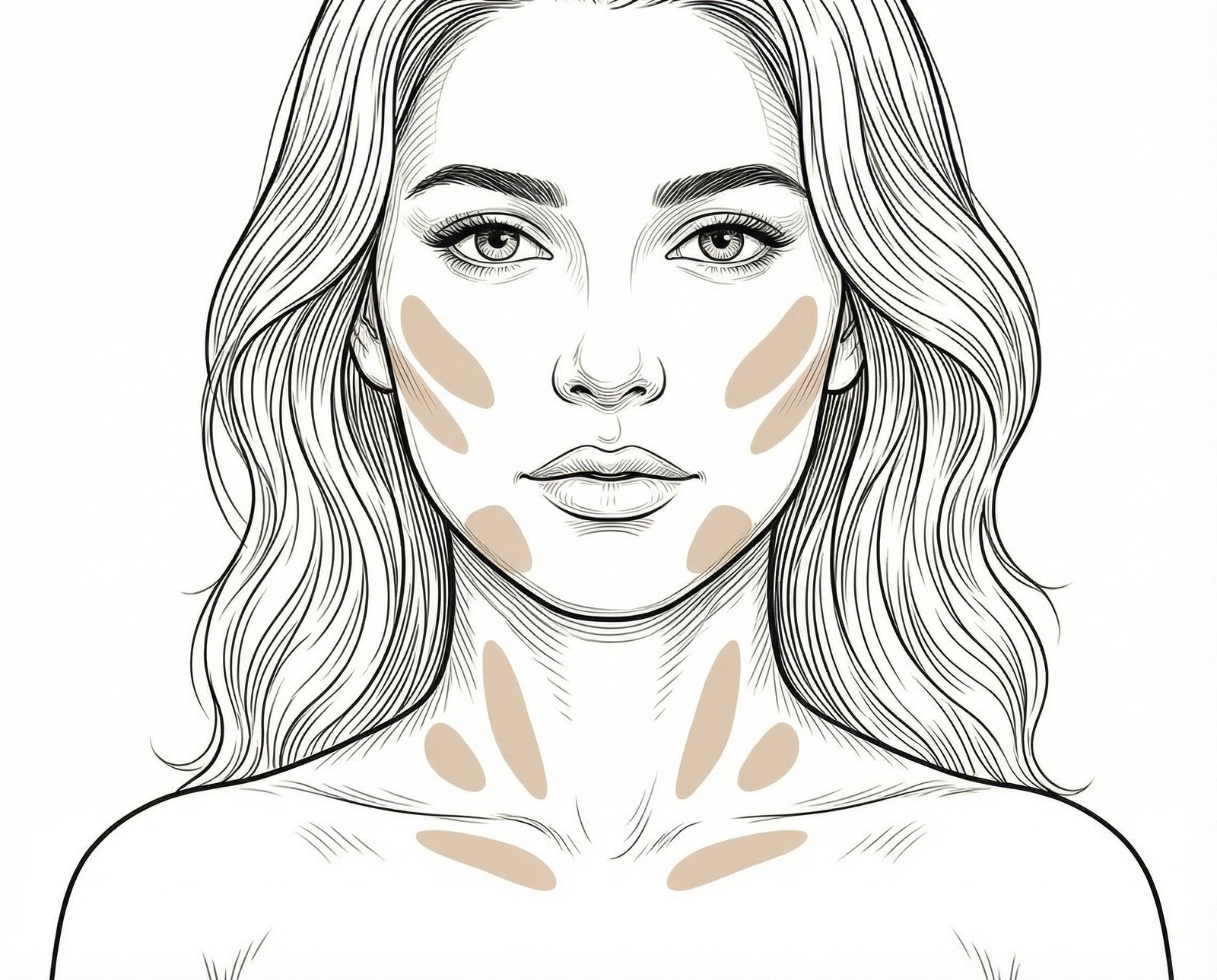
The areas we work on

  1. grey, sallow skin with no radiance, uneven skin tone;
  2. mild post-sun and post-inflammatory pigmentation;
  3. sensitive, reactive skin that doesn't respond well to stronger acids;
  4. instant radiance before an event (wedding, photoshoot, meeting).
Rysunek stref zabiegowych — twarz, szyja i dekolt, sylwetka kobiecaForeheadPoliczkiSzyjaDécolletage
Indicative map of the areas

When cream is no longer enough — what most women feel before their visit

You usually come in for an almond peel with hibiscus not because of one specific problem. More often it's a sum of small things: skin has stopped "glowing", makeup doesn't sit the way it used to, you need more cream in the morning to add freshness, and summer left small marks from the sun. This is exactly the moment when cosmetologists most often reach for Hibiscus Mandelic — mandelic acid with hibiscus works directly on this loss of radiance that doesn't have one clear cause.
It's worth knowing that sensitive, reactive skin — the kind that flushes in the cold, stings from cosmetics and "doesn't like" stronger acids — is the typical profile for this peel. The large molecule of mandelic acid penetrates slowly and evenly, so skin reacts more calmly than to glycolic or salicylic acid.

What women value most about this treatment

Based on what we see in the salon, women value three things here:
Regular evening out of skin tone and reduction of mild pigmentation — the kind left by sun or breakouts — builds up gradually, over a series of four to six sessions. One visit gives a lovely refresh; it's not a permanent change.
  • No visible peeling — this matters most if you have an important event in a few days. Mild redness fades the same day; flaking, if it happens at all, is barely noticeable.
  • Safety for sensitive skin — if you've reacted to stronger acids before, mandelic with hibiscus is usually your first successful experience with a chemical peel.
  • Instant glow — visible after the first session, without waiting for a series. Skin looks fresher and smoother the very same day.

The peel and home care — what to adjust

Hibiscus Mandelic doesn't require giving up your whole skincare routine, but a few things are worth pausing for several days after the treatment. Retinol and strong AHA/BHA acids — pause until your cosmetologist says otherwise. Coarse mechanical scrubs — skip these entirely for this period. What stays: a gentle soap or lotion, a hydrating, repairing cream and — every day, without exception — SPF 50+.
If you use a vitamin C serum or another brightening serum, ask your cosmetologist — often you can continue with it, and it can even boost the treatment's brightening effect.

The peel, makeup and going out

Let your skin rest on the day of the treatment — mild redness usually fades within a few hours, so it won't stop you going out that evening. Full makeup is best from the next day. If you're planning the peel before an important event — a wedding, a photoshoot, a meeting — schedule it at least a few days ahead, to make sure your skin has settled and looks radiant, not pink.

Frequently asked questions

Will an almond peel with hibiscus be safe for my sensitive, reactive skin, given that other acids irritate it?
Yes — this is one of the reasons we so often choose this peel for reactive skin. The large molecule of mandelic acid penetrates slowly and evenly, so skin doesn't react as strongly as it does to fine-molecule glycolic acid. Hibiscus adds a gentle smoothing effect. The final decision on strength is always made by your cosmetologist after assessing your skin — we match the strength of the peel to your skin's condition, not to a fixed formula.
I have mild pigmentation from summer — will one session be enough to fade it?
One session gives a visible refresh and brightens skin tone, but evening out the pigmentation itself and reducing it builds up over a series. Four to six sessions every one to two weeks is the standard plan for post-sun pigmentation. Daily SPF 50+ is equally essential — without it, results fade quickly.
Can I have this peel before an important event — I have a wedding in a week?
Yes, but with the right margin. Mandelic acid usually doesn't cause visible flaking, so the risk of "looking off" is low. Even so, for peace of mind, schedule your last session at least four to five days before the event. Any redness will have faded, leaving skin radiant and smooth.
I have vascular skin with visible broken capillaries — will mandelic acid irritate it?
Mandelic acid is one of the acids specifically recommended for delicate skin prone to redness — its gentleness comes directly from its molecule size. For broken capillaries and very reactive skin, your cosmetologist will adjust the strength of the peel, and may also suggest calming the skin beforehand. Assessment at consultation is key here.
Can I keep using my home exfoliants — scrubs, acid serums — after the treatment?
Pause them for a few days after the treatment. Strong AHA/BHA acids, retinol and mechanical scrubs should wait until your cosmetologist confirms your skin is ready. You can usually continue with gentle brightening and hydrating serums — but agree this individually, since every skin reacts a little differently.

Where we offer it

Hibiscus Mandelic for women — we perform it in three J'ADORE INSTYTUT salons: two in Warsaw and one in Krakow.

  • WarszawaŻelazna 59 · Wola · Mirów
  • WarszawaMińska 29A · Praga-Południe · Kamionek
  • KrakówKarmelicka 45 · Stare Miasto · Piasek

Price list

    Book a visit

    Prices come from the salon price lists. The choice of cocktail and the number of sessions is decided by your specialist at the consultation.