WarszawaŻelazna 59WarszawaMińska 29AKrakówKarmelicka 45Warszawa · Kraków

Careers

ENPL

Full perspective

Hibiscus Mandelic for men

Why men rarely get chemical peels — and why that's worth changing
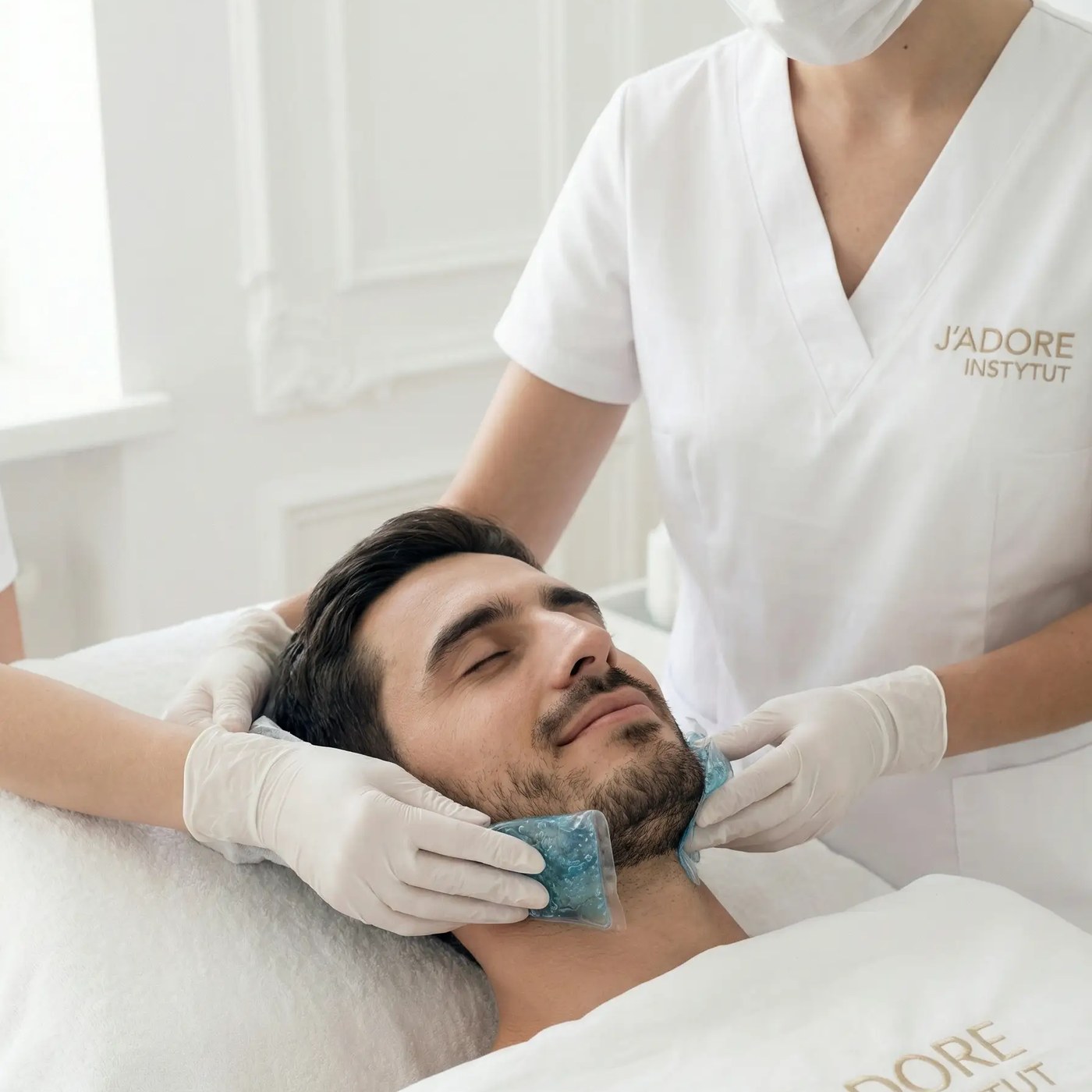
In men, skin is thicker and more often oily, with larger sebaceous glands (hence larger, more visible pores), plus acne scars and post-acne pigmentation, and usually no habit of using SPF. Mandelic acid fits perfectly here — it regulates sebum, unclogs pores and works bacteriostatically, while also being safe on skin after shaving. This is the almond peel with hibiscus for men.
Czas
a few dozen minutes (slightly longer with skin preparation)
Efekt
radiance and smoother texture are visible immediately; evening out skin tone and pigmentation deepens and lasts with a series
Regeneracja
minimal — usually mild redness the same day, with no visible peeling
Seria
best as a series of 4–6 sessions every 1–2 weeks, followed by maintenance
Wykonuje
experienced cosmetologist
ListenHibiscus Mandelic — this whole page read aloud

When it's worth it — indications

  • Grey, sallow skin with no radiance — "tired-looking" skin that creams alone can no longer fix. This is the main indication for Hibiscus Mandelic.
  • Uneven skin tone and mild hyperpigmentation — post-sun, post-inflammatory, post-acne; mandelic acid supports a more even skin tone (melasma requires a separate, dedicated approach).
  • Enlarged pores and oiliness — the peel unclogs pores, regulates sebum and improves texture for combination and oily skin.
  • Sensitive and reactive skin — the large molecule of mandelic acid makes this one of the best-tolerated peels; often chosen where glycolic acid stings.
  • Darker skin phototype — mandelic acid carries a lower risk of post-inflammatory hyperpigmentation than glycolic acid, making it a safer choice for darker complexions (always with strict SPF use).
  • Early signs of ageing and photoageing — fine lines, loss of freshness after years of sun exposure; hibiscus adds a smoothing effect here.
  • Tendency towards blemishes — blackheads, small breakouts (NOT for active, pustular acne — that requires a separate assessment).
  • Instant radiance — before a wedding, a photoshoot, an important meeting; a good "quick glow" without prolonged flaking.

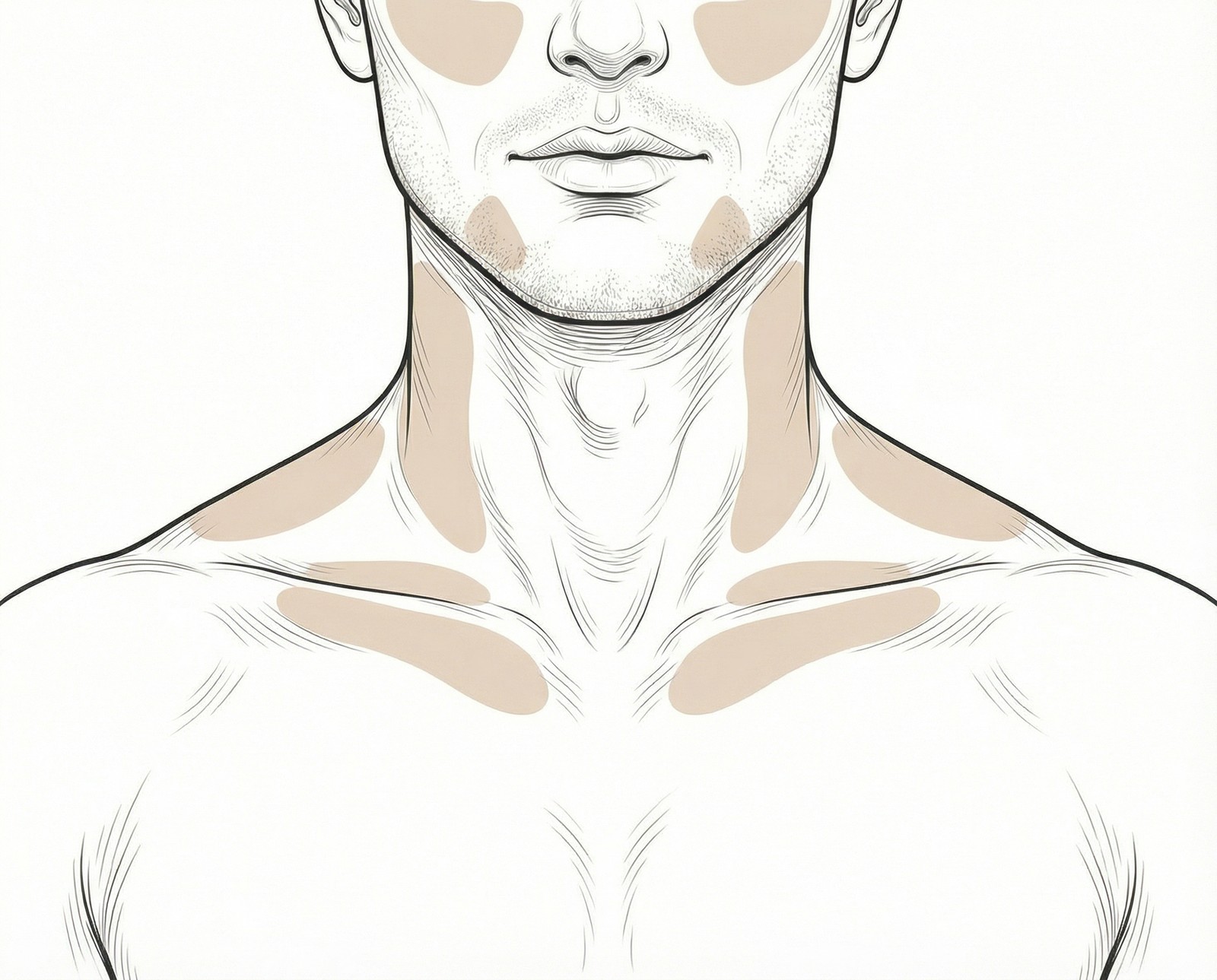
The areas we work on

  1. oily, thicker skin with enlarged pores;
  2. acne scars and post-acne pigmentation — evening out skin tone and texture;
  3. grey, tired skin after stress, poor sleep and smoking;
  4. no drama with flaking — you can go straight back to daily life.
Rysunek stref zabiegowych — twarz i szyja, sylwetka męskaForehead and templesPoliczkiJawlineSzyja
Indicative map of the areas

Why men rarely get chemical peels — and why that's worth changing

Male skin is anatomically thicker, has larger sebaceous glands and therefore more sebum, and pores are more visible and deeper. This isn't a stereotype — it's physiology, and it directly affects what the skin needs. The result is often: oiliness in the T-zone, visible pores, uneven texture and — especially after acne in youth — hyperpigmentation and small scars that last for years. Hibiscus Flower Mandelic Peel (DermaQuest) addresses exactly these issues: mandelic acid regulates sebum, unclogs pores and works bacteriostatically, while hibiscus supports an even skin tone and smoother texture.
There's also one of the biggest advantages from a man's perspective: no visible peeling. Mild redness fades the same day. You can go back to work, the gym, a meeting — without "hiding at home for a week".

What this peel does specifically for men

Mandelic acid is the AHA with the largest molecule — it penetrates more slowly than glycolic acid but effectively renews the epidermis, regulates sebum production and works bacteriostatically. In practice, for male skin, this means:
Hibiscus adds a texture-smoothing effect — important for skin roughened by shaving or with an uneven surface.
  • Smaller, less visible pores — after a series, not after one session, but the effect lasts with maintenance.
  • Smoother skin tone and less visible post-acne pigmentation — the kind left over from breakouts in school years or later.
  • Less oily skin — regulating sebum is one of mandelic acid's direct effects.
  • Overall skin "freshness" — grey, tired skin after stress, poor sleep and city living looks rested and well cared for again.

SPF after the peel — the one hard rule

The biggest objection men raise about peels is SPF: "I don't wear sunscreen, I never have." After a peel, it's not optional — it's a condition for lasting results. Freshly renewed epidermis is more sensitive to UV, and without SPF 50+, pigmentation doesn't just fail to fade — it can deepen.
Good news: sunscreens for men today are light, mattifying and don't leave a white cast. Several brands make formulas designed specifically for oily, thicker skin. During consultation, your cosmetologist can recommend a product suited to your skin type, so you're not buying something at random and giving up on it straight away.

The peel, shaving and skincare

Mandelic acid is safe for skin after shaving — it doesn't irritate mechanically compromised epidermis the way stronger acids can. A few rules for the series:
  • For a day or two after the treatment, avoid intensive friction while shaving — use a gentler technique, gel rather than alcohol-based foam.
  • Postpone sauna, hammam and swimming pool for a few days — high temperature intensifies redness.
  • Strong alcohol-based toners and harsh cleansing gels — pause for a few days, then you can go back to them.
  • Retinol (if you use it) — a few days' break after the treatment, then resume.

Frequently asked questions

Is it really true that nothing shows after this peel — can I go straight to work?
Practically, yes. Mandelic acid has the largest molecule among AHA acids, so it works gently — it doesn't cause visible peeling. Some mild redness may appear the same day, fading within a few hours. Flaking, if any, is subtle and brief. Most men return to their normal day without any issue after the treatment.
I have acne scars and pigmentation left from acne years ago — is an almond peel the right approach?
For evening out skin tone and texture after acne — yes, it's a sensible choice, especially as a starting point. Mandelic acid works bacteriostatically, regulates sebum and supports an even skin tone. For deeper atrophic scars (indentations), a brightening peel is one piece of the puzzle, not the only tool — it's worth discussing at consultation whether to add needle mesotherapy or another complementary treatment.
I have oily skin with enlarged pores — is this suitable for me?
This is practically the ideal indication. Mandelic acid regulates sebum production, unclogs pores and works bacteriostatically — exactly what oily skin needs. After a series, pores are less visible, skin is less shiny and has a more even texture.
Do I need to use SPF if I work in an office and don't spend time in the sun?
Yes — for at least a few days after every treatment, without exception. Even through an office window, UVA rays get through, and they accelerate pigmentation on freshly exfoliated skin. During a series of peels, daily SPF 50+ is a condition for lasting results. During consultation, your cosmetologist can recommend a light, mattifying sunscreen for oily skin — one that doesn't feel sticky and doesn't leave a white cast.
I have recurring cold sores — can I have these peels?
A chemical peel can reactivate the herpes virus, so we don't perform peels on active cold sores — we postpone the treatment until it has fully healed. If cold sores recur often, be sure to mention this at consultation — for peels of this depth, it's worth discussing antiviral prophylaxis in advance, to avoid scheduling the treatment at the wrong moment.

Where we offer it

Hibiscus Mandelic for men — we perform it in three J'ADORE INSTYTUT salons: two in Warsaw and one in Krakow.

  • WarszawaŻelazna 59 · Wola · Mirów
  • WarszawaMińska 29A · Praga-Południe · Kamionek
  • KrakówKarmelicka 45 · Stare Miasto · Piasek

Price list

    Book a visit

    Prices come from the salon price lists. The choice of cocktail and the number of sessions is decided by your specialist at the consultation.