
WarszawaŻelazna 59WarszawaMińska 29AKrakówKarmelicka 45Warszawa · Kraków

Careers

ENPL

Full perspective

Plasma (Plasma IQ — plasma pen) for women

Eyelids that give away your age — and what to do about it without a scalpel
For women, the most common reason for a visit is drooping upper eyelids hiding make-up, along with fine lines around the eyes and above the lip. The goal is a more open gaze and smoother skin, while keeping the eye's natural shape. This is the classic Plasma IQ for women.
Czas
several dozen minutes (depending on the area)
Efekt
usually 1–3 years
Regeneracja
a few to around two weeks away from social life (swelling and small scabs)
Seria
usually 1 session per area; with a larger excess of skin — a repeat treatment or a short series
Wykonuje
doctor or experienced cosmetologist
ListenPlasma (Plasma IQ — plasma pen) — this whole page read aloud

When it's worth it — indications

  • Drooping upper eyelids — excess skin, "heavy" eyes, a tired look; this is the most common indication and an alternative to blepharoplasty for moderate excess.
  • Laxity and fine lines on lower eyelids — gentle firming of the under-eye "bag" area.
  • Crow's feet — the fine lines at the outer corners of the eyes.
  • Lines above the upper lip (so-called "smoker's lines") — vertical lines above the mouth.
  • Skin lesions — seborrhoeic warts, skin tags, milia, small lesions — following a prior assessment of their nature.
  • Correcting minor asymmetry or small scars — targeted skin remodelling.
  • People who want to avoid surgery — and accept a few days of downtime in exchange for no cutting and no general anaesthesia.

The areas we work on

  1. lift for a drooping upper eyelid — a "lighter", more open gaze;
  2. fine lines on the lower eyelids and crow's feet;
  3. vertical lines above the upper lip ("smoker's lines");
  4. removal of small skin lesions and milia on the face.
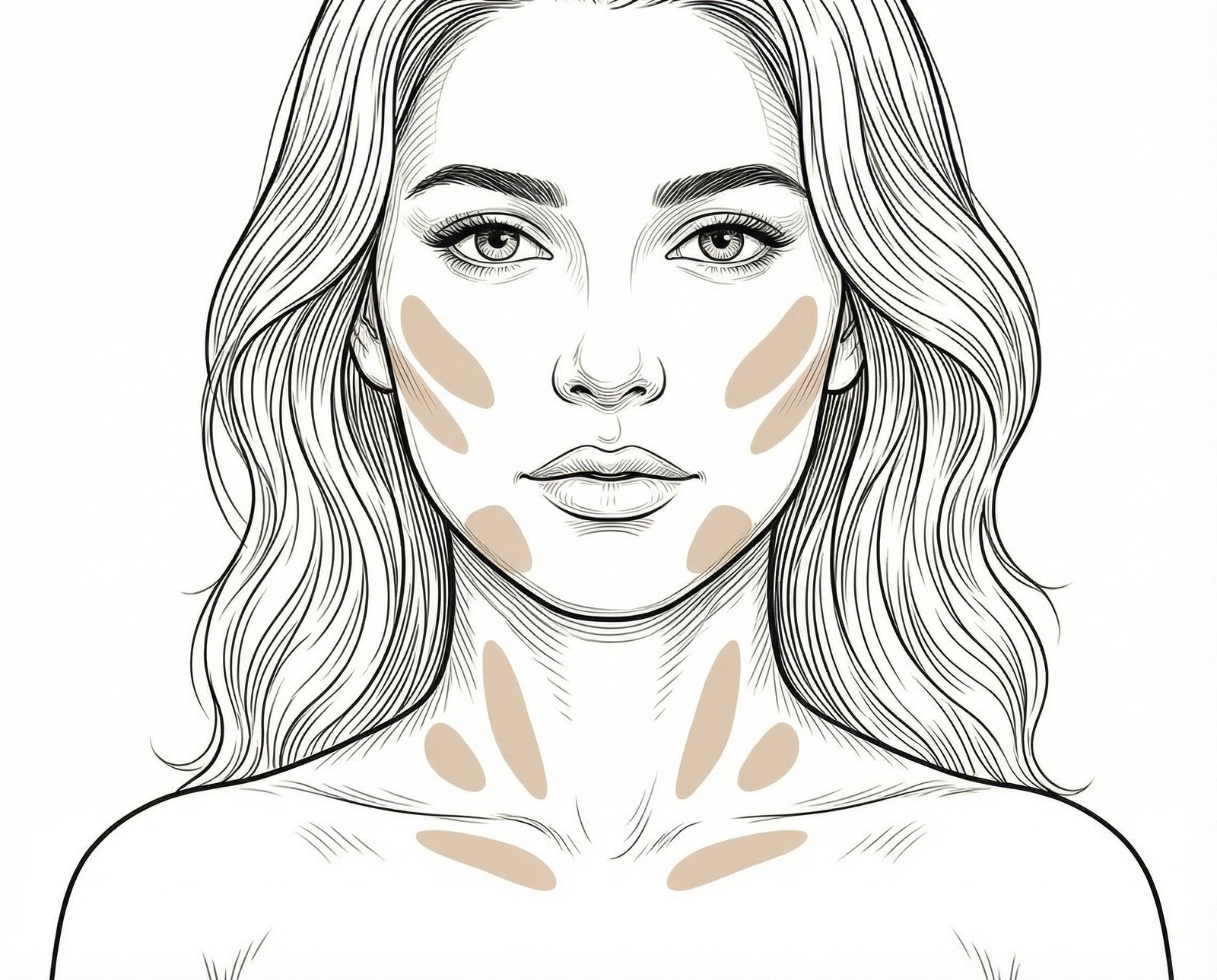
Rysunek stref zabiegowych — twarz, szyja i dekolt, sylwetka kobiecaForeheadPoliczkiSzyjaDécolletage
Indicative map of the areas

Eyelids that give away your age — and what to do about it without a scalpel

The eye area ages faster than the rest of the face — faster than we'd like. The thin, delicate skin of the eyelids loses elasticity earlier than the skin on your cheeks or forehead. Excess skin on the upper eyelids often appears after your forties: eyelids look heavy, make-up stops sitting in the natural crease, eyeshadow seems to vanish. This isn't about beauty — it's the physics of ageing skin.
Plasma IQ does exactly what a surgeon does during blepharoplasty — it tightens the eyelid skin — but without cutting, without stitches and without an operating theatre. For those who want a real, physical lifting effect rather than just temporary smoothing, this is one of the few treatments that genuinely lifts the skin instead of just masking the change.

Female anatomy around the eyes — what changes

Female eyelid skin is statistically thinner and more prone to losing elasticity than male skin — and hormones only speed this up. Menopause brings a sharp drop in oestrogen, which is responsible for collagen production and skin hydration. The skin around the eyes is often the first place this change becomes visible.
On top of that: many women have worn eye make-up since their twenties — daily removal of mascara, foundation and eyeshadow causes micro-damage. The skin is mechanically tired before it has even had time to age biologically. Plasma IQ works precisely on this zone — thermally, without extra mechanical intervention.
Female skin responds very well to Plasma IQ — the numbing cream eliminates discomfort, and skin remodelling after the treatment progresses predictably. Treatment parameters are chosen individually for your skin thickness, phototype and degree of drooping — there's no single universal protocol.

Make-up, retinol, acids — how to fit them around the treatment

One of the first concerns we hear is: "Do I have to give up make-up for weeks?" The answer is specific.
Before the treatment there are no particular cosmetic restrictions — you can keep your skincare routine right up to the last day. It's worth pausing retinoids and exfoliating acids 2 weeks beforehand so the skin isn't overly thinned.
After the treatment, make-up on the treated area is off-limits for the first 7–14 days — the scabs need to fall off on their own. Mascara, eyeliner and eyeshadow return only once the skin has fully closed over. Retinol and acids come back 4 weeks after the treatment. SPF 50+ for the first 4 weeks after the treatment is mandatory, not optional — UV exposure during this time can lead to hyperpigmentation.
In short: the treatment means a break from eye make-up, but the result that remains after 6–8 weeks is worth those two weeks without eyeliner.

Natural results — a lift that doesn't change your expression

Women often ask whether their face will look "done" after Plasma IQ. The answer comes from how the treatment works: Plasma IQ doesn't introduce any substance into the skin, and it doesn't change muscle anatomy or facial volume. It physically tightens excess skin — restoring how things looked a few years back, not creating a new shape.
The result is subtle in the best sense of the word: eyes look more open, the expression is well-rested, and make-up finally sits the way it used to. No one will ask what you've had done — they'll simply notice you look well.

Frequently asked questions

Is Plasma IQ safe near the eyes — can the plasma harm them?
Eye safety is an absolute priority in this treatment. Before every session, special protective shields are placed directly on the eyeball — they protect the cornea and conjunctiva from the plasma energy. The treatment is performed by a doctor trained in this procedure. Plasma IQ never works inside the eye — the plasma arc operates only on the surface of the eyelid skin, at a distance from the eyeball.
Can I combine Plasma IQ with Botox around the eyes?
Yes — and it's one of the best combinations for this area. Botox smooths expression lines (crow's feet) by relaxing the muscle that encircles the eye. Plasma IQ tightens excess eyelid skin. These are two entirely different mechanisms with two different results — they can be done in the same session or spaced a few weeks apart. Your specialist will suggest the optimal plan.
After Plasma IQ on the upper eyelids, will eyeshadow still stay in place?
That's exactly why women choose Plasma IQ. Drooping upper eyelid skin covers the eyelid crease — the place where eyeshadow sits. After the treatment, the crease returns, and make-up finally has somewhere to "sit" again. The result is the opposite of the concern — Plasma IQ restores the conditions for make-up rather than making it harder.
Can I have Plasma IQ during pregnancy or while breastfeeding?
No — pregnancy and breastfeeding are absolute contraindications for this treatment. If you're planning a pregnancy, it's best to wait until after breastfeeding ends. Hormonal changes during this time affect skin healing and can compromise the result.
What does aftercare look like — is it complicated?
It's specific, but not complicated. The most important rule: don't touch, pick or scrape at the scabs — not with your hand, not with a cotton pad. They fall off on their own after 7–14 days. Cool compresses reduce swelling for the first 48 hours. Apply the protective cream as instructed by your specialist. SPF 50+ every day for 4 weeks. Avoid saunas, swimming pools and intense exercise for a week after the treatment. You'll leave with written instructions — you don't need to memorise everything during your visit.

Where we offer it

Plasma (Plasma IQ — plasma pen) for women — we perform it in three J'ADORE INSTYTUT salons: two in Warsaw and one in Krakow.

  • WarszawaŻelazna 59 · Wola · Mirów
  • WarszawaMińska 29A · Praga-Południe · Kamionek
  • KrakówKarmelicka 45 · Stare Miasto · Piasek

Price list

Plasma Iq - Lifting Powiek · Lifting powiek – górne lub dolne

899 zł

  • Żelazna899 zł
  • Mińska899 zł
  • Karmelicka899 zł
Book a visit

Prices come from the salon price lists. The choice of cocktail and the number of sessions is decided by your specialist at the consultation.