WarszawaŻelazna 59WarszawaMińska 29AKrakówKarmelicka 45Warszawa · Kraków

Careers

ENPL

Full perspective

Hyperpigmentation removal (DYE-VL) for women

Hyperpigmentation in women — hormones, sun and something we don't treat the same way

For women, hyperpigmentation is one of the most common reasons for a visit — and also the most nuanced topic, because a hormonal factor comes into play. This is classic hyperpigmentation removal for women.
Czas
short "lunch break" treatment
Efekt
lasting, as long as you protect your skin from the sun
Regeneracja
usually no downtime (redness for 1–2 days)
Seria
series of several sessions, a few weeks apart
Wykonuje
doctor or experienced cosmetologist
ListenHyperpigmentation removal (DYE-VL) — this whole page read aloud

When it's worth it — indications

  • Sun spots (lentigo solaris) — brown spots on the cheeks, temples and forehead, typical after years in the sun.
  • Freckles — when they bother you and you want them lightened (some people like them — it's a choice, not a necessity).
  • Hyperpigmentation on the hands and décolletage — classic "age spots", one of the areas that gives away age most readily.
  • Uneven, grey and tired skin tone — when skin has lost its uniformity and glow due to photoageing.
  • Remnants of post-inflammatory hyperpigmentation — such as marks left by long-healed acne (following specialist assessment).
  • Skin generally affected by sun damage — light treatments also improve texture and tone (photorejuvenation) as a bonus.

The areas we work on

  1. sun spots on the cheeks and temples, freckles;
  2. hyperpigmentation on the hands and décolletage — "age shows on the hands";
  3. melasma / "pregnancy mask" — hyperpigmentation after pregnancy or contraception; this needs a separate, careful approach, not standard light treatment;
  4. evening out skin tone after years of photoageing, often combined with photorejuvenation.
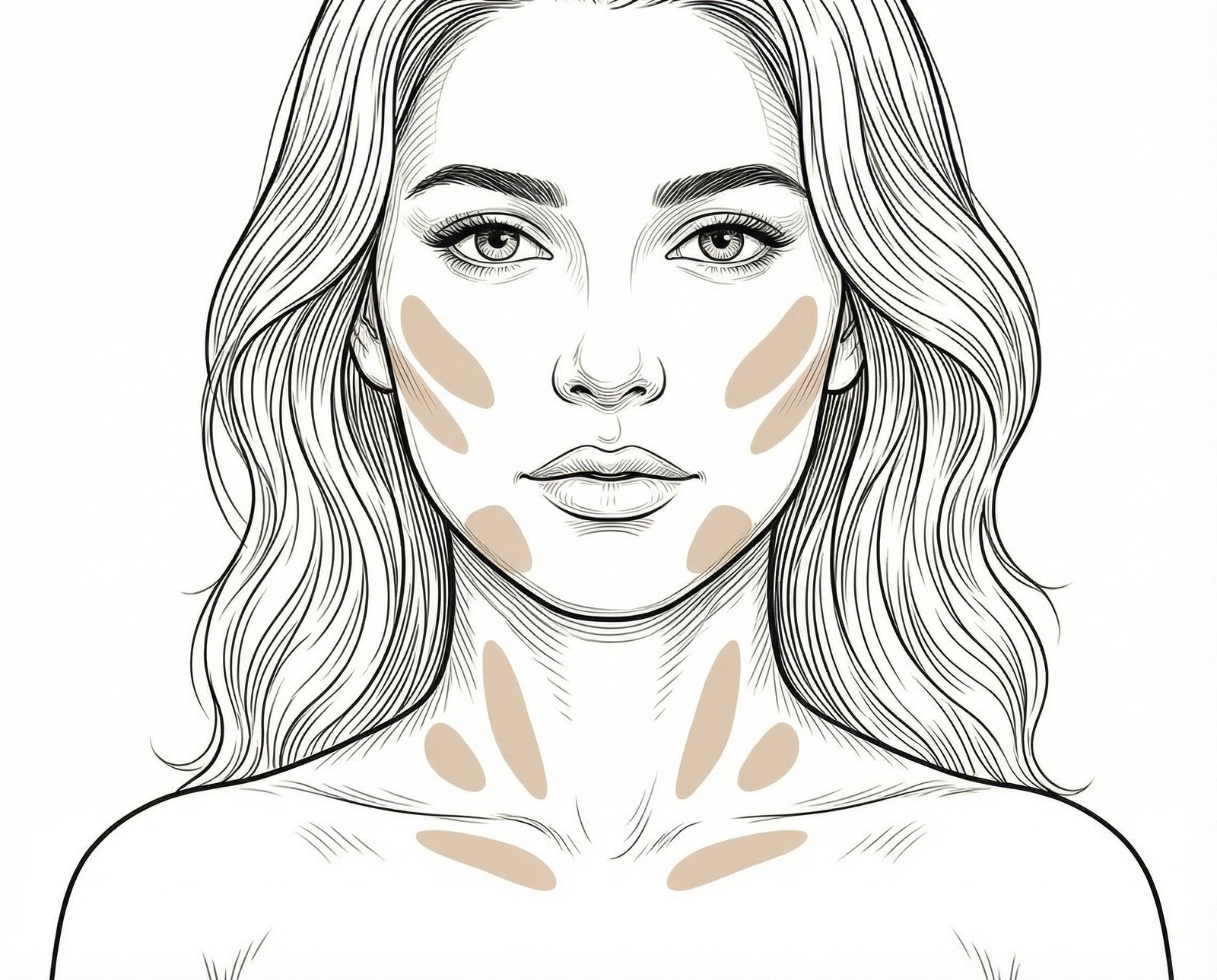
Rysunek stref zabiegowych — twarz, szyja i dekolt, sylwetka kobiecaForeheadPoliczkiSzyjaDécolletage
Indicative map of the areas

Hyperpigmentation in women — hormones, sun and something we don't treat the same way

Women's skin changes throughout life — with contraception, pregnancy, menopause, and years of sun exposure on the face and hands. So when a woman says "I have hyperpigmentation", that phrase can cover entirely different conditions — a sun spot on the cheek, a mark left by old acne, a symmetrical shadow on the forehead after pregnancy, or a mix of all three at once.
This hormonal factor is exactly why removing hyperpigmentation in women calls for a different approach than "we'll just use a laser and it's done". Before any treatment, we first identify what we're dealing with — choosing the wrong method for the wrong type of spot can not only fail to help, but actually make things worse.

Melasma and chloasma — why your hyperpigmentation might follow different rules

Melasma (also known as chloasma or the "pregnancy mask") is one of the most common types of hyperpigmentation in women of reproductive age — and also one of the most demanding to treat. It appears on the cheeks, forehead, nose and above the upper lip; it can be symmetrical and diffuse, and it worsens with sun exposure, heat and hormonal changes.
If hyperpigmentation appeared or clearly worsened during pregnancy or while using hormonal contraception — mention this during your consultation. It changes the whole treatment plan: with melasma, we don't start with technology, but with proper qualification, careful depigmentation and strict sun protection.

The areas women mention most often

Hyperpigmentation in women tends to appear in certain favourite spots — and each has a slightly different story:
  • Cheeks and temples — classic sun spots from years of holidays, tanning, or simply everyday sun exposure without protection. These usually respond well to light-based treatments.
  • Forehead and above the upper lip — this is where melasma appears most often, especially in women who have given birth or use hormonal contraception. Caution matters most here.
  • Hands and décolletage — zones that give away age even when the face looks well cared for. Spots on the backs of the hands come from years of accumulated sun exposure — and are one of the changes truly worth addressing.
  • Post-inflammatory marks — from past acne or other inflammatory conditions; these respond to different protocols than actinic (sun-related) spots.

Home care that supports the results

Women who already use active skincare ingredients have good news: most of these products complement hyperpigmentation treatments well — we'll cover the details on retinol, acids and vitamin C during your consultation, since the withdrawal period depends on concentration and the technology chosen. The one non-negotiable foundation is SPF 50+ every day — without it, no result lasts long.

Frequently asked questions

I have hyperpigmentation on my face and suspect melasma — can I just book a laser session?
It's best to start with a consultation, not with a laser. With melasma, an aggressive light treatment can make things worse — melanocytes, stimulated by the energy, can produce even more pigment. During the consultation, we assess what type of hyperpigmentation you have and whether a careful brightening protocol is safer, followed later by a gentle technology if needed. This isn't a waste of time — it's a condition for success.
I'm breastfeeding, or I recently finished — can I start a series?
We postpone light- and laser-based treatments during breastfeeding. Once you've finished, come back for a consultation — but bear in mind that pregnancy-related hyperpigmentation (melasma) often settles on its own in the months after childbirth, so the treatment plan starts with observation, not straight into a series of treatments.
Can I wear makeup after the treatment?
After gentle light treatments — usually from the next day. After fractional laser, a few days' break applies. Your specialist will tell you exactly when you can return to foundation and concealer — during this period, it's better to protect the skin than to cover hyperpigmentation and mechanically irritate the flaking epidermis.
My hyperpigmentation got worse after stopping contraception — is this normal, and what should I do now?
Yes, hormonal changes after stopping contraception can temporarily worsen melasma or change its pattern. This isn't the time for aggressive treatments — first, observe for a few weeks, then book a consultation once your skin has stabilised. The treatment plan starts with diagnosing the type of hyperpigmentation, not with technology.
Is the result permanent, or will the hyperpigmentation come back?
The specific spot that's been removed won't reappear — but new hyperpigmentation can form if skin continues to be exposed to sun without protection. Daily SPF 50+ is the only maintenance step there's no substitute for. With melasma, how long results last also depends on hormonal stabilisation — if pregnancy or contraception was the cause, skin often becomes calmer once that ends.

Where we offer it

Hyperpigmentation removal (DYE-VL) for women — we perform it in three J'ADORE INSTYTUT salons: two in Warsaw and one in Krakow.

  • WarszawaŻelazna 59 · Wola · Mirów
  • WarszawaMińska 29A · Praga-Południe · Kamionek
  • KrakówKarmelicka 45 · Stare Miasto · Piasek

Price list

Górna warga

od 210 zł

  • Żelazna250 zł
  • Mińska210 zł
  • Karmelicka210 zł
Book a visit

Prices come from the salon price lists. The choice of cocktail and the number of sessions is decided by your specialist at the consultation.