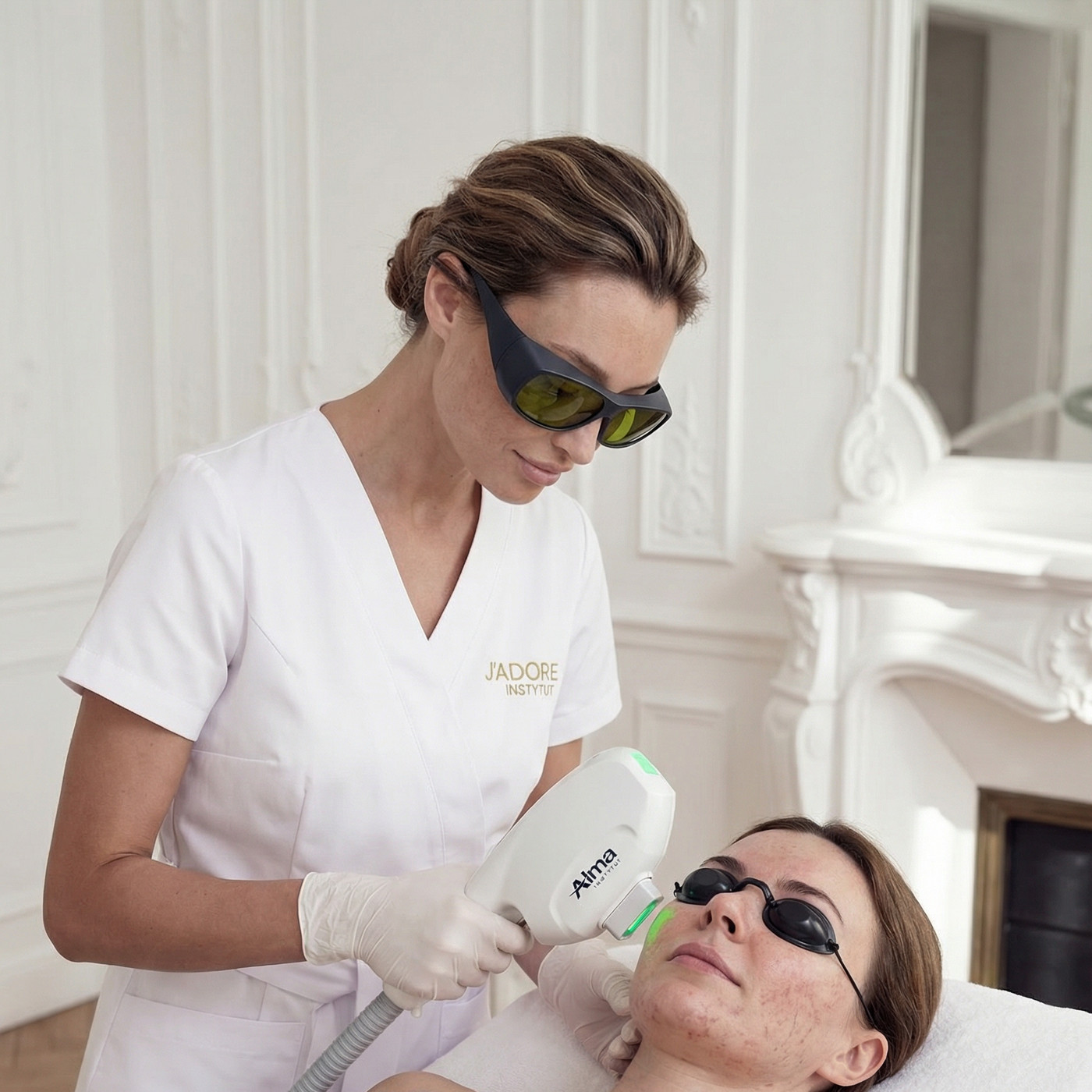
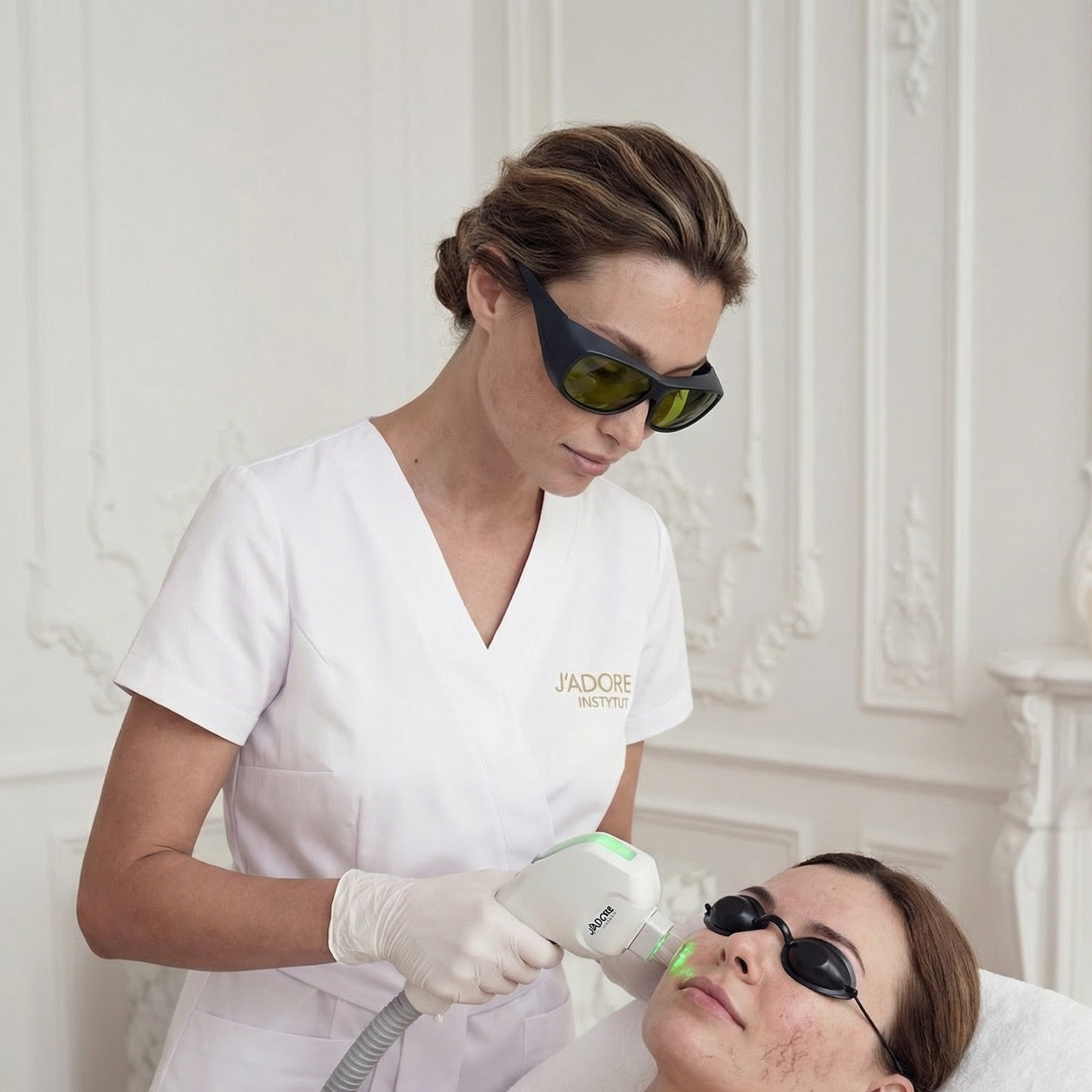
WarszawaŻelazna 59WarszawaMińska 29AKrakówKarmelicka 45Warszawa · Kraków

Careers

ENPL

Full perspective

IPL photorejuvenation / DYE-VL for women

IPL photorejuvenation — when skin tone has become your obsession
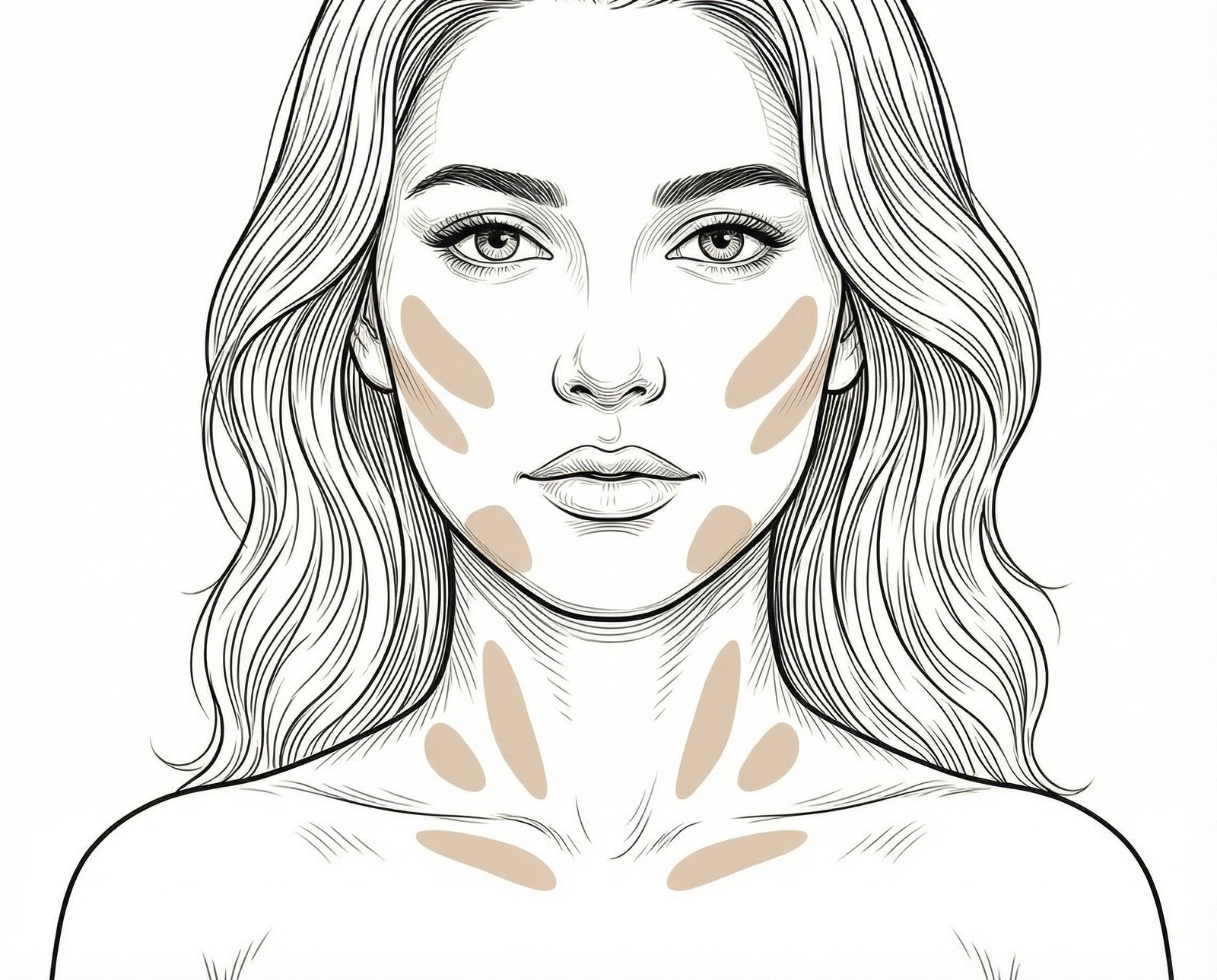
The most common reason women come in for photorejuvenation for women is hyperpigmentation: sun-induced, pregnancy-related (melasma), post-inflammatory — plus uneven tone on the face, décolletage and hands. The goal is a clean, even tone and radiance "like after a good holiday" — minus the sun that caused the spots in the first place.
Czas
a few dozen minutes (depending on the zone)
Efekt
months — with consistent use of SPF 50+
Regeneracja
usually 0–2 days (temporary redness)
Seria
usually a series of several sessions every 3–4 weeks
Wykonuje
doctor or experienced cosmetologist
ListenIPL photorejuvenation / DYE-VL — this whole page read aloud

When it's worth it — indications

  • Sun-induced hyperpigmentation — spots on the face, décolletage and hands left over from years of sun exposure.
  • Freckles and age spots (lentigines) — widespread pigmentation you want to lighten.
  • Post-inflammatory hyperpigmentation — dark marks left by blemishes or irritation (including after shaving).
  • Uneven, grey skin tone — dull, "tired"-looking skin with no radiance.
  • Broken capillaries and redness — telangiectasia, diffuse redness, skin prone to rosacea.
  • Photoageing — loss of radiance, enlarged pores, fine texture irregularities.
  • Skin preparation for an event — when you want an even tone and a "fresh" look.

The areas we work on

  1. sun-induced hyperpigmentation on the face, décolletage and hands;
  2. freckles, lentigines and dark post-inflammatory marks;
  3. uneven skin tone and loss of radiance — a "brightening" effect;
  4. broken capillaries and redness on the cheeks and around the nose.
Rysunek stref zabiegowych — twarz, szyja i dekolt, sylwetka kobiecaForeheadPoliczkiSzyjaDécolletage
Indicative map of the areas

IPL photorejuvenation — when skin tone has become your obsession

You know the feeling: you apply foundation, you even it out, you brighten it — and it's still visible through your make-up. Sun-induced hyperpigmentation, dark marks from acne years ago, a patch that appeared after pregnancy and never faded. Or that subtle greyness that makes your face look drained of energy, even when you're well rested. IPL isn't a remedy for every skin concern — but for hyperpigmentation, uneven skin tone and surface-level photoageing, it's one of the most effective methods available.
One important thing before you start: photorejuvenation works differently from brightening creams. The result isn't immediate and it isn't subtle — hyperpigmentation first darkens (this is the desired reaction; melanin has absorbed the energy), then flakes off over 5–10 days. During this window, you can use mineral make-up from the next day onwards, but the pattern of dark spots is visible. It's worth knowing this in advance.

Skin after pregnancy, after hormones, after sun exposure — what IPL can and can't do

Hyperpigmentation in women has more causes than in men: sun exposure, hormonal fluctuations (pigmentation after pregnancy, after contraception, after menopause), post-acne marks, and in older skin — age spots on the hands and décolletage. IPL responds very well to sun-induced pigmentation and lentigines. With melasma — a typically female concern that often worsens with sun exposure — the approach has to be very cautious. Incorrect parameters can make the pigmentation worse rather than better. That's why during consultation we assess each area of pigmentation individually, rather than treating the whole face as a single problem.
One specific anatomical fact: women's skin is, on average, thinner and more reactive to light stimuli than men's skin. This means energy parameters are chosen precisely for your phototype, skin thickness and type of pigmentation — not from a fixed template, but for you specifically.

Skincare you need to pause — and when to bring it back

One of the most common situations at J'adore Instytut: a client with an advanced skincare routine (retinoids, acids, active-strength vitamin C) asks what she needs to pause before IPL and for how long. The good news — the break is short:
We don't combine oral retinoids (isotretinoin) with IPL — a break of at least 2–4 weeks is needed; details are discussed at consultation.
  • Topical retinoids (cream, serum): stop 5–7 days before the treatment; resume 10–14 days after the session
  • AHA/BHA acids (glycolic, lactic, salicylic): stop 3–5 days before; resume gradually once flaking has settled
  • Vitamin C: you can continue — it should actually be part of your aftercare routine (it enhances the skin-tone-evening effect)
  • SPF 50+: essential — both during preparation and for at least 4–6 weeks after your last session

How IPL fits into your daily rhythm

Women who come in for photorejuvenation often have busy schedules and mainly ask about two things: the flaking window and make-up. Flaking of dark spots takes 5–10 days — it's not painful or dramatic; it looks like a gentle darkening followed by a gradual fading of the spot. During this time:
The best time for a series: autumn, winter, early spring. Skin isn't tanned during these seasons (IPL is more sensitive to melanin from a tan than, say, an Nd:YAG laser is), and by summer you're already showing the result — even, healthy skin tone with no spots.
  • You can use mineral make-up from the next day
  • Sauna, hot baths, intense physical activity — wait 48 hours
  • Social occasions, work, everyday outings — no restrictions

Frequently asked questions

Can I wear make-up the day after the treatment?
Yes — light, mineral make-up. On the day of the treatment, let your skin rest. For the first few days, avoid heavy foundations and alcohol-based products. Pigmentation will look darker and may be slightly visible even under foundation — this is a natural phase that passes after 5–10 days.
Can I have IPL during pregnancy or while breastfeeding?
No. IPL treatments aren't recommended during pregnancy or breastfeeding, regardless of trimester. If pigmentation appeared as a result of pregnancy (pregnancy-related or hormonal melasma), we'll discuss a plan and choose an appropriate method during a consultation once breastfeeding has ended.
I use retinoids and acids in my skincare — do I need to give them up completely before the series?
Not completely, and not for long. You pause retinoids 5–7 days before each session and resume 10–14 days after. Acids — pause 3–5 days before, resume gradually. You don't need to pause vitamin C — it enhances the result. Before your first session, we'll show you an exact schedule for your skincare routine during the consultation.
Will the result look natural, or will I look "done"?
IPL doesn't change your features or proportions — it evens out skin tone and removes hyperpigmentation. The result is healthy, even skin, not a retouched face. People around you will most likely comment that you look rested and glowing — not that you've had something "done".
Can I combine IPL with other treatments I already do?
Often, yes — but the order and the intervals between treatments matter. IPL combines well with ClearLift (collagen), needle mesotherapy and medical peels — but not within the same session as aggressive chemical peels. During consultation, we build a plan that takes into account what you're already doing, so treatments reinforce each other rather than overlap.

Where we offer it

IPL photorejuvenation / DYE-VL for women — we perform it in three J'ADORE INSTYTUT salons: two in Warsaw and one in Krakow.

  • WarszawaŻelazna 59 · Wola · Mirów
  • WarszawaMińska 29A · Praga-Południe · Kamionek
  • KrakówKarmelicka 45 · Stare Miasto · Piasek

Price list

    Book a visit

    Prices come from the salon price lists. The choice of cocktail and the number of sessions is decided by your specialist at the consultation.