

The beauty industry has a problem (and knows it)
Let's start with the numbers. They don't lie:
- The cosmetics industry produces over 120 billion units of plastic packaging every year (Zero Waste Week report, 2025). Most of it ends up in landfill.
- 70% of a cosmetic product's carbon footprint comes from packaging and transport — not the formula itself (Quantis study for L'Oréal Group, 2023).
- The average European woman uses 12–15 skincare products a day. Each has packaging. Each package has a box. Each box has film wrap.
- Only 9% of the world's plastic has ever been recycled (OECD Global Plastics Outlook, 2024). Nine per cent.
The beauty industry isn't the main climate culprit — it's not aviation or the meat industry. But it's an industry that sells a sense of virtue — which is exactly why the hypocrisy stings more.
Greenwashing — the green little lie
Greenwashing happens when a brand pretends to be eco-friendly without actually being so. In beauty, this happens on a massive scale.
"Clean beauty" — a myth that costs a fortune
The "clean beauty" movement promises products that are "toxin-free". The problem? Toxicity depends on the dose, not the name of the ingredient. Water is toxic in the right amount. Your own body produces formaldehyde.
- A study published in the Journal of the American Academy of Dermatology (2024) found that products labelled "clean" have no better safety profile than conventional ones.
- "Clean" cosmetics are, on average, 40–60% more expensive than their conventional equivalents (Mintel market analysis, 2025).
- The paradox: removing synthetic preservatives means a shorter shelf life → more frequent repurchasing → more packaging → more waste.
Your bathroom vs the salon — which is more eco-friendly?
This is where it gets interesting. The counterintuitive question is: are salon treatments more eco-friendly than home skincare?
Technologies that don't need chemistry
This is where sustainability and effectiveness meet.
5 things you can do TODAY
You don't need to become a zero-waste activist. But these changes cost zero effort:
- Finish what you have. The best eco choice is not buying a new product until you've finished the old one — even if the old one is "out of fashion".
- Fewer products, better skin. Dermatologists have said it for years: a simplified routine of 3–4 products can work better than 10 steps. Fewer products means less packaging and a healthier skin barrier.
- Check certifications, not packaging colours. ECOCERT, COSMOS, NATRUE — look for the logo, not the word "natural" on the label.
- Choose device-based treatments over product-heavy ones. LPG, LED, microdermabrasion, ultrasound — these are technologies, not chemistry. Minimal waste.
- Refill, don't rebuy. More and more brands offer refills. One bottle plus refills can mean up to 60–80% less plastic.
Is "eco beauty" a privilege for the wealthy?
A hard question, an honest answer: partly, yes. Certified organic cosmetics cost more. Salon treatments cost money.
But — and this is an important "but" — beauty consumerism isn't cheap either. Polish women spend, on average, several thousand PLN a year on cosmetics (GfK, 2025). A large part of that goes on impulse buys, TikTok trends and "just trying" products. If that same money went into a few trusted products and a handful of salon treatments a year, the result could be better — for skin and for the planet.
The real Earth Day isn't 22 April
The real Earth Day is when you're standing in a drugstore, holding another "must-have" serum from Instagram, and you put it back on the shelf because you know what you already have is enough. It's when you choose a treatment that works through physics, not chemistry. It's when "less is more" isn't a slogan on a tote bag, but your everyday practice.
The planet doesn't need you to buy a cream in bamboo packaging. It needs you to buy fewer creams.
J'ADORE INSTYTUT — a philosophy of mindful skincare
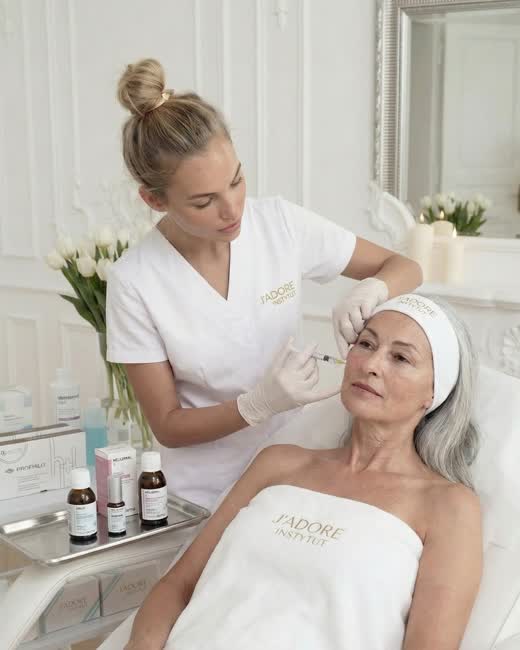
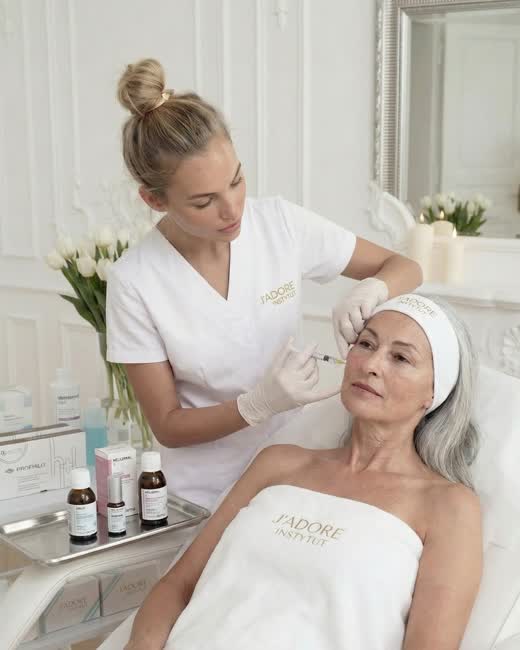
At J'ADORE INSTYTUT, we focus on device-based treatments — LPG Alliance, LED therapy, diamond microdermabrasion, ultrasound — which can deliver measurable results without single-use packaging or excess chemistry. We don't call ourselves an "eco salon", because that sounds like greenwashing. We're a salon where less means more: fewer products on your face, more technology, better results. And, as it happens, less waste.


