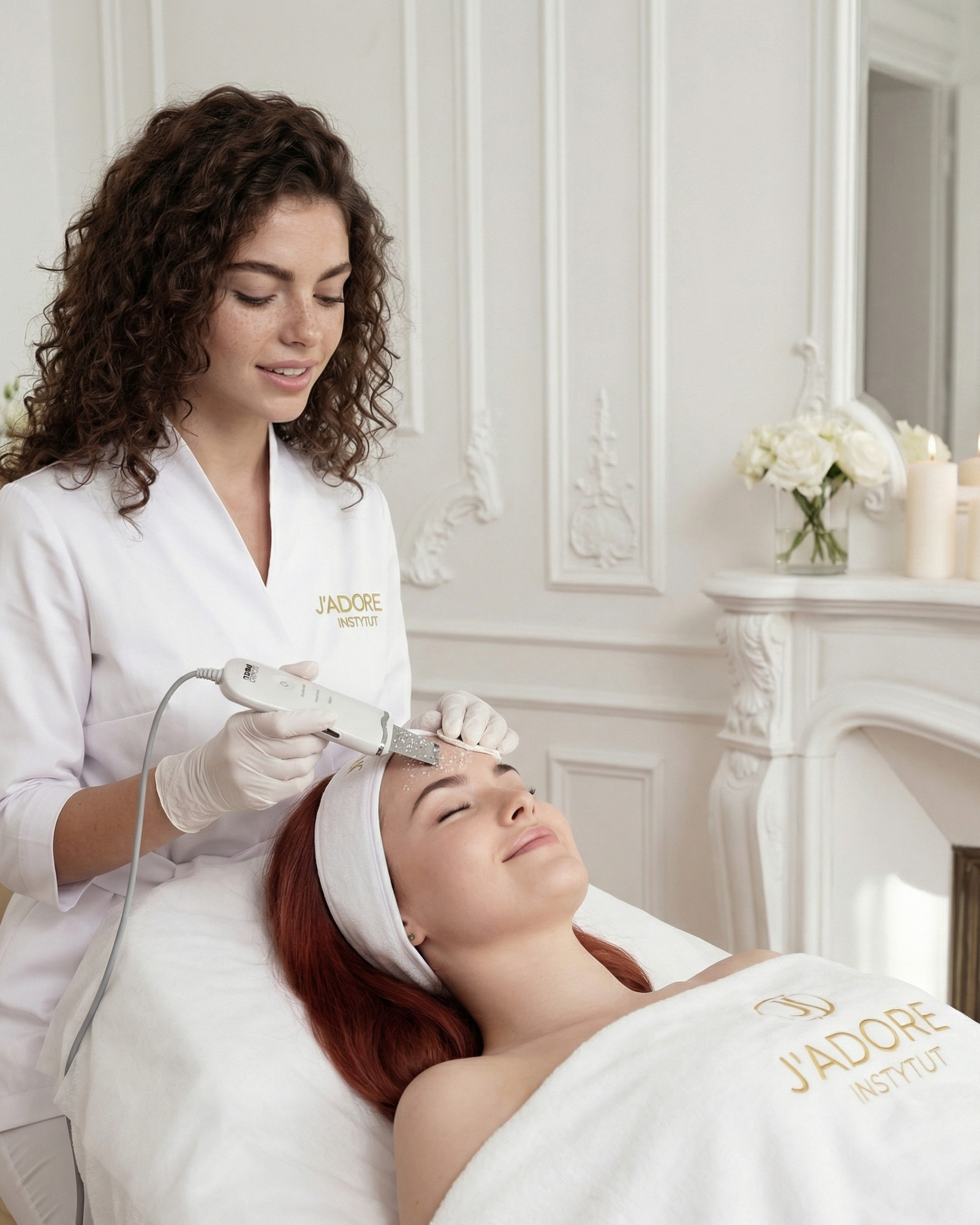
What the ultrasonic spatula actually does
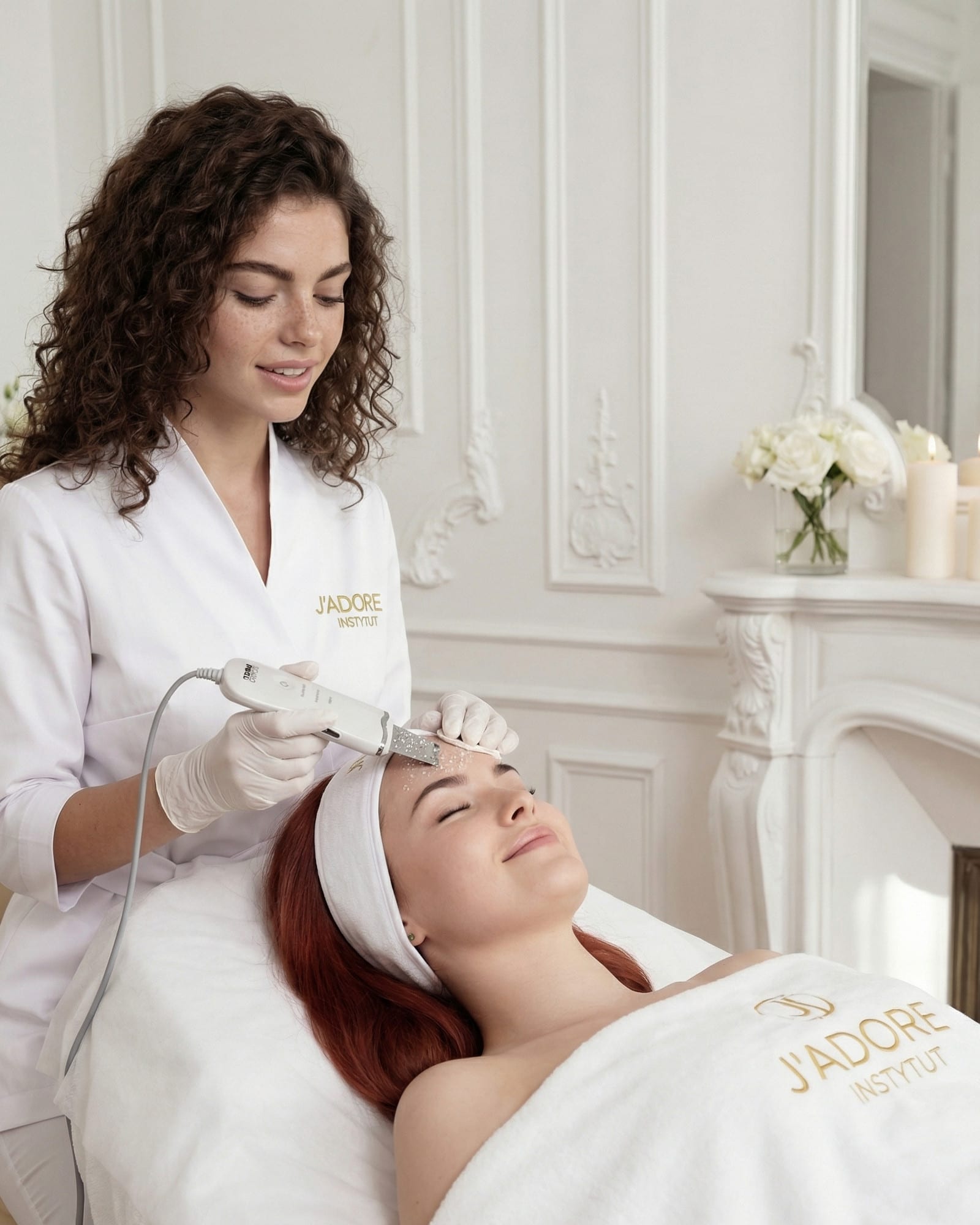
Cavitation peeling works on three levels at once — which is exactly why it can be effective, when it's the right choice. The head emits ultrasonic waves that, combined with water, trigger cavitation: microscopic vapour bubbles implode right at the skin's surface, mechanically breaking down sebum and dead cell build-up in the pore openings. That's the first layer of action — cleansing. The second is sonophoresis: the same carrier waves help active ingredients applied to the skin penetrate deeper than simple massaging could achieve. The third is microcirculation stimulation: the vibrations boost blood flow, giving your skin an immediate glow.
The result is skin that's more thoroughly cleansed, better prepared to absorb active ingredients, and visibly brighter. That sounds great — and it is great, when that's exactly what you need. The problem starts when you expect the ultrasonic spatula to do something it was never designed for.
Cavitation peeling or classic peel — which makes sense when?
This isn't a question of "better or worse". It's a question of matching the right tool to the problem. The comparison below isn't a ranking — it's a map: which mechanism suits which goal.
Cavitation peeling
cleansing + enhanced absorption
- open comedones and pore openings — mechanical cleansing without irritation
- skin prepared for sonophoresis (active ingredient penetration)
- gentle microcirculation stimulation and immediate glow
- sensitive, reactive skin with broken capillaries — no acids, no abrasives
Chemical peel
exfoliation + epidermal renewal
- sun-induced and post-acne hyperpigmentation — acids brighten and even out skin tone
- superficial wrinkles and skin texture — accelerated cell renewal
- acne and excessive keratinisation — salicylic and mandelic acids regulate sebum
- skin that needs deeper work — the right acid is selected for the indication
Hydro-cleansing
hydra-cleansing + antioxidant boost
- simultaneous cleansing + hydration in a single protocol
- dehydrated and dry skin — synergy between impurity removal and hydration
- mature skin with early signs of ageing — oxidation and UV exposure
- results visible immediately, with no transitional phase
Test: what's visible on your skin — before you book the treatment
Before choosing a treatment, it's worth looking in a magnifying mirror — not to diagnose, but to identify what's most prominent. This simple test sets the right direction for your conversation with your cosmetologist:
- You see comedones, enlarged pores, and a "dullness" with no visible pigmentation — that's a classic indication for cavitation peeling. Mechanical cleansing without irritation, ideal as a regular maintenance treatment.
- You see brown patches, uneven skin tone, rough texture — here a chemical peel, selected to match your skin type and the degree of hyperpigmentation, makes more sense.
- Your skin feels dry, dehydrated, tight, and lacks radiance — consider hydro-cleansing: it combines the mechanics of impurity removal with immediate hydration.
- Sensitive, reactive skin with visible capillaries, prone to redness — cavitation is usually the safest choice of the three, since it requires no acids or abrasives.
- You have active inflammatory lesions (pustular acne) — none of these treatments is a good choice without a prior consultation. Your specialist first assesses whether your skin is ready.
When cavitation really shines — the best combinations
Cavitation peeling reaches its full potential not as a standalone treatment, but as a gateway: it prepares your skin for whatever comes next. Cleansed, open pores and stimulated microcirculation create the ideal environment for active ingredients — whether in a follow-up treatment or in your home care routine. That's why we most often combine it with procedures that "feed" the skin, not just cleanse it.
Cavitation peeling + mesotherapy
cleansed pore openings give ingredients delivered through the skin a better path in. Cavitation as preparation, mesotherapy as the main regenerative treatment.
Cavitation peeling + biorevitalisation / biostimulators
same logic: skin absorbs more intensely after cavitation. A combination particularly favoured for mature, dull skin.
Cavitation peeling + oxygenating mask or LED
a short protocol for tired, grey-looking skin. Cleansing + oxygen + light = immediate radiance with zero downtime.
Regular cavitation every 2–4 weeks
for skin prone to comedones, as an ongoing maintenance treatment. No transitional phase, no irritation — suitable all year round.
It's worth noting that cavitation doesn't conflict with most other treatments — there's no downtime, and unlike acids, it doesn't increase sun sensitivity. That makes it a convenient first step in many treatment plans — for people just starting out with salon skincare, and for those who already follow a more advanced schedule.