

The epidermal barrier — why skincare has its limits
The epidermis is an excellent barrier. It protects us from the outside world. But that also means it blocks active ingredients from entering. How well something penetrates depends mainly on molecule size.
What does skincare do well?
The right home care routine has real power — if you know what to expect and choose ingredients that actually reach where they're meant to.
- UV protection (SPF) — the single most important investment in your skin. No treatment can replace daily sun protection.
- Epidermal hydration — hyaluronic acid, glycerin, ceramides and panthenol build an effective hydration barrier.
- Sebum regulation — niacinamide, BHA acids and azelaic acid help with oily and combination skin.
- Surface brightening — vitamin C, arbutin and niacinamide can even out skin tone.
- Normalising keratinisation — retinol and AHA acids speed up cell renewal.
- Antioxidant protection — vitamins C and E, and resveratrol, neutralise free radicals.
What won't skincare do?
An honest look at the limits — because the marketing promises on cream jars can be far removed from skin biology.
- It won't rebuild lost collagen in the dermis — the molecules are simply too large to get there.
- It won't reverse sagging tissue — that requires stimulation from within, or mechanical support.
- It won't erase deep, static wrinkles that have formed over years.
- It won't restore lost volume in the cheeks or around the lips.
- It won't remove cellulite caused by fatty tissue septa beneath the skin.
- It won't change the structure of scarred skin.
What do treatments do well?
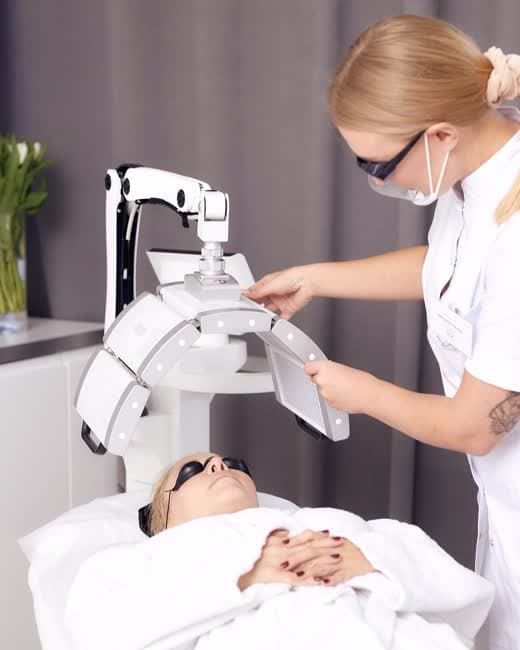
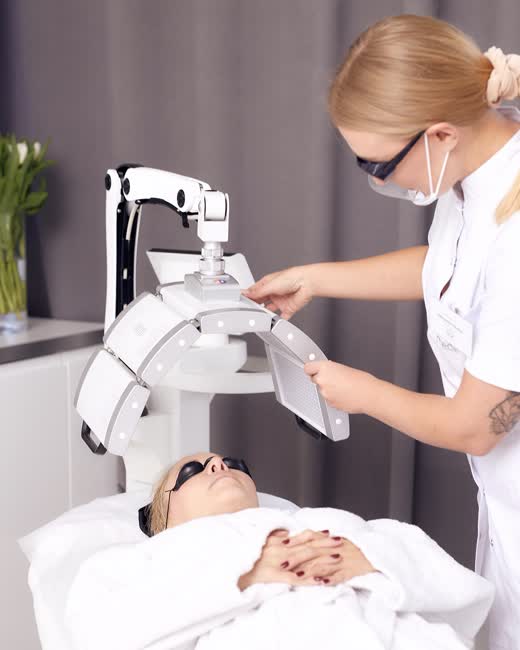
Salon treatments work at levels that home care often can't reach.
- They deliver active ingredients directly into the dermis — as with needle mesotherapy.
- They stimulate fibroblasts from within — biostimulators and bioremodelling trigger the skin's natural repair processes.
- They mechanically break down cellulite septa — an effect mechanical drainage can achieve.
- They coagulate and contract collagen — laser, RF and HIFU work in the deeper layers of the skin.
- They restore lost volume — using methods only available in a salon setting.
- They selectively target hyperpigmentation — with advanced laser technologies.
- They strengthen the body's muscles — using devices based on electromagnetic stimulation.
The synergy model — the best combination
Skincare and treatments aren't rivals — they work together. The best results come from combining both approaches thoughtfully.
When is it worth starting treatments?
Prevention is always easier — and often cheaper in the long run — than correction. Different stages of your skin's life call for different priorities.
- Early adulthood: SPF and a solid basic routine — niacinamide, low-strength retinol, ceramides. This is the foundation that pays off for life.
- Around age 28–35: your first treatments can be an excellent form of prevention — cleansing, deep hydration, and starting biostimulation.
- Around age 35–45: biostimulators, medical peels, and preventive work on expression muscles.
- After age 45: a comprehensive approach — volumetry, advanced lifting treatments, a series of restorative sessions.


