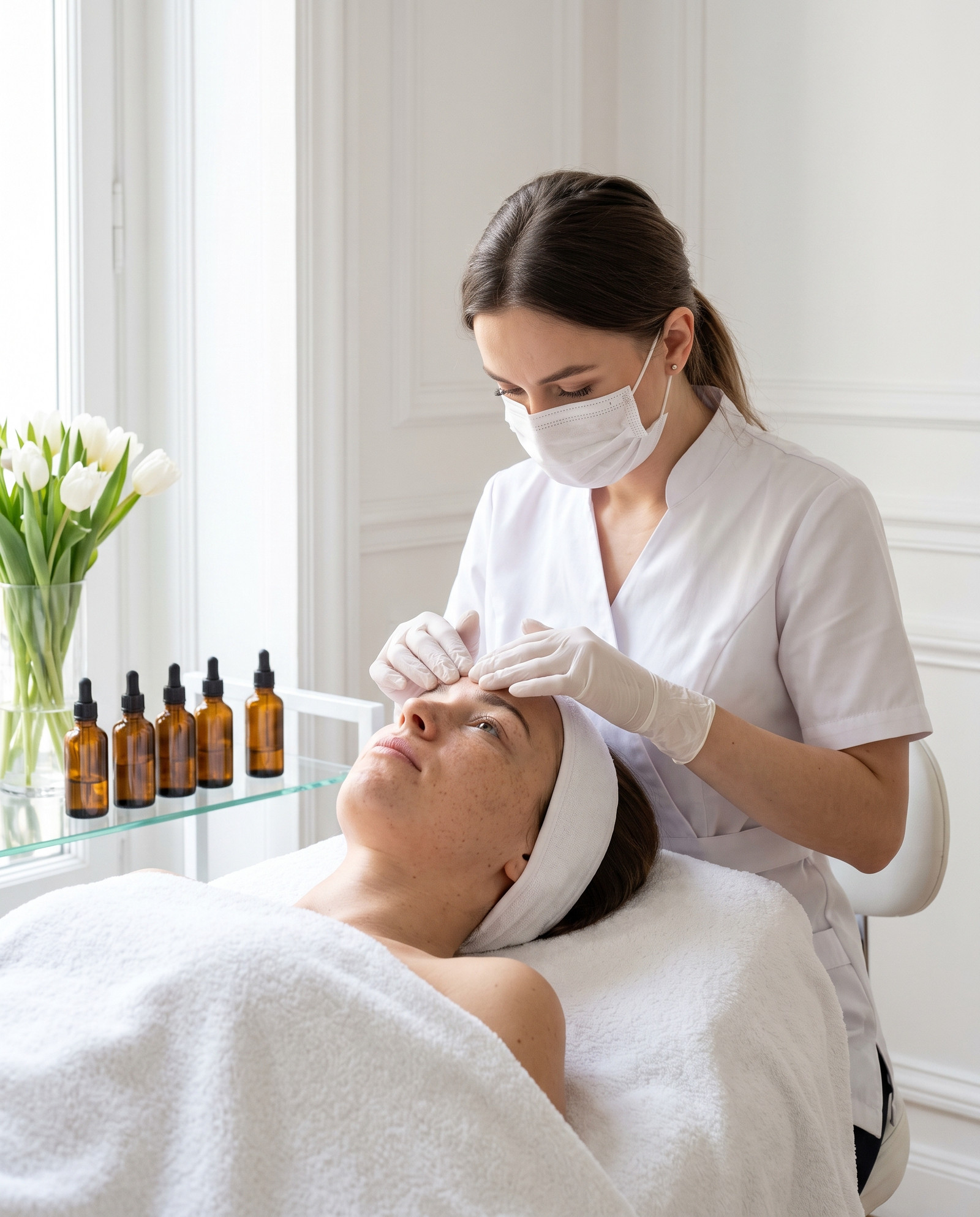
Before an important event, you need a margin, not a rescue treatment
Do not schedule your first extraction immediately before a day when your make-up needs to look predictable. The cosmetologist does not yet know your tendency for erythema, scab formation, or post-inflammatory marks. They also do not know which comedones will empty under moderate pressure and which should be left alone. A calm interval allows you to see the reaction without the temptation to cover every spot with another layer of foundation.
If the event is soon, mention it before starting. The specialist may limit the work to a few mature lesions, avoid the most sensitive areas, or propose a gentler procedure without extraction. Changing the plan does not mean the visit was unsuccessful. It means the aesthetic goal was not placed above the skin's capabilities.
Planning a visit for someone who already knows their reaction is different from planning a first extraction before a photoshoot. A regular client knows that after treating the nose, the spots fade the same day, but the chin can be tender for longer. The cosmetologist can therefore perform a smaller scope and leave the area around the lips alone. A new client does not have such a history. They need a trial well in advance, not an assurance that every skin calms down identically. This margin is especially important when a make-up artist is to work with a sponge and brush on the areas after pressure.
The cosmetologist first distinguishes a comedone from an inflammatory lesion
In the salon light, it is clear whether the follicle opening is filled or if redness, swelling, and soreness have already appeared around the lesion. An open comedone behaves differently than a deep, tender papule. Attempting to empty the latter does not result in a cleaner pore; it may increase trauma and spread the inflammation. This is why the list of lesions to be treated is created only after make-up removal and examination of the face.
Summer does not forbid cleansing, but it makes the first hours after it more difficult
A client returning from holiday often sees more irregularities and asks to remove everything in one visit. At the same time, the cosmetologist may notice dehydration, irritation from the sun, and fresh hyperpigmentation. In such a situation, they divide the face into areas: they work only where the skin is calm, or they postpone extraction until the barrier is rebuilt.
The heating season creates mixed skin that cannot be cleansed with one level of intensity
After the visit, do not plan a sauna, hot bath, or a long walk in the freezing wind immediately. Freshly treated areas may react with stinging to extreme temperatures. A simple return home, gentle washing, and the care recommended in the salon provide more information about tolerance than adding another stimulus the same evening.
A spring plan is not about making up for several months in one session
In spring, many people change their cream, introduce acids, and book a treatment at the same time. This makes assessment difficult. If the face stings two days later, it is unclear which stimulus exceeded the tolerance. A sensible calendar separates new care from extraction so that the skin's reaction has a clear context.
The cycle of changes is more important than a fixed day every month
For some people, deeper, painful papules appear before menstruation, while at other times shallow comedones dominate. Keep a record for a few weeks of when your skin becomes most tender. Observation is not a hormonal diagnosis, but it helps to avoid scheduling extraction exactly when most lesions are not suitable for mechanical treatment.
If the pattern includes recurring painful lesions, scarring, or rapid deterioration despite gentle care, a series of cleansings does not replace a dermatological consultation. Emptying subsequent points may give a short sense of control, but it does not address the cause of the recurrence.
The first and fifth visit should look different
At the next visit, you can compare where the comedones have returned and whether the change in routine has improved anything. If after several meetings the entire face is still treated with the same intensity every time, the plan does not benefit from the skin's history. A good direction is to reduce the scope of mechanical extraction, not to accustom the face to increasingly frequent trauma.
A person returning after several visits often says: "the nose looks better, but the chin is clogging up again". This is not an invitation to repeat the entire protocol. The specialist checks whether a new cosmetic with a heavier formula, friction from a scarf, frequent propping of the face, or painful lesions that should not be squeezed have appeared in that area. The fifth visit may therefore include a short treatment of the chin and a longer conversation about the routine, although the first required work in several zones. A smaller scope can be proof of progress, not a service performed "too weakly".
Travel and a week full of meetings can be more important than the weather
- Plane travel. Dry air in the cabin, frequent touching of the face, contact with the headrest, and difficult hygiene are factors that can irritate the skin after the treatment.
- Work in difficult conditions. A day spent in a kitchen full of steam or under a helmet exposes the complexion to sweat and impurities, which does not favour regeneration.
- Planning the visit. If you cannot ensure a quiet evening for your skin without heavy make-up, sweat, and cosmetic experiments, postpone the visit, even if the time of year seems appropriate.
Before the appointment, look not only at the day of the treatment but at the next 24 hours. The question "what am I doing later?" can better predict comfort than a temperature forecast. The calendar is meant to protect the recovery period, not to force the skin to adapt to a professional schedule.
If the trip cannot be postponed, preparation does not involve packing a stronger toner. Take a gentle cleansing product, a known cream, and sun protection that your skin already tolerates. Do not test hotel cosmetics and do not cover spots after extraction with a cosmetic plaster without a recommendation. Upon arrival, examine your face in neutral light, but do not press on irregularities to check if "something is left". Increasing pain, oozing, or clear warming require contact with the salon. Ordinary temporary redness should be observed according to the instructions received after the treatment, not compared with a photo of a random person from the internet.
Changing a retinoid, acid, or medication requires a new conversation
The cosmetologist may see a shine that does not result from excess sebum, but from excessive exfoliation and a tight surface. Mechanical cleansing of such skin does not remove the cause. It may intensify stinging. First, you need to calm the routine and assess the barrier, and only then return to the comedones.
The practical scene looks like this: the client has started a retinoid, sees peeling at the sides of the nose, and considers it a layer to be removed. During make-up removal, the skin quickly turns red, and a regular preparation causes a stinging sensation. The specialist gives up on preparation for extraction, even though there are comedones on the nose. They do not try to "do at least a little", because the current limit is set by the barrier reaction. The next date is set only after discussing the care and, if it concerns treatment, the recommendations of the person in charge.
A breakout on the day of the visit changes the scope, even if the appointment has been waiting for a month
In the morning, three painful lesions appear on the chin. The worst preparation is trying to empty them before leaving. Call the salon and describe the situation. On-site, the specialist may avoid the inflammatory area, deal only with superficial comedones, or completely postpone the extraction. Using the reservation is not more important than the current appearance.
A series makes sense only if every check changes the decision
A standing reservation can be convenient, but it should not determine that full cleansing is performed every time. At the beginning of the visit, you need to check the number of new comedones, irritation, the condition of the cheeks, and the effects of home care. Sometimes the result of the previous plan means shorter work on the nose. Sometimes it means no extraction.
A break does not cancel the previous treatment. The skin constantly produces sebum and renews the epidermis; the rate of recurrence also depends on cosmetics, friction, hormones, and treatment. The goal is not flawless attendance at subsequent appointments. The goal is an increasingly rare need for mechanical treatment and faster recognition of the situation in which another method will be more sensible.
In Krakow, choose a date after which your skin will get a quiet evening
You will find the current service description on the manual cleansing page in Krakow. J'adore Instytut is located at Karmelicka 45/2B, 31-128 Krakow and is open from Monday to Saturday from 8:00 to 20:00. When booking, tell us about any important events, new medications, retinoids, and fresh skin deterioration.
If a long stay in the sun, a trip, or an intense workout awaits you after the visit, choose another day or discuss a gentler scope. Local availability of a date solves logistics. It does not replace the assessment of the skin after make-up removal.
You will recognise a good moment by three answers
Are most of the lesions calm comedones, not painful papules? Does the barrier not sting after regular washing and is it not freshly irritated by the sun or active care? Do you have time after the treatment for a simple routine without heavy make-up, swimming, and touching your face? Three affirmative answers provide a better basis than the slogan "autumn is the best".
If one answer is "no", do not try to save the calendar with stronger preparation. Move the date, change the scope, or start with a consultation. Manual cleansing is a precise tool for specific lesions. It works best when it does not have to fight simultaneously with inflammation, a damaged barrier, and a plan more important than the skin.
Before the next reservation, write down how many days the spots after the previous extraction were visible and when the face stopped being tender when washing. Your own healing history provides a better margin before an event than someone else's calendar found in a guide.