Your phone is damaging your skin — blue light damage is not a myth
Your screen is glowing. Your skin can feel it — and it helps to know what to do about it.
8 min read
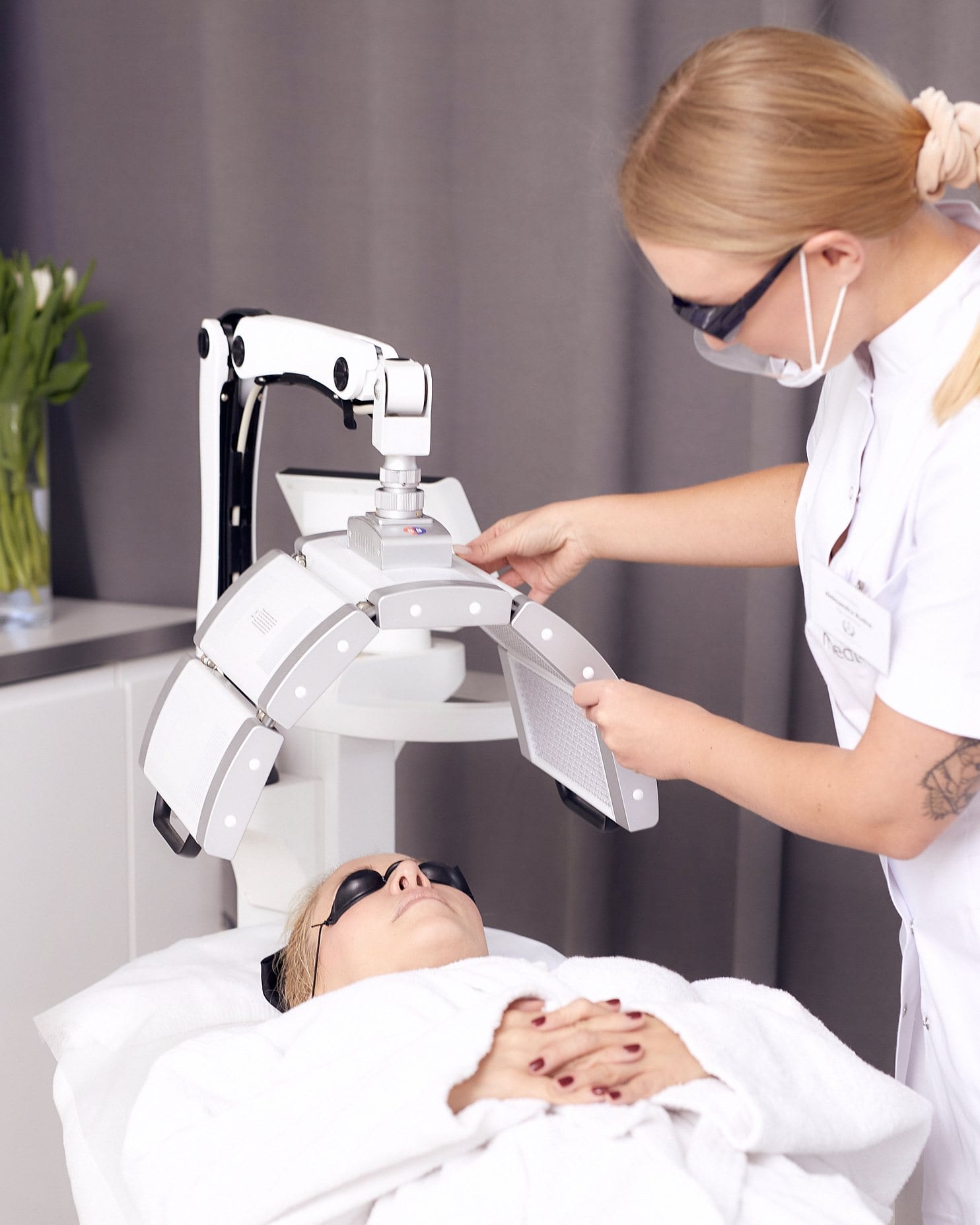
Illustrative photo. It shows an example of how the treatment is performed.
8 min read10 April 2026
You spend 7, 8, maybe 9 hours a day in front of screens. Before anyone tells you to "put your phone down" — that's not what this article is about. It's about what your screen — literally, physically, scientifically — does to your skin. And what you can do about it without giving up your phone.
01
What is blue light (and why should you care)
Visible light sits on the electromagnetic spectrum, with wavelengths roughly between 380 and 700 nanometres. At one end you have violet and blue (short wavelength, high energy). At the other, red (long wavelength, low energy).
Blue light — officially HEV (High Energy Visible light) — covers the 380–500 nm range. The main sources are:
The sun — still number one. It emits more HEV than every screen combined.
LED screens — your smartphone, laptop, tablet, monitor and TV.
LED lighting — the lamps in your home, at school and in the office.
02
Why screens are a different story to the sun
03
What blue light does to your skin — the research
This isn't a conspiracy theory or cosmetics-industry marketing. These are published, peer-reviewed studies.
Collagen (loss of firmness)
Elastin (loss of elasticity)
Cellular DNA (accelerated ageing)
Lipid barrier (dryness, sensitivity)
04
"But my grandmother didn't have a phone and she still got wrinkles"
True. Because sun + time + genetics = ageing. Nobody is claiming blue light is worse than UV. UV is still enemy number one. But blue light is an additional factor that previous generations simply weren't exposed to at this intensity.
05
Dark mode, blue light glasses, filters — what actually works?
06
What actually protects your skin
Brands with documented HEV protection: Heliocare 360°, SkinCeuticals Physical Matte UV Defense, La Roche-Posay Anthelios UVMune 400, Colorescience Sunforgettable.
Vitamin C (ascorbic acid, 10–15%) — the best-researched antioxidant in dermatology. It neutralises ROS, inhibits melanin production and stimulates collagen. Apply in the morning, under SPF.
Niacinamide (vitamin B3, 5–10%) — regulates sebum, strengthens the skin barrier and reduces hyperpigmentation. Tolerated by almost every skin type. Apply in the morning or evening.
Vitamin E (tocopherol) — works alongside vitamin C, boosting its effect. It's usually already included in vitamin C formulas.
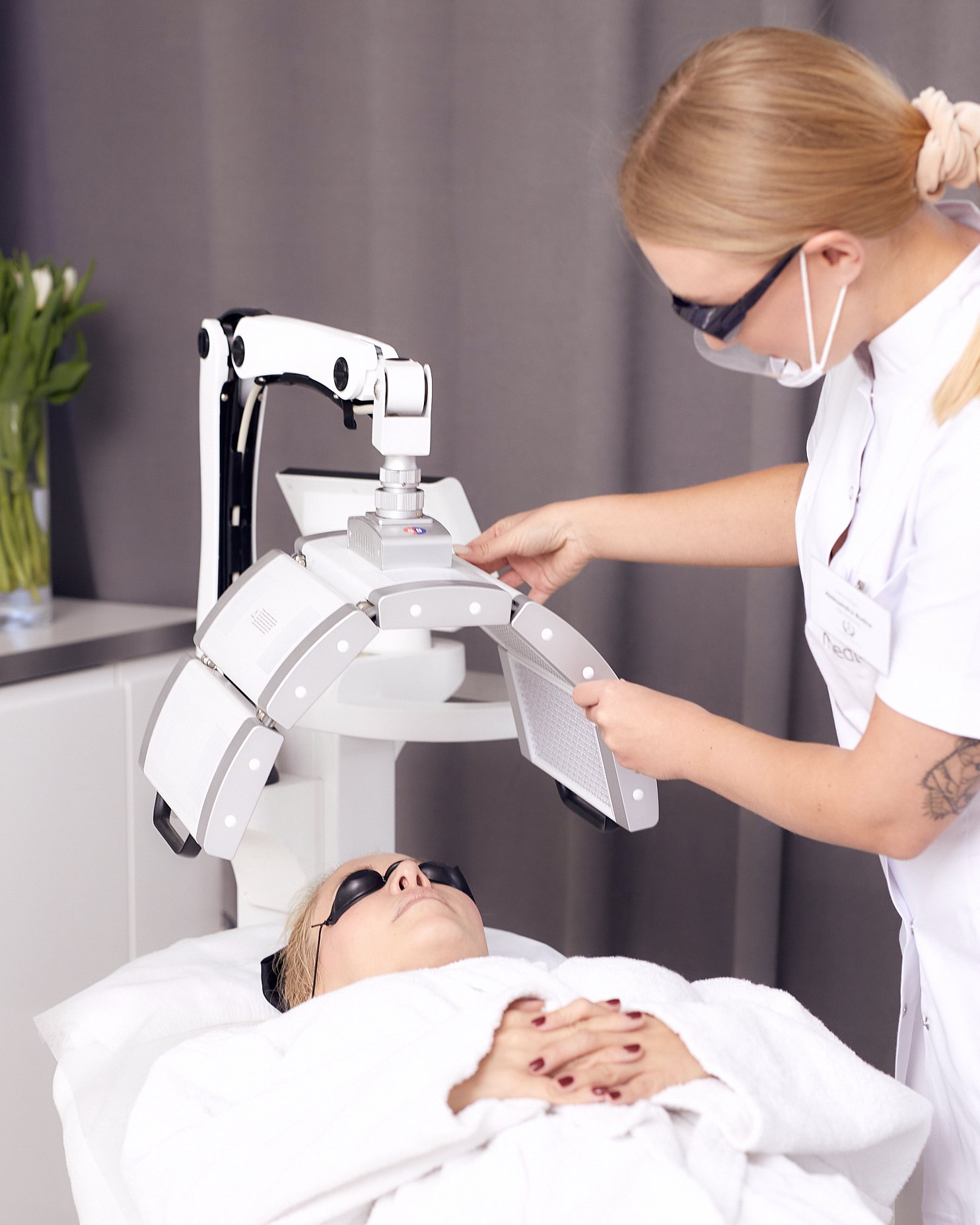
Illustrative photo. It shows an example of how the treatment is performed.
07
Screen time — what you can realistically change
Not "put your phone down". You won't. Nobody will. But you can minimise the damage.
08
Advice, not a scare tactic
This article isn't meant to alarm you. Young skin is in great shape — it regenerates quickly, produces collagen efficiently and is remarkably resilient.
But the habits you build now will shape your skin in 10–20 years. Someone who starts wearing SPF and using antioxidants early often looks noticeably younger than their peers decades later. That's not magic — it's the sum of small decisions.
Blue light damage isn't an apocalypse. It's an additional factor worth knowing about. Like smog, like stress, like too little sleep. You don't need to panic. You need to know.
09
Quick check — your skin vs blue light
Spend more than 5 hours a day in front of screens? → Wear SPF with HEV protection.
Scroll your phone in bed? → Night mode + lower brightness, at minimum.
Notice uneven skin tone or dark spots? → Vitamin C serum in the morning.
Skin dry or dull despite moisturising? → Check whether your SPF contains iron oxide.
Sleeping less than 7 hours? → That's probably doing more to your skin than blue light is.
10
LED therapy and consultation at J'ADORE INSTYTUT
At J'ADORE INSTYTUT, LED therapy uses red and near-infrared light to stimulate collagen, reduce inflammation and repair the skin barrier. Ironically, we treat light damage... with light. Just a different kind. Science can be elegant like that.
Your first consultation is a chance to find out what your skin actually needs — and it's usually less than you think.