WarszawaŻelazna 59WarszawaMińska 29AKrakówKarmelicka 45Warszawa · Kraków

Careers

ENPL

Full perspective

Brightening programme for women

When hyperpigmentation has a history

For women, the most common and most challenging issue is hormonal hyperpigmentation (melasma) — symmetrical patches triggered by pregnancy, contraception and sun exposure, with a tendency to recur. Sun spots and acne marks add to this. The goal is to even out skin tone and fade these areas with full gentleness. This is the classic brightening treatment for women.
Czas
several dozen minutes (single visit within the series)
Efekt
results build up over the series and last for months — provided you use daily SPF
Regeneracja
none, or a few days of light peeling after stronger stages
Seria
series of 4–6 treatments every 1–2 weeks (for persistent hyperpigmentation, a 2–6 month programme)
Wykonuje
experienced cosmetologist
ListenBrightening programme — this whole page read aloud

When it's worth it — indications

  • Sun spots — light brown patches on the forehead, cheeks, décolletage and hands, the result of years of UV exposure without protection.
  • Post-acne hyperpigmentation (PIH) — dark marks left behind after a breakout, even though the spot itself is long gone.
  • Melasma / "pregnancy mask" — symmetrical, widespread hormonal hyperpigmentation (pregnancy, contraception); the most difficult and recurring type.
  • Uneven, grey skin tone — skin that looks "dulled" by patches, lacking radiance, with an inconsistent tone.
  • Individual darker patches visible even under makeup, that you want to fade rather than cover up.
  • Hyperpigmentation from shaving and ingrown hairs — post-inflammatory marks along the beard line.
  • Skin after a holiday — deepened tone and old spots "brought out" by the sun.
  • Prevention for those prone to hyperpigmentation — when you want to maintain an even tone.

The areas we work on

  1. melasma and "pregnancy mask" — protocols with tranexamic acid, a gentle pace;
  2. sun spots on cheeks, forehead, décolletage and hands;
  3. post-acne hyperpigmentation (PIH) — peels plus niacinamide;
  4. common goal: an even, radiant tone without "bleaching" — discreetly, with no downtime.
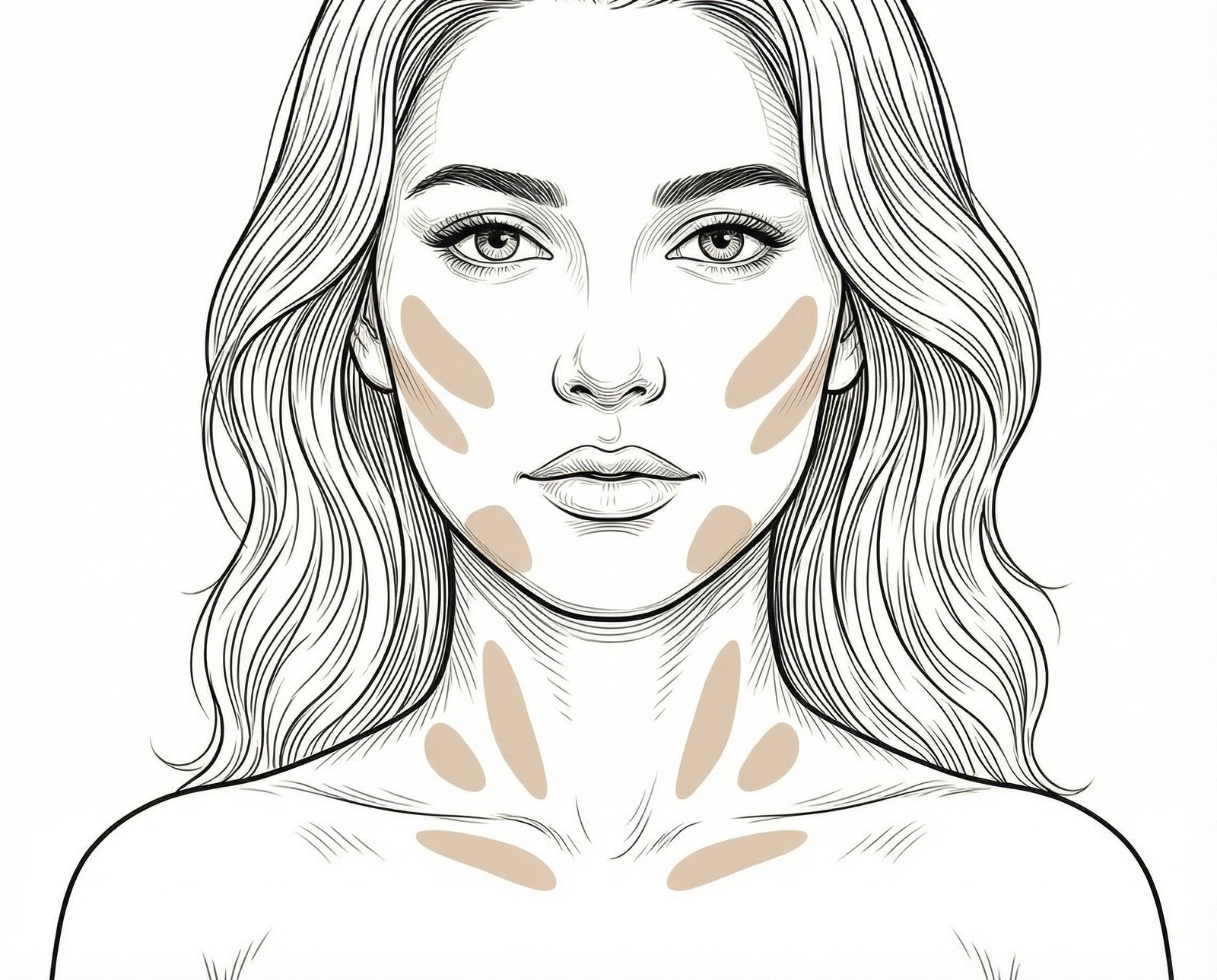
Rysunek stref zabiegowych — twarz, szyja i dekolt, sylwetka kobiecaForeheadPoliczkiSzyjaDécolletage
Indicative map of the areas

When hyperpigmentation has a history

Every patch on the face tells a story — hormones from years of pregnancy or contraception, a summer spent without SPF, acne that's long healed but left a dark trace behind. A woman's skin is particularly sensitive to hormonal changes: melanocytes respond to oestrogen and progesterone far more intensely than in men, which is why melasma affects women disproportionately more often and more deeply. This isn't about neglect — it's biology. And it's biology that sets the starting point for diagnosis.
One thing matters most: hormonal, sun-related and post-inflammatory hyperpigmentation are three completely different mechanisms. The same treatment applied without diagnosis can backfire — deepening hyperpigmentation instead of reducing it. That's why a brightening treatment at J'adore Instytut always begins with a phototype assessment and identification of the type of hyperpigmentation. The protocol is then built around your specific skin and its history.

What matters in women's skin

A woman's skin is, on average, thinner and more reactive than a man's — which directly affects the choice of concentrations and the pace of treatment. This is an advantage: it responds faster to active ingredients. It's also a responsibility: it requires precision. The strength of the peels, the application time for the Cosmelan mask, the concentration of niacinamide in the home protocol — everything is tailored to your individual anatomy and treatment goal, not applied by a fixed template.
Melasma deserves its own mention — hormonal hyperpigmentation that, in women after pregnancy or during or after hormonal contraception, can cover large areas of the face: forehead, cheeks, around the mouth. Cosmelan and Dermamelan are clinical protocols designed specifically for this type of change — they inhibit tyrosinase at several stages simultaneously and deliver a 70–90% reduction after a full, six-month cycle. They demand discipline: daily maintenance cream, SPF 50 without exception. But they achieve results a single treatment simply cannot.

Home care as part of the treatment

A brightening treatment isn't a series of separate visits — it's a system where the salon and home routine work together. Between sessions, your skin works with a home protocol: depigmenting cream morning and evening, niacinamide 10%, SPF 50 every day. Without this part, salon results fade quickly — hyperpigmentation returns at the first UV exposure.
A word on retinol and exfoliating acids, which many women already have in their routine: during an active brightening treatment, these need to be discussed. Some can enhance the effect; others, if poorly matched, can irritate skin already weakened by a peel. Your specialist will discuss this at your first visit and adjust the home protocol to fit what you're already using.

Photoprotection — not optional, a rule

SPF 50 is the single thing that protects the results of a brightening treatment. UV is the main factor that reactivates melanocytes — unprotected exposure after a Cosmelan treatment can bring hyperpigmentation back within weeks. That's why SPF 50 is part of the protocol, not an add-on — and it doesn't end with the last session. Daily photoprotection becomes a permanent habit, and maintenance sessions two to three times a year protect the result long term.

Frequently asked questions

Is a brightening treatment safe during pregnancy or breastfeeding?
No — pregnancy and breastfeeding are absolute contraindications for depigmenting protocols, acid peels and laser therapy. Once breastfeeding ends, it's worth booking a diagnostic consultation and planning the treatment afresh — post-pregnancy hormones often leave melasma that needs treating after birth, but only once your body is ready.
I use retinol and acids — do I have to give them up during the treatment?
Not necessarily entirely, but a review is required. Retinol can enhance the exfoliating effect, but combined with an acid peel it raises the risk of irritation. At your first consultation, your specialist will review your routine and adjust the protocol — some ingredients can continue, others are best paused during the active phase of treatment.
How soon after the treatment can I go back to wearing makeup?
After exfoliating treatments, makeup is possible the following day — with a light foundation and SPF 50. After Cosmelan (the depigmenting mask), skin is sensitive for 5–10 days, and it's worth keeping cosmetics to a minimum during that time. You'll get detailed instructions at every visit. Will the result look natural? I'm worried my skin will end up looking bleached. The goal of the treatment is to even out skin tone, not lighten the whole face. Hyperpigmentation fades while the rest of the skin keeps its natural shade. We don't use bleaching preparations — we target excess melanin in specific spots. The final result is even, radiant skin — no different in tone from the rest of your body.
Can I combine a brightening treatment with other treatments I have at J'adore?
Yes — many treatments work well alongside a brightening protocol. PRX-T33 enhances the tone-evening effect, and Dermapen can help deliver active ingredients deeper. Treatments with hyaluronic acid fillers and botulinum toxin are usually no problem — a consultation lets us schedule everything so the procedures reinforce each other rather than compete.

Where we offer it

Brightening programme for women — we perform it in three J'ADORE INSTYTUT salons: two in Warsaw and one in Krakow.

  • WarszawaŻelazna 59 · Wola · Mirów
  • WarszawaMińska 29A · Praga-Południe · Kamionek
  • KrakówKarmelicka 45 · Stare Miasto · Piasek

Price list

    Book a visit

    Prices come from the salon price lists. The choice of cocktail and the number of sessions is decided by your specialist at the consultation.