
WarszawaŻelazna 59WarszawaMińska 29AKrakówKarmelicka 45Warszawa · Kraków

Careers

ENPL

Full perspective

Scalp LED therapy for women

When your hair starts revealing what you've been through
In women, hair loss is most often linked to diffuse thinning — a wider parting and reduced density, often after childbirth, during menopause, or after severe stress or illness (telogen effluvium). This is a sensitive subject, so we approach it calmly and without judgement. LED scalp therapy for women most often comes in as a gentle booster within a series — it supports microcirculation and skin condition, combines well with mesotherapy, and calms the scalp after stronger treatments.
Czas
short visit — around half an hour
Efekt
cumulative effect — builds up over a series and, with maintenance, lasts for weeks
Regeneracja
none
Seria
best as a series, done regularly — often used to reinforce mesotherapy or carboxytherapy
Wykonuje
trichologist or experienced cosmetologist
ListenScalp LED therapy — this whole page read aloud

When it's worth it — indications

  • Hair loss and thinning — as support for a trichology series, after the cause has been diagnosed.
  • Weakened, fine hair — when the goal is to improve the follicle environment and scalp condition.
  • Irritated, reactive scalp prone to redness — LED has a soothing effect.
  • Scalp prone to excess sebum and tightness — support for comfort and balance.
  • Recovery after scalp mesotherapy, carboxytherapy or microneedling — LED shortens recovery time.
  • Anyone who wants a gentle approach with zero downtime — no needles, no pain, no marks.

The areas we work on

  1. thinning and a widening parting (diffuse hair loss);
  2. telogen effluvium — after childbirth, stress, illness or dieting;
  3. a weakened, reactive scalp that needs calming;
  4. support and recovery during a series of scalp mesotherapy.
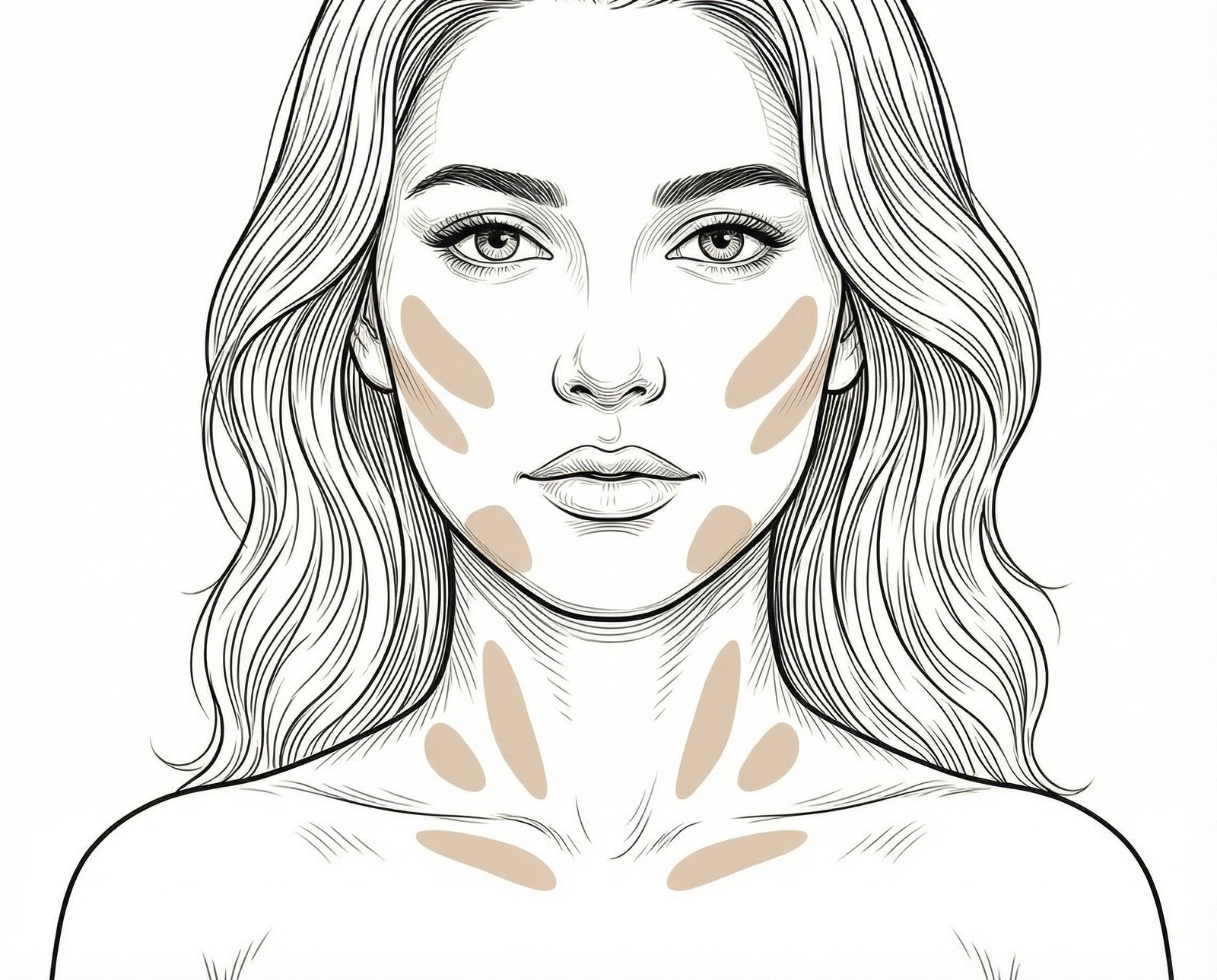
Rysunek stref zabiegowych — twarz, szyja i dekolt, sylwetka kobiecaForeheadPoliczkiSzyjaDécolletage
Indicative map of the areas

When your hair starts revealing what you've been through

A parting that keeps getting wider. Hair on the brush and pillow that wasn't there before. A scalp that feels tight, sensitive to touch. Women experience telogen effluvium more often than men — a sudden thinning that appears a few weeks to a few months after severe stress, illness, an intensive diet or childbirth. The body shifts large numbers of follicles into the resting phase at once, and hair falls out in waves. On top of that comes thinning around menopause, when shifting hormone levels show up literally — in hair density.
LED scalp therapy won't reverse a hormonal or nutritional cause — that's a job for a doctor. But it can be gentle, valuable support: a better-perfused, calmer scalp is a better environment for follicles that are still active. That's why, for women, LED most often comes in as part of a series — reinforcing mesotherapy or carboxytherapy — or as a soothing finishing touch after a stronger treatment, when the scalp needs calming.

What LED does differently from yet another anti-hair-loss shampoo

Shampoos, tonics and supplements act on hair from the outside or via the bloodstream. LED works at the level of the scalp cell: red and infrared light absorbed by the mitochondria triggers repair processes, improves local blood flow and calms inflammation. For women with a reactive, irritated scalp — especially those who have previously had aggressive colouring, keratin treatments or frequent straightening — this matters: LED doesn't add further irritation, it calms it.
One thing LED won't do: it won't add hair where the follicle is already inactive. The mechanism is supportive, not curative. It's an honest and useful technology — precisely because it doesn't promise miracles.

Scalp after childbirth and during menopause — two different states, similar caution

After childbirth the scalp can be dry, sensitive and prone to excess sebum all at once — hormones return to baseline, and the whole skin system feels it. LED works particularly well here: it calms reactivity, soothes redness and improves comfort without any chemical intervention.
During menopause, thinning tends to be gradual and more even — overall density decreases and hair becomes finer in texture. LED combined with mesotherapy can support the condition of follicles that still have potential. A trichologist, after trichoscopy, will assess whether and how to build this into your plan.

Caring for your scalp between sessions — a few rules

  • A shampoo suited to your issue — with hair loss and a sensitive scalp, avoid harsh detergents and strong keratolytic ingredients unless a trichologist recommends them.
  • Strengthening ampoules and serum — applied at home between sessions, they support what we do in the salon; they don't replace the treatment, but they extend its effect.
  • Heat protection — straightening, high-heat drying and tight hairstyles put extra strain on hair that's already weakened; it's worth cutting back during a trichology series.
  • Soothing tonic — for a tight, itchy scalp, it works between sessions in a similar way to LED: it calms without any chemical intervention.

Frequently asked questions

Will LED therapy help me after childbirth, when my hair is falling out in handfuls?
Telogen effluvium after childbirth is one of the most common reasons women come to a trichology salon. LED can be valuable support — it calms the scalp and improves microcirculation — but with severe hair loss we start with a consultation and trichoscopy, plus a history, to make sure there isn't an additional cause that needs treatment. A series of LED sessions, often combined with mesotherapy, comes in as part of the plan, not as the only answer.
I'm worried my parting keeps getting wider — what can LED do for me?
Thinning around the parting is very characteristic of the female pattern of hair loss and can be deeply stressful. LED won't fill in the parting in a few sessions, but it can improve scalp condition and the environment for follicles that are still active — especially alongside mesotherapy. The real effect is assessed after a series, not after one visit.
I have coloured hair and a sensitive scalp — is LED safe for me?
Yes — that's one of the reasons we reach for LED specifically with a reactive, irritated scalp after chemical hairdressing treatments. LED doesn't puncture the skin, doesn't sensitise it and doesn't dry it out. It calms redness and soothes inflammation. The only thing we check before the session is whether you're taking any photosensitising medication or products — if so, we'll adjust the approach.
Can I have LED during pregnancy or while breastfeeding?
LED therapy emits no UV and doesn't break the skin — it's widely considered safe. Even so, always tell your specialist if you're pregnant or breastfeeding: we'll adjust our approach and consult a gynaecologist if anything raises questions.
Will LED replace mesotherapy, or do I need both treatments?
That depends on your issue and the trichoscopy result. LED and mesotherapy are different tools: mesotherapy delivers nutrients deep into the skin through micro-injections, LED gently stimulates microcirculation and soothes. Most often they work best together — LED as a booster and finish after mesotherapy — but a trichologist will decide, after diagnosis, exactly what your scalp needs.

Where we offer it

Scalp LED therapy for women — we perform it in three J'ADORE INSTYTUT salons: two in Warsaw and one in Krakow.

  • WarszawaŻelazna 59 · Wola · Mirów
  • WarszawaMińska 29A · Praga-Południe · Kamionek
  • KrakówKarmelicka 45 · Stare Miasto · Piasek

Price list

    Book a visit

    Prices come from the salon price lists. The choice of cocktail and the number of sessions is decided by your specialist at the consultation.