WarszawaŻelazna 59WarszawaMińska 29AKrakówKarmelicka 45Warszawa · Kraków

Careers

ENPL

Full perspective

LED therapy for women

Your skin, your light

The most common goals are acne, broken capillaries and radiance, with collagen support becoming a priority from age 30 onwards. Women's skin tends to be thinner and more reactive, so we often choose the yellow filter (calming) and the red filter (anti-ageing, freshness). This is classic LED therapy for women — a gentle treatment that fits easily between cleansing, HydraFacial or needle-free mesotherapy sessions.
Czas
several dozen minutes
Efekt
cumulative effect — lasts weeks to several months after the series
Regeneracja
none
Seria
series of 6–10 sessions (1–2× a week) + maintenance 1–2× a month
Wykonuje
experienced cosmetologist
ListenLED therapy — this whole page read aloud

When it's worth it — indications

  • Inflammatory acne — recurring pustules, papules, inflammation (blue filter).
  • Vascular skin and a tendency to flush — reactive skin that reddens at the slightest trigger (yellow filter).
  • Rosacea (redness component) — calming redness and strengthening blood vessels; with rosacea, always assessed individually.
  • Fine lines and loss of firmness — collagen stimulation from age 30 onwards (red filter).
  • Grey, tired skin lacking radiance — stimulating cell metabolism and microcirculation.
  • Skin needing regeneration after a treatment — after a peel, Dermapen or laser, LED shortens healing time and calms irritation.
  • Sensitive skin that doesn't tolerate aggressive treatments — LED is one of the gentlest treatments available.

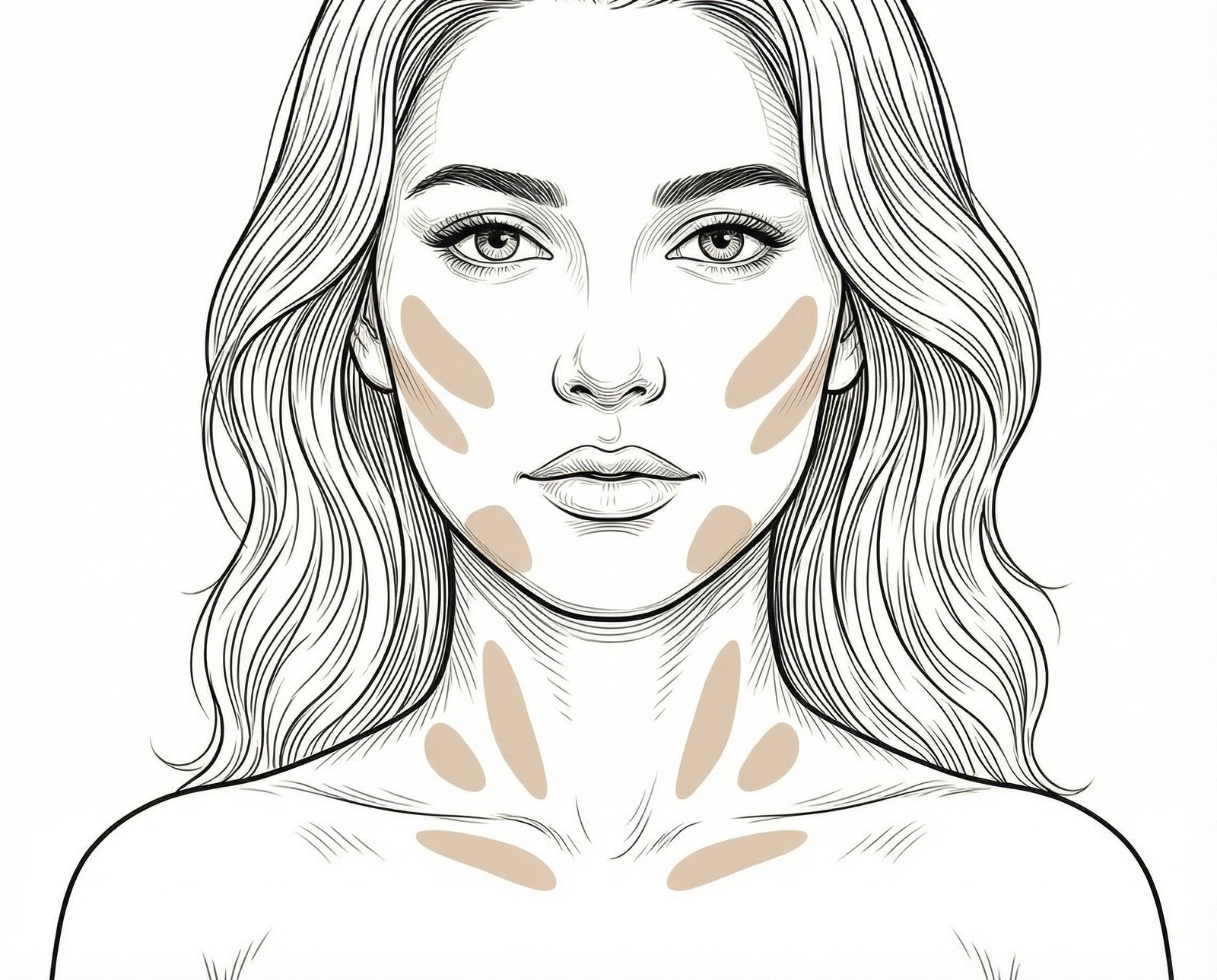
The areas we work on

  1. inflammatory acne and the occasional pre-period breakout (blue);
  2. vascular skin, redness, sensitive skin (yellow);
  3. radiance and even skin tone before an event — the finishing step of a skincare protocol;
  4. anti-ageing prevention and regeneration after exfoliating treatments (red).
Rysunek stref zabiegowych — twarz, szyja i dekolt, sylwetka kobiecaForeheadPoliczkiSzyjaDécolletage
Indicative map of the areas

Your skin, your light

Women's skin goes through many phases — hormonal shifts through the cycle, pregnancy, breastfeeding, menopause — and each leaves its mark. Reactivity, uneven tone, loss of density after thirty, hormonal acne that keeps recurring despite strict skincare. LED therapy addresses this complexity without chemicals and without breaking the skin's surface: a precisely chosen wavelength reaches exactly where it's needed, stimulating processes the body already knows, but performs more slowly with age.
Red light at 633 nm speaks to fibroblasts in a language they understand — activating synthesis of collagen types I and III, improving skin firmness and density. Blue light at 415 nm destroys Cutibacterium acnes through the photo-oxidation of porphyrins — without antibiotics, without any risk of resistance, without drying out the skin. Yellow light at 590 nm strengthens vessel walls, tones down reactive redness and calms skin that has become sensitive after years of acids and retinoids.

When LED works particularly well for women

Women's skin rarely has just one issue — more often it's a combination: hormonal acne on the chin and jawline, alongside early signs of loss of firmness on the cheeks, plus reactivity and a tendency to flush after strong acids. LED lets you address several concerns in one session by combining filters.
  • Hormonal acne around the jawline and chin — the bacterial component of hormonal acne is where blue LED excels; after a series, inflammation is noticeably reduced, even if the hormonal cause persists
  • Collagen stimulation from your 30s, 40s and 50s — red LED is particularly effective as collagen synthesis physiologically slows down; skin regains density and radiance cumulatively, session by session
  • Skin after retinoids and acids — reactive and needing calm — yellow LED reduces inflammation without straining the skin barrier; an ideal window between sessions of active skincare
  • Regeneration after in-salon treatments — after mesotherapy, chemical peels or microneedling, LED shortens recovery time and reinforces the stimulation effects
  • Skin during pregnancy and after childbirth — LED therapy is widely considered safe during pregnancy (no UV, no breaking of the skin's surface); it refreshes and calms irritation without active ingredients that should be avoided

Results you don't see straight away — but that build up

One LED session gives a light brightening and calming effect — enough to head out without foundation. A series of 8–12 sessions is a different story: noticeably improved firmness, fewer acne breakouts, a more even skin tone. The cellular processes triggered by photobiomodulation don't stop the moment the session ends — the skin keeps working for several days afterwards.
Results last for several months after completing the series. Skin doesn't regress abruptly — improvements fade gradually, giving you time to plan maintenance sessions. A rhythm of 1–2 LED sessions a month after the series is enough to keep results going long-term.

LED's place in your daily skincare

LED doesn't clash with your skincare routine — it reinforces it. After a session, skin cells are metabolically activated and absorb active ingredients from serums and creams more effectively. This is a window for deeper penetration of hyaluronic acid, vitamin C or peptides — we apply them right after the treatment.
One thing to note: on the day of an LED session, don't combine it with retinoids or strong exfoliating acids — not because it's dangerous, but because activated skin after LED plus a strong acid can increase reactivity. Your specialist will work out how to fit LED around your current skincare routine.

Frequently asked questions

Can I put on makeup and go out after an LED session?
Yes — and it's one of the biggest advantages of LED therapy. The treatment leaves no visible trace at all: no redness, no flaking, no swelling. You can apply makeup right after the session. Many clients come in on a work break or between meetings — no one can tell you've just left a treatment.
Is LED safe during pregnancy and breastfeeding?
LED therapy is widely considered safe in both cases — it doesn't emit UV radiation, doesn't break the skin's surface, and doesn't introduce anything into the body. Let your specialist know if you're pregnant or breastfeeding — we'll adjust the protocol and choose the filters accordingly (yellow to calm, red for radiance). Your eyes are protected with goggles throughout.
Does LED clash with the retinoids and acids I use at home?
Retinol and exfoliating acids are excellent ingredients that don't rule out LED therapy — but it's worth taking a break from them on the day of your session. Activated skin absorbs active ingredients more deeply after LED, so we apply serum after the treatment. If you used retinol the evening before your session, that's not a problem — what matters is your skincare on the actual day of the treatment.
Will the results look natural, or will it be obvious that "I've had something done"?
LED is a stimulating therapy — it activates processes your skin already performs, just more efficiently. Results are gradual and natural: skin looks healthier, denser, more radiant — not different, just better. There's no "done" look to it. If anyone asks what you've changed, you'll usually hear that you look well-rested.
Can I combine LED with other treatments I do at J'ADORE?
LED works well alongside most in-salon protocols. After mesotherapy or microneedling, it speeds up regeneration and reinforces the stimulation effects. After chemical peels, it reduces inflammation. Whether used on its own or as a finishing step, your specialist will suggest the best sequence, so each session builds on the last.

Where we offer it

LED therapy for women — we perform it in three J'ADORE INSTYTUT salons: two in Warsaw and one in Krakow.

  • WarszawaŻelazna 59 · Wola · Mirów
  • WarszawaMińska 29A · Praga-Południe · Kamionek
  • KrakówKarmelicka 45 · Stare Miasto · Piasek

Price list

    Book a visit

    Prices come from the salon price lists. The choice of cocktail and the number of sessions is decided by your specialist at the consultation.