WarszawaŻelazna 59WarszawaMińska 29AKrakówKarmelicka 45Warszawa · Kraków

Careers

ENPL

Full perspective

Relaxation massage for men

Stronger muscles — deeper tension

Relaxation massage for men is increasingly seen as part of self-care, not a luxury — a way to "reset" after work and release tension that settles in the neck, shoulders and back extensors. The goal is the same: come down from "high revs" and truly rest.
Czas
shorter or longer session — your choice
Efekt
relief from the first visit; calm and better sleep build over a series
Regeneracja
none — you return to your day straight away
Seria
single visit or a regular "just for you" series
Wykonuje
massage therapist / therapist
ListenRelaxation massage — this whole page read aloud

When it's worth it — indications

  • Chronic stress and tension — when your mind won't switch off and your shoulders sit up by your ears.
  • Sleep problems — trouble falling asleep, shallow sleep that doesn't restore you.
  • Tense shoulders, neck and back — from desk work, phones, driving, carrying a child.
  • Fatigue and overload — after an intense week, travel, or a busy season at work.
  • Need for "an hour to yourself" — rest, recovery, a moment without stimuli.
  • A gift — a massage voucher for someone close, or a shared massage for two.

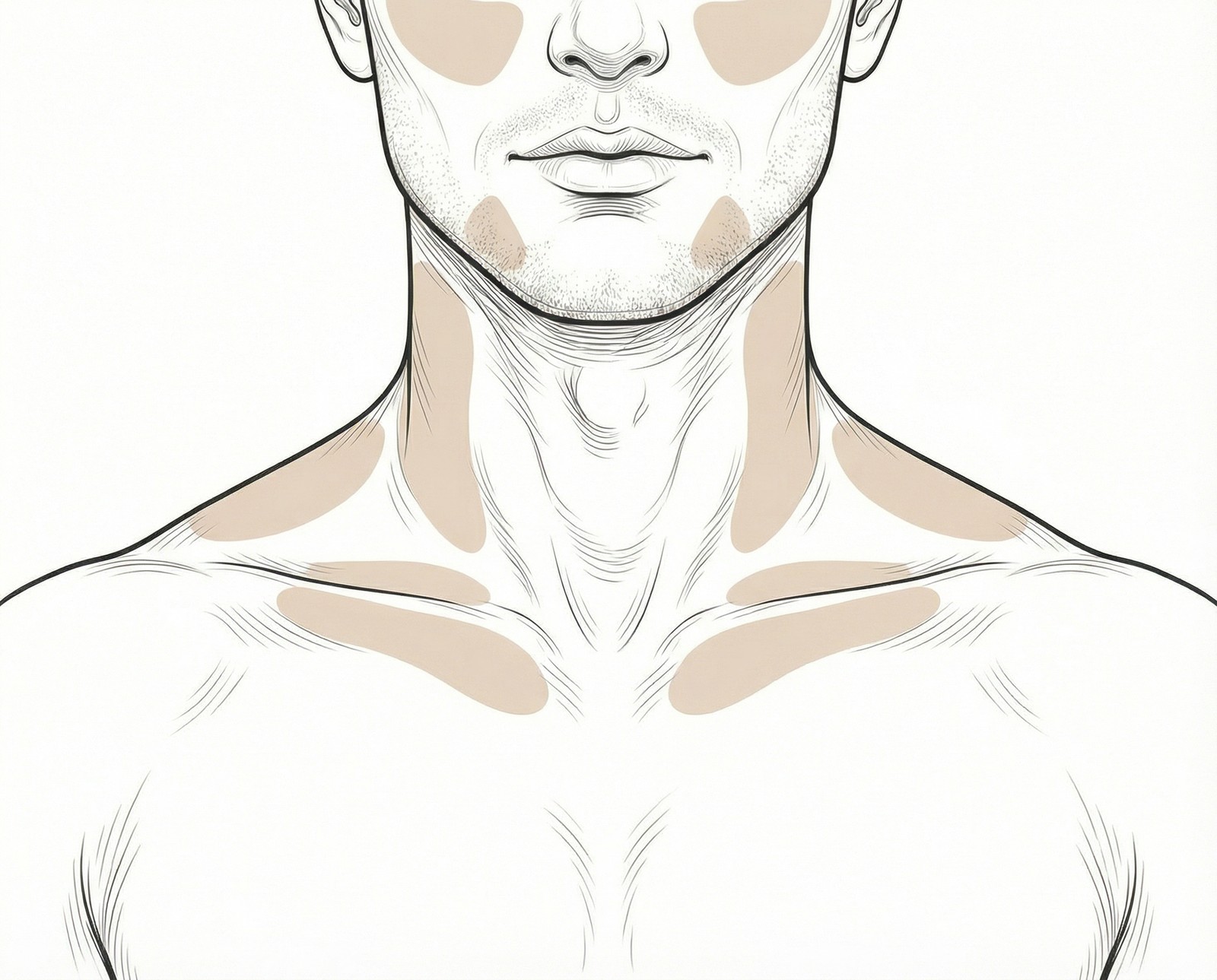
The areas we work on

  1. neck, shoulders and back — stiffness from desk work, driving, strength training;
  2. a "reset" after a stressful week — calming the mind, screens off;
  3. a stronger, firmer pressure available on request;
  4. zero downtime — you go straight back to your day after the massage.
Rysunek stref zabiegowych — twarz i szyja, sylwetka męskaForehead and templesPoliczkiJawlineSzyja
Indicative map of the areas

Stronger muscles — deeper tension

Male muscle mass is, on average, 30–40% denser than female muscle mass. This means tension builds up in deeper layers — in the shoulder rotators, the muscles alongside the spine, and the lumbar-dorsal fascia — and doesn't ease with standard, surface-level touch. Relaxation massage at J'adore Instytut is performed by a physiotherapist who adjusts pressure, pace and technique to your body's actual anatomy: stronger kneading, deeper fascial work, precise release of trigger points in the neck and shoulders.
This isn't the same massage you'd get at a standard spa with gentle movements. It's manual work matched to your body's parameters and the purpose of your visit — lowering cortisol, improving sleep quality, or recovering from overload.

Work-related stress has a specific address in the body

Hours at a desk, long meetings, driving — your neck, shoulders and lower back act like a reservoir for tension. Cortisol keeps muscles in a permanent state of shortening: hard, poorly supplied with blood, with limited range of motion. Over time this leads to tension headaches, trouble falling asleep despite physical tiredness, and mornings that don't feel restful.
Relaxation massage reverses this mechanism at a physiological level. Manual techniques lower cortisol levels and activate the parasympathetic nervous system — the same one active during deep sleep. After 60 minutes, muscles return to normal tone, circulation speeds up, and the body leaves alarm mode. The effect is measurable and felt that same night.

Massage and strength training — not mutually exclusive

If you train regularly, you know that muscle soreness the next day (DOMS) is a sign of microscopic fibre damage in the recovery phase. Relaxation massage performed 2–4 hours after training speeds up the removal of metabolites (lactate, ammonia), improves blood flow to overloaded areas, and shortens recovery time between sessions. It doesn't replace sports massage for specific injuries — but as a weekly recovery ritual, it works better than stretching alone.
Massage before training? Possible — it warms tissues and improves range of motion. In that case, leave at least a 2-hour gap to avoid excessive muscle relaxation before strength work.

Zero downtime, a real effect

There's no recovery period. There's no time when you need to avoid activity. Most men feel calm and clearer focus after a massage — not drowsiness. You go straight back to work, to a meeting, or to training. The only recommendation is hydration (at least 0.5 l of water after the treatment) and avoiding intense effort for the next 2 hours.

Frequently asked questions

Should I shave my back before the massage?
No — it's not necessary. Relaxation massage is performed using oil, which glides over the skin regardless of hair. Back hair doesn't affect the effectiveness of manual techniques or the comfort of the treatment. Come as you are.
Can I come the day after an intense strength training session?
Yes — that's actually an optimal window. Massage 18–48 hours after a heavy training session speeds up the removal of metabolites from overloaded tissue and reduces the intensity of DOMS. Tell the physiotherapist which muscle groups you trained — they'll adjust the depth of work and techniques to your muscles' current state.
Will anyone notice I've had a massage?
Skin can be slightly reddened for 30–60 minutes after a massage — a normal vascular response to tissue manipulation. After that, there are no visible signs. Many men schedule massage in the morning before work or between meetings — your appearance, focus and calm afterwards are indistinguishable from a day without a massage, just better quality.
What's the difference between relaxation massage and sports massage — which should I choose?
Relaxation massage targets cortisol and the nervous system: rhythmic, flowing techniques lower stress levels and improve sleep. Sports massage works more intensively on specific muscle groups overloaded by exertion, using stretching and targeted techniques for recurring tension. If your main issue is work stress and poor sleep — choose relaxation massage. If you have a specific pain after training or overload in a particular area — choose sports massage. The physiotherapist will help you choose during the initial consultation.
Can relaxation massage be combined with kinesiotaping?
Yes — it's an effective combination for recurring neck or lower-back overload. The massage relaxes the tissue first, and kinesiotaping applied afterwards maintains the effect for the next 3–5 days. If you have recurring issues with a specific area, tell the physiotherapist before your session — they'll plan the sequence of both methods in one visit.

Where we offer it

Relaxation massage for men — we perform it in three J'ADORE INSTYTUT salons: two in Warsaw and one in Krakow.

  • WarszawaŻelazna 59 · Wola · Mirów
  • WarszawaMińska 29A · Praga-Południe · Kamionek
  • KrakówKarmelicka 45 · Stare Miasto · Piasek

Price list

    Book a visit

    Prices come from the salon price lists. The choice of cocktail and the number of sessions is decided by your specialist at the consultation.