
WarszawaŻelazna 59WarszawaMińska 29AKrakówKarmelicka 45Warszawa · Kraków

Careers

ENPL

Full perspective

Intensive hair regeneration with microneedling for women

Women and hair loss — it's not one single problem
In women, thinning most often shows along the parting and at the crown, while the hairline stays intact. Common underlying causes include hair loss after childbirth, stress, diet, or hormonal factors — which is why scalp microneedling for women makes sense mainly as part of a plan, not instead of diagnostics. The goal is a denser look and improved scalp condition.
Czas
around an hour
Efekt
results build up over a series and need maintenance
Regeneracja
minimal — the scalp usually settles within a day
Seria
usually a series of sessions every few weeks, after prior diagnosis
Wykonuje
trichologist or experienced cosmetologist
ListenIntensive hair regeneration with microneedling — this whole page read aloud

When it's worth it — indications

  • Weakened, "thin" hair — hair that has lost density and bounce, lies flat and breaks easily.
  • Thinning and excessive shedding — when noticeably more hair ends up on your brush and in the drain than before.
  • Support for growth — wanting to "wake up" follicles and improve scalp condition.
  • Scalp in poorer condition — dry, irritated, prone to seborrhoea or dandruff (once the underlying condition has settled).
  • Hair loss after stress, diet, or childbirth — when shedding is temporary and you want to support recovery.
  • Emerging thinning — as part of a broader trichology plan, not a one-off "miracle."

The areas we work on

  1. thinning along the parting and at the crown;
  2. telogen shedding (after childbirth, stress, dieting);
  3. weakened, "lifeless" hair after intensive colouring and styling;
  4. support after calming seborrhoea/dandruff, for a healthier scalp.
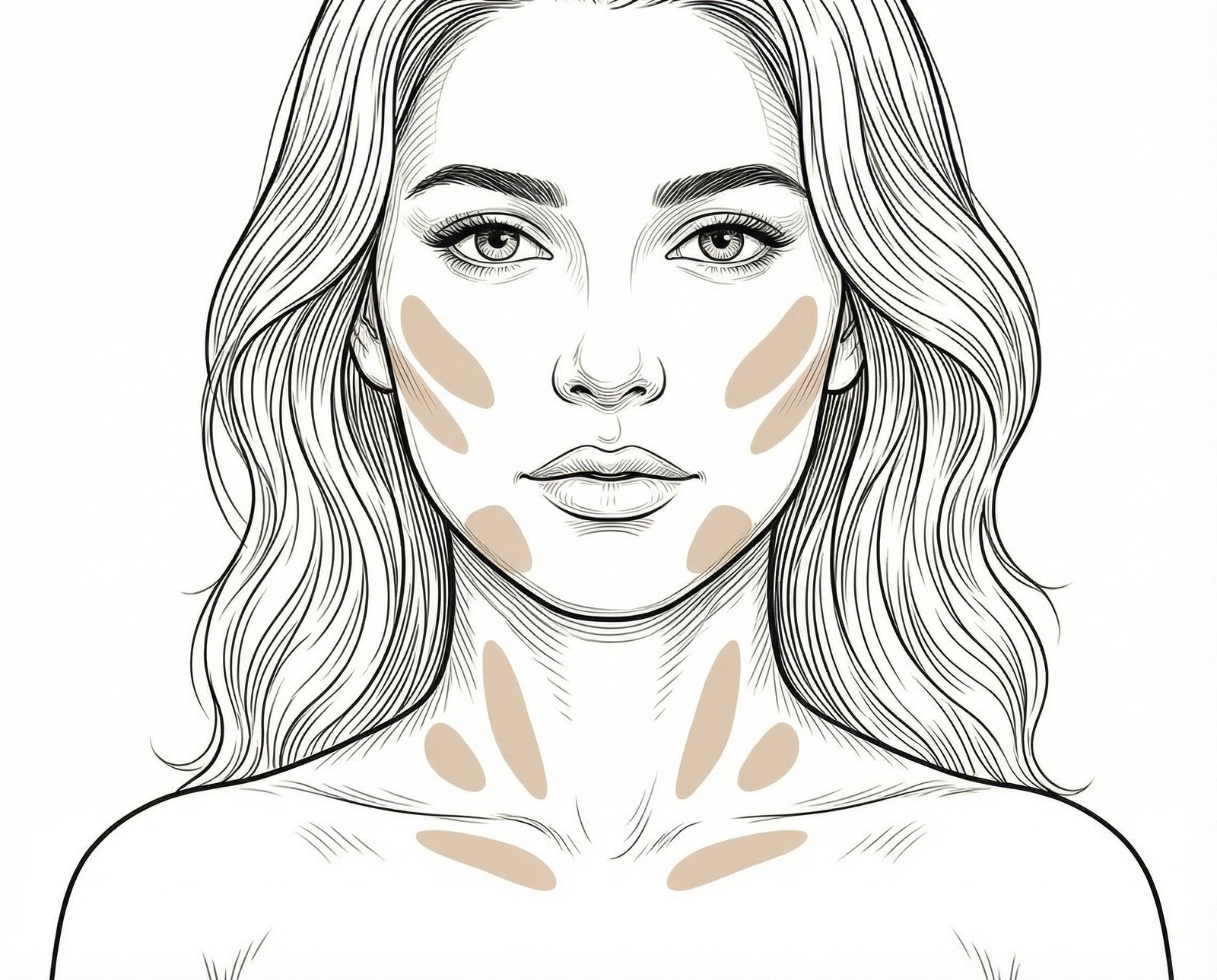
Rysunek stref zabiegowych — twarz, szyja i dekolt, sylwetka kobiecaForeheadPoliczkiSzyjaDécolletage
Indicative map of the areas

Women and hair loss — it's not one single problem

Women talk less openly about hair loss, though the causes vary widely. Telogen shedding after childbirth, sudden thinning after prolonged stress, weakening from a restrictive diet, or hormonal changes — each of these leaves a different mark on the scalp and responds differently to treatment. That's why scalp microneedling at a trichology practice isn't "an ampoule intensified with a needle" — it's an intervention matched to your follicles' specific situation and scalp condition, determined after trichoscopy.
In women, thinning most often appears along the parting and at the crown, while the hairline stays intact. Hair becomes thinner to the touch, breaks more easily, and volume fades despite daily care. Ampoules and conditioners applied "on top" work on the fibre — microneedling delivers regenerative, strengthening ingredients to where the problem actually starts: the scalp and follicle.

When this method is worth considering

Women who most often come to J'adore Instytut for this treatment:
  • Telogen shedding — after childbirth, during or after intense stress, following restrictive diets and deficiencies; the follicle is alive but needs support to get back into growth
  • Hormonal thinning — scalp changes linked to hormonal balance require parallel diagnostics (this doesn't replace an endocrinologist, but fits well into a broader plan)
  • Hair weakened by styling — years of colouring, straightening, perming can wear down the scalp, not just the fibre; here the needle reaches deeper than any mask
  • Support after calming seborrhoea — once a previously oily or flaky scalp has been cleansed and is ready for growth stimulation

Anatomy of a woman's scalp — why going deeper matters

Women's scalps are usually somewhat thinner and more reactive than men's. The protective barrier that shields the skin every day also makes it harder for active ingredients — even very well-formulated ones — to penetrate. Micro-punctures (Dermapen or fractional microneedling RF) create a network of micro-channels, through which regenerative, strengthening ampoules reach much deeper and work more effectively. At the same time, these same micro-injuries improve scalp blood flow — and a well-supplied follicle has a real chance of retaining and strengthening hair.
That's why the treatment's result shows not only in how the scalp feels, but over time — in new, stronger hair growing at the root.

Before your visit — what's worth knowing

Scalp microneedling isn't a first move made blindly. A sensible starting point is a trichology consultation with trichoscopy, which shows whether follicles are active, what type of shedding you have, and whether anything beneath it needs endocrinological or dermatological diagnostics. The treatment works best where there's something to wake up — and it's the trichologist who assesses whether that moment has arrived.
A series spread over several weeks, combined with gentle home care (a mild shampoo without harsh detergents, scalp ampoules between visits, SPF protection for the parting), gives noticeably better results than a single visit.

Frequently asked questions

Will it be obvious I've had something done — can I go back to work the same day?
Your scalp may be slightly red and sensitive for a few hours, but marks under the hair are practically invisible. Most women return to normal activities the same day. Your trichologist will give you precise instructions — for the first 24 hours, we skip washing and heavy styling.
My hair is dyed and I lighten it regularly — is that a problem?
The treatment targets the scalp, not the fibre, so colouring on its own doesn't rule out microneedling. What matters is not combining colouring and the needle treatment back-to-back — your trichologist sets the interval individually, so the scalp is calm when treated.
I lost a lot of hair after giving birth — when's a good time for the treatment?
Postpartum telogen shedding usually slows on its own once hormone levels stabilise. Trichoscopy will show whether follicles have returned to the growth phase and whether it's a good time for stimulation — that's why a consultation before the treatment matters, rather than booking straight into a series.
Does it hurt more than on the face?
The scalp is given a topical anaesthetic before the treatment. Most women describe it as vibration and slight pricking — tolerable, though the scalp can be sensitive. It may feel tender for a few hours afterwards; that's a normal reaction.
Will this replace my Olaplex treatment?
These are two different treatments with entirely different goals. Olaplex repairs damaged hair fibre from the outside — it helps with damaged, over-dried length after colouring and lightening. Microneedling works on the scalp and supports follicles. If you have both thinning and damaged ends, both methods can make sense — but at different times and for different reasons.

Where we offer it

Intensive hair regeneration with microneedling for women — we perform it in three J'ADORE INSTYTUT salons: two in Warsaw and one in Krakow.

  • WarszawaŻelazna 59 · Wola · Mirów
  • WarszawaMińska 29A · Praga-Południe · Kamionek
  • KrakówKarmelicka 45 · Stare Miasto · Piasek

Price list

    Book a visit

    Prices come from the salon price lists. The choice of cocktail and the number of sessions is decided by your specialist at the consultation.