Two drainage methods, two mechanisms
Both treatments "move" fluid around the body — but through different mechanisms and at different depths. The simplest way to remember it: manual drainage follows the lymphatic system. Machine drainage works on soft tissue and fascia. That's why they're not substitutes for one another — they complement each other.
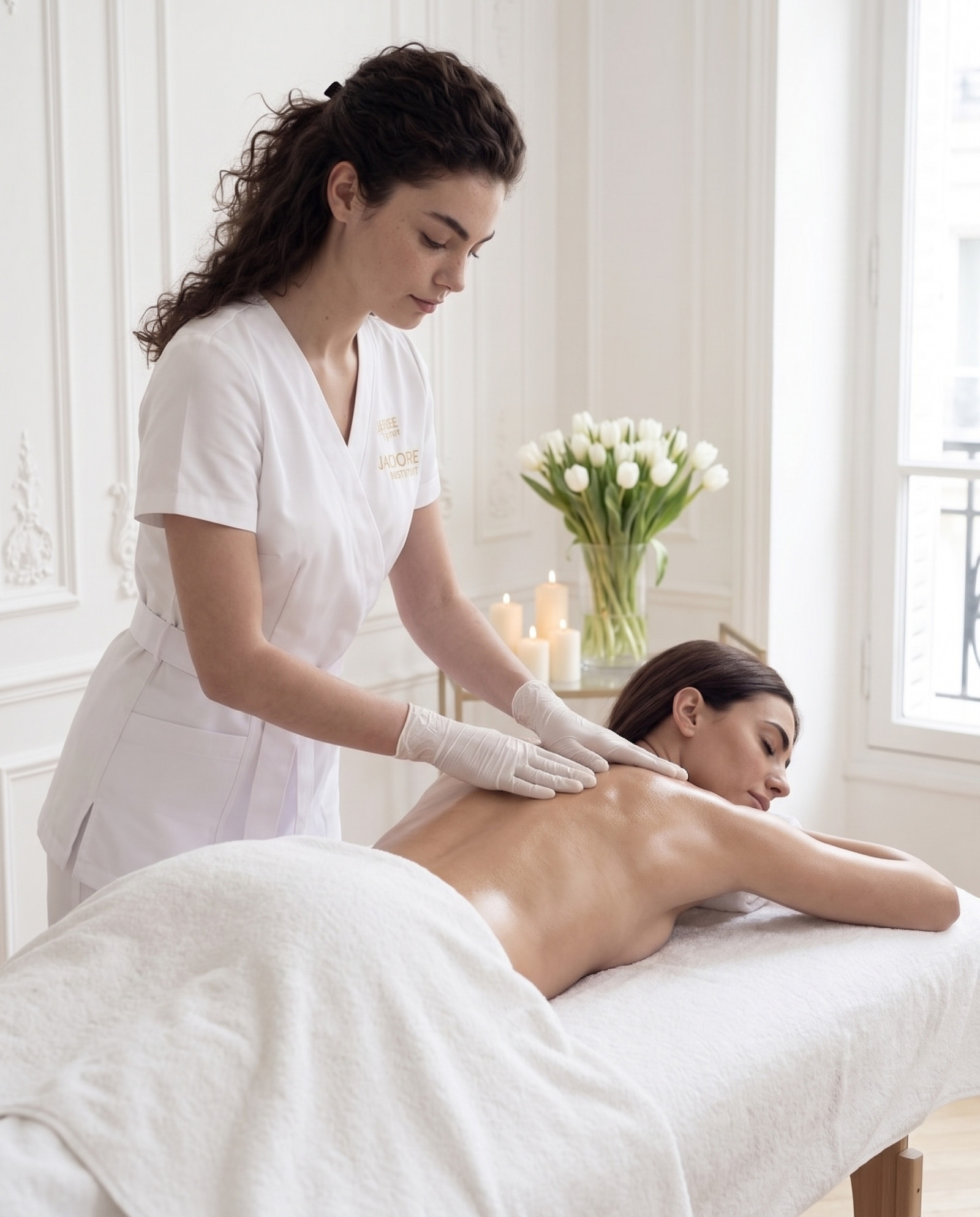
Manual (lymphatic) drainage
supports lymph flow through the lymphatic system
- swelling, puffiness (legs, face, hands)
- recovery after surgery and aesthetic treatments
- heavy, tired legs; fluid retention
- immune support, toxin reduction
- chronic inflammatory conditions, lymphoedema
Machine drainage (pressotherapy / EPS)
mechanically compresses and massages soft tissue
- cellulite, orange-peel skin, uneven texture
- skin laxity on the thighs, abdomen, arms
- scars, fibrotic thickening after liposuction
- muscle recovery after sport, tension relief
- body contouring as part of a treatment plan
When to choose manual drainage
Manual drainage works best wherever the problem is excess fluid in the tissues — not sagging or cellulite. The technique relies on very gentle, rhythmic hand movements that mimic the natural pulse of the lymphatic vessels. This makes the treatment surprisingly gentle — many clients are surprised that something so calm can work so effectively.
- After surgery and aesthetic treatments — post-operative swelling is a normal part of healing. Manual drainage often shortens it and eases discomfort.
- Chronic leg swelling — especially in the evening or after long periods of standing or sitting; many people notice a clear improvement in comfort.
- Face and neck — morning puffiness, swelling after flights, tension around the jawline.
- As support during recurring infections — the lymphatic system is part of your immune defence.
- During pregnancy and postpartum (after consulting a doctor) — swelling in the legs and ankles is a common complaint.
When to choose machine drainage
Machine drainage — whether pressotherapy or a device for mechanical tissue stimulation — works deeper. Its goal isn't so much lymph flow as remodelling of connective tissue: breaking down fibrotic thickening, stimulating circulation at the level of the fascia, improving skin firmness from within. Results build up over a series — not after one session, but through a regular course.
- Cellulite and orange-peel skin — especially deep, fibrotic types (firm, lumpy texture); the device mechanically mobilises thickened bands of connective tissue.
- Skin laxity on the thighs, buttocks, abdomen — the device stimulates fibroblasts and can improve skin firmness after weight loss or pregnancy.
- Post-surgical and post-treatment scars — after liposuction, firm subcutaneous nodules and scarring can form; the device helps soften them.
- Sports recovery — deep mechanical massage can shorten recovery time after intense exercise.
- Body contouring as part of a treatment plan — combined with diet and physical activity.
A simple test: what do you actually need?
Before you book a treatment, check in the mirror and take a moment to listen to your body:
- 01
Does the problem appear in the evening or after long periods of sitting?
Swelling, a feeling of heaviness, legs like logs — that's a signal from the lymphatic system. Direction: manual drainage.
- 02
Is the skin "lumpy" or lax?
Firm cellulite, uneven texture, skin that loses firmness after a change in weight — that's connective tissue remodelling. Direction: machine drainage.
- 03
Have you had surgery or an aesthetic treatment recently?
Fresh post-surgical swelling is territory for manual drainage — gentler and safer during the healing phase.
- 04
Do you respond to both problems?
Swelling AND cellulite, fatigue AND sagging — this is the most common scenario. It's worth combining both types of drainage in your treatment plan.
When it's worth combining both
In practice, we most often see clients with several issues at once — leg swelling and cellulite, post-pregnancy sagging and fluid retention, muscle fatigue and treatment scars. In these cases, combining both techniques achieves results that neither can reach alone.
Manual drainage + pressotherapy
A classic sequence: manual drainage first to remove fluid, then pressotherapy to lock in the effect and stimulate deeper layers. Often used alternately within the same series.
Manual drainage as preparation for machine treatment
Before a machine-based cellulite treatment — opening up lymphatic drainage first gives toxins and fluid somewhere to go, which can improve comfort and effectiveness of the session.
Machine drainage after liposuction (later phase)
In the first weeks after surgery, we work manually and gently. Once the tissue has stabilised, the device helps soften scars and even out the contour.
A contouring programme using both techniques
In body-contouring programmes — a series of machine sessions for fat and connective tissue, with manual drainage to maintain results and reduce swelling after intense sessions.
The order and proportions are always set by the therapist based on an individual consultation. There's no single approach that suits everyone — that's why the first consultation matters so much. Come with a list of concerns, not a treatment name.