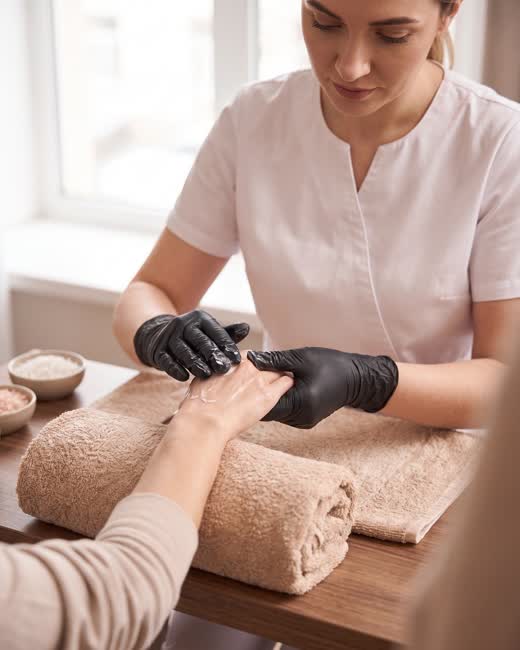
Why a man's neck and shoulders are a different story
Larger muscle mass, intensive strength training and a specific pattern of strain mean that muscle tension in men has a different character than in women. The trapezius, levator scapulae and neck muscles — these are areas that accumulate both training load and hours spent in one position at a computer or behind the wheel. The result: the neck stiffens, range of motion drops, and a dull ache appears when turning the head.
Classic massage helps, but it has limits. The therapist works on a tense muscle — and that muscle resists throughout. Heat changes this equation. A heated stone placed on the muscle triggers a reflex release before the real work even begins. It's like a warm-up for the tissue — instead of fighting resistance, the therapist works on an area that's already opened up.
Hot stones vs classic: what sets the two treatments apart
The most common question: "Why hot stones, when massage is massage?" The answer lies in what heat does — and how it changes the way the therapist works.
Classic massage
manual work, no heat therapy
- works on surface and mid-level muscle layers
- the therapist breaks down tension mechanically
- the muscle often "resists" throughout the session
- effective for regular tension and as prevention
Hot stone massage
manual work + heat therapy
- heat prepares the tissue before kneading begins
- the muscle responds to heat with a reflex release
- the therapist can work deeper with less force
- often more effective on hard, chronically tense areas
What happens during the treatment — no sugar-coating
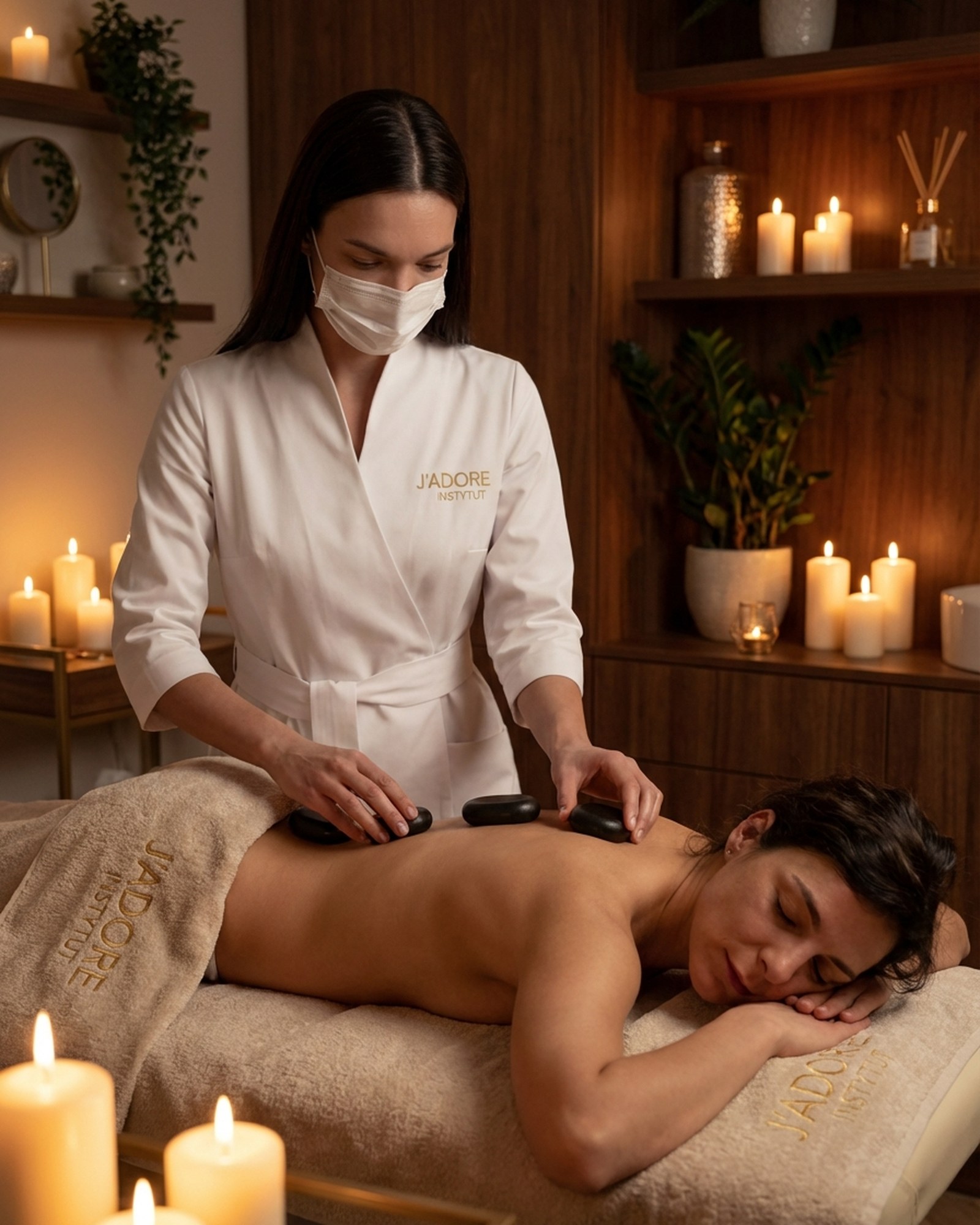
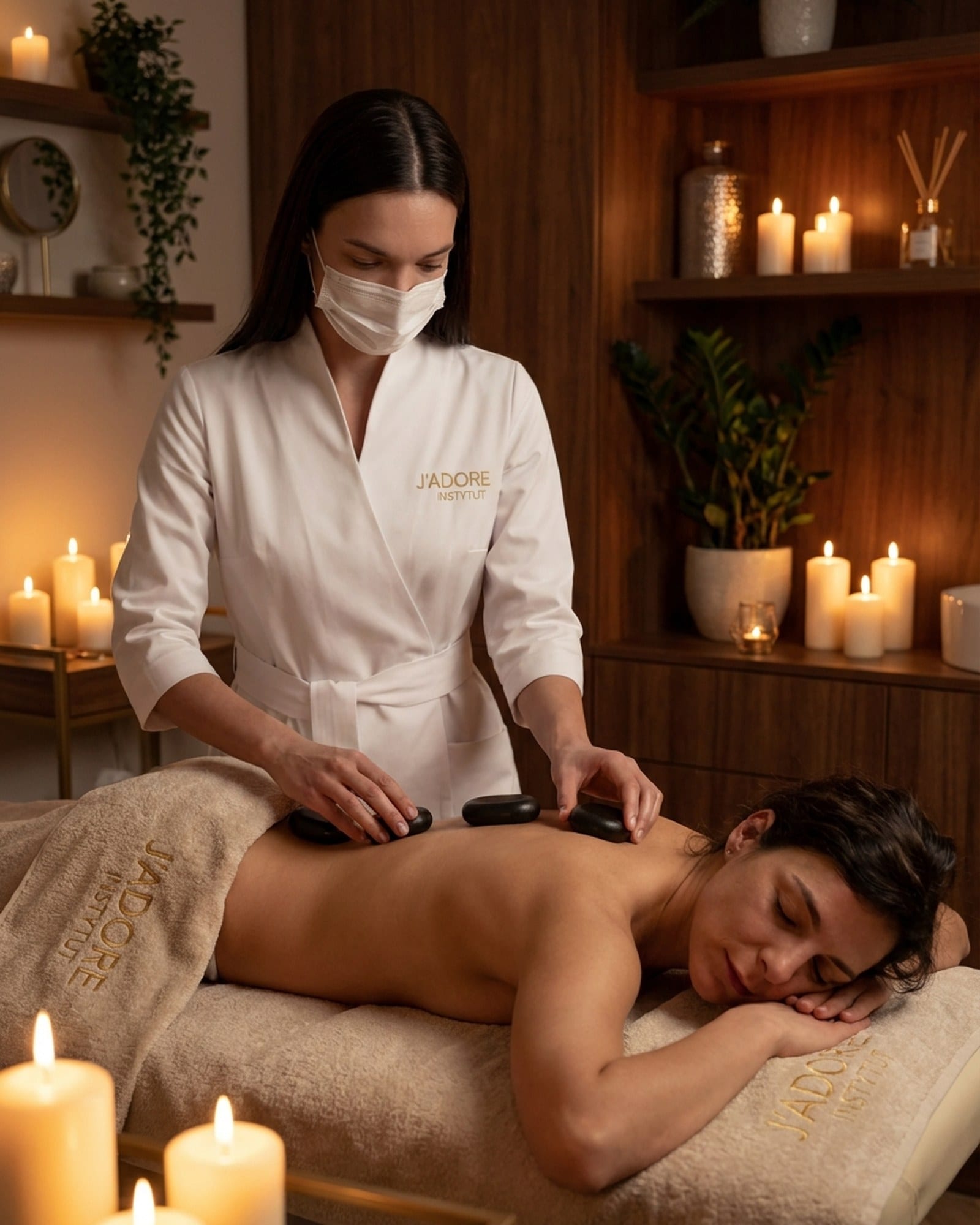
The treatment starts with warm stones placed along the spine and on the shoulders — this is the stage where the tissue gets time to open up. It sounds calm, and it is, but it doesn't last long. The therapist then moves to manual work, using the stones as an extension of the hands: kneading, rubbing, working along the muscle fibres.
- 01
Stones on the body
Hot stones are placed on the neck, shoulders and along the spine. Heat prepares the tissue — muscles begin to release before the therapist starts the real work.
- 02
Manual work with the stone
The therapist uses the stone as a massage tool: deeper work on the trapezius, shoulders and neck. The heat keeps the tissue ready to respond.
- 03
Focused work on specific areas
Focused work on the most tense areas — often the neck and shoulders. Smaller stones reach hard-to-access spots between the shoulder blades.
- 04
Wind-down
The final phase uses a lighter touch — time for the tissue to absorb the changes. There's no marketing spin here — it's simply a physiologically justified stage.
The effect is usually noticeable during the session itself: range of motion in the neck typically improves as you go, not just afterwards. It's one of the reasons men who were sceptical at the start leave with the same surprise. The body responds to the stimulus, not to opinions about the treatment.
Who benefits most
Not every tense muscle needs hot stones. But there are situations where this treatment makes a clear difference:
- A neck after strength training. Deadlifts, rowing, overhead press — these exercises put heavy load on the trapezius and neck. If your neck "locks up" after a few such sessions, hot stones can effectively reset the tension.
- A desk-bound job. Hours at a desk, especially with a screen set off-centre or too low, can turn one side of the neck and shoulder to concrete. This tension often doesn't ease up on its own.
- Muscle tension from mental stress. It sounds trivial, but it's well documented: emotional tension builds up physically in the neck, shoulders and jaw. Heat works here on both the tissue and the nervous system — many people notice a marked calming effect after the treatment that they didn't expect from a "massage".
- Chronic tension that "won't shift". If classic massage brings relief for 2–3 days and then you're back to square one, that's a sign the tension runs deeper. Hot stones can reach layers that are harder to access with mechanical force alone.
Aftercare — what to know
Right after the treatment, your body is warm and relaxed. It's a pleasant state, but worth respecting for a few hours. Intensive training straight after the massage isn't a good idea — muscles need time to "absorb" the work the therapist has done. Many people book hot stones for Friday afternoon specifically to have the weekend to recover.
Hydration matters more here than after an ordinary massage — heat stimulates circulation and metabolic processes in the tissue more intensely. This isn't a wellness-brochure suggestion — it's a practical point: drink water regularly for the rest of the day after the treatment, not alcohol.
How to combine hot stone massage with other treatments
Hot stones rarely become the only element of a routine — more often they act as a reset within a regular recovery programme. Here are combinations that make sense for men:
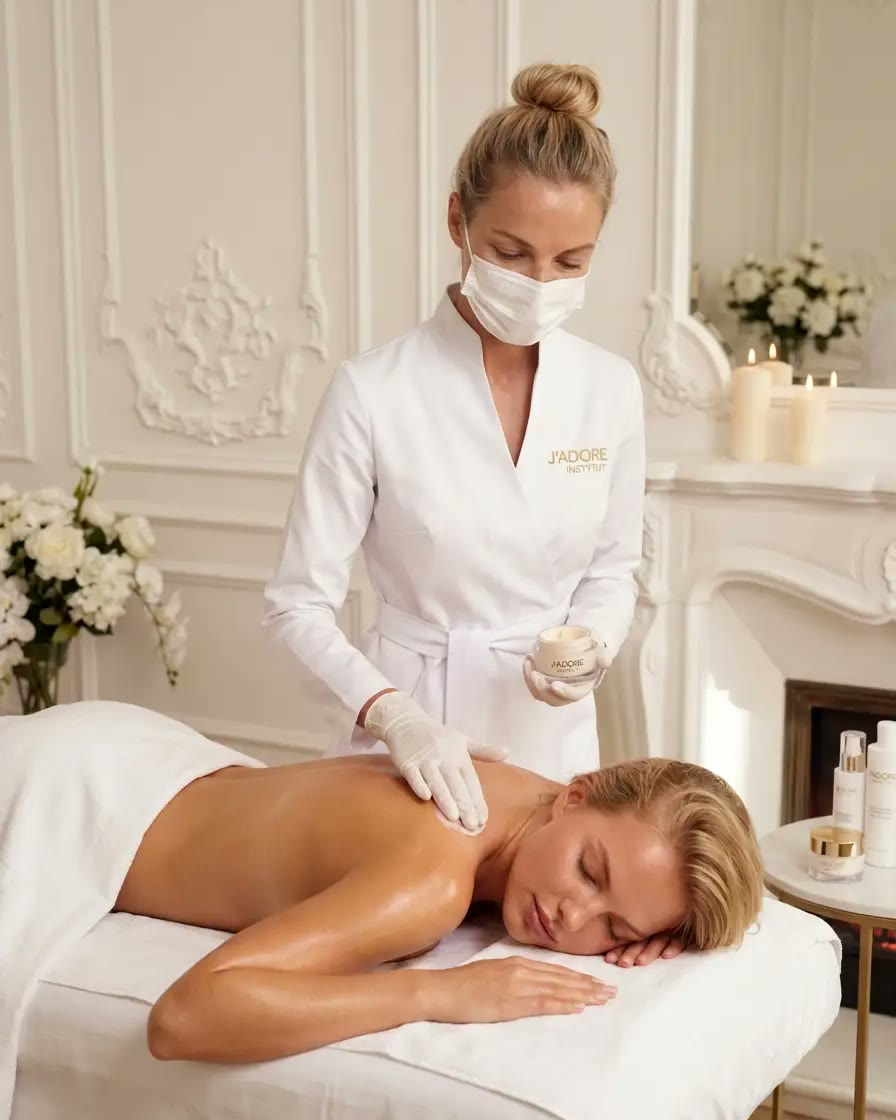
Classic massage
A good rhythm is hot stones once a month as a "deep reset" and classic massage every 2 weeks for ongoing maintenance. Together they build lasting release — apart, each has its limits.
Sports massage
Sports massage targets overloaded muscle fibres more precisely (say, after a specific exercise). Hot stones give deeper thermal release across whole muscle groups. The combination makes sense with an intensive training plan.
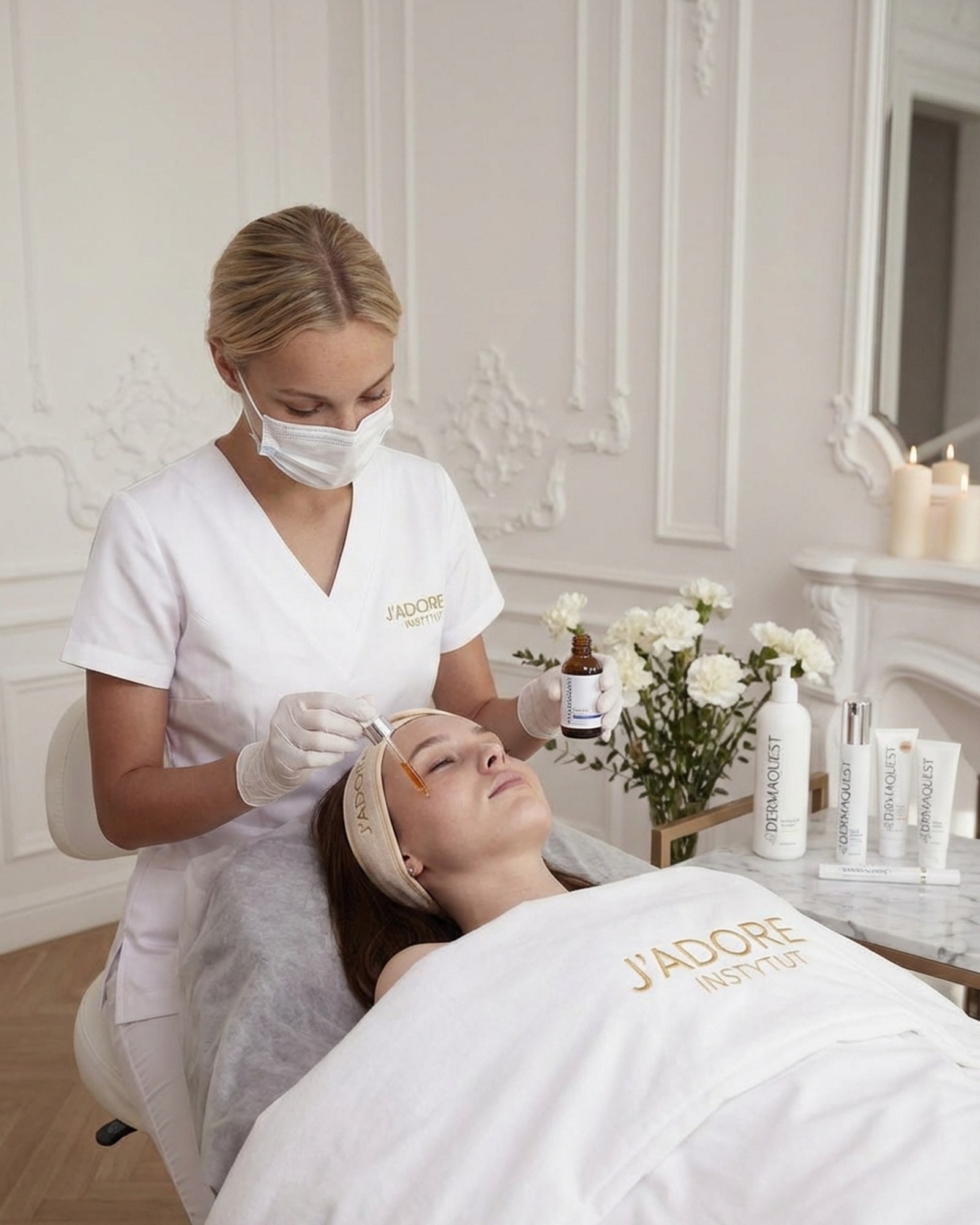
Face and head massage
If neck tension extends up to the base of the skull and causes tension headaches, adding a short session working on the head and temple muscles can strengthen the effect. Few people ask about this directly, but the difference can be noticeable.
In practical terms: when to book your first visit
There's no wrong time — unless you have active inflammation or have just finished an intensive training session (in that case, wait a day). Ideally, book on a day when you have no demanding plans afterwards — give your body a few hours to take in the treatment. An evening slot midweek is often a good choice.
For many men, the first hot stones visit is an experiment approached with a bit of distance — "let's see what this does". They leave already knowing it's not a treatment "to forget about". A neck that hasn't budged for two weeks often releases within a single session. That's not a guarantee — but it's what we hear most often.