
The lymphatic system — the quiet cleansing system we forget about
The circulatory system is the one everyone knows — the heart, arteries and blood in the veins. But alongside it, there is another parallel and far less familiar system: the lymphatic system. This is the system involved in drainage.
Imagine that cells throughout your body are constantly ‘bathed’ in tissue fluid. This fluid supplies nutrients and removes metabolic waste products. The heart pumps blood under pressure, which delivers what tissues need. But the tissue fluid then needs somewhere to drain — together with what it has collected. This is where lymph comes in.
- Lymph is not blood. It is a slightly yellowish fluid that flows through a network of lymphatic vessels running throughout the body. It collects tissue fluid, metabolic waste products and immune cells. It transports them to the lymph nodes — small ‘filtering stations’ in the groin, underarms, neck and abdominal area.
- The lymphatic system has no pump of its own. Unlike blood, lymph is not driven by the heart. Its movement depends on muscle activity, breathing movements and the pulsation of nearby arteries. This is why a sedentary lifestyle, prolonged standing or air travel can make your legs swell — lymph flow slows down.
- Lymph nodes filter and neutralise. This is where lymph is ‘cleansed’. Bacteria, viruses, cancer cells and other unwanted substances are captured. This is why lymph nodes can become palpable and painful after an infection — the immune system is fighting there.
- A snail’s pace is normal. Lymph flows through the body much more slowly than blood. At rest and with limited movement, it may stagnate. This is when swelling, heaviness and the characteristic ‘spongy’ feel of tissues develop.
What actually leaves the body — step by step
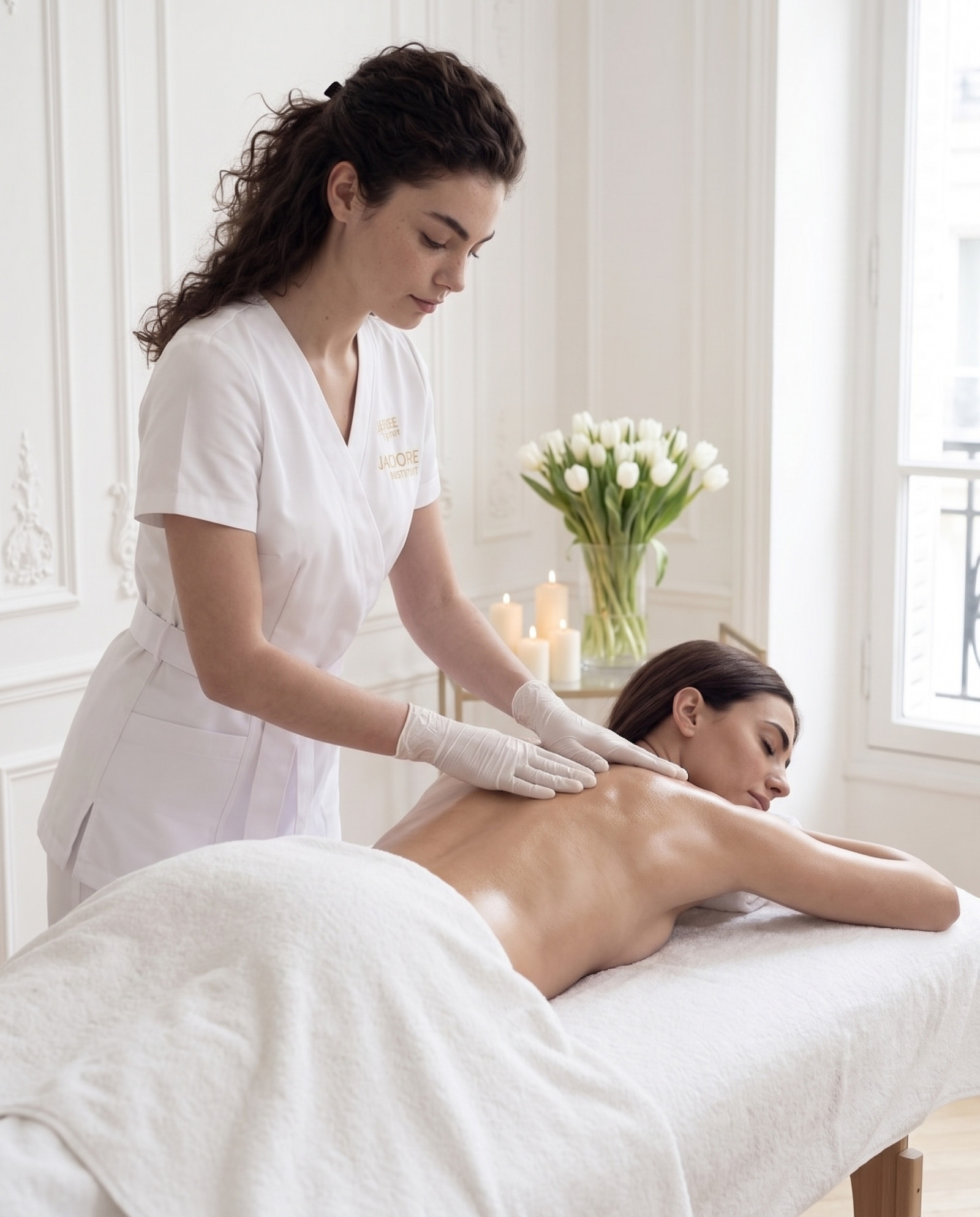
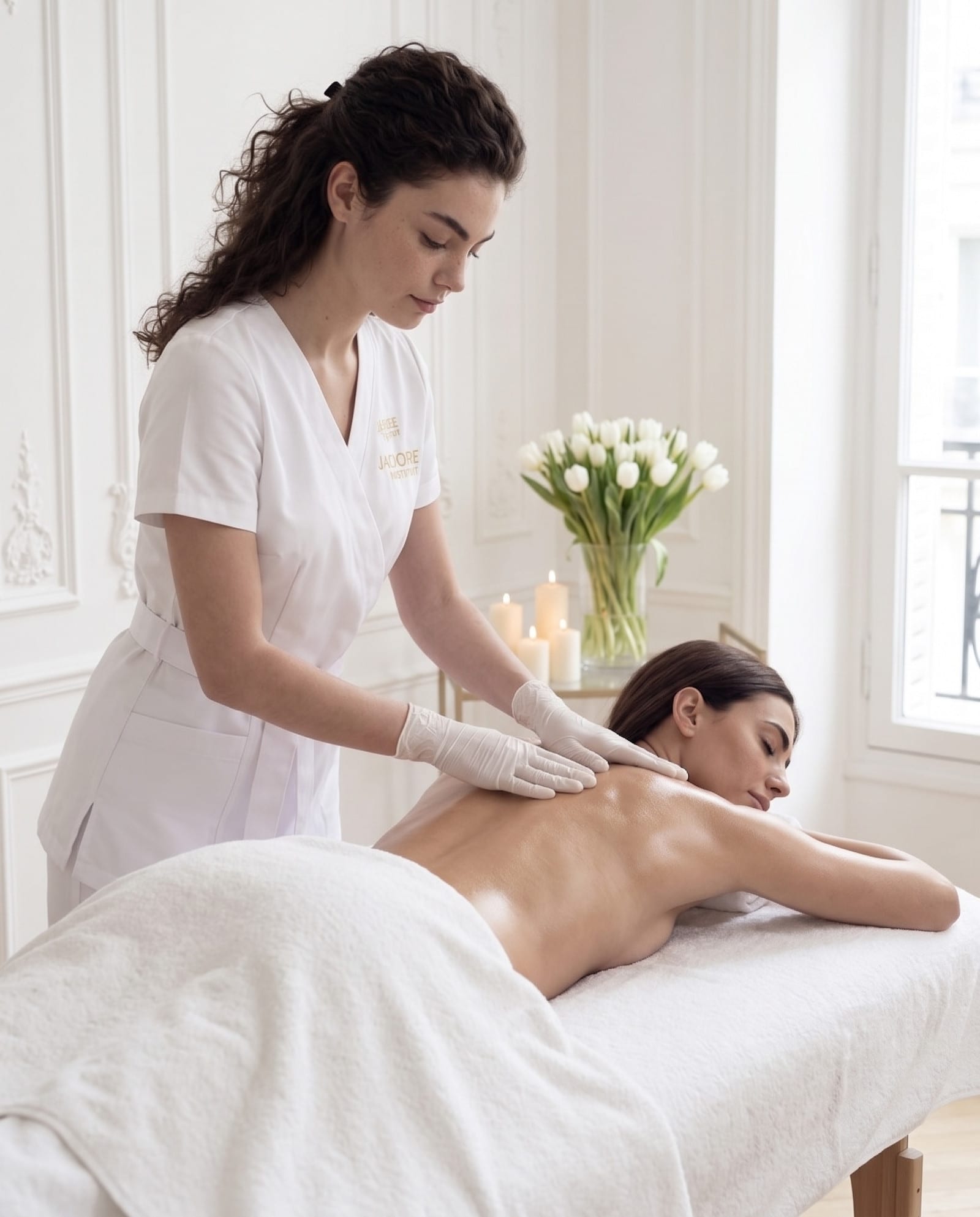
Lymphatic drainage is a manual treatment, sometimes supported by devices. It uses a very specific technique: gentle, rhythmic movements towards the lymph nodes. This is not a classic massage that kneads the muscles. It focuses only on lymphatic vessels. They lie just beneath the skin and respond to light, precise pressure rather than force.
- 01
Activation of lymphatic vessels
Gentle pressure in a specific sequence — always starting at the lymph nodes, not at the swelling — ‘opens’ the vessels and speeds up flow. Lymph begins to move faster than it would naturally at rest.
- 02
Moving fluid out of the tissues
Tissue fluid that has remained between cells is gradually ‘drawn’ into the lymphatic vessels. This is the stage at which swelling reduces. You can literally see the tissues become less tense and body contours more defined.
- 03
Transport to the lymph nodes
Collected lymph — together with metabolic waste products, excess proteins, microorganisms and cellular debris — is directed to the nearest lymph nodes, where it is filtered.
- 04
Removal through the urinary system
After filtration in the nodes, cleansed lymph returns to the blood and is ultimately removed from the body by the kidneys. This is why drinking more water after drainage is recommended. It supports elimination and ‘flushes’ the system.
Not weight loss — so where does the change on the scales come from?
This brings us to the heart of the question: if drainage does not burn fat, where does the weight loss come from?
The answer is simple: water has weight. One litre of water weighs one kilogram. When excess fluid is drained from the tissues — often built up over weeks — your weight may drop by several hundred grams, or even more in people with significant fluid retention. It is not fat, but it is not an ‘illusion’ either. It is real mass that has left the body.
Importantly: this water will return if the cause of retention returns. Drainage does not ‘fix’ a blocked lymphatic system forever. It unblocks and flushes it. Results therefore last longest in people who also change their habits. They move more, avoid salty and processed foods, and drink enough water.
What drainage does
real results
- Removes excess tissue fluid from the spaces between cells
- Speeds up lymph flow and unblocks vessels
- Reduces swelling and heaviness in the legs, arms and face
- Supports the removal of metabolic waste products
- May visibly improve body contours, particularly in the face, ankles and thighs
- Supports the immune system and recovery after exercise or a treatment
What drainage does not do
common myths
- Does not destroy fat cells
- Does not alter fat metabolism
- Does not replace diet or physical activity
- Does not reduce cellulite without support from other methods
- Does not provide lasting results without changing habits
Where does the impression of a slimmer figure come from — and does it last?
One of the most common comments after drainage is: ‘I looked as though I had lost weight, but the scales were almost the same.’ This is a very characteristic result and has a clear explanation.
Tissue swelling is not only about kilograms — it also changes proportions and contours. Swollen ankles, ‘puffy’ thighs and a swollen face after a night’s sleep affect how we see our figure in the mirror, regardless of the number on the scales. When fluid drains away, contours return. Legs suddenly look slimmer, the face becomes more defined and the abdomen looks less ‘bloated’. This is not an optical illusion. It is a real change in the tissues.
How long does the result last? It depends on the cause of fluid retention. For people whose swelling had a specific cause — travel, stress, heat or hormones — the result may last because the cause has passed. For those with a chronic tendency to retain water, drainage brings relief for several days to several weeks. It may then be worth repeating. Premium salons recommend a series of several treatments at regular intervals. Observe how your body responds, as everyone reacts differently.
Cellulite, circulation and other questions worth asking
Lymphatic drainage is often discussed alongside several other topics. It is worth distinguishing between them, as misunderstandings are easy here.
- Cellulite — drainage can support the reduction of cellulite as part of a broader plan, but it does not eliminate it on its own. Cellulite involves changes in fat and connective tissue structure. Drainage improves tissue nourishment and reduces retained water, which may make it less visible. However, it does not address the underlying cause. The best results come from combining drainage with other methods.
- Circulation — lymphatic drainage and massage in general stimulate blood flow in the tissues. This may cause slight skin redness and a feeling of warmth after the treatment. This is a healthy response.
- Immune system — lymph is one of the main pathways for immune cells. Supporting its flow may be used during periods of reduced immunity or recovery. However, drainage is contraindicated during an active infection with fever.
- Stress and cortisol — high cortisol levels are one of the most common causes of water retention in women and men. Drainage has a relaxing effect. Gentle, rhythmic movements activate the parasympathetic nervous system. The calming effect is real and is often as important as the fluid-reducing effect.
Drainage + classic or deep massage
Classic massage relaxes muscles and improves blood flow. Drainage removes fluid and metabolic waste products. Together, they work synergistically. This is particularly helpful for leg pain, muscle fatigue and after prolonged physical exertion.
Drainage + cellulite contouring treatments
Drainage prepares the tissues and reduces water retention. Contouring treatments work on fat and connective tissue structure. Combining them may produce a more visible smoothing effect and greater cellulite reduction than either method alone.
Facial drainage + facial skincare
Facial drainage immediately before a skincare treatment improves microcirculation and releases tissue congestion. Active cosmetic ingredients may penetrate more effectively into prepared, relaxed skin.
Who benefits most — and when to book
Lymphatic drainage is not solely a ‘cosmetic’ treatment in the traditional sense. It is a technique with a strong physiological basis, with specific indications and contraindications. It works best where there is a genuine issue to address: where the lymphatic system is not functioning as efficiently on its own as it should.
- People prone to swollen legs — especially after standing or sitting at work, long journeys or in hot weather. Legs often show the most visible change after drainage.
- Women at different stages of their cycle — hormone levels during the monthly cycle directly affect water retention. Many women notice clear weight fluctuations, sometimes of several kilograms, depending on the stage of their cycle. Drainage may ease these episodes.
- People after surgery or injury — when lymphatic vessels have been cut or lymph nodes removed, lymph flow requires support. In such cases, drainage may be medically indicated.
- People under intense stress — cortisol causes water retention. Drainage combined with relaxation offers a dual mechanism of action.
- Preparation for an important event — a wedding, photoshoot or important dinner. Facial and body drainage may create a visible difference in contours on the same day.
- Sports recovery — after a competition or intensive training, lymph collects metabolites from the muscles. Drainage speeds up their removal, which may shorten recovery time.
Drainage is one of those rare options where the mechanism of action is well understood, results are predictable and risks are minimal in healthy people. There is no need to promise miracles. It is enough to understand what it really does. Your body has a system designed precisely for what you are looking for: removing what is unnecessary. Drainage simply helps it do its job.