Love handles and the muffin top — why the gym alone isn't enough
Fat on the sides and lower abdomen in men isn't down to a lack of effort. This is a hormonally privileged storage site — the body protects these energy reserves longest, and fat receptors in this area respond less readily to fat-burning signals than those on the arms or chest, for example. That's why after months of strength training your chest and arms can look noticeably better while your love handles stay put. That's biologically normal, not a failure.
Shockwave therapy works differently from exercise. It doesn't burn calories — it mechanically damages fat cell membranes, triggering apoptosis (controlled cell death). Fat from the damaged cells is then gradually cleared by the lymphatic system. At the same time, the shockwaves stimulate fibroblasts to produce collagen. Skin in the treated area often becomes firmer and better toned — something that matters especially after rapid weight loss, when skin struggles to keep up.
How it works: mechanics, not magic
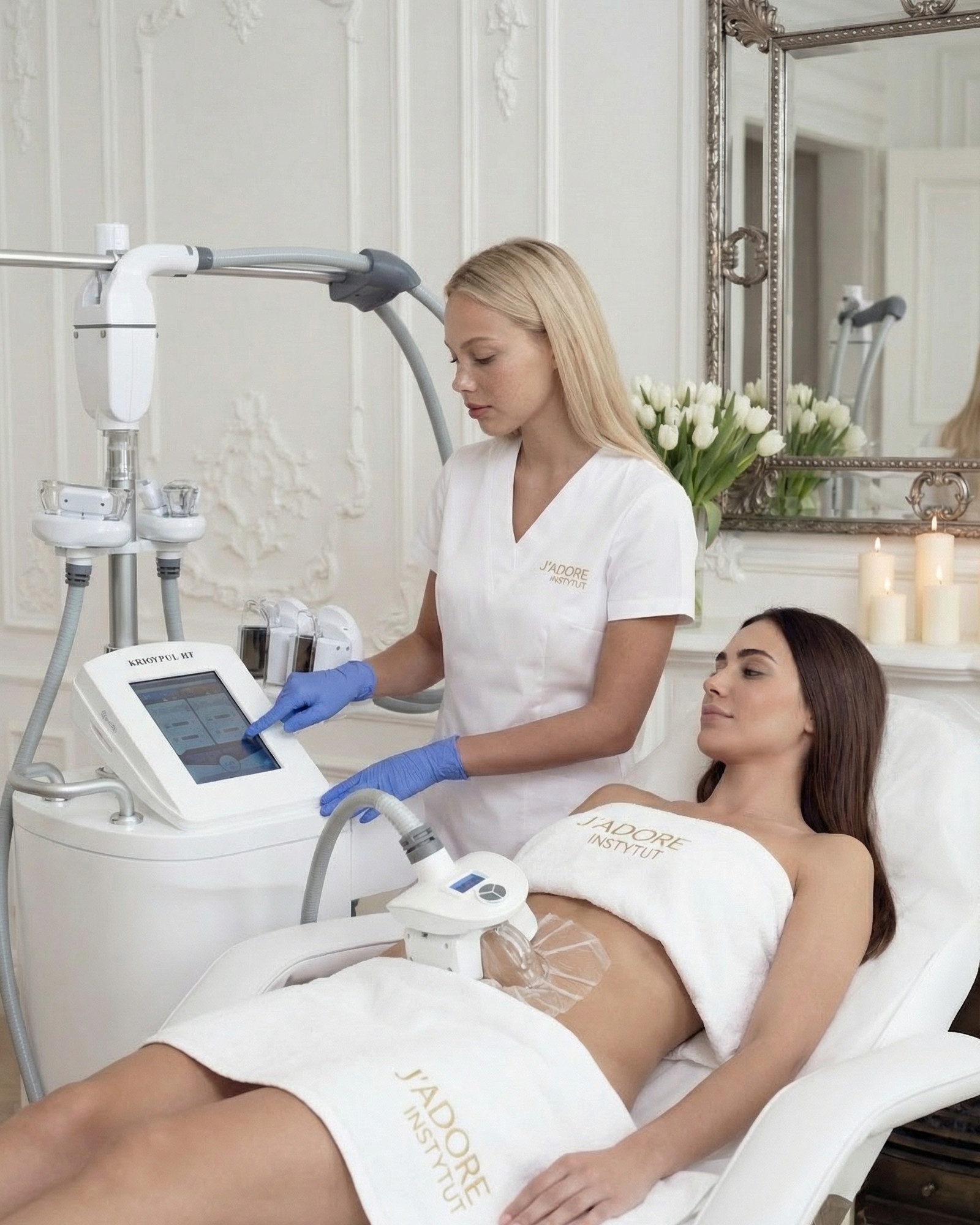
The applicator is placed against the skin and sends acoustic waves — pressure pulses — deep into the tissue. You feel vibration and rhythmic impacts, which can feel uncomfortable near bony areas but are tolerable. No needles, no laser, no incisions. A session for a single area is short, and you can go straight back to your normal day afterwards.
Three things happen in the tissue at once:
- Mechanical destabilisation of adipocytes — acoustic pressure breaks down fat cell walls in a controlled way; the contents are then gradually metabolised.
- Collagen and elastin stimulation — fibroblasts in the dermis respond to the mechanical impulse with increased synthesis of structural proteins; the result shows as improved skin firmness.
- Improved microcirculation — the shockwaves increase perfusion in the treated tissue, which speeds up recovery and reduces post-treatment swelling.
Two paths: body contouring vs sports recovery
Shockwave therapy has two distinct uses for men in the salon, differing in goal and treatment area. It's worth knowing which one you're discussing with your specialist before the treatment.
Reduction — love handles and muffin top
Ideal for: body contouring
- breaks down stubborn fat cells in localised areas
- improves skin firmness in the treated area
- a series of sessions at weekly intervals
- best combined with regular training and diet control
Recovery — muscles and overuse
Ideal for: sport and activity
- speeds up healing in overworked soft tissue
- reduces tension in contracted muscle areas
- helps with enthesopathy, tendon pain, and "stiff" hamstrings
- applied to specific points, not the whole contouring area
Many active men combine both approaches within one series: love handles and the muffin top are treated as the contouring area, while tight quadriceps or contracted hamstrings are treated as recovery. This can all be planned during a single visit with your specialist.
A series, not a one-off hit
Shockwave therapy works cumulatively. One session gives an impulse — a series delivers results. How many sessions? That depends on tissue thickness, your body's individual response and your goal. During consultation, your specialist assesses this specifically for you, not from a chart. The plan usually involves several visits at regular intervals.
- 01
Consultation
Tissue assessment, discussion of your goal (reduction / recovery / combination), and a check for contraindications. No pressure to decide on the spot.
- 02
First session
Shockwaves are applied to the planned area. You'll feel vibration and rhythmic impacts — not pleasant, but tolerable. You leave and carry on with your day.
- 03
Follow-up sessions
Intervals between visits give the tissue time to respond. The body gradually metabolises the broken-down fat and remodels collagen.
- 04
Assessment after the series
Full results appear a few weeks to a few months after the series ends. With an active lifestyle, results last a long time.

What to combine it with
Shockwave therapy works well on its own, but as part of a broader plan it delivers results faster and for longer. A few combinations that are often used together:
Cryolipolysis
Deeper freezing of fat cells complements the shockwaves — cryolipolysis targets larger deposits, while shockwave therapy boosts the effect and improves skin firmness afterwards. A popular combination for a pronounced muffin top.
Lymphatic drainage
After shockwave therapy, the breakdown products from adipocytes need to be cleared efficiently. Drainage speeds up this process and reduces any swelling or heaviness in the treated area.
Muscle electrostimulation (EMS)
For men combining reduction with muscle building — EMS strengthens active muscle groups alongside the reduction of surrounding fat tissue. The result: less fat, more definition.
When shockwave therapy is NOT for you
The treatment is safe for the vast majority of healthy men, but there are situations where your specialist will say "no" or suggest a different plan:
- Blood clotting disorders or use of anticoagulant medication
- An implanted pacemaker or other active electronic implants
- Active cancer, or cancer in recent remission — an oncology consultation is required
- Active inflammation, skin infection or open lesions in the planned area
- Severe osteoporosis (when treating near bony areas)