What "ablative fractional" actually means — no sugar-coating
Ablative fractional laser works by precisely removing microscopic columns of skin — hundreds of tiny channels reaching deep, spread evenly across the treated area. Between them, untouched zones of healthy tissue remain intact. These drive the healing process. "Ablative" means the top layer of skin is actually removed — unlike non-ablative lasers, which work deeper but leave the epidermis undamaged.
The result is a dual remodelling mechanism. On one hand, your body has to rebuild the removed microscopic columns — producing new collagen, new epidermis. On the other, heat spreading sideways from each column stimulates scar remodelling and thickens existing collagen fibres. This is why ablative fractional laser is often called the "gold standard" for treating atrophic scars — it addresses both dimensions of the problem: depth and texture.
Acne scars — why they're harder to treat in men
Acne in men often runs a more aggressive course. Higher androgen levels mean more sebum production, which means deeper, more inflamed lesions. The result: atrophic scars — ice pick, boxcar and rolling scars — run deeper and cover more area. On top of that, men's thicker skin means surface-level treatments like peels and microdermabrasion have less reach than they would on women's skin.
- Ice pick scars — narrow, deep craters, like puncture marks. The hardest to treat; they need significant laser depth.
- Boxcar scars — wide, rectangular depressions with sharp edges. Fractional laser can noticeably soften these and blur the edges.
- Rolling scars — wavy texture, irregular undulation across the skin. Collagen remodelling from the laser can help smooth the surface.
- Uneven texture and enlarged pores — no visible scarring as such, but the skin looks uneven, rough, "tired".
Not every type of scar responds the same way. During your consultation, the specialist assesses depth, type and distribution of the changes — this determines the treatment settings and the number of sessions needed to see a real difference. There's no single answer for everyone.
Ablative fractional laser vs other methods — what's the difference
The market for scar treatments is broad — microneedling (dermapen), TCA peels, non-ablative laser, platelet-rich plasma, fractional CO2. Each method has its place, but not all of them work at the same depth.
Ablative fractional laser
Deep remodelling of scars and texture
- Reaches the dermis — right where the scar sits
- Dual mechanism: ablation plus lateral heat
- Visible recovery period (several days to two weeks)
- Often 2–4 sessions are enough for a clear result
Microneedling / TCA peel
Shallower action, milder recovery
- Lower risk, gentler treatment
- A good starting point or an addition to a laser series
- Works well for shallower changes and uneven texture
There's no "better" or "worse" here — just methods suited to a given problem. For deep, well-established scars from severe acne, ablative fractional laser is often the first-choice method, because other tools simply don't reach deep enough.
What the treatment involves — what to expect
The treatment is preceded by a medical consultation — assessing your scars, skin condition and any contraindications (active acne, photosensitising medication, history of cold sores, recent sun exposure). Without this, there's no treatment — and that's the point: a "same protocol for everyone" approach is a recipe for poor results.
- 01
Consultation
Assessment of scars, skin and medical history. The doctor sets a plan: number of sessions, intensity, treatment area.
- 02
Skin preparation
Numbing cream is applied — usually around thirty to forty minutes before the treatment. Your face should be clean, with no makeup or creams.
- 03
The treatment
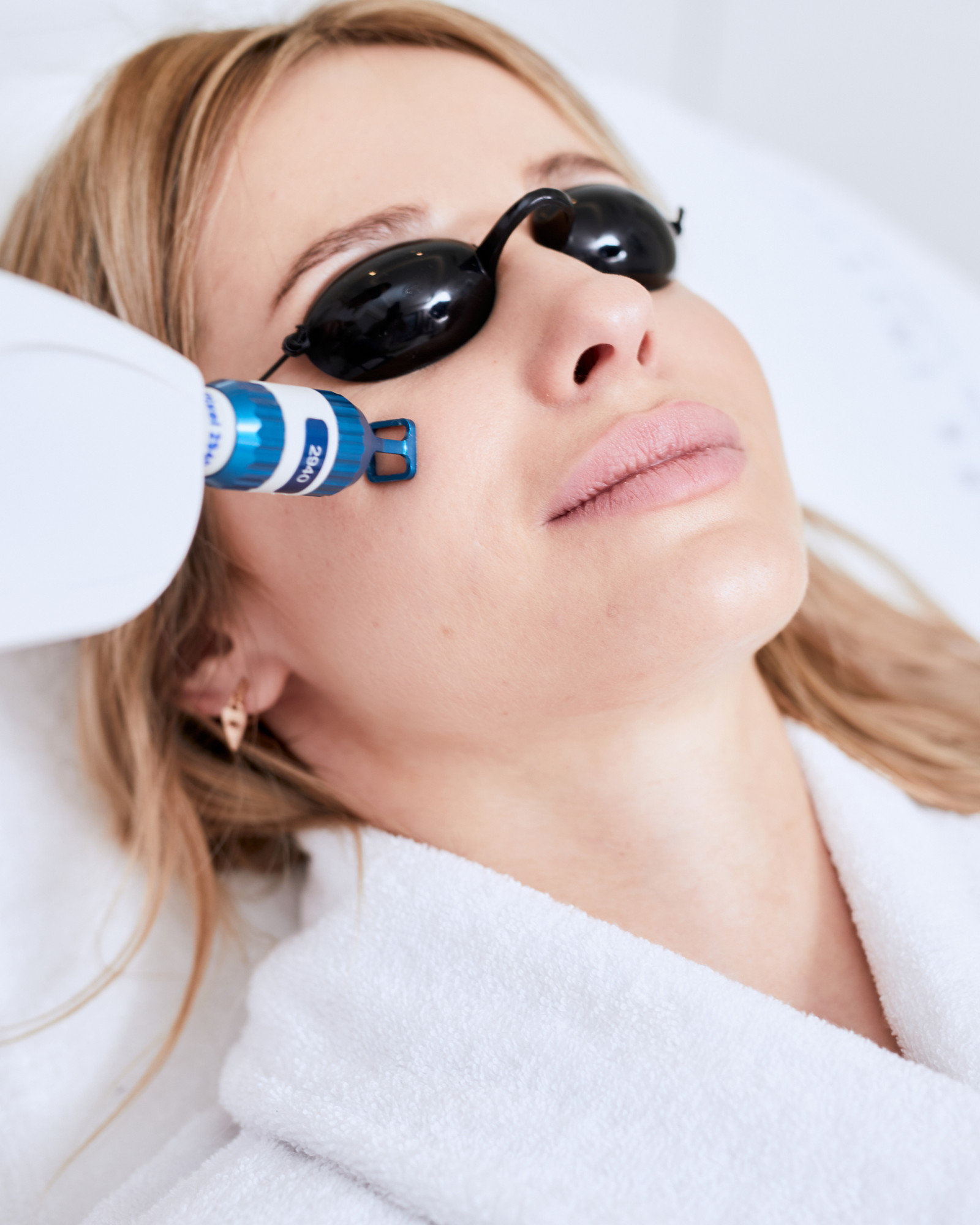
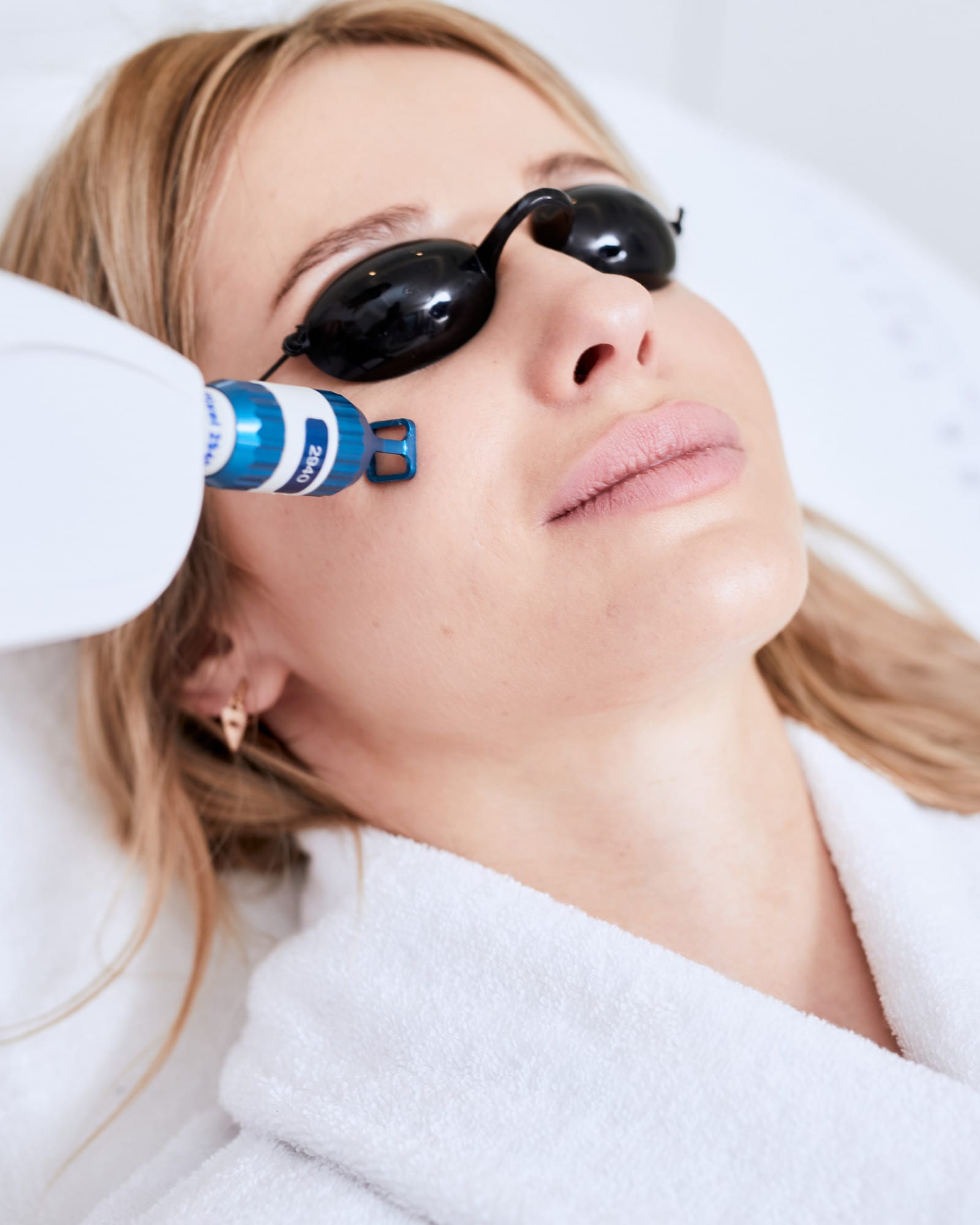
The laser handpiece moves over your skin in passes. You'll feel warmth, a stinging sensation, and possibly crackling — brief, and tolerable with local anaesthesia.
- 04
Immediately after
Strong redness and swelling — the intensity depends on the depth of the treatment. Your skin will look like a stronger version of sunburn.
- 05
The first few days
Oozing, scab formation, flaking. Your skin heals underneath the scabs — don't remove them by hand.
- 06
Weeks 2–4
Redness gradually fades, and the new skin "matures". Collagen keeps remodelling for several more months — final results appear at 3–6 months.
Recovery after the treatment — your plan
This is usually the point where guys finish their research and decide — one way or the other. Recovery after ablative fractional laser is visible, and it takes time. There's no point hiding that. But you can prepare for it.
- First 2–3 days: intense redness and swelling, especially around the eyes. Working from home with the camera off — fine. Going into the office — probably not.
- Days 3–7: scabs form and flake off. This is the worst part visually — but it's also when your skin is regenerating most intensively. Do NOT rub or pick at it.
- Week 2: flaking ends, and pink, sensitive new skin appears. SPF is non-negotiable — UV radiation is the main enemy of fresh collagen.
- Months 1–6: collagen keeps rebuilding deep in the skin. The result keeps improving — what you see at 4 weeks isn't the final outcome. That comes at 3–6 months.
Ideal for — and who should hold off
Ablative fractional laser isn't for everyone. And that's fine — no one should have a treatment that doesn't suit their situation.
- ✅ Atrophic acne scars — ice pick, boxcar, rolling
- ✅ Uneven skin texture, enlarged pores
- ✅ Minor surgical or trauma scars (subject to medical qualification)
- ✅ Skin after acne that has settled down — not active
- ❌ Active acne — treat the inflammation first
- ❌ Dark skin tones (phototype V–VI) — risk of discolouration; special caution required
- ❌ Recent tanning — a minimum 4–6 week break from UV exposure is required
- ❌ Photosensitising medication, isotretinoin — a break is required (your doctor decides how long)
- ❌ Tendency to keloid scarring — disqualifies you from the treatment
Combining with other treatments — when to consider a series
Ablative fractional laser alone gives solid results, but for extensive scarring or more complex skin issues, a combined approach is often used — different tools addressing different depths and mechanisms. This isn't marketing — it's the logic of collagen rebuilding.
Platelet-rich plasma (PRP)
Growth factors from your own blood strengthen regeneration after ablation — a synergistic combination. PRP is often given right after the laser treatment or in a separate session.
Needle mesotherapy
Delivers bioactive substances (hyaluronic acid, vitamins, amino acids) during the regeneration phase. This complements what the laser triggers from within.
Microneedling (dermapen)
Lighter maintenance sessions between laser treatments — they keep collagen synthesis going without another intensive recovery period.
Non-ablative laser
For lighter texture concerns, or as a way to maintain results after an ablative series — no downtime, but a shallower depth of action.