

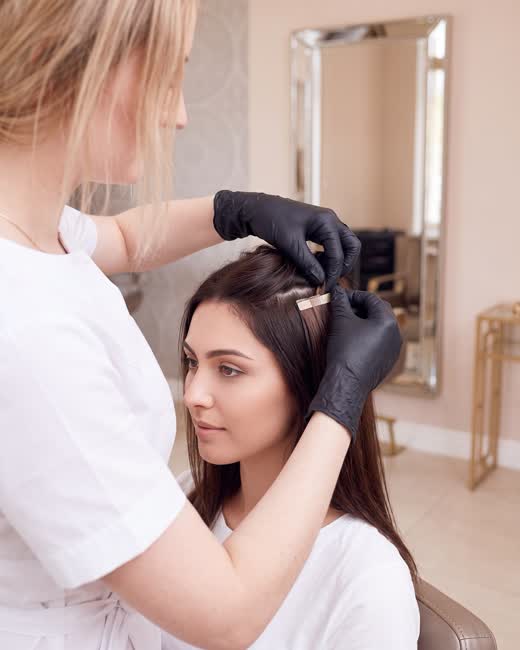
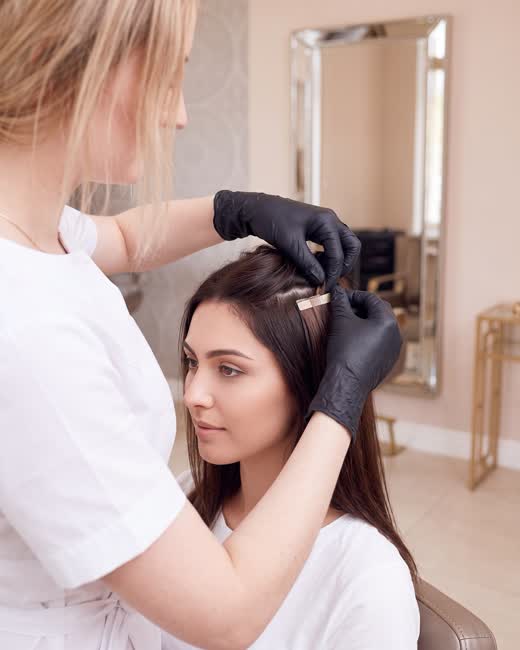
Three treatments, three different moments
The simplest way to remember it: forming creates dreadlocks, retwisting maintains them, removal ends the chapter. Each treatment answers to a different moment in your hair's life — and none replaces the others.
Forming
creates dreadlocks from scratch
- hair with no previous dreadlocks, or after a full removal
- choice of technique: crochet hook, twist & rip, backcombing
- length matters — the result depends on your starting point
- requires aftercare and patience in the first few weeks
Retwisting
maintains and tidies regrowth
- existing dreadlocks with visible regrowth (usually every few months)
- incorporating new hair growth into the dreadlock structure
- strengthening loose ends and roots that are starting to separate
- immediate result — dreadlocks look well-kept, neat and secure
Removal
removes dreadlocks and restores your hair
- the decision to give up dreadlocks — fully or partially
- requires time, specialist products and patience
- hair condition after removal depends on how long you wore your dreadlocks
- you can move forward with healthy hair after suitable aftercare
How to work out what you need — three questions before your visit
Before booking a salon visit, answer three simple questions. They save time at your consultation and reduce the risk of misunderstanding:
- Do you already have dreadlocks? If not, you need forming. If you do, but they're old, loose, or you want to start over, your consultation will decide whether retwisting is enough or you should start fresh.
- When did you last have a retwist? If it's been a few months since your last retwist and you can see regrowth, this is the classic moment for one. If years have passed without any care, your hair condition may need assessing before deciding on a technique.
- Are you considering giving up dreadlocks? If so, removal is a separate topic that needs its own consultation — not something to add "while you're at it" during a retwist.
A good consultation is when a specialist examines your hair before proposing a specific plan. If you get an answer before anyone has even looked at your hair, that's a sign to ask more questions.
Forming — what happens to your hair at the start
Forming is work from scratch. Hair is divided into sections, and each one is treated individually — the technique is chosen to suit texture, density and the result you want. Not every technique works the same way on every hair type — what works well on curly hair can behave differently on straight hair.
- 01
Consultation and sectioning
Assessing hair condition and deciding on dreadlock thickness and technique. This is where the final result is decided — changing the plan halfway through is difficult.
- 02
The forming process
Working on each section individually. Time depends on hair length, density and the method chosen.
- 03
The first few weeks
Dreadlocks "mature" — they may be looser than expected, change shape, or shorten slightly. This is normal.
- 04
First retwist
Usually after a few months, once regrowth is visible. Often also the moment for small shape adjustments.
Retwisting — the rhythm of dreadlock care
Retwisting is part of everyday life with dreadlocks. Hair keeps growing, and the new growth at the root isn't yet part of the dreadlock. Retwisting incorporates this regrowth into the structure, strengthens the roots, and keeps the look neat. This isn't a luxury — it's a necessity. Without regular care, dreadlocks start to fuse together at the root (often called "congo-ing") or simply look neglected.
Beyond regrowth, retwisting also covers strengthening loose ends, working on dreadlocks that are starting to separate, and tidying roots if congo-ing has begun. It's not worth putting off for too long — the more regrowth there is, the longer and harder the treatment becomes.
Removal — a separate chapter
Removing dreadlocks is one of the most underestimated treatments — often treated as something you can do yourself one evening with a YouTube tutorial. The truth is different. Healthy removal takes time, the right products and the right technique. Rushing it almost always ends in serious damage or the need to cut off a significant length.
- The older the dreadlocks, the longer removal takes. Young dreadlocks (a few months old) come out more easily than ones worn for years.
- Specialist products that soften the dreadlock structure are essential — without them, the risk of hair snapping mechanically is very high.
- Removal takes many hours — nobody does it "quickly, while you're at it".
- After removal, hair needs intensive aftercare — its condition depends on how it started out and how long the dreadlocks were worn.
When is it worth combining treatments?
Some situations call for combining several treatments in one visit — or planning them in sequence. The logic is the same as with any hair care: diagnosis first, then a plan.
Retwisting + end strengthening
A classic combination — root regrowth and loose ends are the two most common problems that occur together. Many salons treat this as a single treatment.
Retwisting + separating fused roots
Once dreadlocks start sticking together, retwisting and separating go hand in hand. The earlier this happens, the easier it is.
Consultation + forming plan
Before forming, it's worth having at least one meeting where a specialist assesses your hair and discusses realistic outcomes — otherwise expectations and results often drift apart.
Removal + restorative aftercare
Immediately after removal, hair needs intensive hydration and rebuilding. Scheduling restorative treatments straight after removal can significantly speed up recovery.
A good salon never proposes a single treatment without context. If you come in with a specific problem, you should hear a plan, not just a price. If anything is unclear, ask: what happens if I don't do this? What's the right order? What can I expect after the treatment?


