Barber — what it actually is
A barber is a specialist in short, classic and technical men's cuts — styles that need precision at the edges, fading, razor work and a sharp eye for geometry. It's a craft with tradition: the barber shop has its own environment, its own aesthetic, its own rhythm of a visit. A good barber cut can take longer than a hairdresser's appointment, simply because every millimetre of the transition matters.
- Specialisation: technical cuts (fade, taper, undercut, classic sides), razor finishing, beard and moustache shaping
- Tools: clippers, scissors, a straight razor — each tool has its use and its place in the sequence
- Environment: a barber shop is usually more than a haircut — it's a ritual, a conversation, a fixed slot in your schedule
- Limitation: a barber doesn't do colouring, scalp treatments, or long cuts for women or unisex styles
A good barber does what he does very well — and doesn't pretend to do anything else. That's his strength. The trouble starts when you need something a barber simply doesn't offer, or doesn't do well enough: colouring, care for chemically damaged hair, treatment for hair loss, or regenerative treatments. In that case, a barber won't help — because that's not what he's there for.
A hair salon — broader scope, different tools
A hair salon — especially one with a full offering for men — operates on a completely different level of complexity. A salon hairdresser isn't a less precise barber; they're a specialist in a wider range of services, where a technical cut is just one part of the job.
Barber shop
what it does best
- fade, taper, skin fade — precise gradation
- classic cuts, combover, pompadour
- beard — shaping, trimming, razor work
- hot towels and the ritual of the visit
Premium salon
what it does better, or what a barber can't offer
- colouring — balayage, greying, lightening
- scalp treatments (hair loss, dandruff, oiliness)
- care for chemically damaged hair
- trichology consultation and product selection
The difference is clearest when you talk about a problem — not just how long the sides should be. Hair loss, dandruff that won't respond to shampoo, oiliness at the roots, or hair damaged by DIY colouring — these are topics for a salon, not a barber. And conversely: if you want a perfectly even skin fade and a well-defined beard, a barber will do it better.
Barber or salon — the specifics
Instead of a general rule — a few real-life situations and a straight answer:
- 01
You want a new cut, short and technical
Fade, taper, skin fade, pompadour, undercut with a precise razor finish — go to a barber. This is his specialisation; he'll do it better than most hairdressers in a standard salon.
- 02
You want to cover grey or change colour
A barber won't help here — colouring is a salon job. The more advanced the effect (covering grey, balayage on dark hair, lightening), the more important the consultation and hair assessment before applying colour.
- 03
Your hair is falling out or your scalp itches
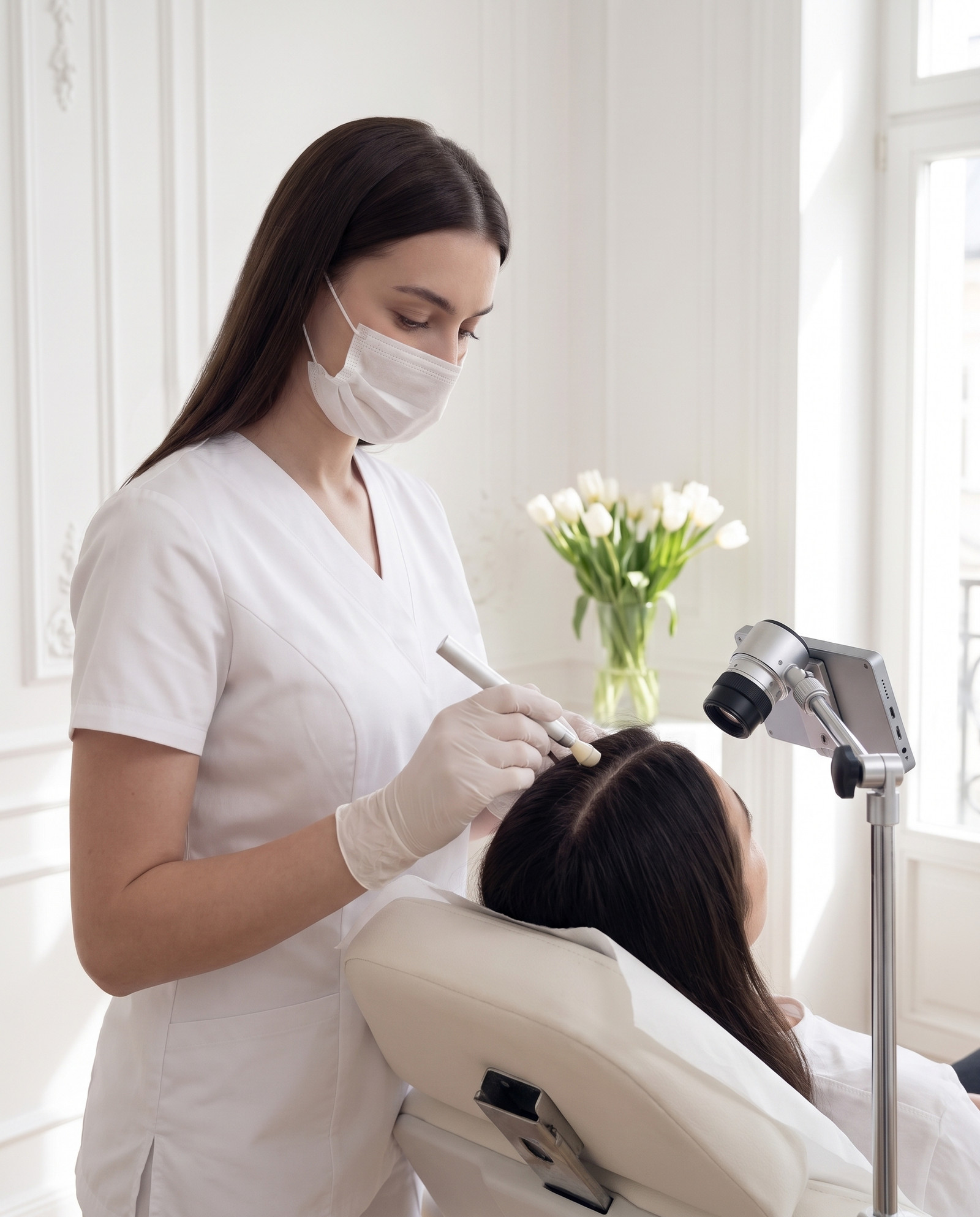
Go to a salon with a trichology consultation or a specialist offer for men. Before you rub anything into your scalp, you need to establish what's actually happening — dandruff, seborrhoea, sensitivity, or something else.
- 04
You have longer hair and want a cut with shape
Go to a salon. A barber specialises in short, precise geometry; with hair down past the shoulders, you need a hairdresser who thinks about the style as a whole, not just the outline.
- 05
You want a treatment for your hair or scalp
Go to a salon. Keratin treatment, hair Botox, hydrating treatments, enzyme peels for the scalp — these are salon services. At a barber's, you'll get styling products, not deep care.
The mistakes men make most often
Over the years, we've seen a few recurring patterns — and each one could have been avoided by knowing where to go and why:
- Colouring at a barber shop. Some barber shops offer dyeing, but without the right setup and specialisation, the result can be unpredictable. Colouring is chemistry, diagnosis and precision — it should be done by someone who does it every day.
- DIY trichology treatments. "Buy an anti-hair-loss shampoo from the pharmacy" isn't a plan. Hair loss can have several different causes — each one needs a different approach. Without a consultation, you're buying random products and hoping something works.
- Switching barbers mid-process. A fade that's just started to "settle" into your head shape is the result of consistency. Changing barbers every visit means starting from scratch each time — a different style, a different eye, a different geometry.
- Skipping care between visits. A haircut holds its shape between sessions only when your hair and scalp are in good condition. A good salon can advise on what to do at home — it's worth asking.
Beauty salon versus hair salon — one more distinction
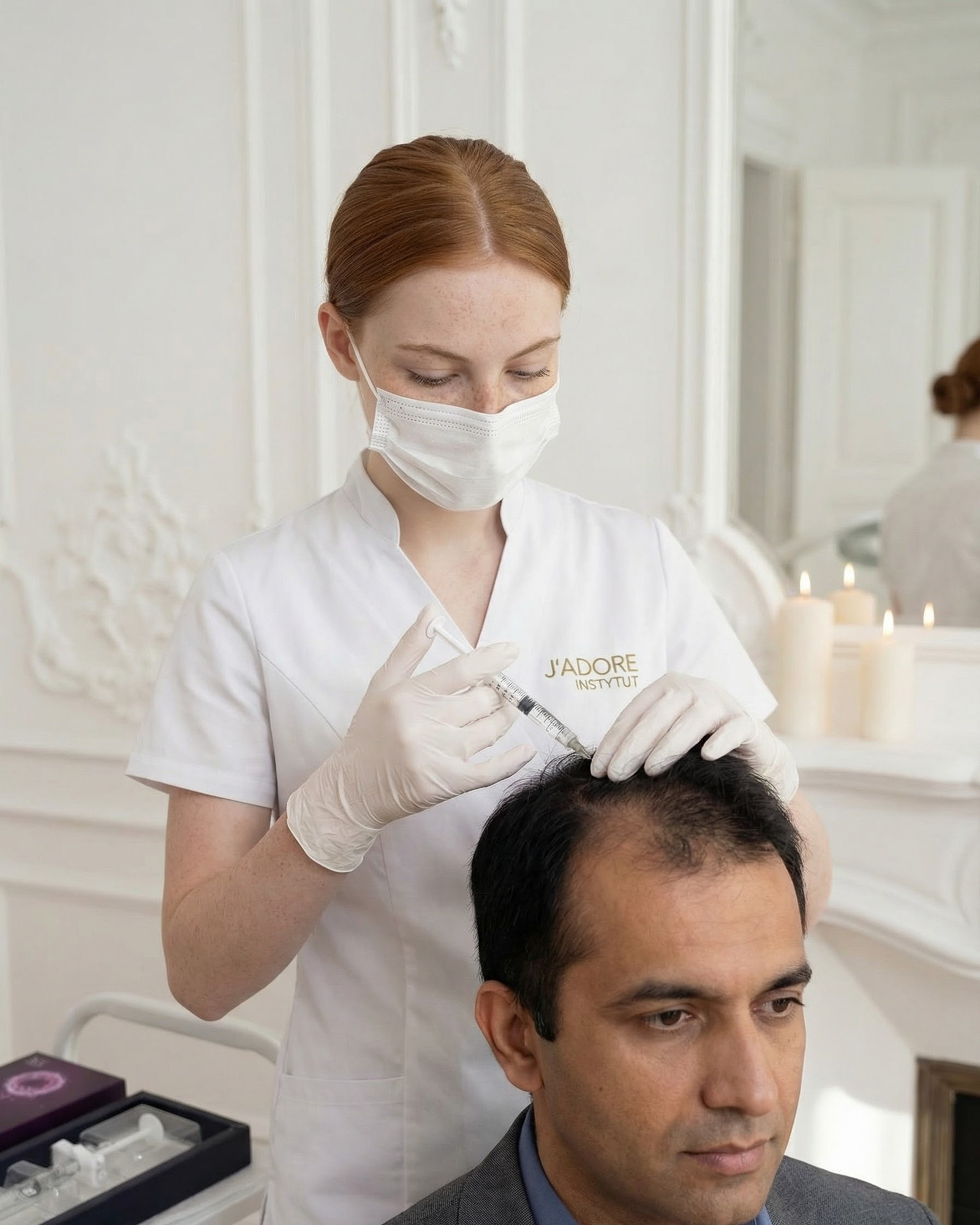
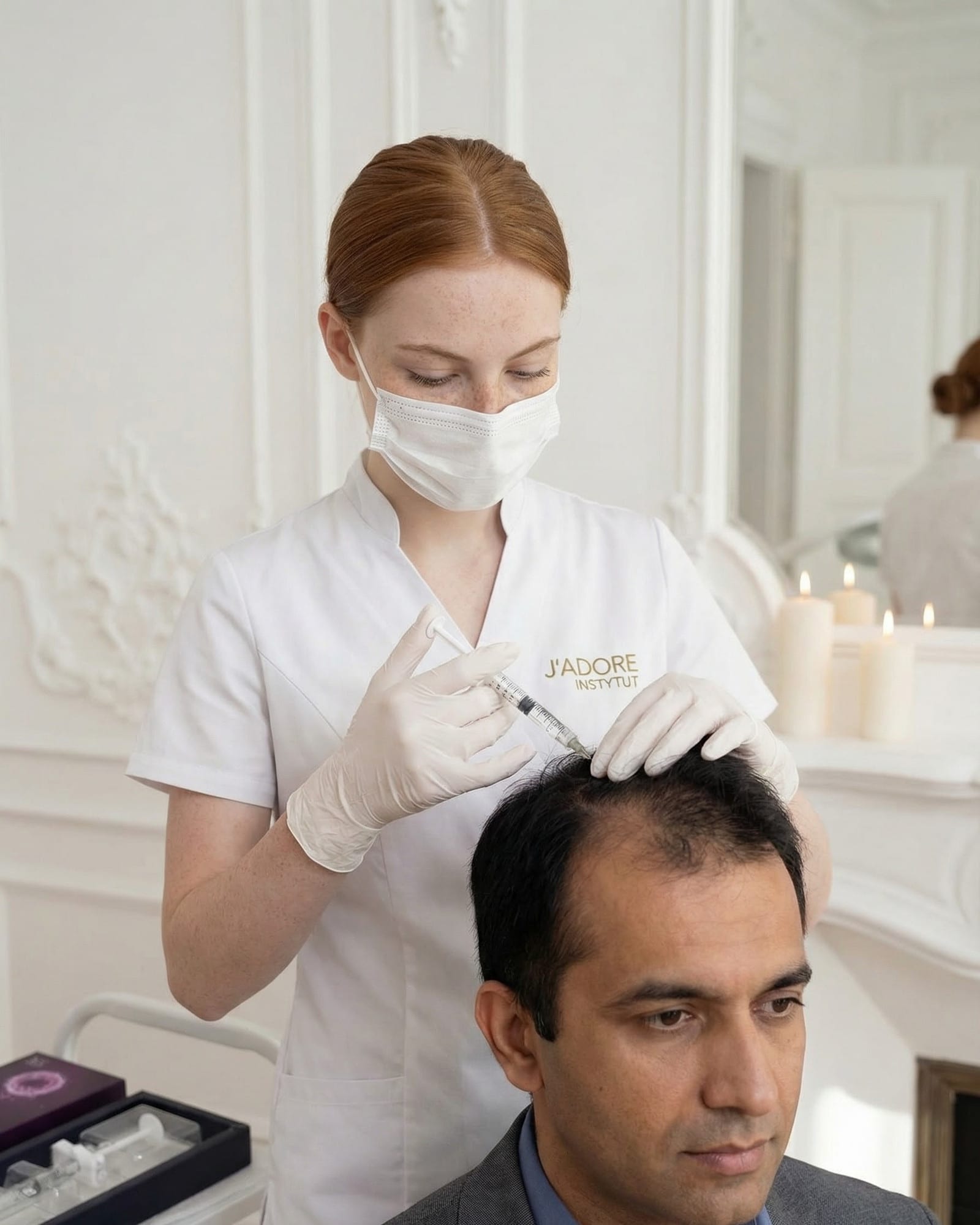
There's another distinction worth knowing: a hair salon isn't the same as a beauty salon with a hair offering. A beauty salon — like J'ADORE — includes scalp and hair treatments carried out by a cosmetologist or trichologist: needle and needle-free mesotherapy, plasma treatments, enzyme peels, hydrating and revitalising treatments. This is a level of care that starts where shampoo and conditioner leave off.
A hairdresser looks after the structure of the cut and the colour. A cosmetologist looks after the condition of the scalp and the hair follicle — in other words, what determines how much hair you have and how it looks at the root. For many men dealing with hair loss, oiliness or a dry scalp, a cosmetologist is the right specialist — not a hairdresser, not a barber.
Needle mesotherapy for hair loss
For when hair loss has been an issue for months — before thinning hair becomes permanent loss. Often combined with diagnostics and a home care plan.
Enzyme peel for the scalp
For a scalp that's oily, itchy, or prone to dandruff. It cleanses, regulates sebum and prepares the ground for active treatments.
Hydrating hair treatment
After colouring, after summer, or after months of exposure to dry air. It rebuilds the hair structure from within — better results and better styling response.
What this looks like in practice — a decision framework
A barber and a salon aren't competitors — they're different tools for different problems. Many men go to both, alternating depending on what they need at the time: to the barber for a regular cut and beard maintenance, to the salon for scalp care or when they want to change colour. It's no extra effort — you just need to know why you're going.