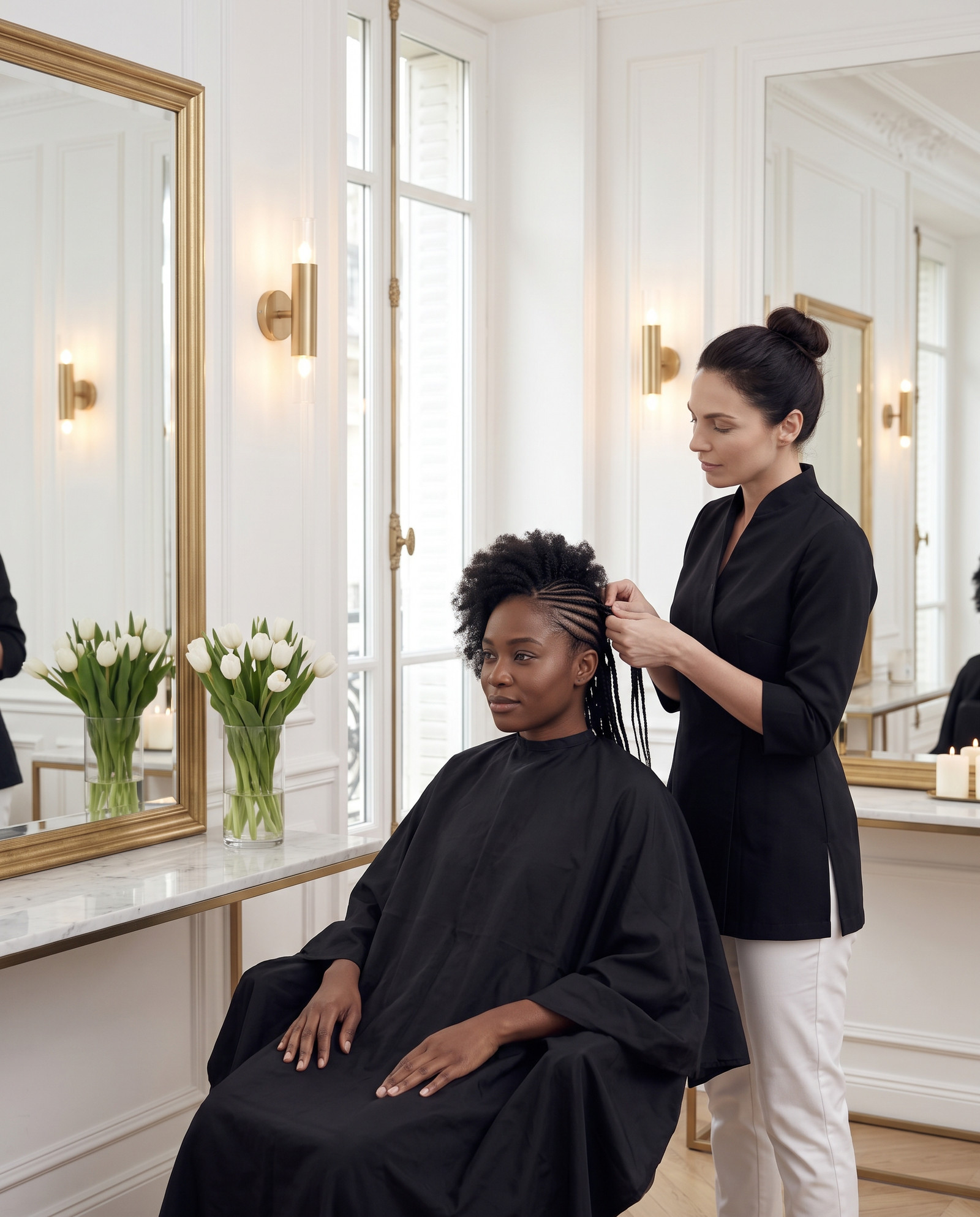
What's the difference between the two methods?
The key difference isn't aesthetic — in photos, both methods can look similar. It's about the mechanics of the plait and the weight your hair has to carry. Extensions add volume to each braid and let you shape it to almost any length, regardless of what's growing on your head. A braid made purely from your own hair is thinner, lighter and — paradoxically — often more demanding: it needs the right length, density and good condition for the plait to hold.
Braid extensions (synthetic hair)
lengthens, thickens and evens out the braids
- works regardless of your own hair's length
- braids stay uniform in thickness from root to tip
- the plait often lasts longer — up to 6–8 weeks
- gives a full, even-braid effect
- available in various colours, including ombré
Your own hair
a natural look with minimal weight
- no extra weight on the follicles
- the scalp breathes more freely
- easier day-to-day hair hydration
- braids need less recovery once removed
- the preferred option for sensitive or irritated scalps
When are extensions necessary — and when are they unnecessary?
There's no single rule, because the decision depends on several factors at once. In salon practice, there are situations where extensions are almost essential, and others where your own hair is entirely sufficient — and adding extensions would simply be unnecessary weight.
- 01
Length of your own hair
Braids made only from your own hair usually need at least a few centimetres for the plait to hold at the root. With short or very fine hair, extensions give the stylist something to work with and stop the braids from coming apart.
- 02
Expected braid length
If you want braids down to your waist but your own hair only reaches your shoulders, extensions are the only option. For braids the length of your own hair, you can skip them.
- 03
Desired braid thickness
Very fine braids (micro braids) made entirely from your own hair can be fragile and hard to maintain. A small amount of extension stabilises the plait and makes the braid last longer.
- 04
Hair condition and density
Thinning hair, hair after colouring, or hair in a recovery phase — extensions can be too much of a load in these cases. Here, your stylist may suggest gentler techniques or postponing extensions until your hair's condition improves.
How to care for your hair under braids — depending on the method
Aftercare isn't optional — it's essential. It differs depending on whether you have extensions woven in or braids made purely from your own hair. In both cases, scalp hydration and minimising friction are key.
- With extensions: hydrate your scalp lightly every day with an oil or hydrating spray — reach between the braids with your fingertip or an applicator tip. Synthetic hair itself doesn't need care, but the natural hair underneath it does.
- Without extensions: it's easier to reach the root, so hydration is simpler. You can also gently massage your scalp — this supports circulation and often extends how long the braids stay neat before unravelling.
- Both methods: sleep in a silk or satin bonnet, or on a silk pillowcase — it reduces friction and moisture loss at the follicles.
- Both methods: don't leave braids in longer than your stylist recommends. As new hair grows, it creates tension at the root.
Braid extensions or your own hair — how to decide in the salon
You'll make the best decision together with your stylist before the braiding starts, not during it. Here are a few questions worth asking during your consultation:
- "Is my own hair long and dense enough for the plait to hold without extensions?"
- "What length and thickness of braids do I want — and is that possible without extensions?"
- "Is my hair currently in good enough condition to safely add extensions without risking damage to the follicle?"
- "How long do I plan to wear the braids — and does that plan suit extensions, or not?"
When is it worth combining braids with other treatments?
African braids protect hair from everyday friction and styling, but they don't replace regular scalp care. The best time for aftercare treatments is always once the braids come out, when your hair and scalp need rebuilding the most.
Recovery after braids
An intensive restorative treatment after extended braid wear — it restores moisture and elasticity, and reduces the risk of breakage.
Scalp care
Massage and cleansing of the scalp between sessions — especially important when extensions have covered the scalp for several weeks.
Keratin strengthening
A treatment that strengthens hair structure before the next braiding session — it can extend how long braids last and reduce the risk of damage.