Exam candidate under pressure — skincare for stress
Your skin and cortisol — what really happens under exam stress
7 min read
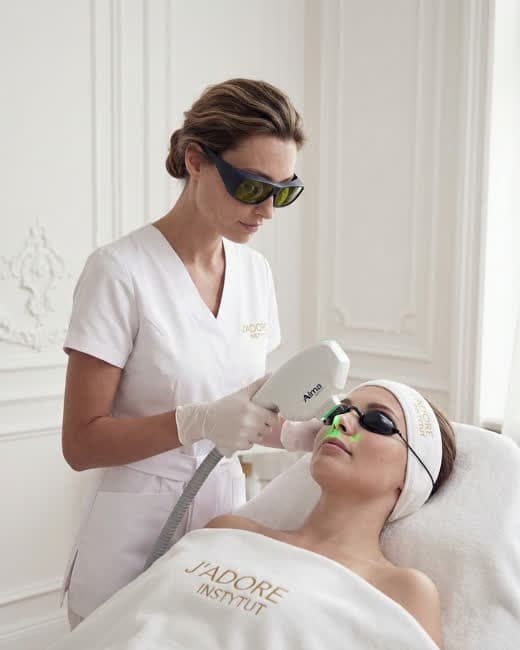
Illustrative photo. It shows an example of how the treatment is performed.
7 min read9 May 2026
Two weeks until your final exams. You're not sleeping, you're eating badly, you're on your fourth coffee — and you've just noticed in the mirror that your skin looks worse than it did during your teenage hormonal peak. That's no coincidence — it's cortisol. Before you panic-buy three new products, read this article. Because the worst thing you can do right now is experiment.
01
Cortisol and skin — why stress literally shows on your face
Cortisol is a stress hormone produced by the adrenal glands. In normal conditions, it's useful — it helps you wake up in the morning, react to threats and mobilise energy. The problem starts when cortisol stays chronically elevated. Exam season is a classic scenario for chronic stress.
What elevated cortisol does to your skin:
02
Emergency plan: what to do NOW
The key rule for exam season: DON'T EXPERIMENT. This isn't the time for a new product, a new active ingredient, a new peel or a new cream you saw on TikTok. Any change to your routine risks a reaction — irritation, dryness, a rash — and that's the last thing you need right now.
Don't introduce retinol — it needs 4–6 weeks to settle in, and you only have 2 weeks until your exams. At first, retinol can make skin worse (so-called purging).
Don't do a strong peel — exfoliating stressed, inflamed skin just means more irritation.
Don't squeeze spots — dirty fingers plus a weakened barrier means a risk of scarring, hyperpigmentation and infection.
Don't switch cleansers — a new product is a potential reaction.
Don't buy an "acne kit" — aggressive formulas on stressed skin can do more harm than good.
03
The touch-your-face challenge — how often do you touch your face while studying?
Studies show that the average person touches their face somewhere between a dozen and several dozen times an hour. While studying, it's easy to touch it even more: resting your chin on your hand, rubbing your eyes, scratching your nose, biting your nails.
Every touch transfers bacteria from your hands to your skin — and your hands have been on your keyboard, your pen, your phone, your textbook cover. The average smartphone carries a huge amount of bacteria, and we hold it against our cheek during calls.
Set a reminder every 30 minutes: "hands off your face"
Study with your hands on the desk or keyboard, not on your chin
Clean your phone with an antibacterial wipe once a day
Change your pillowcase every 3–4 days (it collects sebum, bacteria and night sweat)
Tie your hair back if it falls onto your forehead — oil from your hair can clog pores
04
The exam-candidate diet — what your skin really needs
We're not going to tell you to go on an elimination diet during exam season. That's unrealistic. But a few simple changes can genuinely help.
05
Peels — when to say yes, when to say absolutely not
Exfoliation matters — it removes dead skin cells, unclogs pores and supports regeneration. But during a stressful period, you need to tell two situations apart.
06
LED — light that helps without touching your skin
LED light therapy is one of the gentlest in-salon technologies — and also one of the more effective for inflamed skin. Why is it worth knowing about during exam season?
07
The stress will pass — your skin will reset
The most important thing to remember: this is temporary. Exam stress lasts a few weeks. Once your exams are over, cortisol will drop, sleep will return to normal, your diet will improve — and your skin will start to recover.
Don't panic. Don't take drastic steps. Keep a simple routine, drink water, sleep as much as you can, keep your hands off your face, and don't experiment with products. This isn't the time to treat your skin — it's the time to get through it.
Home care
Care matched to the concern
Products from our shop matched to the need this text is about.