First: is teenage skin really a "problem"?
Before we go further, it's worth saying one important thing: teenage skin is a work in progress. Hormones that start working more intensively change it from within — the sebaceous glands produce more sebum, the rate of skin cell turnover can become uneven, blood flow fluctuates. This isn't a disease. It's physiology.
Most of the changes that worry teenagers — redness, occasional spots, an oily T-zone, enlarged pores, dull skin — fall well within the normal range for this stage of life. They become a problem when they're severe, persistent, resistant to well-chosen home care, or when they affect wellbeing and daily life. The line between "this is normal" and "this is worth looking into" is individual — and it's best assessed by a cosmetologist, not by comparing yourself to filtered photos on social media.
Why teenage skin is different — three scenarios
Before choosing a method, it's worth understanding what kind of concern you're actually dealing with. Teenage skin usually fits one of three patterns — and each calls for a different approach.
Oily and acne-prone
Excess sebum + inflammation
- Shine, clogged pores, spots
- Often worsens under stress and before a period
- Needs sebum regulation and barrier support
Dehydrated and reactive
Compromised barrier + water deficiency
- Dull, tight, flaking skin
- Reacts with redness to many products
- Often mistaken for dry skin — but it's a barrier problem, not a lack of oil
Post-inflammatory hyperpigmentation
Marks left behind by acne lesions
- Brown and red marks after breakouts
- Worsens after sun exposure
- Needs gentle brightening and UV protection
This distinction matters in practice: needle-free mesotherapy supports oily skin one way (regulation, soothing), dehydrated skin another way (deep hydration, barrier repair), and skin with post-inflammatory hyperpigmentation (PIH) yet another way. That's why we always start with a skin assessment — not with the first treatment that comes to mind.
Needle-free mesotherapy — where to start, step by step
The good news is that the path is simple — as long as you follow it in the right order. Below is a plan that works well in practice.
- 01
Step 1 — Consultation with a cosmetologist (the starting point)
Before deciding on any treatment, a teenager (ideally with a parent) should come in for a consultation with a cosmetologist. A close skin assessment identifies her skin type, how severe any changes are, and whether a salon visit is the right step — or whether adjusting home care is enough. It's 30 minutes that can save months of trial and error.
- 02
Step 2 — The basics: hydration, SPF, gentle cleansing
Before any treatments come into play, the skin needs solid foundations. A good home routine — a gentle cleansing gel, a light day cream with SPF, hydration in the evening — is the groundwork without which no salon treatment will deliver lasting results. A cosmetologist can advise on which products are safe for young skin.
- 03
Step 3 — First treatments: cleansing and evening out
The classic first step in the salon is cleansing — manual or device-based. It removes blackheads, normalises sebum production, and evens out texture. This is the stage where the skin "learns" regular care and usually responds quickly and gratefully.
- 04
Step 4 — Needle-free mesotherapy as the next level
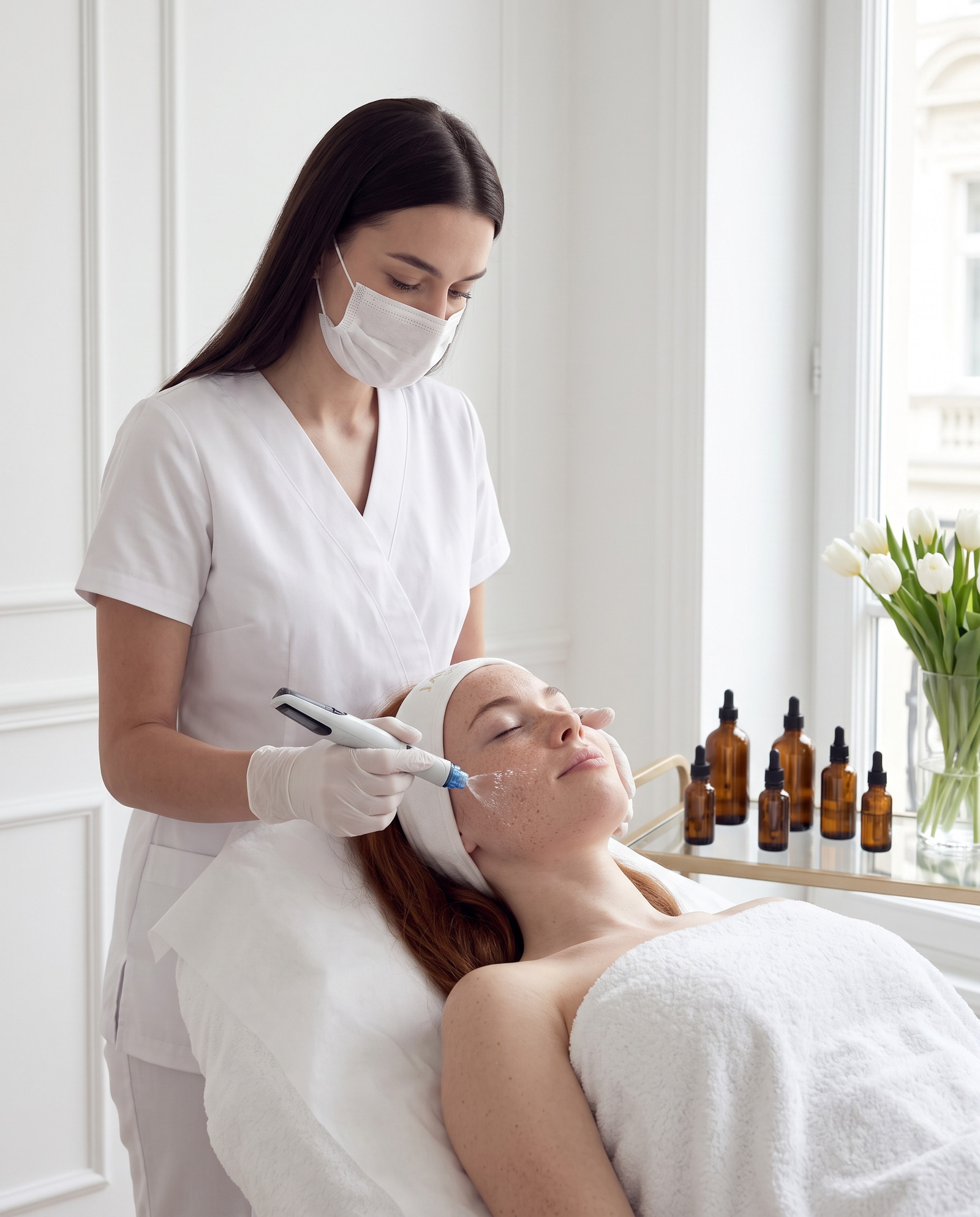
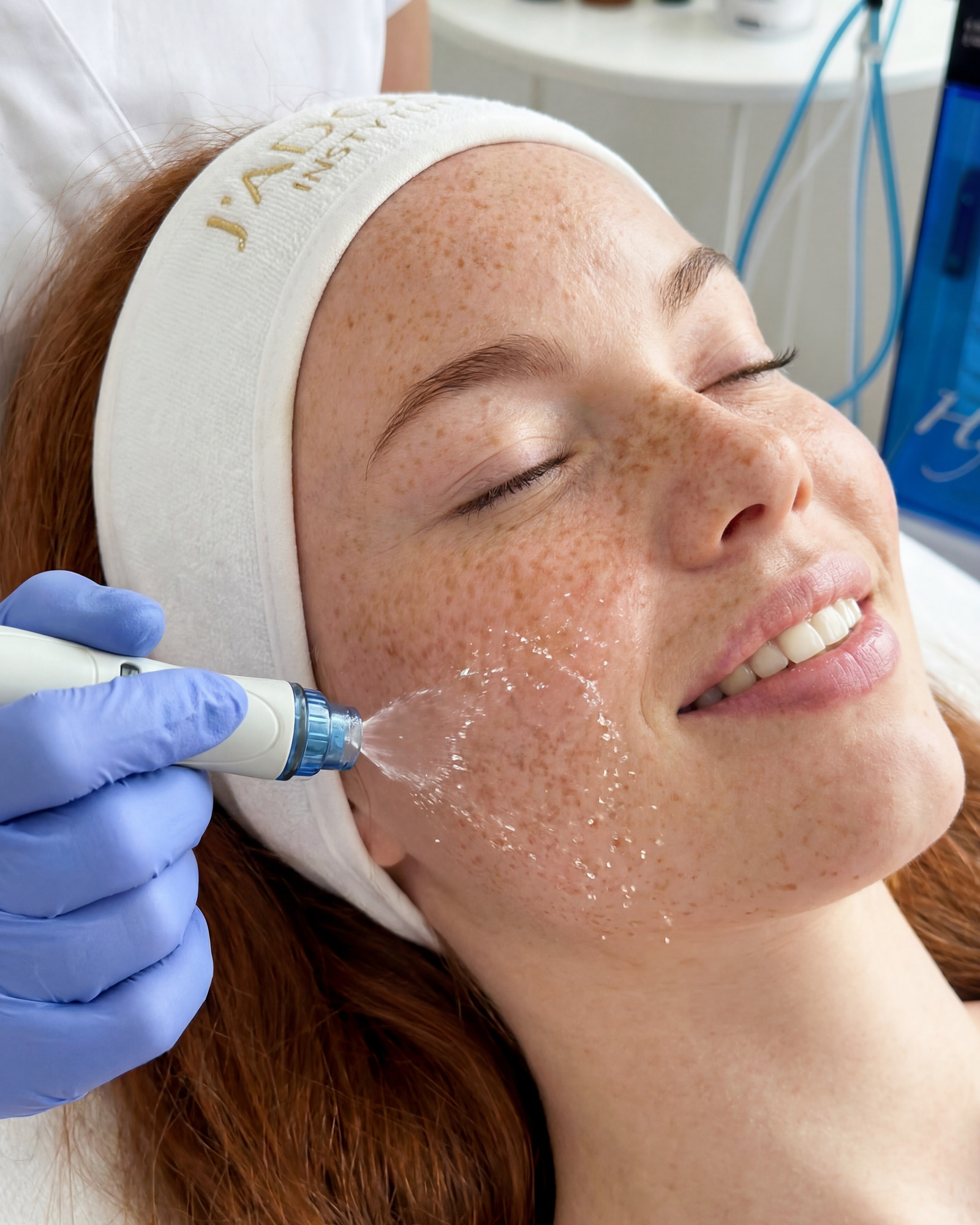
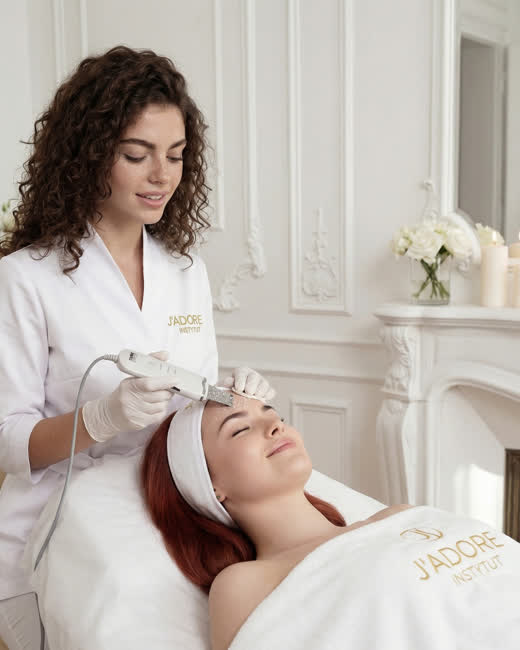
Once the basics are covered and the skin is ready for more intensive support, needle-free mesotherapy comes in. Using electroporation or ultrasound waves, active ingredients — hyaluronic acid, vitamins, peptides — penetrate deeper than a regular cream allows. The result: deeper hydration, calmer inflammation, a stronger barrier. No needles, no pain, no downtime.
- 05
Step 5 — A series, not a one-off session
Needle-free mesotherapy works as a series. A single session is just the starting point — results build up over the course of treatment. Your cosmetologist sets a schedule tailored to your skin and its needs. Between visits, sun protection matters, and so does avoiding aggressive cosmetics tried "on your own".
What NOT to do — a list worth remembering
Good care for teenage skin isn't only about what we do — it's also about what we avoid. Here are a few things we regularly see in the salon as the result of mistakes made "before the appointment".
In short: wisdom at this age means patience and a consultation. Teenage skin is remarkably adaptable — it responds quickly and heals efficiently — but that's exactly why mistakes can also leave their mark faster than they would on adult skin.
When to see a cosmetologist — a checklist
Not every teenager needs a salon visit. But there are situations where it's worth stopping the delay and simply booking an appointment.
- Acne is severe, hasn't responded to home care for at least 2–3 months, and is affecting wellbeing.
- Acne scars or post-inflammatory hyperpigmentation have appeared and aren't fading.
- Skin is very dehydrated and reactive — it responds with redness to most products.
- A teenager uses a lot of active cosmetics on her own without knowing how to combine them safely — her skin may need a specialist assessment.
- Intense itching, burning or a contact rash has appeared — that's a signal for a consultation, not for more experimenting.
- A parent or teenager simply wants to know where to start — a consultation exists to build a plan, even when there's no obvious problem yet.
At J'adore, we work with teenagers from the age of 16 — always with a parent present or with parental consent. We start with a conversation and a skin assessment, not with a treatment on the first visit. The goal is for every young client to leave with a clear plan and real understanding, not just with one treatment behind her.