What oestrogen used to do for your skin (and what it no longer does)
Oestrogen is a hormone people talk about far too little in the context of skin. Yet skin is one of the largest target organs for oestrogens — it carries oestrogen receptors in both the epidermis and the dermis. For decades, oestrogen worked quietly on your behalf:
Hyaluronic acid — oestrogen stimulates fibroblasts to produce hyaluronic acid, the skin's natural "water magnet". A single HA molecule binds up to 1000 times its weight in water. When oestrogen drops, HA production falls dramatically. The result? Skin loses internal hydration that no cream can fully replace from the outside.
Collagen — here the numbers speak for themselves. In the first five years after menopause, skin loses around 30% of its collagen. Thirty percent. That's the equivalent of turning back the clock 15–20 years on collagen production — only in reverse. Research published in the Journal of the American Academy of Dermatology found that after menopause, skin thickness decreases by 1.13% per year.
Elastin — elastin fibres, responsible for skin's "spring-back" (the reason your face returns to its resting position after a smile), degenerate and fragment. Skin starts to "remember" expressions — wrinkles become static.
Epidermal barrier — oestrogen supports the production of ceramides and lipids that form the epidermis's protective "wall". Without them, TEWL (transepidermal water loss) rises, and skin starts reacting to things it never noticed before.
Symptoms you can see (and the ones that catch you off guard)
Most women expect wrinkles and dryness. But menopause can still surprise you.
Extreme dryness — not the kind a richer cream fixes. This is systemic dryness, caused by HA loss and a disrupted lipid barrier. Skin feels tight, flakes, itches. Ordinary moisturising is like watering a pot with no bottom.
Laxity and loss of facial contour — gravity plus collagen loss plus elastin breakdown equals tissue "slipping down". The jawline loses its shape, jowls appear, and the cervicomental angle softens.
Deepened wrinkles — not new wrinkles, but a dramatic deepening of existing ones. Nasolabial folds, marionette lines, forehead lines — everything becomes more pronounced.
Hyperpigmentation — oestrogen used to regulate melanogenesis. Without it, melanin production becomes erratic. The result: pigmentation spots, uneven skin tone, a "dull" complexion.
And the biggest surprise: perimenopausal acne. Yes, acne after 45. Oestrogen falls, but androgens (male hormones that women also have) stay relatively stable. This creates a hormonal imbalance that, in some women, shows up as deep, painful inflammatory lesions — most often along the jawline and on the chin. This isn't teenage acne, and it isn't treated the same way.
HRT and skin — what the research says (and why it matters)
Hormone Replacement Therapy (HRT) is a topic that stirs strong feelings. But the scientific data on how HRT affects skin are surprisingly robust.
A 2023 meta-analysis published in Menopause (the official journal of The Menopause Society) found that:
- HRT increases skin thickness by 7–15% over 12 months
- It improves hydration by 20–35% (measured by corneometry)
- It increases collagen content by 6.5% per year
- It improves skin elasticity as measured with a cutometer
Research from the British Journal of Dermatology (2024) confirmed that women using HRT have skin that looks, on average, 5–7 years "younger" compared with peers who don't use it.
An important caveat: HRT is a medical decision, made together with a gynaecologist-endocrinologist. It has its own indications, contraindications and risks. It isn't a "prescription anti-ageing cream". But it's worth knowing that if you use HRT for menopausal reasons, your skin is one of the beneficiaries.
Phytoestrogens — plant allies
For women who can't or don't want to use HRT, there's a middle-ground option: topical phytoestrogens.
Genistein and daidzein (soy isoflavones) — in vivo studies have shown that genistein applied to skin increases collagen synthesis, improves epidermal thickness and acts as an antioxidant. Cosmetics containing soy isoflavones aren't just a marketing gimmick — they have a genuine scientific basis.
Red clover extract — rich in biochanin A and formononetin. Clinical studies from the Journal of Cosmetic Dermatology (2022) showed a 12% improvement in skin elasticity after 12 weeks of use.
Bakuchiol — a plant-based "retinol" that's also a phytoestrogen. It works two ways: stimulating collagen production and acting through oestrogen receptors in the skin. Without the irritation typical of retinol — ideal for sensitive menopausal skin.
This isn't a substitute for HRT and doesn't give comparable results, but as part of a daily skincare routine, it makes sense.
Oral collagen — does it actually work?
The short answer: yes, and we have data to back it up.
A meta-analysis of 26 randomised clinical trials (2023, International Journal of Dermatology) found that collagen peptide supplementation at 2.5–10 g daily for a minimum of 8 weeks significantly improves:
- Skin hydration
- Elasticity
- Collagen density in the skin (measured by ultrasound)
Optimal supplementation protocol: 10 g of collagen peptides daily, ideally on an empty stomach with vitamin C (a cofactor for collagen synthesis). Marine or bovine collagen hydrolysate — both are effective. Results are visible after 8–12 weeks of regular use.
What to avoid: "drinkable collagens" dosed at 1000 mg (1 gram) with added sugar and flavourings. Great marketing — clinically, a suboptimal dose.
Treatments — because a cream really isn't enough
And here we get to the heart of it. Home care during menopause is the foundation — but a foundation without a building. Skin that has lost 30% of its collagen needs deeper intervention.
Profhilo — bioremodelling with hyaluronic acid
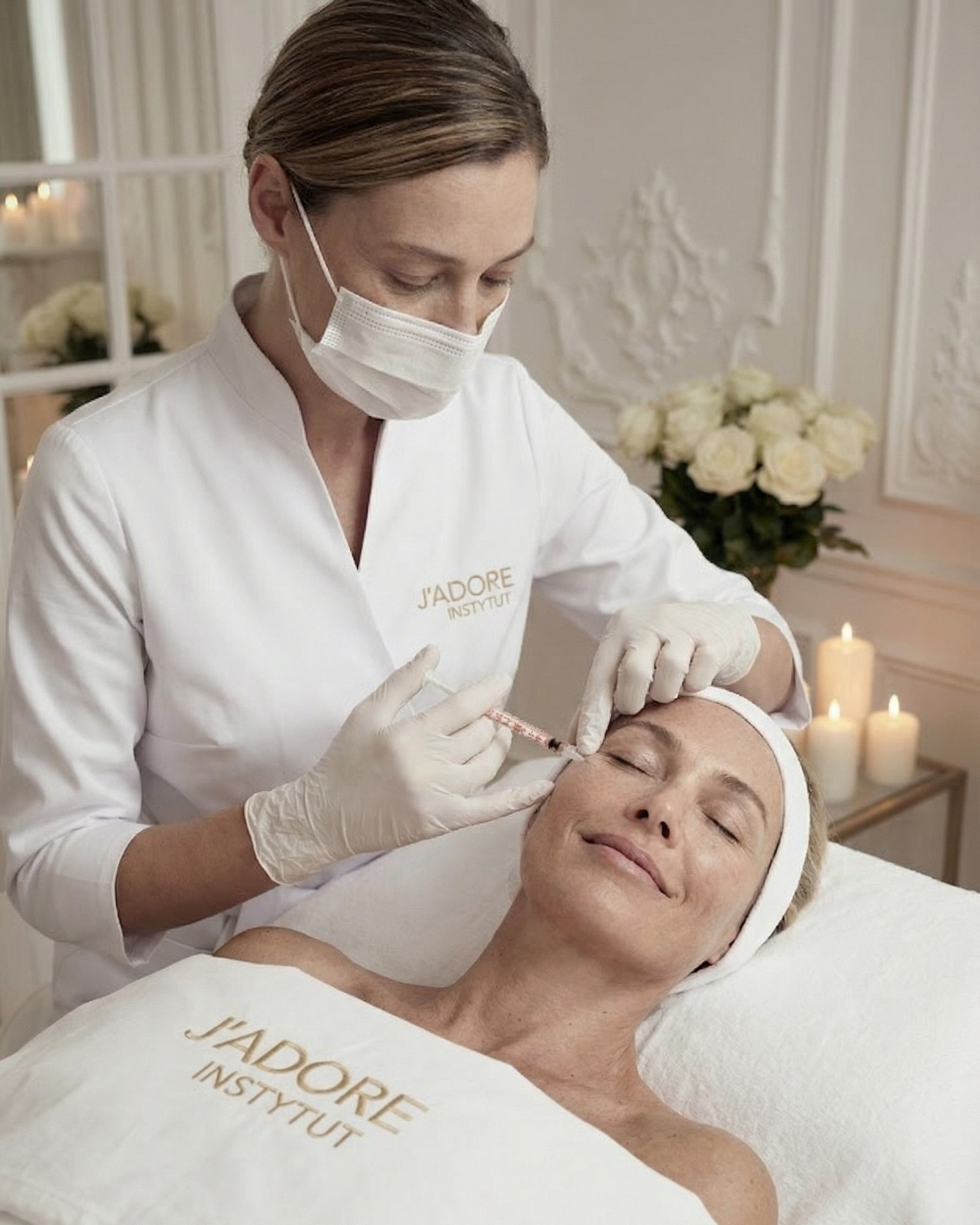
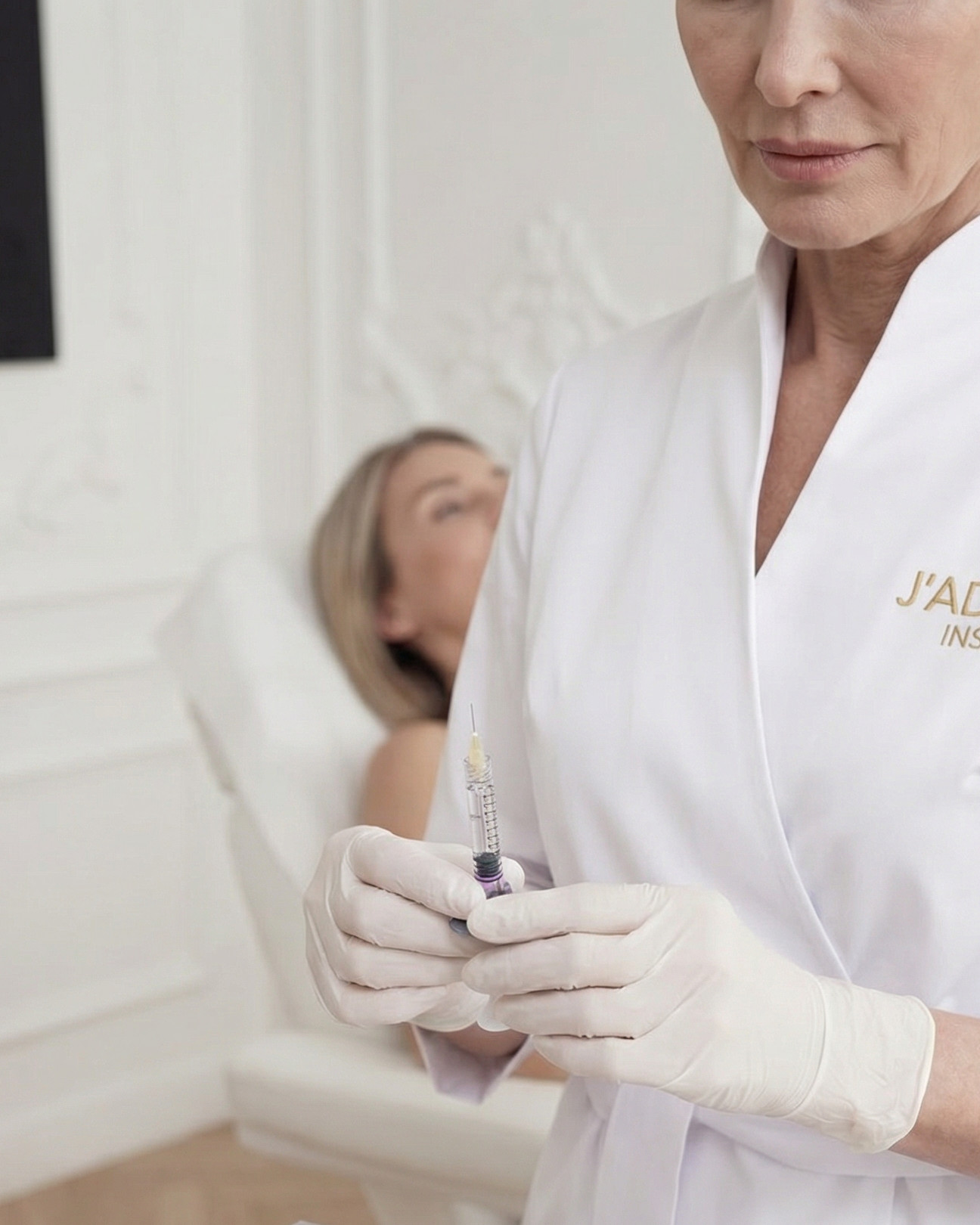
Profhilo isn't a filler. It's an entirely different category — bioremodelling. The formula contains 64 mg of ultrapure hyaluronic acid (the highest concentration on the market), stabilised using NAHYCO technology. After injection at 5 BAP (Bio Aesthetic Points) on each side of the face, the HA spreads through the tissues, stimulating:
- Type I and III collagen production
- Elastin production
- Adipocyte proliferation (rebuilding lost volume)
Protocol: 2 sessions, 4 weeks apart. Results: skin that looks nourished and "plumped" from within, improved facial contour, reduced fine lines. Maintenance: repeat every 6 months.
Profhilo is particularly well suited to menopause, because it works directly on the mechanisms oestrogen has stopped stimulating. It's not about adding volume, as a filler would — it's about restarting the skin's own biological repair processes.
Tissue biostimulators — Sculptra and Nithya
Another category of preparations that's changing the approach to anti-ageing after 45. Tissue biostimulators don't fill — they "wake up" fibroblasts to produce their own collagen.
Sculptra (poly-L-lactic acid, PLLA) — after injection, it triggers a controlled inflammatory response that stimulates neocollagenesis. Results build gradually over 3–6 months and last up to 2 years. A series of 2–3 sessions every 4–6 weeks.
Nithya (recombinant type I collagen) — a newer generation of biostimulators. It delivers exogenous collagen while also stimulating endogenous production. Lower risk of nodules than Sculptra, with a faster onset.
RF Accent — firming without a scalpel
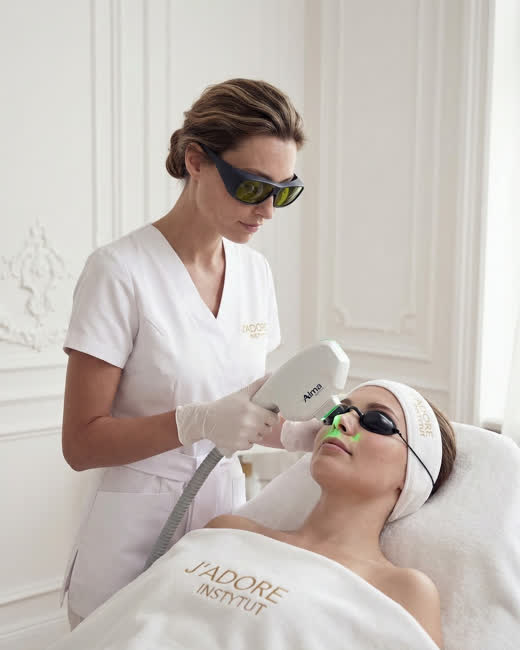
Radiofrequency is a technology that's particularly valuable during menopause. Accent RF combines two applicators — unipolar (deep tissue heating, collagen contraction) and bipolar (surface tightening).
What it delivers:
- Immediate contraction of existing collagen fibres (visible after just 1 session)
- Neocollagenesis stimulation (results building over 3–6 months)
- Improved facial contour and neck skin firmness
- Reduced submandibular laxity
- Zero downtime — you walk out after the treatment and go straight back to your day
Protocol: a series of 4–6 sessions every 2 weeks, followed by 1 maintenance session every 2–3 months.
Daily skincare — the foundation we build on
In-salon treatments give spectacular results, but without proper home care, those results don't last as long.
Must-haves for menopausal skincare:
- Retinoid (retinol 0.3–1% or retinal) — the gold standard in anti-ageing, stimulates cell renewal
- Vitamin C (L-ascorbic acid 10–20%) — an antioxidant and a cofactor for collagen synthesis
- Niacinamide (vitamin B3, 5%) — strengthens the barrier, reduces hyperpigmentation
- Ceramides — rebuild the lipid barrier
- SPF 50 — every day, without exception. Photoageing plus hormonal ageing means a double hit
What to avoid: harsh acid peels (menopausal skin is thinner and more sensitive), over-cleansing (the barrier is already disrupted), and products containing denatured alcohol.
This isn't the end — it's a new chapter
Menopause is often described in apocalyptic terms when it comes to skin. "You'll lose your collagen", "your skin will age", "nothing will help". That's simply not true.
We now have tools no previous generation of women has had. Bioremodelling, tissue biostimulators, RF, phytoestrogens, collagen peptides — this isn't science fiction. It's evidence-based medicine and 2026 dermatology.
At J'ADORE INSTYTUT, we work with menopausal women every day. We see how Profhilo restores "bounce" to skin that seemed to have lost it entirely. How a series of Accent RF sessions rebuilds a facial contour that had been slipping for two years. How tissue biostimulators achieve results no cream ever could.
The first step is a consultation — an honest conversation about where your skin is right now and what we can do for it. No judgement, no pressure, no sales push. Visit us at our salons in Warsaw (Żelazna 59, Mińska 29A) and Krakow (Karmelicka 45).
Your skin after 45 deserves more than "some cream". It deserves a strategy.