Where do the myths about patch testing come from?
The patch test has a bad reputation for several reasons at once. First, it takes time — it needs to be done in advance, which clashes with the "I'll just pop in tomorrow for lashes" logic. Second, for years people believed allergies were something you were born with and already knew about. Third, the result is invisible: when the test comes back negative, nothing dramatic happens — which can make it feel like it "wasn't needed at all". But that's precisely the point.
There's also a cumulative effect: the more times you're exposed to a given substance, the greater the chance that your immune system will "remember" it and start reacting. An allergy gives no advance warning — there's no intermediate stage where you feel "something's coming". It works like a switch: nothing for a long time, then a reaction you never expected.
Seven myths that cost you your health
Myth 1: "I've done this a hundred times and never had a problem." This is the most common reason clients skip the patch test — and the most dangerous one, because contact allergy works in exactly the opposite way this statement suggests. Sensitisation — the body becoming increasingly sensitive — builds up with every exposure. The first contacts often produce no symptoms at all. The reaction appears once your immune system crosses its threshold, and that threshold is different for every person and impossible to predict.
Myth 2: "The patch test is only needed the first time." This mistake happens surprisingly often in salons, on both the client's and the beautician's side. An allergy can develop at any point, regardless of your treatment history. The standard protocol calls for repeating the test whenever the product changes and after any break longer than a few weeks. Tint manufacturers change formulas, salons switch brands, and your body changes independently of both — especially after pregnancy, illness, antibiotic treatment or prolonged stress.
Myth 3: "A test on the wrist is enough." The skin on your wrist is thicker, less vascularised and structurally quite different from the delicate skin around your eyes. A test done behind the ear or in the crook of the elbow — areas with thinner skin and richer blood supply — gives a result closer to how the eye area is likely to react. That's why it's not just about doing a test, but also about where you do it.
Myth 4: "Natural tints are safe and don't need a patch test." The "natural" marketing angle means products labelled "PPD-free", "herbal" or "hypoallergenic" often get treated as risk-free zones. In reality, any colouring agent — plant-based included — can trigger a reaction in a susceptible person. Henna contains lawsone, which is itself an allergen; black henna often contains added PPD at higher concentrations than standard tints. No PPD in the ingredient list doesn't mean no allergy risk.
Myth 5: "If something happens, I'll take a pill and it'll pass." A mild allergic reaction — redness, slight eyelid swelling — can indeed settle down with an antihistamine. But a strong contact reaction near the eyes can lead to corneal swelling, conjunctivitis, and in extreme cases the need for medical intervention. The eye area is one where even a seemingly minor reaction can escalate quickly and unpredictably. A pill doesn't replace prevention.
Myth 6: "The salon is responsible, so it's their problem, not mine." The question of liability is secondary to the question of your health. But it's worth knowing this: a professional salon that skips the patch test is breaching industry standards and manufacturer guidelines. If a beautician offers to tint your lashes without a test, that's a warning sign about their whole approach to treatment safety.
Myth 7: "I feel healthy, so the risk is minimal." Your general health is linked to how your immune system responds, but it doesn't protect you from contact allergy. What's more, certain conditions and life stages increase the risk of sensitisation: recovering from a fever-related illness, taking medication that affects the immune system, pregnancy and the postpartum period, chronic stress, and even intense sun exposure around the time of the treatment. None of these factors is visible from the outside.
What the patch test looks like in the salon — and what a positive result means
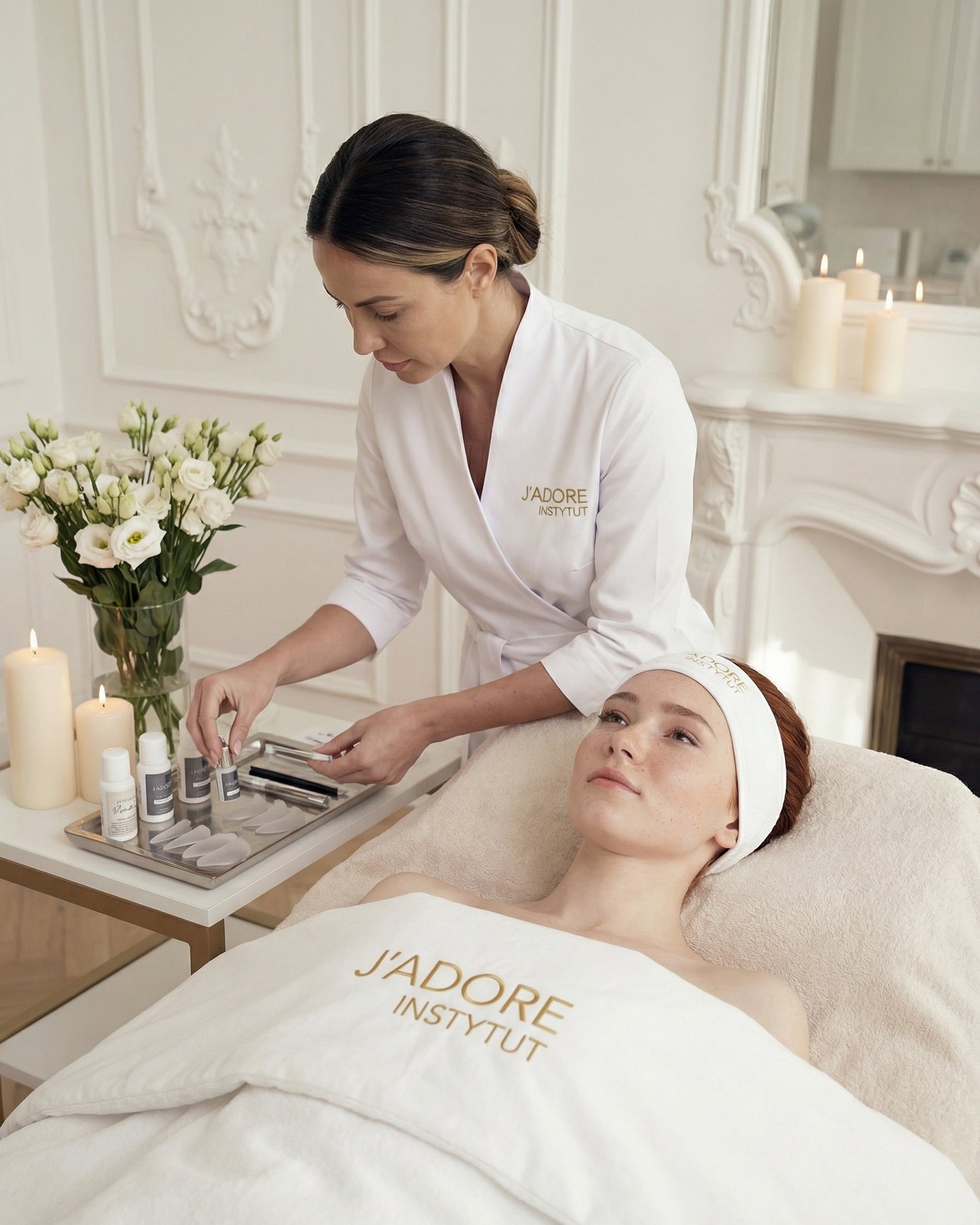
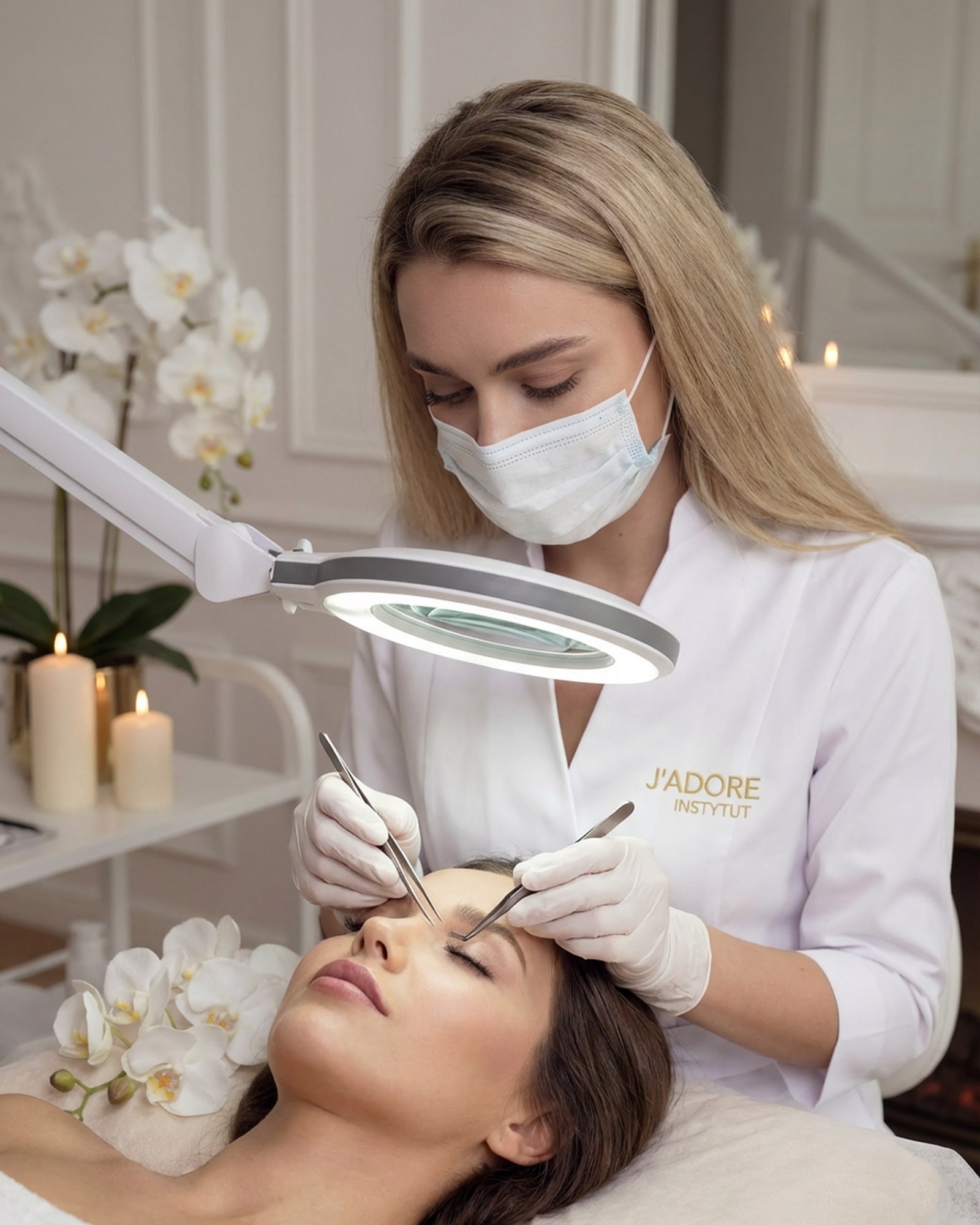
The patch test is a few-minute procedure that protects you for several weeks — until your next treatment or a change of product. In the salon, it works like this: the beautician prepares the ready-mixed tint exactly as she would for the treatment, applies a small amount at the designated site, notes the application time, and tells you when to remove it and how to assess the result. You go home and observe the site for 24–48 hours.
- 01
Applying the test
The ready-mixed tint is applied behind the ear or in the crook of the elbow. It's left on for the time specified by the manufacturer.
- 02
Removal after the set time
You gently remove the test at home, exactly as instructed by your beautician.
- 03
Observation over 24–48 hours
You check the test site for redness, itching, swelling or blistering.
- 04
Assessing the result before the treatment
No reaction at all = a necessary condition for treatment. Any reaction = tinting is contraindicated, regardless of how mild it is.
What do you do if the test comes back positive? First of all — don't ignore the result. Even minimal redness or tingling at the application site means your body is reacting to the substance. Tinting after a positive test isn't a case of "it might be fine" — it's a conscious decision to expose a sensitive area to a substance you have a documented allergic reaction to.
What this means in practice — for you and for the salon
The patch test is one of the few moments in cosmetics where the procedure protects you, not just the salon. A salon that performs it gives you something more valuable than a safety certificate — it gives you real information about how your body reacts to a specific product, at a specific point in your life. That's information no "hypoallergenic" label and no ingredient-comparison algorithm can give you.
Without a patch test
A risky approach
- No information about how your body reacts to the product
- Risk of an allergic reaction right next to your eye
- A reaction means an interrupted treatment, treatment for the reaction, and a break from future sessions
- No documentation in the event of complications
With a patch test
A safety standard
- Real information about how your body reacts, here and now
- A treatment carried out under a documented protocol
- A basis for planning future treatments and any product changes
- Peace of mind before the treatment — and after it
Asking for a patch test — or asking whether the salon performs one — isn't excessive caution. It's a question that separates salons that take safety seriously from those that treat it as a formality. And it helps you make an informed decision before anything happens.
Before you book lash tinting
Three things worth knowing before you call the salon. First: ask whether they perform a patch test before every treatment, and what the procedure looks like. If the answer is "it's not necessary" or "only the first time" — that's a serious red flag about their standards. Second: if you have a history of contact allergy, atopy, an allergy to hair dye, or a recent pregnancy, mention it when booking — not at the treatment itself. Third: book your appointment with enough lead time to allow for the patch test. No cosmetic treatment is worth risking your eye health to save a few days.
And finally: the patch test isn't a scare tactic. Most clients will go through it without any reaction and go on to their treatment with a clear conscience. But the few whose test shows a reaction can avoid something that could genuinely harm them. For those few, the test isn't a formality. It's a barrier that works.