Where do myths about lash lifting come from
Most misunderstandings around lash lifting have one source: confusing a well-performed treatment with one performed poorly or too often. If someone has had dry lashes after too frequent sessions or an incorrectly chosen processing time, the impression that "lifting damages" is very real for them — but the experience describes a technical error, not a property of the treatment itself. Additionally, there are comparisons with other lash procedures: the effects of extensions, tinting and lifting overlap, and it is easy to attribute to one what results from the other. It is worth unravelling these threads one by one.
Seven myths — one by one
Myth 1: "Lash lifting damages lashes". This statement is made so often that it is worth pausing for a moment. Lifting changes the keratin structure using a chemical preparation — and like any treatment of this kind, if performed too often or with an overly aggressive agent, it can weaken the lash and make it more brittle. The key words, however, are "too often" and "too aggressively". Lifting performed with the proper interval between sessions and by a trained specialist — who selects the strength of the preparation based on the condition of the individual's lashes — usually does not cause permanent damage. Many people's lashes look thicker afterwards because lifting from the root creates the illusion of greater volume. Damage occurs where treatments are repeated every few weeks or where the condition of the lashes is not taken into account before application.
Myth 2: "Lashes fall out in large numbers after a lift". This is one of the most confusing beliefs — because it contains a grain of truth but interprets it incorrectly. Every lash lives its own cycle: it grows, matures and falls out naturally — regardless of whether you had a lift or not. The average life cycle of a lash is a few weeks. After the treatment, lashes continue to fall out at their natural rhythm — and some people only notice this when the lashes are more visible thanks to the lift. Lifting does not accelerate lash loss as a biological process. If it seems like lashes are "falling out" after the treatment, it usually just means that a natural replacement is underway — it is simply more visible now.
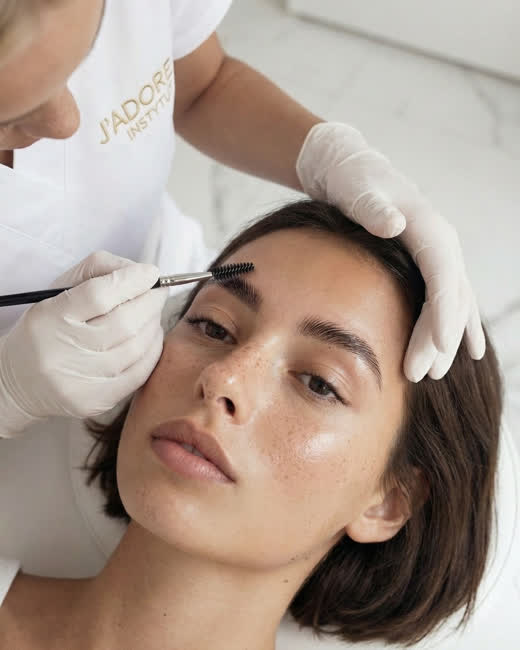
Myth 3: "Lash lifting hurts". Lashes are dead keratin structures — just like hair and nails — so they do not feel anything themselves. The lifting preparation acts on the keratin, not on living tissue. During the treatment, your eyes are closed, lashes are secured on a silicone rod, and the specialist applies the preparation with a brush. The vast majority of people feel no discomfort — at most a slight feeling of pressure when the rod is attached. If something starts to sting or itch during the process, it is a signal that something has entered the eye or that there is a reaction to an ingredient in the preparation — and that is the moment to stop the treatment, not proof that lifting "always hurts".
Myth 4: "The result lasts only a week". This is one of the biggest myths — and one of the most harmful, because it makes some people give up on the treatment before they get to see its potential. The result of a lift usually lasts for several weeks — until the natural lash cycle replaces those that were treated with new, unformed ones. In practice, for many people, the result is clearly visible for six to eight weeks, sometimes longer, and the exact duration is mainly determined by the individual growth rate of the lashes and their condition. The impression that the result "disappeared after a week" is sometimes a sign that the treatment was performed on lashes that were too short or that the rod was chosen imprecisely for the length of the person's lashes.
Myth 5: "You don't need mascara after a lift". Lifting changes the angle of the lash — it lifts it from the root, making the eye look more open and the lashes themselves look longer. What mascara does — that is, thickening lashes, visually lengthening them, adding volume — lifting does not replicate. The good news is that after a lift, mascara is applied exceptionally easily and effectively, because painting lifted lashes from the root gives a clearly better result than with straight lashes. Many people do indeed use less mascara after the treatment — but that is a matter of choice, not necessity.
Myth 6: "Lifting can be done every month". This is one of the myths that can actually cause harm. The lifting preparation changes the keratin bonds in the lash — chemically, irreversibly, until the lash is naturally replaced by a new one. Re-applying the preparation to a lash that has already undergone lifting means acting on a structure that is already modified. An interval between sessions that is too short — less than six to eight weeks — can lead to dryness and brittleness. Lifting performed while maintaining an appropriate interval allows lashes to grow out and "shed" the processed fragments — and only then is it really worth returning for another session.
Myth 7: "Lifting and lash extensions can be combined immediately". Lifting changes the keratin of your own lash — and this is the same structure to which the extension glue attaches the artificial lash. Immediately after a lift, lashes have a different surface structure and the glue may not hold as securely as normal. On the other hand: doing a lift on lashes that already have extensions applied risks mechanical damage and shortening the effect. Both lash treatments require an interval — and checking with a specialist in what order and when to combine them safely. There is no rule that works for everyone: it depends on the condition of the lashes, the extension technique, and how much the lashes have already been through.
What to do before deciding: how to find a good specialist
Most myths about lash lifting come down to one common denominator: the difference between a treatment performed well and one performed poorly or too often. Before the session, a good specialist assesses the condition of the lashes — their length, thickness, hydration level — and based on this, selects the strength of the preparation and the size of the rod. They choose the rod based on the length of the lashes, not the other way around. They inform you about aftercare rules, rather than staying silent about them. And they do not suggest another session in three weeks.
There are a few things worth checking before you sit in the chair. A portfolio of before and after photos — pay attention not only to the result but also to whether the lashes in the "after" photos look healthy, rather than dry or spirally curled. Information about the preparations used — a good salon uses proven cosmetics designed specifically for lifting, not substitutes. A conversation before the treatment — the specialist should ask about the history of your lashes: whether they were extended, tinted, whether you have had a lift before, when and how often. This is not an unnecessary formality — it is information without which it is difficult to choose the right procedure.
Lash lifting is a treatment that — when performed properly — can give truly pleasant, natural results with minimal time spent each morning. Most of the myths that surround it describe either technical errors or bad habits (repeating too often, combining with other treatments too quickly). When a proper specialist and a proper interval between sessions stand behind the lifting, the story about "damaging lashes" most often simply has nowhere to come from.