What the roller actually does — and why its size matters
A lash lift roller is a soft silicone pad, applied to the eyelid right at the base of your lashes. Your lashes sit on this roller while the shaping products take effect — and its curvature radius determines how much lift your lashes get, and at what angle.
The smaller the roller, the tighter the arc — and the stronger the curl. The larger the roller, the softer and more relaxed the curve. This isn't about aesthetics or a specialist's personal preference. It's about matching the roller to the length, thickness and natural growth direction of your lashes. That's why the same roller size can give completely different results on different people.
S, M and L — three sizes, three different results
S, M and L are general size labels — different brands use their own naming (XS, B, C, D, L, M...), but the principle stays the same everywhere: a smaller letter means a stronger curl, a larger letter means a softer curl. Here's how these three basic options differ:
Roller S (small)
strong, distinct curl
- short lashes (up to around 8 mm)
- a very open, even dramatic effect
- lashes clearly angled upwards
- often chosen for hooded or drooping eyelids
Roller M (medium)
natural arch, our most commonly recommended option
- medium-length lashes (8–12 mm)
- naturally curled result — "like you were born with these lashes"
- a good base for mascara
- suits most eye shapes
Roller L (large)
gentle lift, a "lifted" effect
- long lashes (over 12 mm)
- a "lifted" result — lashes lifted from the base while keeping their natural length
- ideal for dense lashes or lashes that point downwards
- also used for straight Asian lashes
How to spot the right size for you — things to check before your visit
The final decision always belongs to your specialist — but a few simple observations before your visit can help you explain what you're hoping for, and get your consultation off to a good start:
- Lash length: If your lashes are barely visible without mascara and don't extend much beyond your lid line, an S roller is usually indicated. Lashes that are noticeable but not long typically call for M. Lashes that are already long and visible without any treatment usually need L or XL.
- Natural growth direction: Lashes that grow straight or downwards often need a stronger effect and a smaller roller for the lift to be visible at all. Lashes that already grow upwards naturally can use a larger roller, since the effect doesn't need to be as intense.
- Previous results: If your last lash lift "disappeared" after a week, the roller was probably too large. If the result looked overdone, or your lashes had a "kink", it was probably too small.
- The look you're after: Want a dramatic, clearly curled arch? Choose a smaller roller. Prefer a naturally lifted but relaxed look? Choose a larger roller.
When one size isn't enough
In reality, lashes on a single eyelid aren't uniform. Lashes near the inner corner are often shorter than those at the outer corner — for many people, the difference is several millimetres. An experienced specialist may use two different roller sizes on the same eyelid — for example, S at the inner corner and M or L at the outer corner. The result: an even, natural arch along the whole lid, rather than overdone lashes in one spot and barely-there lashes in another.
That's why it's worth thinking of a lash lift not as "always the same treatment", but as a treatment adjusted every time — at the very least through a quick check of your lashes before the rollers go on. Salons where the specialist measures your lashes before every visit and adjusts accordingly give far more predictable, repeatable results.
When it's worth combining a lash lift with other treatments
A lash lift works well on its own — but as part of a broader approach to your eyes and brows, it creates a result that really stands out. Here are the most common combinations that make sense:
Lash lift + lash tint
Curl and colour in one session — lashes look thicker and more defined without mascara. Especially recommended for people with fair lashes.
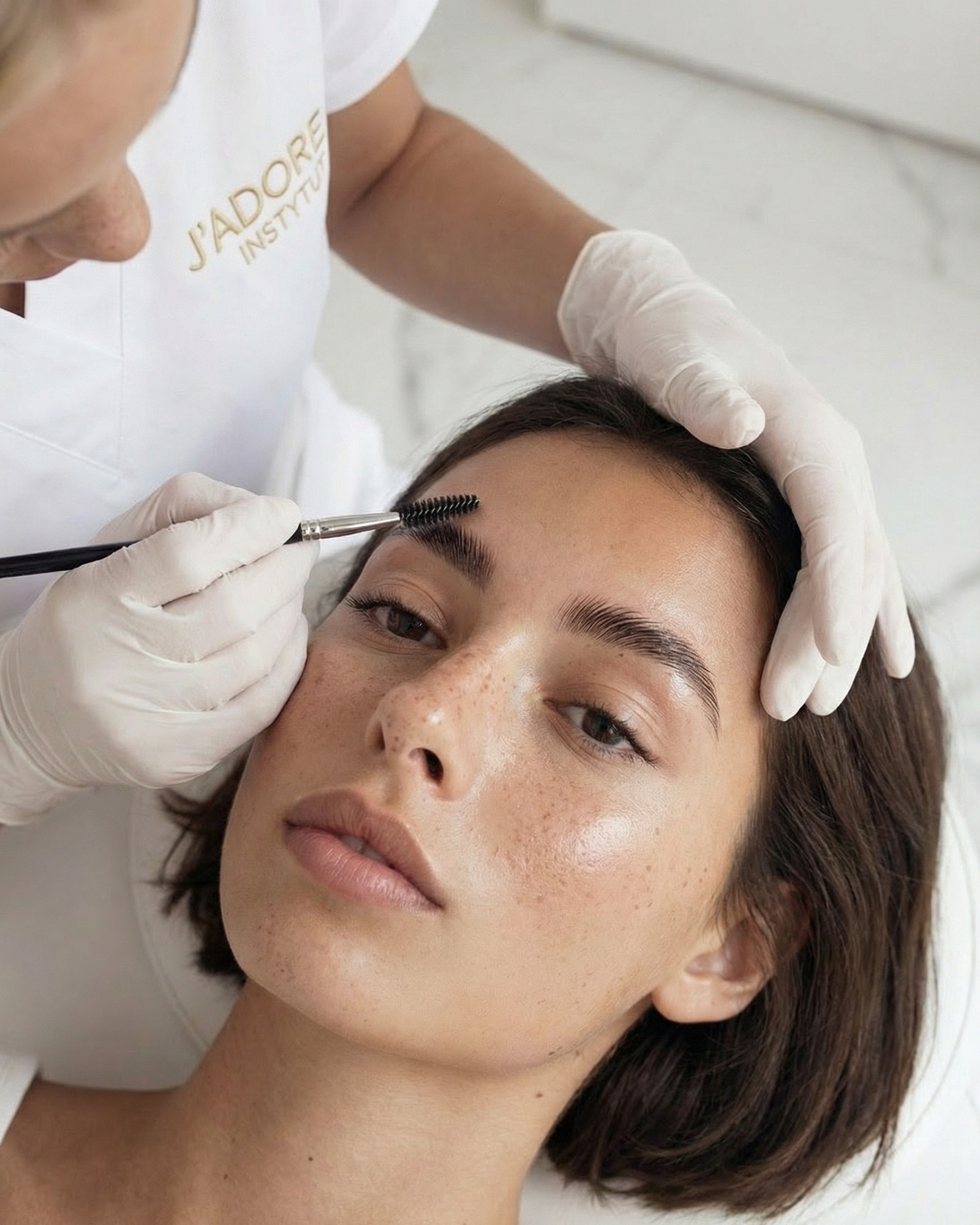
Lash lift + brow lamination
A complete eye and brow treatment — lashes lifted, brows shaped. A "ready" look with no makeup, lasting several weeks.
Lash lift + brow tint
When brows are fair or sparse, brow lamination with tint adds colour and visual density, while a lash lift completes the whole look.
Lash lift + keratin lash treatment
For weakened or damaged lashes, a keratin treatment strengthens lashes before the lift and can extend how long the results last.