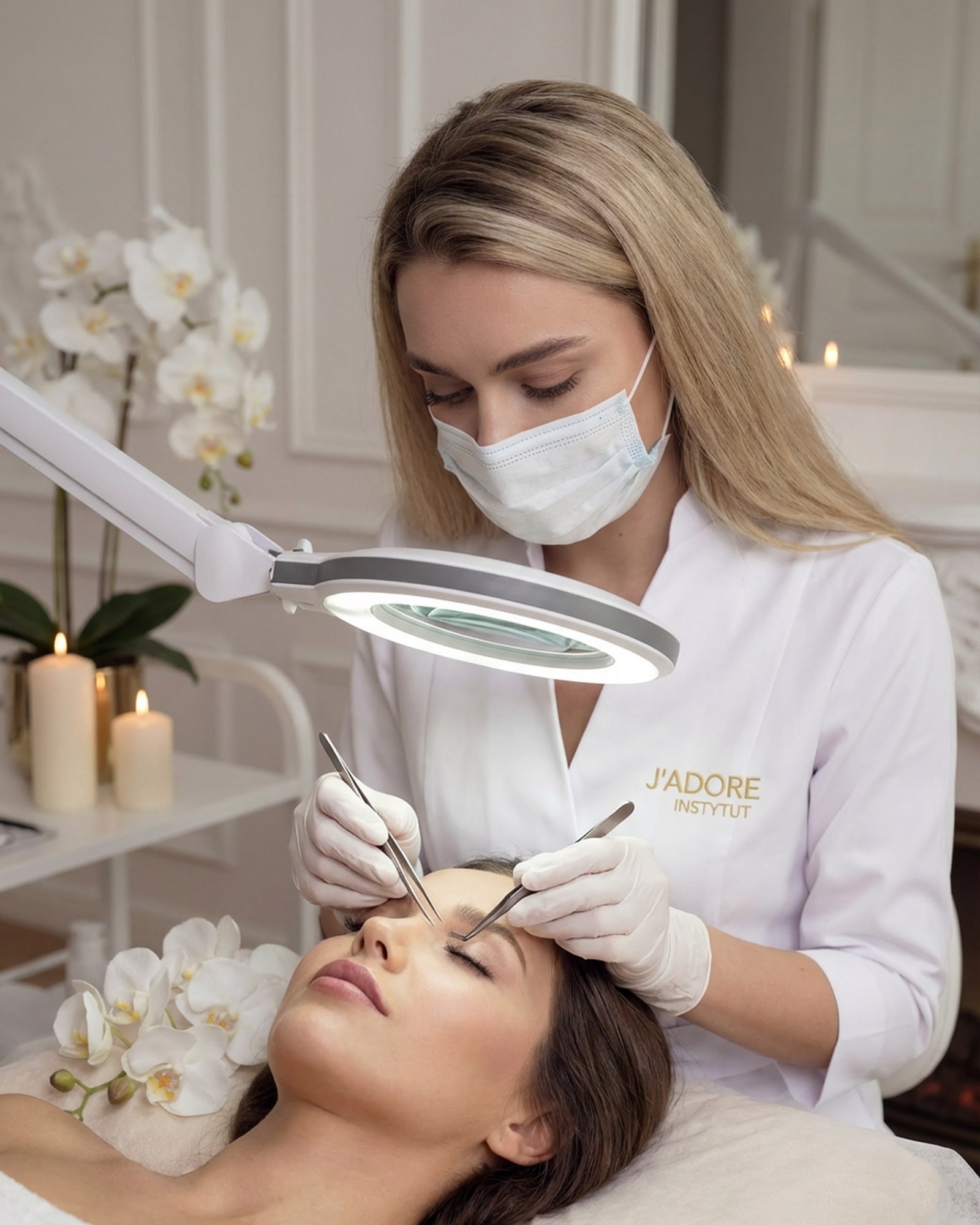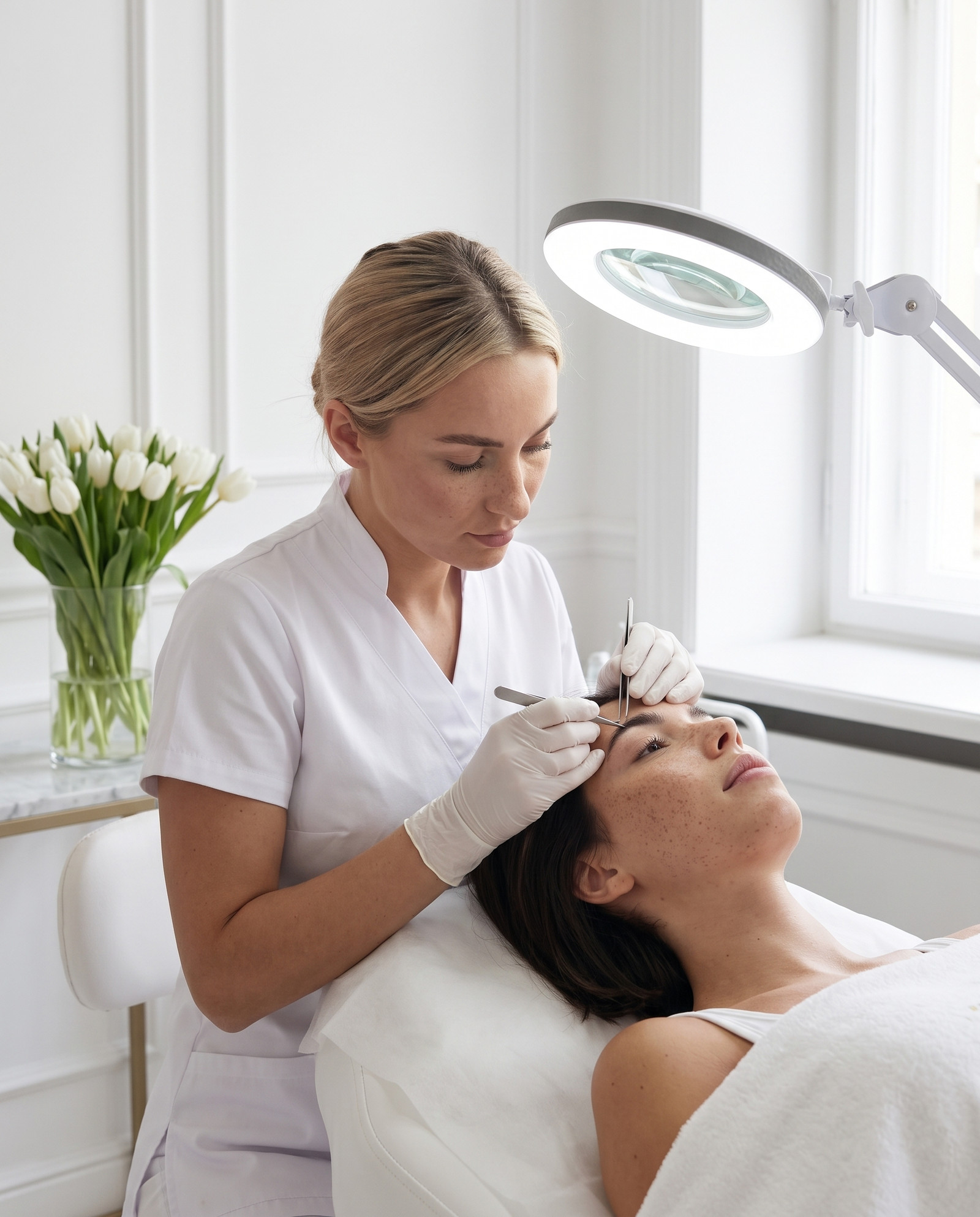
Three methods, three completely different results
Before comparing the details, it is worth establishing one thing: none of these methods is better than the others — they are simply different. Classic henna colours the brow hairs. Powder henna mainly colours the skin. PMU is a treatment in which pigment is placed beneath the skin. These are three different answers to what you are looking for.
Classic henna
colours the brow hairs
- natural plant-based formula
- intense colour on the hairs for several weeks
- subtle skin pigmentation for a few days
- a wide range of shades, from light to graphite
- can be performed regularly without concern
Powder henna
colours the skin beneath the brows
- a “filled-in” brow effect, like makeup
- ideal for thin or sparse brows
- lasts on the skin for up to several weeks, depending on skin type
- allows precise shaping of the arch and creates a fuller look
- a more defined result than classic henna
PMU (permanent makeup)
pigment placed permanently beneath the skin
- lasts from one year to several years, depending on the technique and skin
- techniques: ombre, powder, microblading, combo brows
- improves symmetry, shape and density long term
- no need for daily brow makeup
- regeneration only requires a corrective visit
How to recognise what you are truly looking for
The answer to “which method is right for me?” depends on several factors: brow density, skin type, makeup style and how long you want the result to last. Here are a few questions worth asking yourself before your visit:
- Are my brows dense or rather sparse? Classic henna works beautifully on dense, natural brows — it enhances what is already there. Powder henna and PMU are excellent for filling gaps.
- Do I have oily skin? On oily skin, pigmentation on the epidermis from powder henna may fade faster. It is worth considering this when choosing. PMU sits deeper and is less affected by sebum production.
- How much time do I want between visits? Classic henna — every few weeks. Powder henna — similarly, although the effect on the skin fades sooner. PMU — a corrective visit once a year or less often.
- Do I want a natural or more defined result? Classic henna = naturalness and deeper hair colour. Powder henna = a defined, makeup-style shape. PMU = full control over the result for years.
- Am I ready for an invasive treatment? PMU is a needle treatment — it requires healing, consultation and commitment. Both types of henna are cosmetic treatments, with no recovery period.
Classic henna — when it makes sense
Classic brow henna remains the purest tool for intensifying the natural colour and shape of your brows. It colours the hairs, adds depth and makes your natural brows look healthier, fuller and more defined — without an artificial effect. It works well if you:
- have sufficiently dense brows and mainly want to enhance their colour
- value a natural look — you want to look well-groomed without an obvious “done” effect
- are just beginning your brow care journey and are looking for a safe introduction
- prefer regular salon visits and want to adjust the colour slightly each time
- have sensitive or atopic skin — the natural formula is gentler
Powder henna — when it makes a difference
Powder henna is the logical next step for those who feel classic henna is “not enough” — because they want to define the shape and fill the space between the hairs. It colours the skin beneath the brows. This creates an effect similar to light makeup: filled-in, even brows with a visible arch. It works particularly well when:
- your brows are thin or have gaps — classic henna will not fill what is not there
- you want a defined shape without drawing your brows in every day
- you like a makeup-style result but are not ready for PMU
- you want to test a shape before deciding on permanent makeup
- you are looking for an option between “nothing” and “forever”
PMU brows — when it is worth making this decision
Permanent Makeup for brows is a separate category — not a cosmetic procedure, but a needle treatment that introduces pigment beneath the skin. The result can last from one year to several years, depending on the technique, pigment colour and your individual skin. It is a decision that requires careful thought. This is why a good salon always starts with a consultation, not a booking.
- your brows are very sparse or almost absent (e.g. after chemotherapy or with alopecia)
- drawing your brows every day takes time and produces uneven results
- you are looking for a long-lasting solution for at least one to two years
- you want to improve symmetry and shape once, rather than every few weeks
- an active lifestyle (sport, swimming, travel) causes make-up to wear off quickly
- 01
Consultation
Assessment of shape, colour and skin structure. Selection of the technique and shade. A key stage — this is where the right decision is made.
- 02
Treatment
Precise pigment application according to the planned shape. The treatment area will be red and the colour more intense.
- 03
Healing
A few days to one week. The colour darkens, then fades — this is a normal process. Important: do not wet or scratch the area, and use the recommended products.
- 04
Touch-up visit
After a few weeks — assessment of the result and any adjustments to colour or shape. The result is only final after this visit.
- 05
Refresh
Once a year or less often — a visit to refresh the colour. Frequency depends on your skin, lifestyle and chosen technique.
When to combine henna with other brow treatments
Henna, both classic and powder, rarely works in isolation. Best results are often achieved by combining it with other brow or skincare treatments. The logic is simple: first care for the shape and growth of the hairs, then add colour.
Henna + brow shaping
The most basic combination — first hair removal and shaping, then henna. The colour is applied to well-groomed hairs, making the result more defined and longer-lasting.
Powder henna + brow lamination
Brow lamination sets the hairs in place, while powder henna adds colour to the skin and hairs. Together, they create the effect of full, well-groomed brows without daily styling.
Henna + waxing / threading
After hair removal, the skin is cleaner and henna colours more evenly. Important: we always apply henna after hair removal, not before (open pores may absorb pigment unevenly).
PMU + brow conditioner (after healing)
Once PMU has healed, it is worth caring for your own brow hairs with a serum or conditioner. This strengthens your natural brows and helps the permanent result look harmonious with the hair structure.
Common misconceptions — and what to do about them
Many myths have grown around these three methods. Some make choosing more difficult. Here are the ones that appear most often:
- “Powder henna is the same as PMU” — no. Powder henna colours the epidermis and fades within weeks. PMU places pigment beneath the skin and can last for years for many people. In terms of longevity, it is like comparing make-up with a tattoo.
- “Classic henna is for older women” — this is a stereotype. Classic henna is the most natural option and works well at any age, especially when brows are dense and the aim is enhancement rather than transformation.
- “PMU is forever” — PMU pigments are designed to fade over time and require refreshing. This is intentional — it allows the shape and colour to be adapted to changing preferences and facial features.
- “Henna is safe for everyone” — natural henna is gentle, but synthetic formulas, known as black henna, may contain sensitising ingredients. It is always worth asking about the ingredients, especially if you have sensitive skin.
- “You cannot have henna after PMU” — you can, but it requires consideration. Henna on the hairs does not usually interfere with PMU on the skin — but it is worth consulting the person who performed your PMU.